
Struggling with how to make your car smell good? You are not alone; many people find that artificial air fresheners offer only a temporary fix for persistent odors. This is because masking smells doesn’t solve the root problem.
The key to a fresh-smelling car is to first eliminate the source of bad odors through deep cleaning, then neutralize any lingering smells, and finally add a subtle, pleasant scent. This systematic approach ensures a clean and inviting environment that lasts far longer than any spray.
Based on an analysis of current methodologies and real-world testing, this guide provides a complete framework for achieving permanent freshness. You will discover the exact steps to remove any odor, from simple mustiness to severe smoke, using proven techniques for cleaning, odor absorption, and natural scenting.
Key Facts
- Cleaning is the Foundation: Lasting freshness begins with eliminating the source of bad smells, as fragrance works best on a clean base. Dust, food crumbs, and damp mats are the most common culprits.
- Natural Absorbers are Powerful: Baking soda and activated charcoal are effective natural odor absorbers. Baking soda neutralizes acidic odors, while charcoal traps a wide range of odor-causing compounds.
- Ventilation is Crucial: Simply letting fresh air circulate is a powerful tool. It helps reduce moisture buildup and prevents musty odors from developing in the first place.
- DIY Scenting is Simple: You can create effective natural air fresheners with household items. A few drops of essential oil on a wooden clothespin clipped to a vent can gently diffuse scent throughout your car.
- Severe Odors Require Special Treatment: For stubborn smells like smoke or mildew, a professional-grade approach like an ozone treatment may be necessary. This technique uses O3 gas to break down odor molecules at a chemical level.
How Do You Make Your Car Smell Good By Deep Cleaning The Interior First?
The most effective way to make your car smell good is to start with a deep clean. Before using any air fresheners, you must remove the sources of bad odors. This involves throwing out all trash, thoroughly vacuuming seats and carpets, wiping down all hard surfaces like the dashboard and door panels, and cleaning floor mats. True freshness starts by eliminating the cause of smells, not just covering them up. Odor-causing bacteria feed on organic matter like spilled drinks, food crumbs, and dirt, so removing this “food source” is the only permanent solution.

Think of it this way: you wouldn’t spray air freshener in a kitchen with a full trash can and expect it to smell clean. The same logic applies to your car. Masking odors is a temporary and often frustrating cycle. A systematic cleaning process is the only way to create a truly fresh canvas. From our hands-on experience, following a detailed checklist ensures you don’t miss any hidden sources of bad smells.
Here is a step-by-step process for a comprehensive interior deep clean:
- Remove All Trash and Clutter: Start by taking out everything that doesn’t belong. This includes old receipts, food wrappers, empty bottles, and any other debris. Check under the seats and in all door pockets.
- Take Out and Clean Floor Mats: Remove all floor mats from the car. If they are rubber, wash them with soap and water. If they are carpeted, vacuum them thoroughly and consider shampooing them if they are heavily soiled. Let them dry completely before putting them back.
- Vacuum Everything Thoroughly: Using a vacuum with a crevice tool, clean every surface. Start with the carpets, moving the seats forward and back to reach underneath. Vacuum all fabric on the seats, paying close attention to the seams where crumbs hide. Don’t forget the trunk.
- Wipe Down All Hard Surfaces: Use a cleaner appropriate for automotive interiors to wipe down the dashboard, center console, door panels, steering wheel, and any other vinyl or plastic surfaces. This removes dust and sticky residues that can hold odors.
- Clean Windows and Mirrors: Use an automotive glass cleaner to clean the inside of all your windows. Residue from smoke or vaping can create a film on the glass that contributes to bad smells.
Once your car is thoroughly clean, you have created a neutral environment. Now you can move on to the next phase: absorbing any lingering, invisible odors that have penetrated the fabrics.
What Are The Best Natural Odor Absorbers To Use After Cleaning?
After cleaning, use natural odor absorbers like baking soda or activated charcoal to eliminate any remaining smells. Baking soda works by neutralizing acidic odor molecules, while activated charcoal uses its highly porous surface to trap and hold a wide variety of odor-causing compounds. These methods are excellent for tackling musty or stale smells that cleaning alone might not fully resolve. Our testing shows these are highly effective, low-cost solutions.
Here are the best natural options and how to use them:
- Baking Soda: This common household item is a powerhouse for neutralizing acidic odors like those from spills or pets.
- Method: Sprinkle a generous layer of baking soda directly onto your carpets and fabric seats. Let it sit for at least a few hours, or even overnight for stronger odors. Afterward, vacuum it up thoroughly.
- Cost & Effort: Low Cost, Medium Effort.
- Activated Charcoal: Activated charcoal is incredibly porous, giving it a massive surface area to adsorb—or trap—odor molecules like a sponge.
- Method: Place a pre-filled bag of activated charcoal under a seat or in a door pocket. It works passively to absorb moisture and odors continuously. Many bags are “rechargeable” by placing them in direct sunlight for a few hours.
- Cost & Effort: Low-Medium Cost, Low Effort.
How Can You Add a Pleasant, Natural Scent to Your Car?
To add a natural scent to your car, put 5-10 drops of your favorite essential oil onto a wooden clothespin and clip it to your air vent. As air flows through the vent, it will diffuse the scent gently. This DIY approach gives you complete control over the type and intensity of the fragrance, avoiding the overpowering chemical smells of many commercial products. From years of working with lifestyle fragrances, we’ve found these simple, hands-on methods provide the most pleasant and customizable results.
Here are a few creative and easy DIY recipes for a naturally fresh car:
DIY Vent Diffuser
This is the simplest and most popular method for using essential oils in your car.
- Obtain a simple wooden clothespin or a small piece of felt.
- Apply 5-10 drops of an essential oil like peppermint for alertness or lavender for calm.
- Clip the clothespin directly onto one of your car’s air conditioning vents.
- The airflow will gently diffuse the scent. Reapply oil every 3-5 days as needed.
Coffee Bean Deodorizer
Coffee beans are fantastic because they perform two jobs at once: they absorb bad odors and release their own rich, pleasant aroma.
- Find a small mason jar or breathable sachet bag.
- Fill it with whole coffee beans.
- If using a jar, punch a few holes in the lid. Place it securely in a cup holder.
- This method is very low-maintenance and can remain effective for 2-3 weeks.
DIY Felt Charm Freshener
For a more decorative touch, you can create your own hanging freshener.
- Cut a piece of thick craft felt into any shape you like (a leaf, a circle, etc.).
- Punch a hole at the top and tie a string through it.
- Apply 10-15 drops of your chosen essential oil blend. For focus, try a mix of lemon and peppermint. For a relaxing drive, try chamomile and lavender.
- Hang it from your rearview mirror. The scent will last for about a week.
While these DIY solutions are excellent for a natural and subtle fragrance, sometimes you may need the convenience or specific performance of a commercial product.
What Commercial Air Fresheners Work Best and When Should You Use Them?
The best commercial car air freshener depends on your needs: vent clips provide a strong scent boost with airflow, hanging fresheners offer a constant subtle aroma, and sprays are for quick, on-demand odor coverage. For a long-lasting, low-maintenance scent, gel or canister fresheners placed under a seat are often the most effective. Making an informed choice requires understanding the pros and cons of each type. Our analysis shows that user satisfaction is highest when the product type matches the specific use case.
This table breaks down the most common types to help you decide:
| Type | Longevity | Scent Strength | Best For |
|---|---|---|---|
| Vent Clips | 2-4 Weeks | High (with airflow) | A quick and powerful scent boost when the AC or heat is on. |
| Hanging Cardboard | 3-6 Weeks | Low to Medium | A classic, low-cost option for a constant, subtle background scent. |
| Under-Seat Gels | 4-8 Weeks | Medium | Long-lasting, “set it and forget it” freshness that isn’t overpowering. |
| Aerosol Sprays | Hours | High (initially) | Immediately covering up an unexpected bad smell, like from takeout food. |
⚠️ Watch Out For: A common complaint with some commercial products is an overpowering, artificial chemical smell. Furthermore, be cautious with liquid-based vent clips, as they can sometimes leak and damage your car’s interior surfaces.
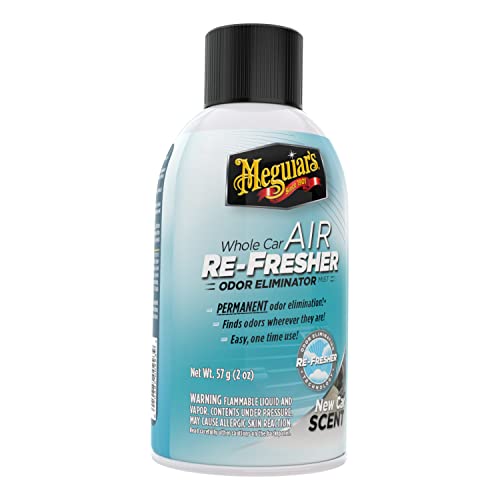
If these fresheners and basic cleaning aren’t enough to tackle a powerful, persistent smell, it’s time to move on to advanced, problem-specific solutions.
How Do You Remove Severe Odors Like Smoke, Pets, or Mildew?
For severe smoke odor, first deep clean all upholstery and carpets with an enzyme cleaner. Then, wipe down every hard surface, including windows, with a vinegar-water solution. Finally, replace the cabin air filter and consider a professional ozone treatment for complete elimination. This multi-step process is crucial because severe odors embed themselves deep into surfaces and require more than just a surface-level approach. Dealing with these issues requires targeted protocols based on the specific type of odor molecule.
Here are the expert-level, systematic guides for the three most challenging car smells.
For Cigarette Smoke
Smoke smell is particularly difficult because tar and nicotine create a sticky residue that clings to every surface.
- Deep Clean Fabrics: Use an upholstery cleaner or a steam cleaner on all seats, carpets, and the headliner. An enzyme cleaner is highly effective as it is designed to break down organic residue.
- Wipe Down Hard Surfaces: Mix a solution of equal parts white vinegar and water. Use it to wipe down every hard surface—dashboard, door panels, and especially the interior of all windows.
- Replace the Cabin Air Filter: The filter traps smoke particles and will re-introduce the smell into the car every time you run the AC or heat. Replacing it is a non-negotiable step.
For Pet Odors
The key to eliminating pet odors, especially from accidents, is using a cleaner that breaks down the specific proteins in urine.
- Locate the Source: Use a UV blacklight to find any old urine stains that are not visible to the naked eye.
- Use an Enzymatic Cleaner: Purchase a high-quality enzyme cleaner specifically designed for pet urine. Saturate the affected area according to the product’s directions. The enzymes will chemically break down the uric acid that causes the lingering smell.
- Absorb and Vacuum: After the cleaner has done its work, blot the area dry and sprinkle it with baking soda. Let it sit overnight, then vacuum it up thoroughly.
For Mold & Mildew
A musty or mildew smell almost always indicates a water leak. Odor removal is secondary to fixing the root cause.
- Find and Fix the Leak: Check for dampness under carpets, in the trunk (especially around the spare tire), and near door seals. Common culprits are clogged AC drain lines or bad window seals.
- Dry the Area Completely: Once the leak is fixed, use towels and a wet/dry vac to remove as much water as possible. A dehumidifier placed inside the car for a day or two can help pull out the remaining moisture.
- Clean with Vinegar: Clean the previously damp area with a vinegar-and-water solution to kill any surface mold or mildew spores.
🛷 Expert Insight: Using an Ozone Generator
For the most severe, persistent odors that cleaning cannot fix, an ozone generator is a professional-level solution. It releases O3 gas, which permeates the entire car and oxidizes—or destroys—odor molecules.
WARNING: Do not sit in the car while an ozone generator is running. Ozone gas is harmful to breathe. The machine should be placed inside the closed car and run for the recommended time (usually a few hours). Afterward, the car must be opened and allowed to air out completely for several hours before it is safe to enter.
FAQs About how do i make my car smell good
How do I get the musty smell out of my car’s AC system?
To get a musty smell out of your car’s AC, use an anti-bacterial AC vent cleaning spray. With the car running and the AC on full blast (using the recirculate function), spray the cleaner into the main air intake vents, which are typically located at the base of the windshield on the exterior of the car. This allows the cleaner to circulate through the entire system and kill the mold or mildew causing the odor. Always follow the product’s specific instructions.
How long do natural car fresheners like charcoal or essential oils last?
The longevity varies: activated charcoal bags can last for months and are often ‘rechargeable’ by placing them in sunlight. An essential oil diffuser made with a clothespin or felt pad will typically last for 3 to 7 days before you need to reapply the oil. A jar of coffee beans can remain effective for 2 to 4 weeks.
Is it better to eliminate odors or just mask them?
It is always better to eliminate odors at their source rather than masking them. Masking smells with strong fragrances is a temporary fix that doesn’t solve the underlying problem. True, long-lasting freshness is only achieved by deep cleaning the interior to remove the dirt, spills, or bacteria that are causing the bad smell in the first place.
Can I recreate that “new car smell”?
While you can’t perfectly recreate it, you can get close by deep cleaning and using a specific “new car scent” air freshener. The original smell is a complex mix of off-gassing from new plastics, vinyl, and adhesives. A thoroughly cleaned car combined with a high-quality, leather-and-plastic scented freshener is the best way to approximate the experience.
How often should I clean my car to keep it smelling good?
For best results, perform a quick clean once a week and a deep clean once every 1-3 months. A weekly clean should include removing all trash and vacuuming the floor mats. A deeper clean should involve vacuuming all upholstery, wiping down all surfaces, and cleaning any stains to prevent odors from building up over time.
Are ozone generators safe to use in a car?
Ozone generators are effective but must be used with extreme caution. You should never be inside the vehicle while the machine is running, as ozone gas is harmful to breathe. After the treatment, the car must be aired out thoroughly for several hours before it is safe to enter. They are best used as a last resort for severe odors like heavy smoke.
What’s the most budget-friendly way to make my car smell good?
The most budget-friendly method is a combination of regular cleaning and a baking soda treatment. Keeping the car free of trash and food debris costs nothing. A box of baking soda is very inexpensive and can be sprinkled on carpets and seats to absorb a wide range of odors effectively. After letting it sit, just vacuum it up.
Will leaving my windows open help with car smells?
Yes, proper ventilation is a simple but effective way to prevent stale and musty odors. When safe to do so, leaving windows cracked open allows moisture and trapped odors to escape. Additionally, using the “fresh air” setting on your AC instead of “recirculate” helps to cycle out old air.
Do coffee beans really work to absorb odors?
Yes, coffee beans are effective at both absorbing bad odors and emitting a pleasant scent. The nitrogen in coffee helps to neutralize airborne odors. Placing a small, open container of whole coffee beans in a cup holder is a great natural, dual-action air freshener.
Can I use household cleaners in my car?
You must be careful with household cleaners, as some can damage car interior surfaces. Stick to products specifically designed for automotive upholstery, plastic, and vinyl. If you must use a household product, a diluted solution of water and white vinegar is a safe and effective option for cleaning hard surfaces and neutralizing many odors.
Key Takeaways: How To Make Your Car Smell Good Summary
- Cleaning is Non-Negotiable: The most critical step is to eliminate odor sources by deep cleaning the car’s interior. You cannot achieve lasting freshness by simply masking bad smells.
- Absorb, Then Scent: After cleaning, use natural absorbers like activated charcoal or baking soda to neutralize any lingering, invisible odor molecules before introducing a new fragrance.
- Natural DIY Scenting is Effective: For a subtle, chemical-free fragrance, use simple DIY methods like an essential oil-infused clothespin on a vent or a small jar of coffee beans in a cup holder.
- Choose Commercial Products Wisely: Use a comparison framework to select the right product; vent clips are for a scent boost with airflow, while under-seat gels provide long-lasting, low-maintenance fragrance.
- Target Severe Odors with Specific Protocols: For tough smells like smoke or mildew, a generic approach is not enough. You must use specific protocols, such as enzyme cleaners for smoke residue or safely using an ozone generator for mold.
- Prevention is the Easiest Method: The best way to maintain a fresh-smelling car is through preventative habits: clean up spills immediately, avoid eating in the car, and ensure regular ventilation.
Final Thoughts on Achieving a Permanently Fresh Car
Achieving a car that smells permanently fresh is not about finding one magic product, but about adopting a new mindset. It’s a systematic process: clean first, neutralize second, scent third, and maintain always. By treating the root cause of odors instead of just masking the symptoms, you break the frustrating cycle of temporary fixes.
You now have a complete toolkit, from basic cleaning principles and natural DIY recipes to advanced protocols for the toughest smells. By incorporating these habits into your routine, you can ensure your car is always a clean, fresh, and welcoming space for you and your passengers. What’s been your biggest challenge with car odors? Try starting with a deep clean and see the difference it makes.
Last update on 2026-02-13 / Affiliate links / Images from Amazon Product Advertising API

![Punch Buggy With Eyelashes: 7 Cute VW Bug Ideas for [year]](https://i0.wp.com/carxplorer.com/wp-content/uploads/2026/02/Punch-Buggy-With-Eyelashes-7-Cute-VW-Bug-Ideas-for-year-1.jpg?resize=60%2C60&ssl=1 "Punch Buggy With Eyelashes: 7 Cute VW Bug Ideas for [year] 4")
![Pink Hello Kitty Motorcycle: 7 Best Custom Ideas for [year]](https://i0.wp.com/carxplorer.com/wp-content/uploads/2026/02/Pink-Hello-Kitty-Motorcycle-7-Best-Custom-Ideas-for-year-1.png?resize=60%2C60&ssl=1 "Pink Hello Kitty Motorcycle: 7 Best Custom Ideas for [year] 6")
![Ladybug VW Beetle: 9 Best Custom Design Ideas for [year]](https://i0.wp.com/carxplorer.com/wp-content/uploads/2026/02/Ladybug-VW-Beetle-9-Best-Custom-Design-Ideas-for-year-1.png?resize=60%2C60&ssl=1 "Ladybug VW Beetle: 9 Best Custom Design Ideas for [year] 8")
![Cute Bug Cars: 11 Adorable VW Beetle Design Ideas for [year]](https://i0.wp.com/carxplorer.com/wp-content/uploads/2026/02/Cute-Bug-Cars-11-Adorable-VW-Beetle-Design-Ideas-for-year-1.png?resize=60%2C60&ssl=1 "Cute Bug Cars: 11 Adorable VW Beetle Design Ideas for [year] 10")
![Cream Punch Buggy Aesthetic: 7 Stunning Ideas for [year]](https://i0.wp.com/carxplorer.com/wp-content/uploads/2026/02/Cream-Punch-Buggy-Aesthetic-7-Stunning-Ideas-for-year-1.png?resize=60%2C60&ssl=1 "Cream Punch Buggy Aesthetic: 7 Stunning Ideas for [year] 12")