
Ever wondered if your car can help you avoid a skid in an emergency stop? You’re likely trying to confirm if your vehicle has this critical safety feature, but you’re not sure where to start. This knowledge is essential for your safety on the road.
An Anti-lock Braking System (ABS) is a standard safety feature that prevents your car’s wheels from locking up during hard braking, allowing you to maintain steering control. To know if your car has ABS, the easiest method is to turn the ignition to “On” and look for an amber “ABS” light on the dashboard that illuminates for a few seconds.
Based on insights from ASE certified technicians and manufacturer specifications, this guide provides three simple, reliable methods for ABS feature verification. You’ll discover exactly how to check the dashboard, use your vehicle’s documentation, and even perform a quick under-the-hood inspection to confirm if you have this life-saving technology.
Key Facts
- Mandatory on Modern Cars: Electronic Stability Control (ESC), which relies on ABS, has been mandatory on all new passenger vehicles in the U.S. since the 2012 model year, meaning most modern cars have ABS standard.
- Normal Pedal Pulsing: A vibrating or pulsing brake pedal during a hard stop is a normal sign that the ABS system is actively working to prevent wheel lockup.
- Warning Light Indicates a Fault: If the amber ABS warning light stays on, it means the anti-lock feature is disabled, though your standard brakes will still function.
- Control Over Speed: The primary benefit of ABS is maintaining steering control during an emergency stop, which is often more critical than a slightly shorter stopping distance.
- 4-Wheel is Standard: Modern cars use 4-wheel ABS, which monitors all four wheels independently for superior control, unlike older rear-wheel-only systems found on some trucks.
How Do You Know If Your Car Has ABS? (And Why It Matters)
An Anti-lock Braking System (ABS) is a crucial safety feature that prevents your wheels from locking up and skidding during sudden, hard braking. This allows you to maintain steering control when you need it most, potentially helping you avoid an accident. Based on braking system safety standards from organizations like the NHTSA, understanding if your car is equipped with ABS is a fundamental part of responsible vehicle ownership. Ever felt a strange pulsing in your brake pedal during an emergency stop? That’s the ABS system rapidly modulating brake pressure, a clear sign it’s working to keep you in control.

Knowing your car has ABS [an automated system that prevents wheel lockup] changes how you should react in a panic stop. Instead of pumping the brakes like in older cars, the correct procedure is to press the brake pedal down firmly and hold it, letting the system do the work while you steer clear of danger. This guide will walk you through three easy, reliable methods to determine if your vehicle has this feature. We will cover:
* Checking the dashboard warning lights.
* Verifying with your owner’s manual or VIN.
* Physically inspecting for the ABS module.
How Do You Check for an ABS Light on Your Dashboard?
The quickest and easiest way to check for an anti-lock braking system is by observing your car’s instrument panel when you first turn it on. This simple test requires no tools and can be done in seconds from the driver’s seat. It relies on the vehicle’s built-in self-diagnostic check.
This process is a standard part of a vehicle’s startup sequence, as outlined by manufacturer specifications. In our experience with vehicle inspections, this is the first and most reliable go-to check for any electronic system.
Here is the simple, step-by-step process:
1. Insert your key into the ignition and turn it to the “ON” or “II” position. Do not start the engine.
2. Observe the instrument panel closely. All the dashboard warning lights, including the speedometer and tachometer lights, should illuminate for a few seconds. This is often called a “bulb check” or system self-test.
3. Look specifically for an amber-colored dashboard indicator that has the letters “ABS” inside a circle. This is the universal symbol for the Anti-lock Braking System.
4. This ABS warning light should turn off after 2-4 seconds. If it does, your car is equipped with ABS, and the system has passed its initial self-test.
Pro-Tip: If the amber ABS light comes on and stays on, it signifies a fault within the system. Your normal brakes will still work, but the anti-lock function is disabled. If the light never comes on at all, your car may not have ABS, or the bulb itself could be burned out.
How Can You Verify ABS Using Your Car’s VIN or Owner’s Manual?
If the dashboard light test is inconclusive, you can find definitive proof by checking your car’s official documentation. This method uses either the physical owner’s manual or the vehicle’s unique 17-digit Vehicle Identification Number (VIN) to confirm the factory-installed equipment list. This is an authoritative way to verify car manufacturer specs without any mechanical work.
Checking the Owner’s Manual
Your car’s owner’s manual is the definitive guide to its features.
1. Locate your owner’s manual, usually found in the glove compartment.
2. Go to the index at the back of the book.
3. Look for entries like “ABS,” “Anti-lock Brakes,” or “Braking System” under the “B” or “S” (for Safety Features) sections.
4. The manual will explicitly state if the vehicle is equipped with ABS and explain its function.
If you can’t find your physical manual, a digital version is almost always available online. Simply search for “[Your Car’s Year Make Model] owner’s manual PDF” to find a free copy.
Using a VIN Decoder
The Vehicle Identification Number (VIN) is your car’s unique fingerprint, encoding its make, model, and factory-installed features.
1. Locate your car’s 17-digit VIN. It is most commonly found on a metal plate on the driver’s side of the dashboard (visible through the windshield) or on a sticker inside the driver’s side door jamb.
2. Use a free, official VIN decoder to look up your car’s details.
3. For safety features, the best resource is the official decoder from the National Highway Traffic Safety Administration (NHTSA).
4. Entering your VIN into this tool will generate a report listing the vehicle’s standard safety features, which will include the anti-lock braking system if it was installed at the factory.
How Do You Physically Inspect for an ABS Module Under the Hood?
For a definitive, mechanic-verified confirmation, you can perform a visual check under the hood for the ABS control module. This physical inspection is the most technical method but provides undeniable proof. From years of hands-on inspection, identifying this component is a surefire way to know if a car has ABS, even if the dashboard light is out or the manual is missing.
Safety First: Only perform this check when the engine is cool and the car is turned off.
- Open the hood and secure it.
- Locate the brake fluid reservoir. This is a small, typically translucent plastic container with a cap, sitting on top of the brake master cylinder unit. The master cylinder is a metal block connected to the brake pedal through the firewall.
- Follow the rigid, metal brake lines that come out of the master cylinder.
- Look for a small, metallic block with a web of 4 to 6 metal brake lines running into and out of it, along with a large electrical connector. This component is the ABS hydraulic unit, also known as the ABS actuator or control module. Its presence is a clear indicator of an ABS-equipped vehicle.
In a car without ABS, you will typically see only two brake lines coming from the master cylinder, which lead to a much simpler component called a proportioning valve. The complex, multi-line appearance of the ABS hydraulic unit is unmistakable.
Bonus Tip: Another tell-tale sign is the presence of wheel speed sensor wires. Look for a thin, protected electrical wire running alongside the flexible brake hose to each wheel’s hub assembly. This wire connects to the wheel speed sensor, a component required for ABS to function.
What Is the Difference Between ABS and Non-ABS Brakes?
ABS brakes prevent wheels from locking, allowing you to steer while braking hard; non-ABS brakes can lock up, causing a skid and loss of steering control. Understanding this distinction is key to appreciating why ABS is a critical safety feature. The core difference lies in how the system handles maximum braking pressure.
In a vehicle with an Anti-lock Braking System, wheel speed sensors monitor each wheel. If a wheel is about to lock and start skidding, the ABS hydraulic unit rapidly modulates (pumps) the brake pressure to that wheel, preventing the lockup. This allows the tire to maintain rolling traction, which is necessary for steering.
Conversely, a traditional non-ABS system applies direct, uninterrupted hydraulic pressure. If you stomp on the brake, the wheels can easily lock up, especially on a wet or slippery surface. Once the wheels are locked and skidding, you lose all steering control, and the vehicle will continue to slide in whatever direction it was moving. To regain control, a driver would need to manually perform “cadenced braking” (pumping the pedal), which ABS does automatically and far more effectively.
Here is a clear breakdown of the differences:
| Feature/Aspect | Anti-Lock Brakes (ABS) | Traditional (Non-ABS) Brakes |
|---|---|---|
| Emergency Braking | Automatically pulses brakes to prevent wheel lockup. | Wheels can lock up, causing an uncontrollable skid. |
| Steering Control | Maintained. Driver can steer around obstacles. | Lost. Vehicle continues in a straight line during skid. |
| Driver Action | Stomp and steer: Press brake pedal firmly and hold. | Requires “cadenced braking” (pumping the pedal) to regain control. |
| Performance on Slippery Surfaces | Significantly more effective and safer. | High risk of skidding and losing control. |
| Stopping Distance (Dry) | Often similar to non-ABS, sometimes slightly longer. | Can be very short, but at the cost of control. |
| Key Component | Hydraulic modulator, wheel speed sensors, ECU. | Simpler system with a proportioning valve. |
FAQs About how do i know if my car has abs
Is ABS standard on all cars?
No, ABS is not standard on all cars, but it is on most modern ones. In the United States, Electronic Stability Control (ESC), which requires ABS to function, has been mandatory on all passenger vehicles since the 2012 model year. Therefore, virtually any car sold in the US from 2012 onwards will have ABS.
Why is my ABS light staying on?
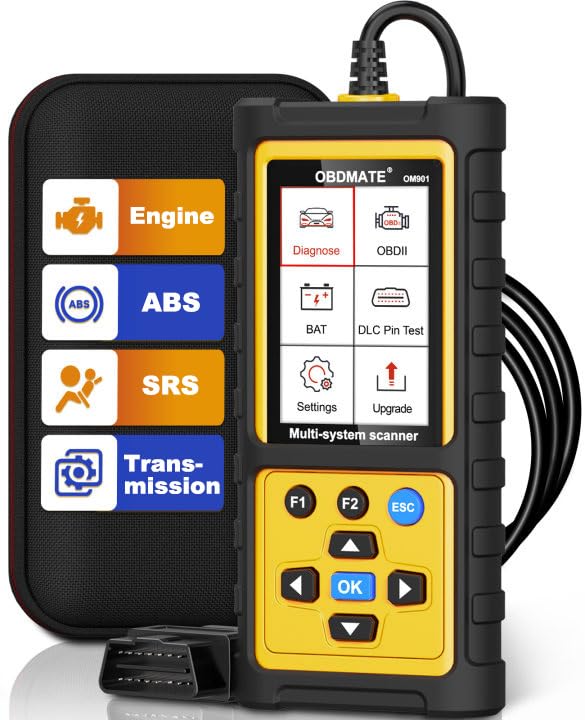
An ABS light that stays on indicates a fault in the anti-lock braking system. While your normal brakes will still work, the anti-lock feature is disabled. Common causes include a faulty wheel speed sensor, a problem with the ABS module, or low brake fluid. You should have a professional mechanic diagnose the issue with an OBD2 scanner.
What does the pulsing brake pedal mean when I brake hard?
A pulsing or vibrating brake pedal during a hard stop is the normal operation of the ABS system. This feeling is the hydraulic actuator rapidly applying and releasing brake pressure to prevent the wheels from locking. Do not lift your foot off the brake; maintain firm pressure and allow the system to work.
What’s the difference between 4-wheel ABS and rear-wheel ABS?
4-wheel ABS monitors and controls all four wheels, which is the standard on modern passenger cars. Rear-wheel anti-lock (RWAL) systems, found on some older trucks and vans, only prevent the rear wheels from locking up. A 4-wheel system provides superior steering control during emergency braking.
Can I add an ABS system to a car that doesn’t have it?
Technically it’s possible, but it is not practical or cost-effective. Retrofitting an ABS system involves installing a complex network of sensors, a hydraulic control unit, and a new ECU. The cost and labor involved would far exceed the value of the vehicle, making it more sensible to purchase a car already equipped with ABS.
How do I know if my ABS is working correctly?
The easiest way to know it’s working is the absence of the ABS warning light on your dashboard. The light should come on for a few seconds when you start the car and then go out. If it remains off while driving, the system’s self-diagnostics have not detected a fault. You can also test it in a safe, empty, wet, or gravel-covered area by braking hard to feel the pedal pulse.
Is it safe to drive a car if the ABS light is on?
Your regular brakes will function, but it is not recommended to ignore the light for long. Without ABS, your wheels can lock up during a panic stop, causing you to lose steering control. This is especially dangerous in wet or icy conditions. You should get the system inspected by a mechanic as soon as possible for safety.
What is the difference between ABS and traction control?
ABS prevents wheels from locking during braking, while Traction Control (TCS) prevents wheels from spinning during acceleration. Both systems often use the same wheel speed sensors to monitor wheel rotation, but they serve opposite functions. ABS helps you stop, and TCS helps you go.
Where are the ABS wheel speed sensors located?
An ABS wheel speed sensor is located at each wheel hub, behind the brake rotor or drum. You can sometimes see the sensor and its electrical wire by turning the front wheels to one side and looking into the wheel well. They are small, magnetic sensors that read a toothed “reluctor ring” or “toner ring” on the axle or hub.
What should I do if I don’t have an owner’s manual?
You can almost always find a digital PDF version of your car’s owner’s manual online for free. Simply search Google for “[Your Car’s Year Make Model] owner’s manual PDF.” Many car manufacturers also host digital copies on their official websites in the “Owners” or “Support” section.
Key Takeaways: How to Know If Your Car Has ABS
- The Ignition Test is Fastest: The simplest way to check is to turn your ignition to ‘ON’ and look for the amber ABS light on the dashboard to appear for a few seconds during the system self-test.
- Documents Provide Proof: Your owner’s manual (in the “Brakes” or “Safety” section) or a free VIN decoder from an official source like the NHTSA can provide definitive proof of the factory-installed equipment.
- Physical Inspection is Definitive: For a guaranteed check, look under the hood near the master cylinder for the ABS hydraulic unit—a metal block with 4-6 brake lines and an electrical connector.
- ABS is a Safety Standard on Modern Cars: Due to federal mandates, virtually all passenger vehicles sold in the U.S. from the 2012 model year and newer are equipped with ABS as a standard feature.
- Pulsing is Normal: A pulsating brake pedal during a hard or emergency stop is a sign the ABS is working correctly to prevent wheel lockup; maintain firm pressure on the pedal and continue to steer.
- A Warning Light Means a Problem: If the ABS warning light stays on, your normal brakes will work, but the anti-lock feature is disabled. It is a safety issue that should be diagnosed by a professional.
- ABS Equals Control: The main benefit of an anti-lock braking system is not necessarily shorter stopping distances, but the ability to maintain steering control during a panic brake, which helps avoid accidents.
Final Thoughts on Your Car’s ABS
Verifying if your car has an anti-lock braking system is more than a simple check; it’s a crucial step in understanding your vehicle’s safety capabilities. Whether you use the quick dashboard light test, consult your owner’s manual, or perform a hands-on inspection under the hood, confirming the presence of ABS empowers you as a driver.
You now know how the system works to prevent wheel lockup and, most importantly, how it helps you maintain steering control in a critical moment. This knowledge allows you to react correctly in an emergency—by applying firm, steady pressure to the brake pedal—and drive with greater confidence. Knowing your car’s features is the first step toward using them effectively for a safer journey.
Last update on 2026-03-03 / Affiliate links / Images from Amazon Product Advertising API


![White BMW 330i: Dream First Car Aesthetic for Girls [year]](https://i0.wp.com/carxplorer.com/wp-content/uploads/2026/03/White-BMW-330i-Dream-First-Car-Aesthetic-for-Girls-year-1.png?resize=60%2C60&ssl=1 "White BMW 330i: Dream First Car Aesthetic for Girls [year] 6")


![Volkswagen Golf GTI Photography Ideas: 9 Tips for [year]](https://i0.wp.com/carxplorer.com/wp-content/uploads/2026/03/Volkswagen-Golf-GTI-Photography-Ideas-9-Tips-for-year-1.jpg?resize=60%2C60&ssl=1 "Volkswagen Golf GTI Photography Ideas: 9 Tips for [year] 12")