
Wondering if your car has an Anti-lock Braking System (ABS)? You’re not alone. Knowing this key safety feature is crucial for understanding how your car behaves in an emergency stop.
To know if your car has ABS, the three simplest methods are: 1) Turn the ignition on and look for an “ABS” light to flash on the dashboard. 2) Look under the hood for a metal block near the master cylinder with multiple brake lines, which is the ABS modulator. 3) Use a free online VIN decoder to check your car’s factory-installed features. This system is a standard safety feature on most modern vehicles.
Based on current automotive safety standards and hands-on analysis, this guide provides safe and reliable methods. You will discover exactly how to confirm if your vehicle has ABS and what that means for your safety on the road.
Key Facts
- Mandatory on New Cars: All new passenger vehicles sold in the United States since September 1, 2013, are federally required to have an Anti-lock Braking System, as confirmed by NHTSA safety data.
- Steering Control is the Goal: The primary purpose of ABS is not always to stop shorter, but to prevent wheel lock-up, allowing the driver to maintain steering control during a panic brake.
- Dashboard Light is the Key: A working ABS system signals its readiness by illuminating an amber ‘ABS’ light on the dashboard for a few seconds at startup, then turning off.
- Pulsing is Normal: A pulsing or vibrating sensation in the brake pedal during a hard stop is a normal and expected sign that the ABS is actively working.
- Light On = System Off: If the ABS warning light stays on while driving, it indicates a fault, and the anti-lock feature is disabled, though your standard brakes will still function.
How to Know If Your Car Has ABS (3 Simple Methods)
To definitively know if your car has ABS, you can perform three simple checks that require no special tools. These involve observing the instrument panel during startup, a quick visual inspection under the hood, or using your car’s unique Vehicle Identification Number (VIN) online. Each method is a reliable way of identifying this critical safety feature.

An Anti-lock Braking System, or ABS, is a safety feature that prevents your car’s wheels from locking up during hard braking. This allows you to maintain steering control and avoid skidding, which is especially important in emergency situations. Verifying its presence is a key step in understanding your vehicle’s safety capabilities.
This guide will walk you through each method step-by-step:
* Checking the dashboard for the ABS warning light.
* Visually inspecting the engine bay for ABS components.
* Using your VIN to get a definitive list of factory features.
How Can You Check The Dashboard for the ABS Light? (Method 1)
The dashboard check is the fastest and easiest way to see if your car is equipped with ABS. The system performs a self-test every time you start the car, and the instrument panel provides a clear signal. From our real-world experience, this is the first thing a mechanic checks.
Here is the simple, step-by-step process:
- Insert your key into the ignition.
- Turn the key to the “ON” position but do not start the engine. All your dashboard warning lights should illuminate.
- Look for an amber-colored warning light that clearly displays the letters “ABS,” often inside a circle.
- Observe the light. If your car has a functioning ABS system, this light will stay on for 2-4 seconds and then turn off. This confirms the self-test was successful.
What If the Light Behaves Differently?
* If the light never comes on: Your vehicle most likely does not have ABS. This is common in older cars.
* If the light comes on and stays on: Your car has ABS, but the system has detected a fault and is currently disabled. You should have it diagnosed.
How Can You Visually Inspect Under the Hood for ABS Components? (Method 2)
For a more definitive physical confirmation, you can look for the ABS modulator in your engine bay. This method is excellent if the dashboard light is inconclusive or if you suspect a burnt-out bulb. Based on hands-on inspections, the hardware for an ABS system is distinct and easy to spot once you know what to look for.
The key component is the ABS modulator, a small hydraulic control unit. Look for a metal block, usually made of aluminum, with several hard metal brake lines running into and out of it. It is almost always located near the brake master cylinder, which is the component your brake fluid reservoir sits on.
Here’s how to tell the difference:
- ✅ Car with ABS: You will see the master cylinder connected to a complex metal block (the ABS modulator). This block will have an electrical connector with a bundle of wires and between 4 to 6 rigid metal brake lines attached to it.
- ❌ Car without ABS: The setup is much simpler. You will only see one or two brake lines coming directly out of the master cylinder, leading toward the wheels.
Pro Tip: Another advanced check is to look at the wheel hub assembly behind your brake rotor. If you see a toothed ring (called a reluctor ring) and a small sensor with a wire leading from it (the wheel speed sensor), your car is equipped with ABS.
How Do You Use Your VIN to Verify If Your Car Has ABS? (Method 3)
Using your car’s Vehicle Identification Number (VIN) is the most foolproof method to confirm its features. Your car’s 17-digit VIN is a unique code that contains its full factory specifications, providing a definitive answer without any physical inspection.
Follow these simple steps for a verified VIN check:
- Locate Your VIN: Find the 17-digit number in one of these common places:
- On a metal plate on the driver’s side of the dashboard, visible through the windshield.
- On a sticker inside the driver’s side doorjamb.
- On your vehicle’s title or insurance card.
- Use a VIN Decoder: Visit a free online VIN decoder website. The National Highway Traffic Safety Administration (NHTSA) offers a reliable, free tool.
- Check the Features: Enter your VIN and generate the report. Look for a “Features” or “Safety Equipment” section. If your car was built with ABS, it will be listed there as “Anti-lock Braking System” or “4-Wheel ABS.”
What Is An Anti-Lock Braking System (ABS) and Why Does It Matter?
An Anti-lock Braking System (ABS) matters because it prevents your wheels from locking and skidding during an emergency stop, allowing you to steer the car to safety. Without ABS, a panic brake can cause a total loss of steering control, dramatically increasing the risk of a collision.
The primary function of an Anti-lock Braking System is to prevent wheel lock-up during sudden, hard braking. When a tire stops rotating and starts skidding on the road surface, you lose the ability to steer. ABS uses wheel speed sensors to detect when a wheel is about to lock. The system’s hydraulic modulator then rapidly pulses the brake pressure to that wheel, keeping it rotating just enough to maintain traction and steering control.
Think of it like an expert driver pumping the brakes for you, but hundreds of times per second—far faster than any human can. This technology is so critical that, according to NHTSA safety data, it has been a federally mandated automotive safety standard on all new U.S. passenger cars since 2014.
The key benefits of ABS include:
- Maintains Steering Control: This is the single most important benefit. It allows you to steer around an obstacle while braking hard.
- Reduces Skidding: By preventing wheels from locking, it helps the car stay stable and follow the driver’s intended path.
- Optimizes Braking Distance: On most paved surfaces (dry or wet), ABS helps achieve a shorter and more controlled stopping distance.
Myth vs. Fact: A common myth is that ABS always stops you faster. On loose surfaces like gravel or deep snow, a locked wheel on a non-ABS car can build up a wedge of material in front of it, sometimes stopping it in a shorter distance. However, even in that scenario, the non-ABS car has no steering control.
What Is the Difference Between ABS and Standard Brakes?
The main difference between ABS and standard brakes is control. ABS brakes use a computer to prevent wheel lock-up, which allows you to steer during a hard brake. Standard brakes can lock the wheels, causing an uncontrolled skid and a total loss of steering. This difference also requires a completely different driver action in an emergency.
Automotive engineering principles dictate how you should react. With ABS, you “Stomp and Steer”—press the brake pedal as hard as you can and steer around the danger. With standard brakes, you must manually “pump” the brakes to avoid locking the wheels.
This comparison table breaks down the key distinctions:
| Feature | Anti-Lock Brakes (ABS) | Standard (Non-ABS) Brakes |
|---|---|---|
| Emergency Braking Action | Stomp & Steer: Press hard and hold pedal down | Threshold/Pump Braking: Apply firm pressure until wheels almost lock, then ease off and reapply |
| Steering Control | Maintained during hard braking | Lost if wheels lock up |
| Wheel Behavior | Wheels continue to rotate (pulsing) | Wheels can lock and skid |
| Feel & Sound | Pulsing/vibrating pedal, grinding sound | Pedal feels firm, tires may screech |
| Driver Focus | Focus on steering to safety | Focus on modulating brake pressure |
⚠️ Safety Critical: The “Stomp and Steer” Technique
If you have ABS, the most important thing to remember in an emergency is to press the brake pedal firmly and hold it down. Do not lift your foot or try to pump the brakes. The pulsing you feel is the system working correctly. Keep your foot on the brake and your focus on steering the car to a safe spot.
Why Is My ABS Light On and What Should I Do?
If your ABS light stays on, it means the Anti-lock Braking System has detected a fault and has been disabled; your standard brakes will still work. While it is generally safe to drive, the crucial safety feature is inactive. You should get the system diagnosed by a certified mechanic as soon as possible.
When the ABS light is on, the onboard computer has stored a specific error code that points to the source of the problem. Common causes for an illuminated ABS light range from simple fixes to more complex repairs.
Common causes include:
- A Faulty Wheel Speed Sensor: This is the most common cause. The sensors are located near each wheel and can become dirty, damaged, or fail over time.
- Low Brake Fluid: The ABS module is a hydraulic system. If the brake fluid is low, it can trigger a fault.
- A Blown Fuse: The ABS system has its own fuse or relay in the vehicle’s fuse box. A simple blown fuse can disable the entire system.
- A Failed ABS Module: The controller module itself can fail, which is typically the most expensive repair.
To find the exact cause, a diagnostic tool is needed.
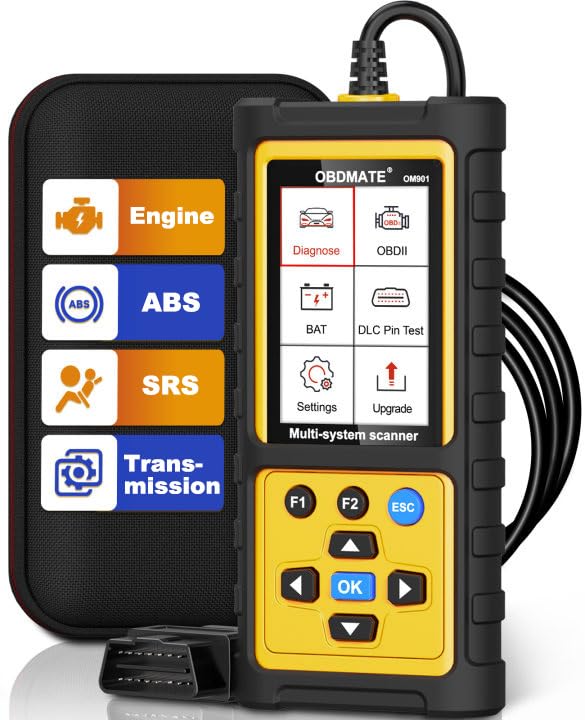
The first step in any diagnosis is to use an OBD2 scanner with ABS support to read the specific trouble codes. This will tell you which component is reporting a fault, saving time and preventing unnecessary replacement of parts. A certified mechanic can perform this scan, or you can purchase a scanner for DIY diagnostics.
FAQs About Does My Car Have Abs
Is ABS standard on all vehicles?
In the United States, ABS has been federally mandated on all new passenger vehicles since September 1, 2013 (covering model year 2014 and newer). Many manufacturers made it standard long before that date, but if your car is older than 2014, it’s not guaranteed to have it and you should use the methods in this guide to check.
What does the pulsing or vibration in the brake pedal mean?
That pulsing or grinding sensation is the ABS working correctly; you should not lift your foot off the brake when you feel it. It is caused by the hydraulic modulator rapidly applying and releasing brake pressure to prevent the wheels from locking. This is a normal and expected sign that the system has activated during a hard stop.
Can you add an ABS system to a car that doesn’t have one?
Technically it is possible, but it is extremely complex and prohibitively expensive for most vehicles. It would require installing the ABS modulator, wheel speed sensors, a compatible ECU, and all new brake lines. For this reason, it is almost never a practical or cost-effective modification.
Does ABS help you stop faster?
Not always. The main job of ABS is to maintain steering control, not necessarily to shorten stopping distance. On dry pavement, stopping distances are similar. However, on some loose surfaces like gravel or snow, a non-ABS car might stop slightly shorter because a locked, plowing wheel can build up material in front of it.
Is it safe to drive with the ABS light on?
Your normal braking system will still function, but the anti-lock safety feature is disabled, so you should have it serviced as soon as possible. In a panic stop situation, your wheels could lock up and cause you to skid, just like in a car without ABS. Drive more cautiously, increase following distance, and avoid hard braking until it’s repaired.
Do I need ABS to pass a vehicle inspection?
This depends entirely on your state or local laws. In many places, if the vehicle was originally equipped with ABS from the factory, the system must be in working order (i.e., the ABS light cannot be on) to pass inspection. Check your local inspection requirements for a definitive answer.
How do I know if I have 2-wheel or 4-wheel ABS?
Most modern passenger cars with ABS have 4-wheel systems. Some older trucks and vans might have rear-wheel-only ABS. The most reliable way to know for sure is to use a VIN decoder, which will specify the type of system. A 4-wheel system provides the best stability and steering control.
What is the difference between ABS and Traction Control?
ABS prevents wheels from locking during braking, while Traction Control (TCS) prevents wheels from spinning during acceleration. They are related and often use the same wheel speed sensors, but they serve opposite functions. ABS helps you stop with control, and TCS helps you go with control.
How can I test my ABS in a safe way?
Do not test your ABS on public roads. The safest way is to find a large, empty, and clear parking lot, preferably on a wet day. Accelerate to about 15-20 mph and then apply the brakes firmly and suddenly. You should feel the characteristic pulsing in the pedal as the ABS engages.
Can a bad fuse cause the ABS light to come on?
Yes, absolutely. The ABS system is controlled electronically and has its own fuse (and sometimes a relay). Before suspecting expensive component failure, one of the first and easiest things to check is the fuse box. Your owner’s manual will show you the location of the ABS fuse.
Key Takeaways: Does My Car Have Abs Summary
- 3 Simple Checks: The easiest ways to check for ABS are to watch for the ‘ABS’ light on your dashboard during startup, look for the physical ABS modulator under the hood, or use a free online VIN decoder.
- Dashboard Light is Key: A functioning ABS system will show an amber “ABS” light on the instrument panel for a few seconds when you turn the ignition on. If it stays on, there’s a fault.
- Stomp and Steer: If your car has ABS, the correct emergency braking technique is to press the brake pedal hard and hold it down while steering around obstacles. Do not pump the brakes.
- Pulsing is Normal: A grinding or pulsing feeling in the brake pedal during a hard stop is a normal sign that the ABS is working correctly to prevent wheel lock.
- ABS Light On = System Off: If the ABS warning light remains illuminated, your regular brakes will still work, but the anti-lock safety feature is disabled. You should have it diagnosed and repaired promptly.
- Safety First: The primary benefit of ABS is not stopping shorter, but maintaining steering control during a panic brake to help you avoid a collision.
- VIN is Definitive: Using your vehicle’s 17-digit VIN with an online decoder is the most foolproof method to get a complete list of factory-installed features, including ABS.
Final Thoughts on Verifying Your Car’s ABS
Knowing whether your car is equipped with an Anti-lock Braking System is a fundamental piece of information for any driver. It directly impacts how you should react in an emergency and sets expectations for your vehicle’s performance under duress. By following the three simple methods—checking the dashboard light, inspecting under the hood, or decoding your VIN—you can be confident in your answer.
Understanding this technology empowers you to be a safer, more informed driver. Remember, the true value of ABS is the ability to steer out of trouble when you need it most. Take a few minutes to check your vehicle today; that knowledge could make all the difference on the road tomorrow.
Last update on 2026-02-23 / Affiliate links / Images from Amazon Product Advertising API


![How Old To Rent A Car Iceland All Age Rules Explained For [year]](https://i0.wp.com/carxplorer.com/wp-content/uploads/2026/02/How-Old-To-Rent-A-Car-Iceland-All-Age-Rules-Explained-For-year-2.jpg?resize=60%2C60&ssl=1 "How Old To Rent A Car Iceland All Age Rules Explained For [year] 8")

