
Wondering if your car must be in neutral to turn the crankshaft by hand? You’re right to be cautious, as doing it wrong can cause the vehicle to roll or create binding that prevents engine rotation. This is a critical step for safety and mechanical ease.
Yes, for both manual and automatic transmissions, the car must be in neutral to safely turn the crankshaft by hand. This is a non-negotiable step because putting the transmission in neutral disconnects the engine from the driveshaft and wheels. This prevents unexpected vehicle movement and removes the immense resistance from the drivetrain.
Based on professional mechanic tips and standard service manual procedures, this guide explains exactly why neutral is mandatory. You will discover the correct, safe method for both automatic and manual cars, what happens if you don’t, and how to troubleshoot if the engine is hard to turn.
Key Facts
- Neutral is a Safety Mandate: For both automatic and manual transmissions, neutral disconnects the engine from the wheels, preventing the car from rolling during manual rotation.
- Park is Not Neutral: In an automatic transmission, ‘Park’ engages a physical lock on the output shaft, which will stop the crankshaft from making a full rotation and can lead to damage.
- Compression is the Main Resistance: Removing all spark plugs before turning the engine is a professional best practice, as it releases cylinder compression, making the engine significantly easier to rotate.
- Clockwise Rotation is Standard: Engines should always be turned clockwise (as viewed from the front) to follow their natural operational direction and prevent loosening the main crank bolt or jumping timing.
- Seizure vs. Compression: A crankshaft that’s hard to turn but “springy” is fighting compression. A crankshaft that hits a solid, immovable stop may indicate a serious mechanical failure like a seized engine.
Does a Car Have to Be in Neutral to Turn the Crankshaft?
Yes, a car’s transmission must be in neutral to turn the crankshaft by hand safely and effectively. This rule applies to both automatic and manual vehicles. The core reason is simple: the neutral gear disengages the engine from the drivetrain. This mechanical separation is crucial because it prevents the rotational force you apply to the engine’s crankshaft from transferring to the wheels, which could cause the car to move.

Furthermore, attempting to rotate the engine while it’s in gear forces you to work against the entire resistance of the transmission, differential, and the vehicle’s weight. Following the correct service manual procedure by selecting neutral allows the crankshaft to spin freely, opposed only by the internal friction of the engine itself. This makes the job easier and safer.
⚠️ Safety Warning: Failing to put the car in neutral before manually turning the engine is a major safety hazard. The vehicle could lurch forward or backward unexpectedly, potentially causing serious injury or property damage.
Why Is Neutral Critical for Manual vs. Automatic Transmissions?
Understanding the mechanical difference between transmission states is key to realizing why neutral is the only correct choice. While both automatic and manual transmissions have a neutral setting, what happens in “Park” on an automatic or when “in gear” on a manual creates dangerous or impossible situations for engine rotation. In our experience, confusion between Park and Neutral is a common source of problems for DIY mechanics.
The table below breaks down exactly what is happening inside your transmission in each state and the result when you try to turn the crankshaft.
| Transmission State | Mechanical Action | Result When Turning Crankshaft |
|---|---|---|
| Neutral (Auto/Manual) | Engine is disconnected from the drivetrain. | ✅ Correct. Crankshaft spins freely against only engine internals. |
| Park (Automatic) | A mechanical pawl locks the transmission output shaft. | ❌ Incorrect. Crankshaft will stop turning as soon as drivetrain slack is removed. Potential for damage. |
| In Gear (Manual) | Engine is directly connected to the wheels. | ❌ Incorrect. The entire car will try to move, creating immense resistance and a major safety hazard. |
| In Gear (Automatic) | Torque converter allows some slip, but fluid pressure and gearsets create major resistance. | ❌ Incorrect. Extremely difficult to turn and puts stress on internal transmission components. |
As engine builder advice confirms, you must avoid drivetrain binding at all costs. The only state that truly isolates the engine for free rotation is Neutral.
How Do You Manually Rotate a Crankshaft? (Step-by-Step Guide)
To rotate a crankshaft manually, you will apply torque to the main crankshaft bolt using a long breaker bar. This process, often called “barring over the engine,” is straightforward if you follow a precise safety protocol. This guide provides a complete workflow, from preparing the vehicle to the final action of turning the engine over, ensuring you do it safely and effectively.
What Tools and Safety Gear Do You Need?
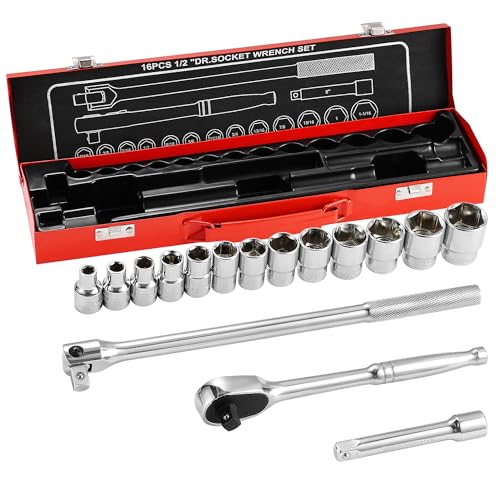
Having the right equipment is essential for both success and safety. A standard ratchet is often not strong enough for this job. Using a 12-point socket instead of a more secure 6-point socket is a frequent beginner mistake that can round off the bolt head. Here is the definitive checklist of what you’ll need.
- Breaker Bar: A long (18-24 inch) 1/2-inch drive breaker bar is essential for leverage.
- 6-Point Socket Set: A quality set of 6-point sockets. You must find the one that fits your crankshaft pulley bolt perfectly to avoid stripping it.
- Socket Extension: A 3-to-6-inch extension may be needed to clear pulleys or other accessories.
- Spark Plug Socket: To fit your vehicle’s specific spark plugs.
- Wheel Chocks: Heavy-duty chocks are non-negotiable for safety.
- Safety Glasses: To protect from debris or fluid.
- Mechanic’s Gloves (Recommended): For grip and hand protection.
How Do You Prepare the Vehicle for Safety?
Following a strict safety-first protocol is the most important part of this job. Before any tools touch the engine, you must secure the vehicle to prevent any possibility of it moving. This is a non-negotiable procedure followed by all professional mechanics.
- Park on Level Ground: Never perform this work on an incline.
- Engage Parking Brake: Set the parking brake as firmly as possible.
- Chock the Wheels: Place wheel chocks securely on both the front and back of a drive wheel (or any wheel remaining on the ground). This is your primary defense against rolling.
- Disconnect the Battery: Disconnect the negative terminal from your car’s battery. This prevents the engine from accidentally starting if a wire is shorted, which could cause serious injury.
Why Should You Always Remove the Spark Plugs First?
You should always remove all spark plugs before turning a crankshaft by hand to release engine compression. Fighting against compression makes the job incredibly difficult. With the plugs in, each piston has to compress the air trapped in its cylinder, creating a “springy” resistance that can be mistaken for a mechanical problem.
Removing the spark plugs provides an escape path for this air, leading to two major benefits:
* 💪 Effortless Rotation: The engine will become significantly easier to turn.
* 🔍 Better Diagnosis: Without the masking effect of compression, you can feel for abnormal resistance from issues like bad bearings or piston ring problems.
Trying to turn the engine with plugs in is like pushing down on a sealed bicycle pump—the trapped air pushes back. Removing the plugs is like opening the valve.
How Do You Turn the Crankshaft? (The Core Action)
With the vehicle secured and spark plugs removed, the core action is to apply firm, steady, and controlled force in the correct direction. This is the final step of the process. Follow these instructions precisely for a safe and successful outcome.
- Locate the Crankshaft Bolt: This is the large, central bolt on the main pulley at the front of your engine, known as the harmonic balancer.
- Fit the Socket and Breaker Bar: Select the 6-point socket that fits the bolt snugly. Attach it to your breaker bar, using an extension if needed to clear obstacles.
- Turn CLOCKWISE Only: Apply firm, steady pressure to the breaker bar, turning the engine in a clockwise direction (as you face the front of the engine). This is the engine’s natural direction of rotation.
> ⚠️ Critical Warning: Never turn an engine counter-clockwise unless explicitly instructed by a service manual. Doing so can loosen the crank bolt, or worse, cause the timing belt or chain to jump a tooth. On many engines, this can lead to catastrophic damage if a valve hits a piston. - Feel the Rotation: With the spark plugs out, the rotation should be smooth and require relatively low effort. You are feeling the friction of the pistons, bearings, and valvetrain components.
Why Is My Crankshaft Hard to Turn by Hand? (Troubleshooting)
If the crankshaft is hard to turn, first ensure all spark plugs are removed. This is the most common cause of resistance. If the plugs are out and it’s still difficult, you need to diagnose the type of resistance you’re feeling. From our experience in expert diagnosis, a “spongy” feel is very different from a “solid wall” feel.
- Spongy, Springy Resistance: You likely missed a spark plug. The air trapped in that cylinder is creating compression. Double-check that all plugs are out.
- Consistent, High Friction: If the engine turns but feels gritty or requires a lot of force throughout the rotation, it could indicate worn or damaged bearings, or piston rings that are scraping the cylinder walls.
- A Solid, Immovable Stop: This is a sign of a serious problem. The engine is likely seized or has a major mechanical obstruction. Common causes include:
- Valve-to-Piston Contact: A broken or jumped timing belt/chain has caused a valve to be open when the piston is rising. Do not apply more force.
- Seized Component: A bearing may have failed and welded itself in place, or a piston may be seized in its cylinder.
- Hydro-locked Engine: A cylinder is filled with liquid (coolant or fuel) that cannot be compressed.
- Parking Pawl Engaged: You have an automatic transmission and left it in Park instead of Neutral.
FAQs About does car have to be in neutral to turn crankshaft
Can you turn the crankshaft in park?
No, you cannot and should not try to turn the crankshaft with an automatic transmission in Park. Park engages a physical lock called a parking pawl inside the transmission that stops the output shaft from spinning. You will only be able to turn the engine a very small amount before it hits this hard stop, and applying force against it can damage the pawl.
How much force does it take to turn a crankshaft?
With the spark plugs removed, it should take surprisingly little force, typically 30-50 ft-lbs of torque. You should be able to turn it with one hand on a long breaker bar. If it requires significantly more force, you may have forgotten a spark plug or there could be an internal mechanical issue causing excessive friction.
Is it okay to turn the engine counter-clockwise?
No, you should almost never turn an engine counter-clockwise. Doing so can cause the crankshaft bolt to loosen. On many engines, it can also create slack in the timing chain or belt, potentially allowing it to jump a tooth. On an interference engine, this can cause the pistons to hit the valves, leading to catastrophic damage.
Can I use the fan belt to turn the engine?
While technically possible on some older vehicles, it is not the recommended method. The belt can slip, it’s difficult to apply steady force, and you risk damaging the belt or a pulley. The proper and safest method is to use a socket and breaker bar directly on the crankshaft bolt, which gives you precise control.
How do I find Top Dead Center (TDC) manually?
To find TDC for cylinder 1, remove the spark plug and feel for compression with your finger over the hole as you slowly turn the engine clockwise. As the piston rises on its compression stroke, you will feel air being pushed out. Once the pressure stops, look at the timing marks on the harmonic balancer and align the ‘0’ mark with the pointer on the engine block.
What does it mean if the crankshaft won’t turn at all?
If the crankshaft is completely immovable, the engine is likely seized. This can be caused by serious issues like a seized bearing, a piston welded to the cylinder wall, a broken timing component causing a valve to hit a piston, or a hydro-locked cylinder full of liquid. Stop immediately and seek professional diagnosis.
Do the wheels need to be off the ground to turn the crank?
No, if the car is correctly in neutral, the wheels do not need to be off the ground. Neutral disconnects the engine from the wheels. However, for any work that requires you to be under the car, you should always use jack stands for safety, which would lift the drive wheels anyway.
Why does the car move when I turn the crankshaft?
If the car moves, you have made a critical error and the transmission is still in gear. Stop immediately, as this is a major safety hazard. You must ensure a manual transmission is fully in neutral or an automatic transmission is in neutral (not Park). The vehicle could roll and cause serious injury.
Key Takeaways: Rotating Your Engine Crankshaft
Turning an engine by hand is a fundamental skill for many diagnostic and maintenance tasks. Doing it correctly ensures your safety and protects the engine from damage. Here are the most critical points to remember from this guide.
- Neutral is Mandatory: Always place the transmission in Neutral (for both automatic and manual) to disconnect the engine from the wheels, ensuring safety and preventing drivetrain resistance. Never use Park.
- Safety Protocol is First: Before touching the engine, ensure the car is on level ground, the parking brake is set, wheels are chocked, and the negative battery terminal is disconnected to prevent accidental starting.
- Remove Spark Plugs: This is a non-negotiable step for ease and diagnosis. It releases all engine compression, making the crankshaft easy to turn and allowing you to feel for abnormal mechanical resistance.
- Clockwise Rotation ONLY: Always turn the crankshaft bolt clockwise (the engine’s normal running direction) with a breaker bar. Turning it counter-clockwise risks loosening the bolt or jumping engine timing.
- Differentiate Resistance: A smooth, low-effort rotation (with plugs out) is normal. Spongy resistance means you forgot a spark plug. A hard, solid stop means the engine is likely seized or has a serious mechanical issue.
Final Thoughts on Manually Turning Your Engine
Mastering the procedure to manually turn a crankshaft is about more than just moving parts; it is about understanding the mechanical state of your vehicle. By following the correct safety protocol—starting with placing the car in neutral and securing it properly—you transform a potentially hazardous task into a controlled diagnostic step. This allows you to perform essential maintenance like setting timing, checking clearances, or diagnosing a seized engine with confidence. Remember that the feel of the rotation itself tells a story, and by removing the spark plugs, you can listen to it clearly.
Last update on 2026-04-10 / Affiliate links / Images from Amazon Product Advertising API


