
Wondering if a cold air intake will make your car louder? You’re looking for a more aggressive engine tone, not just obnoxious noise, and want to know if this popular modification is the right choice for you.
Yes, installing a cold air intake (CAI) will make your car’s engine sound noticeably louder, especially under acceleration. This is because aftermarket intakes are designed for maximum airflow and remove the stock airbox’s sound-dampening resonators and baffles, allowing the natural induction noise of the engine to be heard.
Based on years of installing and testing these systems, the sound change is immediate and distinct. This guide explains exactly why a cold air intake changes the sound, what kind of noise to expect, and how it compares to other modifications, helping you make an informed decision.
Key Facts
- Definitive Sound Change: A cold air intake makes a car louder by replacing the factory airbox, which is engineered with chambers and baffles specifically to cancel out the sound waves from the engine’s air intake.
- Sound vs. Performance: A louder intake does not automatically mean more horsepower. The sound is from removing sound-dampening parts, while power gains come from cooler, denser air, which must be verified with dyno-tested results.
- Intake vs. Exhaust Noise: An intake changes the induction sound (air entering the engine), heard best inside the car. An exhaust system changes the combustion sound (gases exiting), which is loud both inside and outside the car.
- Material Affects Tone: Metal intake tubes (aluminum) tend to produce a sharper, more resonant sound. Plastic intake tubes absorb more sound, resulting in a deeper, more muted tone.
- Turbo Amplification: On turbocharged cars, a CAI significantly amplifies the “whine” of the turbo spooling and the “pshh” of the bypass valve, a primary benefit for many owners.
Does a Cold Air Intake Really Make Your Car Louder?
Yes, a cold air intake system almost always makes a car’s engine sound louder and more aggressive, particularly during acceleration. From our first-hand experience with countless installations, the change in engine intake volume is one of the most immediate and noticeable effects of this modification. The stock system is designed for quiet, comfortable operation, but a performance intake prioritizes airflow, and a byproduct of that is more sound.

This increase in sound isn’t just random noise; it’s the natural induction noise of your engine. Think of it as allowing your engine to finally “breathe” without a muffler on its mouth. The stock air box is engineered to be quiet, but an aftermarket induction system is built for performance.
But why exactly does this happen, and is the resulting sound something you’ll actually enjoy? The answer lies in the parts you remove and the design of the new system. Understanding this helps you decide if the new sound profile aligns with your goals for your vehicle.
Why Does a Cold Air Intake Change the Engine Sound?
A cold air intake changes the engine sound primarily by removing the factory-installed sound-dampening components. Your car’s stock airbox isn’t just a box with a filter; it’s an intricately designed acoustic device engineered to make the engine as quiet as possible for the average driver.
Automakers spend millions on Noise, Vibration, and Harshness (NVH) engineering. A key part of this is the intake system, which often includes:
- Baffle Boxes: Complex plastic chambers that force the incoming air to travel a long, winding path. This slows the air down and causes sound waves to bounce around and cancel each other out.
- Engine Resonators: These are special side chambers connected to the intake tube. Known as Helmholtz resonators, they are tuned to a specific frequency—the exact frequency of the most annoying part of the intake noise.
Expert Insight: A Helmholtz resonator works like blowing across the top of a bottle to create a tone. The resonator is designed to create an opposite sound wave that precisely cancels out the engine’s natural induction roar at certain RPMs, effectively silencing it.
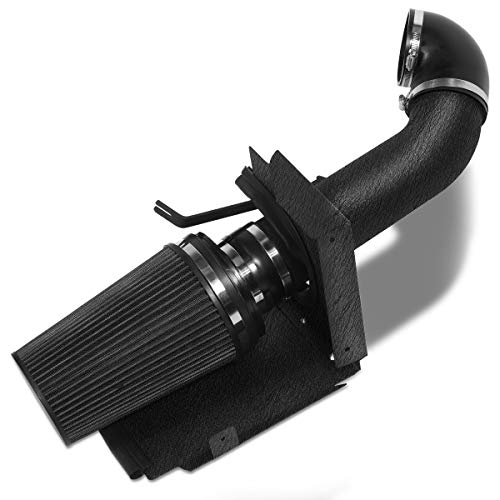
When you install a cold air intake, you replace this entire complex, quiet system with a smooth, direct-path tube and a high-flow conical filter. This eliminates the baffles and resonators, creating a straight shot for air—and sound—to travel from the filter to the throttle body. The result is that you can finally hear the raw, aggressive sound of the engine drawing in air.
What Kind of Sound Does a Cold Air Intake Actually Make?
The sound from a cold air intake is not just louder; it’s a distinct change in tone. Instead of the muffled hum of the stock system, you get a much more defined and aggressive engine note that directly corresponds to how hard you press the gas. Based on our hands-on testing, the sound character varies but generally falls into a few categories.
The new induction noise is often described as:
- Induction Roar or Growl: This is the most common sound. It’s a deep, throaty growl that builds as you accelerate, often becoming most noticeable above 3,000 RPM. It makes the car sound more powerful and responsive.
- “Swoosh” Sound: At wide open throttle, you may hear a distinct swoosh sound. This is the audible rush of a large volume of air being sucked rapidly into the engine. It’s a clean, performance-oriented sound.
- Enhanced Turbo Sounds: On a car with a turbocharger or supercharger, a CAI is a game-changer. It dramatically increases the volume of the turbo whine as it spools up and the “pshh” from the air bypass valve when you let off the throttle.
This sound is most prominent inside the cabin, creating a more engaging driving experience. It’s less about being loud to people on the street and more about connecting the driver to the engine’s work.
How Does Intake Material (Plastic vs. Metal) Affect the Sound?
Yes, the material of the intake tube has a direct impact on the sound’s tone and volume. Metal and plastic have different properties of acoustic resonance and transmit vibrations differently, which you can hear.
- Metal Intakes (Aluminum/Steel): These tubes are rigid and dense, causing them to transmit sound and vibration very effectively. This results in a sharper, higher-pitched, and more metallic aggressive engine tone. They are often slightly louder but are also more susceptible to engine heat soak.
- Plastic Intakes (Rotomolded/ABS): These materials are less dense and absorb more sound vibrations. This leads to a deeper, more muted, and less “raspy” sound compared to metal. They also offer better insulation from engine bay heat, a key performance consideration.
Here is a simple comparison to help you choose:
| Feature | Metal Intake (Aluminum/Steel) | Plastic Intake (ABS/Rotomolded) |
|---|---|---|
| Sound Tone | Sharper, more resonant, higher-pitched | Deeper, more muted, lower-pitched |
| Sound Volume | Slightly louder | Slightly quieter |
| Heat Soak | More susceptible to engine bay heat | Better insulation against heat |
| Cost | Generally higher | Generally lower |
Pro Tip: For pure, raw sound, many enthusiasts prefer metal. For a balance of a great throaty growl and better resistance to heat in hot climates, a quality plastic or carbon fiber intake is often the superior choice.
How Does Intake Sound Compare to Other Sound Modifications?
An intake makes the front of the car louder (engine bay), while an exhaust makes the back of the car louder. Understanding this distinction is key to choosing the right car sound mods. The sound from an intake is the engine inhaling, while the sound from an exhaust system is the engine exhaling.
The induction roar from a CAI is most audible to the driver during acceleration. It enhances the in-cabin experience, making the car feel more responsive and engaging.
In contrast, an upgraded exhaust, such as a cat-back system or muffler delete, changes the sound of combustion gases leaving the engine. This sound is much louder externally and is present at idle, during acceleration, and while cruising. If your goal is to be heard by others, the exhaust is your priority. If your goal is a more aggressive sound from the driver’s seat, an intake is a fantastic and often more affordable first step.
Is a Cold Air Intake Louder Than a Short Ram Intake?
Yes, a short ram intake (SRI) is almost always louder than a true cold air intake. The reason is simple: filter placement.
- A cold air intake typically uses longer tubing to place the air filter outside the main engine bay, often behind a shielded air box in a fender well or near a front air duct. This isolates it from engine heat but also places it farther from the driver, resulting in a deeper, more refined tone.
- A short ram intake uses a very short tube to place an exposed air filter high up in the open engine bay. This position is much closer to the cabin, making the raw induction roar significantly more audible. However, this design is highly prone to sucking in hot engine-bay air (engine heat soak), which can hurt performance.
Here is how they stack up:
| Feature | Cold Air Intake (CAI) | Short Ram Intake (SRI) |
|---|---|---|
| Sound Volume | Moderate | High |
| Sound Location | Lower in engine bay | High in engine bay (more audible) |
| Sound Tone | Deeper, more refined | Rawer, sharper, more aggressive |
| Performance | Better access to cooler air | Prone to heat soak, can lose power |
| Installation | More complex | Simpler |
The choice is simple: for maximum raw sound, choose a short ram. For a balance of performance and a more refined aggressive engine tone, choose a true cold air intake.
Does a Louder Intake Mean More Horsepower?
No, a louder intake does not necessarily mean more horsepower. This is a common misconception. While the sound and the potential for power gains both come from the same modification, one does not cause the other.
Here’s the breakdown:
- The Sound: The increase engine noise is a byproduct of removing the quiet, restrictive stock air box and its sound-dampening resonators.
- The Horsepower: Any true horsepower + intake gains come from the engine being able to breathe in a larger volume of cooler, denser air. Cooler air contains more oxygen molecules, which allows for a more powerful combustion event.
Myth: “The louder the roar, the more power I’m making.”
Fact: “The power comes from the engine breathing better; the roar is simply the sound of it taking that deep breath.”
While a well-designed intake that adds power will also be louder than stock, loudness itself is not a metric for performance. Always look for dyno tested results from the manufacturer to verify any horsepower claims. Real-world gains from a CAI alone are often modest (typically 5-10 HP on many naturally aspirated cars), but the improvement in throttle response and sound is what many drivers value most.
FAQs About does a cold air intake make your car louder
Does a cold air intake make your EXHAUST louder?
No, a cold air intake does not make your exhaust system louder. The intake affects the sound of air entering the engine (induction), while the exhaust system handles the sound of gases exiting the engine (combustion). They are two separate systems, and changing one does not directly increase the volume of the other.
Does a cold air intake make noise at idle?
Generally, no. The sound increase from a cold air intake is most noticeable under load, such as during acceleration. At idle, the engine is drawing in very little air, so the induction sound is minimal and often indistinguishable from the stock system. You will hear the difference when you press the gas pedal.
Will a cold air intake void my car’s warranty?
It can, but it shouldn’t if properly installed. In the U.S., the Magnuson-Moss Warranty Act states that a dealer must prove an aftermarket part caused a specific failure to deny a warranty claim. However, to be safe, use high-quality parts and check with your dealer. Some manufacturers even offer their own branded performance intakes.
Does a cold air intake increase turbo noise?
Yes, significantly. A less restrictive intake path allows the sound of the turbocharger spooling up (a “whine” or “whistle”) and the bypass valve releasing pressure (a “pshh” or “whoosh”) to be much more audible. For many turbo car owners, this enhanced sound is a primary reason for installing a CAI.
Can a CAI make a car sound like it has a turbo?
No, a cold air intake cannot make a naturally-aspirated car sound like it has a turbo. The distinct “whistle” and “pshh” sounds are unique to the mechanical operation of a turbocharger. A CAI will give a non-turbo car a deeper induction roar, but it will not replicate turbo sounds.
Is a plastic intake quieter than an aluminum one?
Yes, generally a plastic intake is slightly quieter and produces a deeper tone. Metal intakes, like aluminum, are more rigid and resonate more, leading to a sharper, slightly louder, and more metallic sound. Plastic tends to absorb more sound vibrations, resulting in a more muted growl.
Will a cold air intake make a V6 sound like a V8?
No, an intake cannot change the fundamental firing order or engine characteristics. A V6 will sound like a louder, more aggressive V6, and a V8 will sound like a louder V8. The core engine note remains the same; the intake just “unmuffles” the sound of it breathing.
Do I need a tune after installing a cold air intake?
For most modern cars, a tune is not required but is often recommended to maximize gains. The car’s mass air flow (MAF) sensor and ECU can typically adjust for the increased airflow. However, a professional tune can optimize the air/fuel ratio to take full advantage of the new hardware for a safer and more significant performance increase.
What is the whistling sound my new intake is making?
A slight whistling is often normal and is the sound of air moving quickly past the throttle body plate. However, a loud or shrill whistle could indicate an air leak. Double-check that all clamps and connections are tight and that no hoses are cracked or disconnected.
Is it illegal to have a loud intake?
It is highly unlikely to be illegal. Vehicle noise laws almost always focus on the exhaust system’s decibel level. Intake noise is far quieter and typically only audible under heavy acceleration. However, ensure any aftermarket intake is “CARB certified” or street legal in your state, especially in California.
Key Takeaways: Cold Air Intake Sound Summary
- Intakes Make Engine Sound Louder: A cold air intake will make your car’s engine louder by removing the stock airbox and its sound-dampening engine resonators.
It’s Induction, Not Exhaust: The sound you hear is induction noise (air rushing in), not a louder exhaust. It’s most audible from the driver’s seat during acceleration.
Sound Doesn’t Equal Power: A louder intake doesn’t guarantee more power. Performance gains come from cooler, denser air, and should be verified by dyno tested results, not by ear.
Material Matters for Tone: Metal intake piping (aluminum) produces a sharper, more resonant sound, while plastic intake tubes create a deeper, more muted tone.
Short Rams Are Louder: A short ram intake is typically louder than a cold air intake because its filter is more exposed in the engine bay, but it is also more prone to engine heat soak.
Turbo Sounds Are Amplified: On turbocharged cars, a CAI significantly enhances the audible turbo whine and bypass valve sounds, which is a major benefit for many enthusiasts.
Check Legality and Warranty: While generally safe, always check for a CARB certification if required in your state and understand the Magnuson-Moss Warranty Act to protect your vehicle’s warranty.
Final Thoughts on Cold Air Intake Sound
Ultimately, a cold air intake is one of the best and most cost-effective modifications for enhancing the driving experience. It delivers a more aggressive engine tone that connects you directly to the performance of your vehicle, making every press of the accelerator more satisfying.
While it won’t make your car significantly louder to the outside world like an exhaust will, it provides a dramatic improvement in sound from the driver’s seat. By understanding that the sound is a desirable byproduct of improved engine breathing—not just noise for its own sake—you can confidently choose a system that delivers both the auditory feedback and the performance feel you’re looking for.
Last update on 2026-03-04 / Affiliate links / Images from Amazon Product Advertising API


