
Wondering if car batteries recharge themselves after they die? You’re not alone in hoping for a simple, hands-off solution. Many drivers find themselves in this exact situation after accidentally leaving their lights on.
No, a car battery cannot recharge itself; it is a storage device that requires an external power source to restore its energy. This power comes from the car’s alternator while the engine is running or from a dedicated battery charger. A battery cannot create its own energy to replenish a depleted charge.
Based on an analysis of current automotive engineering principles, this guide debunks the self-recharging myth. You’ll discover exactly how your car’s charging system works, how long you really need to drive after a jump-start, and how to diagnose the root cause if your battery keeps dying.
Key Facts
- No Self-Recharging: A car battery is an energy storage device, not a generator. It cannot create its own power and requires an external source to recharge, according to fundamental automotive engineering principles.
- Alternator is the Key: The car’s alternator is the true power source while driving. It converts the engine’s mechanical energy into electrical energy to both power the car and recharge the battery.
- Recovery Isn’t Recharging: A battery that seems to “come back to life” after resting is experiencing temporary voltage recovery from chemical diffusion, not gaining new energy. Analysis shows this is a common point of confusion.
- Charging Takes Hours, Not Minutes: A 30-minute drive is often insufficient. Data indicates that fully recharging a deeply depleted battery can take 4 to 8 hours of continuous highway driving.
- Recurring Issues Signal Deeper Problems: A battery that repeatedly dies is typically a symptom of a faulty alternator, an underlying parasitic electrical draw, or an old battery that can no longer hold a charge.
Do Car Batteries Recharge Themselves? The Definitive Answer for 2026
The definitive answer is no, a car battery cannot recharge itself. Once a battery is drained of its energy, it requires an external power source to replenish its charge. This power comes from the vehicle’s alternator while the engine is running or from an external battery charger. A battery simply stores chemical energy; it has no internal mechanism to generate new energy on its own.

This is a common misconception, often fueled by the experience of a seemingly dead battery providing a weak burst of power after a resting period. However, this phenomenon is not true recharging. It’s a temporary chemical stabilization inside the battery. To truly restore the battery’s power, it needs an input of electrical energy from an outside source. The primary source for this while you’re on the road is a critical component called the alternator. Understanding its role is the key to understanding your car’s electrical health. So, where does the power really come from?
What Is the Real Source of a Car Battery’s Charge?
A car battery is recharged by the alternator, which acts as a small generator for your vehicle. The battery’s main job is just to provide the initial burst of power to start the engine. After that, the alternator takes over. When your engine is running, a component called the serpentine belt spins the alternator’s pulley. This rapid spinning motion converts mechanical energy from the engine into alternating current (AC).
This AC power is then converted into direct current (DC) by an internal component called a rectifier. This DC power does two things simultaneously: it runs all of your car’s electrical systems (like the headlights, radio, and computer) and sends a charging current back to the battery to replenish the power used during startup. Think of it like this: your battery gets the party started, but the alternator is the power grid that keeps the lights on all night.
A built-in voltage regulator ensures the alternator sends the right amount of power, typically between 13.7 and 14.7 volts. This voltage is higher than the battery’s own voltage (around 12.6 volts when full), allowing it to overcome the battery’s internal resistance and effectively push a charge into it. Without a functioning alternator, your battery would drain completely as you drive and the car would eventually stall.
Why Does a Dead Battery Seem to ‘Come Back to Life’ After Resting?
This experience is due to a chemical process called ion diffusion, not actual recharging. When you heavily drain a battery (like trying to start the car multiple times), you deplete the chemical ions in the electrolyte solution immediately surrounding the battery’s internal lead plates. This creates a “dead zone” at the surface, and the battery appears to have no power left.
However, there may still be usable ions left in the electrolyte further away from the plates. Letting the battery rest gives these remaining ions time to diffuse and redistribute themselves more evenly, eventually reaching the surface of the plates again. This creates a temporary, weak “surface charge” that might be enough for one last, weak crank of the engine. It’s like a tired runner catching their breath for one final, short sprint. They haven’t become less tired overall, but they’ve gathered their remaining energy for a brief moment.
Here’s the simple breakdown:
* 1. High Drain Depletes Ions: Heavy power use quickly consumes the chemical reactants near the battery’s plates.
* 2. Rest Period Allows Diffusion: When you stop trying to draw power, the remaining reactants in the battery’s acid slowly spread out.
* 3. Temporary Voltage Recovery: This redistribution creates a small, temporary surface voltage, making the battery seem like it has recovered. However, no new energy has been added.
How Long Do You Need to Drive to Fully Charge a Car Battery?
It takes much longer than most people think; a 30-minute drive is often not enough to fully restore a charge. For a deeply discharged battery, you may need 4 to 8 hours of continuous highway driving to approach a full charge. After a jump-start, a minimum of 30-60 minutes of driving at highway speeds is recommended just to get a reliable surface charge and ensure the car will start again.
The reason for this is that your car’s alternator is designed as a maintainer, not a bulk charger. Its primary job is to top off the small amount of energy used to start the car and run the electronics. It is not built to efficiently recharge a deeply depleted battery. Driving at highway speeds is far more effective than idling because the alternator spins faster with the engine, generating more electrical current. Idling produces very little spare current for charging and is highly inefficient.
Pro-Tip: Your car’s alternator is a marathon runner, not a sprinter. It’s built for maintaining charge over the long haul, not for a rapid recharge like a dedicated wall charger.
| Feature/Aspect | Charging by Driving (Highway Speeds) | Charging by Idling |
|---|---|---|
| Alternator Output | High (produces maximum rated amperage) | Low (produces minimal amperage) |
| Charging Time | Faster; significant charge in 30-60 min, full charge in 4-8 hrs | Very Slow; may take many hours for a minimal charge |
| Engine Cooling | Optimal (air flows through radiator) | Sub-optimal (relies solely on fan) |
| Fuel Efficiency | More efficient (covering distance) | Highly inefficient (burns fuel with no travel) |
| Best For | Recovering charge after a jump-start or for deep charging | Insufficient for charging; only maintains existing charge at best |
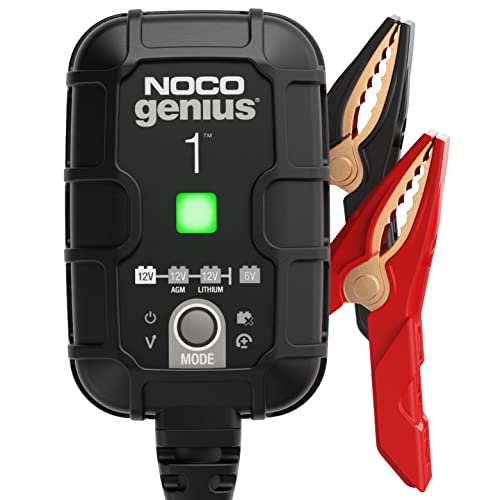
For reliable and complete charging after a deep discharge, using a dedicated smart battery charger is always the best method.
Why Does My Car Battery Keep Dying?
A car battery that repeatedly dies usually points to one of three problems: a bad alternator that isn’t recharging properly, a parasitic draw draining power when the car is off, or an old battery that can no longer hold a charge. If you find yourself needing frequent jump-starts, it’s time to investigate the root cause.
Is It a Bad Alternator?
If the alternator is failing, it can’t produce enough electricity to charge the battery while you drive. This forces the car to run directly off the battery’s stored power, which will quickly drain it.
- Symptoms:
- Dimming or flickering headlights, especially when you use other electronics.
- A “BATTERY” or “ALT” warning light on your dashboard.
- Strange grinding or whining noises coming from the engine bay.
- The car starts with a jump but dies shortly after the jumper cables are removed.
Could You Have a Parasitic Draw?
A parasitic draw is an electrical drain that continues after you have turned the car off. While a small drain is normal for things like the clock and security system (typically under 50-85 milliamps), a faulty component can cause a much larger drain that kills the battery overnight.
- Common Culprits:
- Aftermarket stereos, alarms, or remote starters that were installed incorrectly.
- A glove box light or trunk light that stays on when closed.
- A faulty relay or module that doesn’t shut down properly.
- Faulty wiring causing a short circuit.
Is Your Battery Simply Old?
Car batteries have a finite lifespan, typically 3-5 years. Over time, a process called sulfation occurs, where lead sulfate crystals build up on the battery plates. This buildup prevents the battery from accepting and holding a full charge. An old, sulfated battery might seem to charge but will lose its power very quickly.
How Can You Tell If It’s a Bad Battery vs. a Bad Alternator?
Differentiating between a bad battery and a bad alternator is the most critical diagnostic step. Here are two simple tests you can perform.
⚠ Safety First: Always exercise caution when working with car batteries. Wear safety glasses and gloves, and never let a metal tool touch both battery terminals at the same time.
The Jump-Start Test
This is the quickest and easiest way to diagnose the problem.
1. Jump-start your car using jumper cables and a running vehicle.
2. Once your car’s engine is running, carefully disconnect the jumper cables.
3. Observe what happens:
* If the engine dies immediately or within a minute, your alternator is almost certainly the problem. It’s not producing enough power to run the car on its own.
* If the car continues to run smoothly, your alternator is likely working. The problem is probably the battery, which isn’t holding the charge the alternator is providing. If it fails to start on its own later, this confirms a bad battery.
The Multimeter Test
For a more precise diagnosis, a simple multimeter provides clear data.
1. Test the Battery Voltage (Engine Off): With the car off for at least an hour, set your multimeter to DC volts. Touch the red probe to the positive (+) terminal and the black probe to the negative (-) terminal. A healthy, fully charged battery should read around 12.6 volts. A reading below 12.2 volts indicates a significantly discharged or failing battery.
2. Test the Alternator Voltage (Engine On): Start the car. With the engine running, perform the same test. A healthy alternator should produce a reading between 13.7 and 14.7 volts.
* If the voltage is in this range, your alternator is charging correctly, and the battery is likely the issue.
* If the voltage is below 13.5 volts or is the same as the battery’s resting voltage, the alternator is not charging properly and needs to be replaced.
FAQs About do car batteries recharge themselves
Can a car battery be too dead to jump-start?
Yes, a battery can be too dead to jump-start. If its voltage drops extremely low (e.g., below 10.5 volts), it might have an internal issue like a shorted cell or severe sulfation. In this state, it can’t accept a charge, and a jump-start will fail. Many modern smart chargers will also refuse to charge a battery with such low voltage for safety reasons.
Does revving the engine charge the battery faster?
Yes, revving the engine or driving at highway speeds charges the battery much faster than idling. The alternator’s power output is directly tied to the engine’s speed (RPM). At idle, the alternator produces minimal spare current for charging. Increasing the RPM spins the alternator faster, allowing it to generate significantly more electricity to recharge the battery.
What drains a car battery when the car is off?
This condition is known as a “parasitic draw.” Normal systems like your car’s clock, radio memory, and alarm create a tiny, acceptable drain. However, an excessive drain (over 50-85 milliamps) that kills the battery can be caused by faulty wiring, a malfunctioning electrical component, or improperly installed aftermarket accessories like alarms or stereos.
How often should I drive my car to keep the battery charged?
Ideally, you should drive your car for at least 20-30 minutes at highway speeds at least once a week. Very short trips (under 15 minutes) often don’t give the alternator enough time to replenish the energy used to start the engine, particularly in cold weather. If a car sits for several weeks, the battery will slowly self-discharge on its own.
Does a new car battery need to be charged?
Generally, no. New car batteries are sold fully charged and ready to be installed. However, if a battery has been sitting on a store shelf for many months, its charge might have slightly decreased. A reputable auto parts store or installer will typically test the battery’s voltage before selling or installing it to ensure it’s fresh.
Can you jump-start a car with a bad alternator?
Yes, you can jump-start a car with a bad alternator, but it will not stay running for long. The jump-start provides the initial power to start the engine. However, once the jumper cables are removed, the faulty alternator will fail to supply the necessary power to the car’s ignition and electrical systems, causing the engine to stall within a few minutes.
Why does my car battery die in the cold?
Cold weather dramatically reduces a battery’s chemical efficiency. The electrochemical reactions inside the battery that produce electricity slow down significantly in the cold, which reduces its available power. At the same time, cold engine oil becomes thicker, forcing the starter motor to draw even more power to turn the engine over, creating a difficult “double whammy” effect.
Will a car battery recharge itself after being jumped?
No, the battery does not recharge itself; the alternator recharges it. A jump-start only provides a temporary boost of energy sufficient to start the engine. After the car is running, you must drive it for an extended period to allow the alternator to replenish the battery’s charge. The jump itself does not add significant stored energy.
Does driving fast charge the battery quicker?
Driving at sustained highway speeds charges the battery quicker, but excessive speed offers no extra benefit. The key factor is maintaining a higher engine RPM (e.g., over 2,000 RPM), which is typical during highway driving. This allows the alternator to operate at its most efficient output. Driving at 80 mph versus 60 mph will not result in a noticeably faster charge.
What is the difference between regenerative braking and alternator charging?
Alternator charging consumes engine power, while regenerative braking captures wasted momentum. In a standard car, the alternator is driven by the engine’s serpentine belt, using fuel to create electricity. In hybrid and electric vehicles, regenerative braking turns the electric motor into a generator during deceleration, converting the car’s kinetic energy (motion) back into electrical energy to help charge the battery.
Key Takeaways: Understanding Your Car’s Charging System
After exploring the details, here are the most critical points to remember about your car’s electrical system. Understanding these facts is the first step toward preventing a dead battery and staying reliably on the road.
- ❌ Batteries Never Recharge Themselves – A car battery is an energy storage device, not a generator. It absolutely requires an external source like the alternator or a charger to replenish its power.
- ⚙️ The Alternator is the True Power Source – While the engine is running, the alternator powers all of your car’s electronics and simultaneously recharges the battery by converting mechanical force into electricity.
- 🧪 “Battery Recovery” is a Chemical Illusion – A dead battery that seems to work after resting is just experiencing temporary voltage recovery from ion diffusion, not actual recharging. It has not gained any new energy.
- 🕑 A 30-Minute Drive is Not a Full Charge – While a 30-60 minute drive at highway speeds is crucial after a jump-start, fully charging a deeply depleted battery can take 4-8 hours of driving.
- 🔋 Recurring Dead Batteries Signal a Deeper Problem – If your battery keeps dying, the cause is likely a bad battery that can’t hold a charge, a faulty alternator that isn’t charging, or a parasitic draw draining power when the car is off.
- 🚗 Driving Beats Idling for Charging – The alternator produces significantly more power at higher engine RPMs, making highway driving far more effective for charging a battery than letting the car idle in the driveway.
- 🧤 The Jump-Start Test Differentiates Problems – If a car dies immediately after removing jumper cables, the alternator is the likely culprit. If it runs but won’t start again later, the battery is the problem.
Final Thoughts on Your Car’s Battery Health
Understanding that your car’s battery is a reservoir, not a spring, is the most crucial piece of knowledge you can have. It doesn’t magically refill itself; it depends entirely on the alternator to keep it topped up while you drive. This simple fact demystifies why batteries die and empowers you to diagnose problems effectively. You are no longer guessing; you are working with a clear system of cause and effect.
Instead of waiting to be stranded, take a proactive approach. Now that you know the signs of a failing alternator versus a weak battery, you can test your system or have it tested during your next oil change. If your car often sits for long periods, investing in a simple battery maintainer can prevent the slow, natural discharge that leads to a dead battery. By treating the battery and alternator as a team, you ensure your vehicle has the reliable starting power it needs, every single time you turn the key. What’s been your experience with a dying battery?
Last update on 2026-02-18 / Affiliate links / Images from Amazon Product Advertising API


