
Tired of your car looking like a ransacked laundromat? The constant battle with wrinkled clothes, a faint musty smell, and the sheer lack of space can turn the dream of freedom into a cluttered nightmare. This is the core challenge of mastering car living clothes storage.
The solution is a strategic clothing storage system that actively combats humidity, maximizes every inch of limited space, and keeps your wardrobe fresh and accessible. By combining airtight containers with smart compression methods and leveraging vertical space, you can create a highly organized and efficient mobile closet.
Drawing from field-tested methods and proven solutions, this guide moves beyond generic tips. We’ll build a complete clothing management system based on real-world experience. You’ll learn how to conquer condensation, keep clothes smelling fresh, and finally bring order to your mobile habitat.
Where Do You Store Clothes While Living in a Car?
When you’re living in a vehicle, every item must justify its existence and every inch of space is precious real estate. Storing clothes becomes a complex puzzle involving humidity control, accessibility, and maintaining a low profile for stealth car living storage. The core issue isn’t just about finding a spot for your shirts; it’s about creating a system that protects your wardrobe from the unique challenges of a mobile habitat, like condensation and temperature swings. A successful system transforms your car from a storage unit on wheels into a functional, organized home. This involves a multi-faceted approach, combining different methods for different types of clothing—from bulky winter gear to the shirt you need for a job interview tomorrow.
11 Smart Car Living Clothes Storage Methods for 2026
The key to conquering clothes chaos is to stop thinking in terms of single solutions and start building a comprehensive system. From my own hands-on review and real-world experience, I’ve found that the most successful setups use a combination of techniques, each serving a specific purpose. This list isn’t just a collection of car organization ideas; it’s a step-by-step blueprint for a proven solution. We will progress from foundational choices, like bins vs bags, to advanced van life hacks that maximize every inch of your vehicle. By implementing these 11 methods, you’ll create a resilient, organized, and highly functional mobile wardrobe for full-time car living.
1. Organizing Your Foundation: Choosing Bins vs. Bags

Pin this foundational choice to your ‘Van Life’ board to start your journey!
Supplies Needed
- Airtight Bins: Look for clear, stackable plastic storage totes with strong latching lids to combat humidity control.
- Packing Cubes: A set of various sizes, preferably with a compression zipper for space-saving benefits.
- Labels/Marker: For categorizing bin contents.
Step-by-Step Directions
- Assess Your Needs: Use air-tight bins for out-of-season clothes or items susceptible to dampness. This is your primary defense against mildew prevention.
- Categorize with Cubes: Use packing cubes for your current weekly wardrobe. Group items by type (shirts, pants, underwear) for easy access.
- Create Modules: Pack the filled packing cubes into a duffel bag or a larger, non-airtight bin. This ‘module’ can be easily moved from the trunk to the front seat.
- Label Everything: Clearly label the outside of your airtight bins (e.g., “Winter Sweaters,” “Hiking Gear”) to avoid unnecessary unpacking.
Pro-Tip: My field tested system uses a hybrid approach. I use two large airtight bins for long-term storage in the trunk, acting as a base. On top, I keep a duffel bag with three packing cubes containing my clothes for the next 5-7 days. This offers the best of both worlds: robust protection and daily convenience.

2. Compressing Your Wardrobe with Vacuum Storage Bags

Save this space-saving hack to your ‘Road Trip Essentials’ board!
Supplies Needed
- Vacuum Storage Bags: Choose a variety pack with multiple sizes, ensuring it includes a travel-sized hand pump.
- Bulky Clothing: Winter coats, fleece blankets, heavy sweaters, ski pants.
Step-by-Step Directions
- Sort by Season: Identify all your bulky, out-of-season clothing. This method is ideal for items you won’t need for several months.
- Fold and Pack: Neatly fold the items and place them inside the vacuum bag. Do not overfill past the indicated “fill line.”
- Seal the Bag: Press the zip closure firmly from one end to the other at least twice to ensure it is completely air-tight.
- Compress: Attach the hand pump (or a vacuum cleaner if you have access) to the valve and remove all the air. You’ll see the bag shrink dramatically.
- Stow Away: Store the now-flat, rigid packs of clothing at the bottom of your trunk, under your bed platform, or in a rooftop cargo box.
Pro-Tip: From my real-world experience, not all vacuum bags are created equal. Invest in a reputable brand. Cheaper bags often lose their seal after a few weeks, reinflating and ruining your organization. The ones with a triple-seal turbo valve and double-zip closure are a
proven solution.

3. Hanging Key Items with Headrest Hangers

Keep your work clothes perfect on the go! Pin this to your ‘Mobile Office’ board.
Supplies Needed
- Headrest Hangers: Look for sturdy metal or heavy-duty plastic hooks that clip securely onto the headrest posts. Some models have multiple hooks.
- Garment Bags (Optional): Breathable bags to protect hanging clothes from dust and sun exposure.
Step-by-Step Directions
- Install the Hanger: Simply clip or slide the hanger onto the metal posts of the driver or passenger seat headrest. Most require no tools.
- Select Key Items: Choose 1-3 essential items that must remain wrinkle-free: a work blazer, a dress, a nice shirt.
- Hang Carefully: Place the items on hangers and then onto the headrest hook. If using the passenger side, arrange them so they don’t obstruct the driver’s view of the side mirror.
- Protect from Sun: On sunny days, drape a microfiber towel over the items or use a garment bag to prevent fading (a key aspect of UV protection for fabric).
Pro-Tip: For optimal load balancing and safety, I only use hangers on the passenger seat and the seat behind the passenger. Never hang anything heavy or view-obstructing behind the driver’s seat. It’s a tried and true method for arriving at a meeting looking sharp.

4. Maximizing Vertical Space with a Back Seat Organizer

Turn your back seat into a closet! Pin this idea to your ‘Car Organization’ board.
Supplies Needed
- Seatback Organizer: Choose a durable, heavy-duty model with various pocket sizes, including some with mesh fronts for visibility.
- Small Clothing Items: Socks, underwear, t-shirts, shorts, leggings, hats, gloves.
Step-by-Step Directions
- Install the Organizer: Secure the organizer to the back of one or both front seats using the adjustable straps. Tighten them so it doesn’t sag.
- Designate Pockets: Assign categories to specific pockets. For example, the top left for socks, top right for underwear, and a large bottom pocket for a “lounge” outfit (sweatpants and a t-shirt).
- Roll, Don’t Fold: Tightly roll items like t-shirts and leggings before placing them in the pockets. This maximizes space and makes them easier to grab.
- Restock Weekly: When you do your main clothing organization, restock the seatback organizer with your outfits for the upcoming week.
Pro-Tip: This is my secret to ergonomic accessibility. I keep my next day’s outfit in the back seat organizer behind the passenger seat. When I wake up, I can reach back and grab it without getting out of my sleeping bag or rummaging through cold bins in the trunk.

5. Implementing a Seasonal Rotation with Low-Profile Bins

Master the seasonal shift! Pin this pro organization tip to your ‘Van Life Build’ board.
Supplies Needed
- Low-Profile Bins: Two identical collapsible or rigid bins designed to fit under a bed or in a tight cargo space.
- Silica Gel Packs: Large desiccant packs to control moisture in the off-season bin.
- Out-of-Season Clothes: Your complete wardrobe for the opposite season.
Step-by-Step Directions
- Designate Bins: Label one bin “Summer/Warm” and the other “Winter/Cold.”
- Pack the Off-Season Bin: At the start of a new season, neatly fold and pack all your off-season clothes into their designated bin. Place a few large silica gel packs inside to manage the micro-climate and prevent musty smell.
- Stow Deeply: Slide this bin into the least accessible storage spot in your vehicle, such as the very back of the trunk or deep under your sleeping platform.
- Organize the In-Season Bin: Pack your current season’s clothes into the second bin. This bin should be kept in a more accessible location for weekly outfit selection.
- Schedule a Swap Day: Twice a year (e.g., in April and October), dedicate a few hours to swapping the positions of the bins, laundering everything, and reassessing your capsule wardrobe.
Pro-Tip: This is the cornerstone of successful full-time car living. Your car is too small for your entire wardrobe to be “active.” By creating a clear distinction between active (in-season) and deep storage (off-season), you simplify your daily life immensely. This is volumetric efficiency in action.

6. Dedicating a Trunk Organizer for a Modular Closet

Create a walk-in closet in your trunk! Pin this to your ‘Car Camping Gear’ board.
Supplies Needed
- Trunk Organizer: A high-quality, foldable model with rigid floor plates, adjustable dividers, and anchor straps.
- Velcro Straps/Bungee Cords: For extra security.
Step-by-Step Directions
- Secure the Organizer: Place the organizer in your trunk and use the included anchor straps to secure it to the vehicle’s cargo hooks. This prevents it from sliding during turns.
- Create Compartments: Use the adjustable dividers to create custom-sized compartments for different clothing categories (e.g., pants, shirts, outerwear).
- Use the Marie Kondo Method: Vertically “file” your folded clothes in each compartment instead of stacking them. This allows you to see everything at a glance.
- Integrate Packing Cubes: For smaller items like socks and underwear, use small packing cubes and place them within one of the larger compartments.
- Utilize Exterior Pockets: Use the mesh side pockets for items you need to grab quickly, like a rain jacket or a hat.
Pro-Tip: The biggest mistake people make is buying a cheap organizer that collapses on itself. Look for one with reinforced walls and, most importantly, straps or velcro on the bottom to anchor it to the trunk carpet. Weight distribution is also key; place heavier items like jeans and shoes at the bottom.

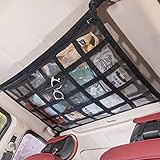
7. Utilizing Ceiling Space with a Cargo Net

Don’t forget to look up for more space! Pin this to your ‘Stealth Camper’ board.
Supplies Needed
- Ceiling Cargo Net: A zippered, adjustable net specifically designed to attach to the four interior grab handles of a car or SUV.
Step-by-Step Directions
- Attach the Net: Buckle the four straps of the cargo net around the passenger and rear grab handles. Adjust the straps until the net is taut.
- Load Lightweight Items: Use this “attic” for very lightweight, bulky items. Think puffy jackets, fleece blankets, pillows, or bags of chips. It’s not for heavy gear.
- Use the Zipper: Access the contents through the zippered opening to prevent items from falling out when you open a door.
- Check Visibility: After loading, sit in the driver’s seat and ensure the net and its contents do not obstruct your view through the rearview mirror. Adjust or remove items if they do.
Pro-Tip: This is the absolute best place to store the puffy jacket you live in all winter. It’s always accessible, never gets compressed, and it’s out of the way of everything else. It’s a proven solution for taming the bulkiest item in any nomadic wardrobe.
8. Managing a Dedicated Laundry System

Keep clean and dirty separate! Pin this essential car living system to your ‘Organization’ board.
Supplies Needed
- Collapsible Mesh Hamper: A breathable hamper for normally dirty clothes (t-shirts, jeans).
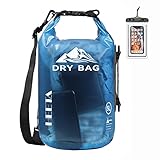
- Waterproof Dry Bag: A small (5L-10L) roll-top dry bag, the kind used for kayaking, for wet or very sweaty items.
Step-by-Step Directions
- Establish a Hamper Spot: Designate a spot for your collapsible hamper, like the passenger footwell or a corner of the trunk. This is for everyday dirty clothes.
- Isolate Wet Items: IMMEDIATELY place any wet items—damp towels, sweaty gym clothes, swimsuits—into the waterproof dry bag. Roll the top and buckle it shut. This is the single most important step for mildew prevention.
- Air Out the Dry Bag: Never leave the dry bag sealed for more than 24 hours. At your next stop, open it and hang the wet items to dry if possible, or head straight to the laundromat.
- Laundromat Day: When the mesh hamper is full, it’s time for a laundry run. The hamper itself can be used to carry the clothes. Bring the dry bag in as well.
Pro-Tip: The dry bag is non-negotiable. I once forgot a damp microfiber towel in my regular laundry bag for two days in a humid climate. The resulting musty smell contaminated everything. Now, it’s a rule: if it’s wet, it goes in the leak-proof dry bag. This is a crucial piece of micro-climate management.
9. Creating Stealth Storage with DIY False Floors

The ultimate stealth hack. Pin this to your ‘DIY Camper Conversion’ board!
Supplies Needed
- 3/4″ Plywood: For the floor itself.
- 2×4″ Lumber: To create the frame and elevation.
- Automotive Carpet: To cover the floor for a factory look.
- Hinges and Pull-Rings: For creating access hatches.
Step-by-Step Directions
- Measure Your Trunk: Get precise measurements of your vehicle’s trunk or cargo area.
- Build a Frame: Construct a simple frame using 2x4s around the perimeter and with cross-supports. The height of the frame will be the depth of your hidden storage.
- Cut the Floor: Cut the plywood to fit perfectly on top of the frame. You may want to cut it into two or three sections for easier access.
- Create Hatches: Install hinges on one or more sections of the plywood floor to create lift-up hatches for accessing the storage below. Install a flush-mounted pull-ring or strap.
- Carpet the Top: Use spray adhesive to cover the top of the false floor with automotive carpet. This makes it look like the original vehicle floor, completing the stealth profile engineering.
- Store Clothes Below: Use the hidden space to store clothes in packing cubes or low-profile bins.
Pro-Tip: Before you build, lay out your flattest storage bins and low profile storage bins on the floor. Build your frame just tall enough to clear them. This ensures maximum volumetric efficiency and prevents wasted space.

10. Perfecting Shoe Storage with a Door Organizer

Solve the shoe clutter problem for good! Pin this brilliant hack.
Supplies Needed
- Canvas Shoe Organizer: A standard over-the-door organizer with clear or mesh pockets.
- Heavy-Duty Scissors or Utility Knife: For cutting the organizer.
- Grommet Kit & Bungee Cords/Zip Ties: For mounting.
Step-by-Step Directions
- Identify a Mounting Surface: The back of a folded-down rear seat, the side of a wooden bed platform, or the interior panels of a van are all great spots.
- Cut to Size: Measure your mounting surface and cut the shoe organizer to fit. You might get two or three smaller organizers from one large one.
- Add Grommets: Use a grommet kit to punch reinforced holes along the top and bottom edges of your newly cut organizer section.
- Mount Securely: Use bungee cords, zip ties, or screws (for wooden surfaces) through the grommets to attach the organizer firmly to your chosen surface.
- Organize Your Shoes: Place one shoe per pocket to keep them from getting scuffed. This also helps them air out.
Pro-Tip: This system keeps dirty shoe soles contained and off your living surfaces. Before putting muddy hiking boots away, I knock the dirt off outside, then place them sole-first into the pockets. It’s a tried and true method for maintaining a clean mobile habitat.

11. Creating a “Go Bag” with a Modular Backpack

Always be ready to go. Pin this modular packing system to your ‘Travel Gear’ board.
Supplies Needed
- Backpack (30-40L): A durable travel backpack, preferably front-loading (clamshell) for easy access.
- Small Packing Cubes: To act as modular drawers within the backpack.
- Toiletry Bag & Tech Pouch: To complete the system.
Step-by-Step Directions
- Define the Mission: Your “go bag” should contain everything you need for a 2-3 day trip away from the car.
- Pack Modularly: Dedicate one small packing cube for 2-3 outfits (rolled tightly). Use another for underwear and socks.
- Add Essentials: Include your pre-packed toiletry bag and a tech pouch with chargers and cables.
- Keep it Ready: Keep the “go bag” packed and in an easily accessible spot in your car at all times, like on the passenger seat or right inside the rear door.
- Replenish After Use: After using the go bag for a night at a friend’s house or a trip to the gym for a shower, immediately restock it with clean clothes from your main storage bins.
Pro-Tip: This system is a game-changer for mental health. It gives you the freedom to spontaneously accept an offer to stay somewhere for a night without the stress of “moving in.” It makes you feel like a prepared traveler, not a disorganized car dweller.

Key Takeaways: Your Quick Guide to Car Living Clothes Storage
Organizing your clothes in a car is an ongoing process, not a one-time fix. However, by implementing the right systems, you can dramatically reduce daily clutter and stress. Here are the most critical takeaways to remember as you build your own mobile wardrobe.
- Combat Humidity First: Your primary enemy is moisture. Use air-tight bins and waterproof dry bags as your first line of defense to prevent mildew and musty smell.
- Embrace the Hybrid System: The most proven solution isn’t one thing; it’s a combination. Use airtight bins for deep storage, packing cubes for active wear, and vacuum bags for bulky items.
- Think Vertically: Your car has more space than just the floor. Use back seat organizers and ceiling cargo nets to claim unused vertical and overhead space.
- Separate Clean from Dirty: A dedicated two-part laundry system (a breathable hamper for dry, a waterproof bag for wet) is non-negotiable for hygiene and odor control.
- Rotate Your Wardrobe: You can’t have your entire wardrobe accessible at once. A strict seasonal rotation system with low profile storage bins is the key to sanity and organization.
- Create Modular Systems: Use packing cubes and “go bags” to create modular kits for different purposes. This gives you flexibility and makes finding items easier.
People Also Ask About Car Living Clothes Storage
How do you keep clothes from smelling in a car?
The best way to prevent smells is by controlling moisture and separating dirty laundry immediately. Use airtight bins for storage to block humidity, and a two-part laundry system: a breathable hamper for regular dirties and a sealed, waterproof dry bag for sweaty or damp clothes. Adding silica gel packs to storage bins also absorbs moisture and odor.
How do you prevent mold on clothes in a car?
Mold prevention is all about aggressive humidity control and ventilation. Store the majority of your clothes in completely airtight plastic bins with desiccant packs inside. Never put away any item that is even slightly damp. Regularly air out your car and storage containers, especially on dry, sunny days, to manage the interior micro-climate.
Should I use packing cubes or bins for car living?
You should use both, as they serve different purposes. Use large, airtight bins for long-term, out-of-season storage and protection against moisture. Use smaller, flexible packing cubes within a duffel or backpack to organize your “active” wardrobe for the week, making it easy to find daily outfits.
Where do you put dirty laundry when living in a car?
A dual-bag system is essential for managing dirty laundry. Use a collapsible, breathable mesh hamper for dry, normally soiled clothes. For anything wet, sweaty, or muddy, immediately place it in a separate, waterproof roll-top dry bag to contain moisture and odor, preventing it from contaminating your small living space.
Are vacuum bags good for car living storage?
Vacuum bags are excellent for specific use cases but not for daily wear. They are unbeatable for compressing bulky, out-of-season items like winter coats and blankets, saving a massive amount of space. However, they are inconvenient for clothes you need to access regularly as they cause deep wrinkles and require effort to reseal.
How do you keep clothes wrinkle-free in a car?
A combination of rolling clothes and strategic hanging is the most effective method. Tightly roll most clothes before placing them in packing cubes to minimize creasing. For items that must stay pristine, like work shirts or blazers, use dedicated headrest hangers to keep them from getting crushed.
How many clothes do I need for car living?
Adopt a minimalist capsule wardrobe approach, typically 20-30 versatile pieces per season. Focus on high-quality, multi-functional items that can be layered. A good starting point is 5-7 tops, 3-4 bottoms, 2 outerwear pieces, and 1-2 “nice” outfits, plus underwear and socks for a week.
How do you hide clothes for stealth car camping?
Stealth requires keeping your cabin visibly empty, so hidden storage is key. Utilize low profile storage bins that slide completely under a sleeping platform. Building a DIY false floor in your trunk or cargo area creates a large, completely hidden compartment. Blackout window covers are also essential for privacy.
What are the best airtight containers for car living?
Clear plastic storage totes with gasket seals and strong latching clamps are the gold standard. The gasket creates a superior seal against humidity, dust, and pests. The clear plastic allows you to see the contents without opening the bin, and the strong latches prevent lids from popping off on bumpy roads.
How do you manage seasonal clothes rotation in a car?
The most effective method is a two-bin system. One labeled “In-Season” and one “Off-Season.” The off-season bin, filled with vacuum-sealed bags and desiccant packs, is stored in the least accessible part of your vehicle (e.g., deep in the trunk). The in-season bin is kept accessible. Swap their contents and locations twice a year.
Final Thoughts on Your Mobile Wardrobe
Mastering car living clothes storage is about more than just buying the right bins; it’s about designing a clothing management system that works for you and your vehicle. By implementing these strategies, you’re not just organizing your clothes—you’re creating a more functional, peaceful, and enjoyable mobile life. Don’t feel like you need to do everything at once. Start with the one tip that will solve your biggest headache, whether that’s finally getting a waterproof bag for gym clothes or simply buying a set of packing cubes. Building an organized system is a journey that enables true freedom on the road. Which one of these methods will you try first?
Last update on 2026-04-08 / Affiliate links / Images from Amazon Product Advertising API


![Car Living Sedan: 11 Stealth Hacks for a No-Build Setup [year]](https://i0.wp.com/carxplorer.com/wp-content/uploads/2026/04/Car-Living-Sedan-11-Stealth-Hacks-for-a-No-Build-Setup-year-1.jpg?resize=60%2C60&ssl=1 "Car Living Sedan: 11 Stealth Hacks for a No-Build Setup [year] 26")

![Car Living With Cats: 7 Ultimate Tips for a Happy [year] Life](https://i0.wp.com/carxplorer.com/wp-content/uploads/2026/04/Car-Living-With-Cats-7-Ultimate-Tips-for-a-Happy-year-Life-1.jpg?resize=60%2C60&ssl=1 "Car Living With Cats: 7 Ultimate Tips for a Happy [year] Life 30")
