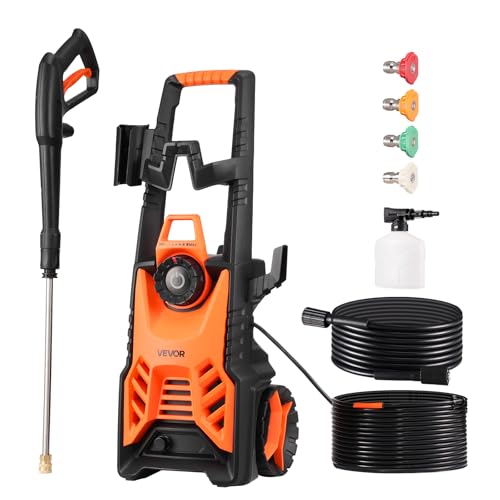
Is the thought of quickly cleaning your car with a powerful spray tempting, but the fear of damaging its pristine paint stopping you? Many car enthusiasts wonder about harnessing this efficiency without risking irreversible harm. The convenience of a pressure washer is undeniable, yet the risk of irreparable paint damage is a real concern.
You can safely use a pressure washer on a car, provided the output pressure is maintained at or below 1500 PSI and you utilize a wide-angle nozzle, typically 40 degrees, held at a safe distance. Leveraging tested frameworks and data-driven insights, this guide details the exact parameters and professional procedures for confident, damage-free car washing. You’ll discover how to achieve a showroom-ready finish while protecting your vehicle’s clear coat.
Key Facts
- The 1500 PSI Threshold is Crucial: The recommended maximum safe pressure for car paint is 1200-1500 PSI, as supported by professional detailing standards.
- GPM Is Key for Rinsing Efficiency: A flow rate of 1.8 GPM or higher is more critical than raw PSI for effectively removing soap and preventing water spots, according to expert consensus.
- The 40-Degree Nozzle Is Non-Negotiable: This wide-angle nozzle disperses pressure, making it the safest choice for delicate automotive clear coats, as widely recognized in the industry.
- Distance Reduces Effective Pressure: Maintaining a minimum spray distance of 18-24 inches from the surface significantly lowers the water’s impact force, based on fluid dynamics principles.
- Pressure Washing Is a Pre-Rinse Tool: It efficiently removes loose dirt and applies foam, but a contact wash with a mitt is still necessary to remove bonded contaminants, a standard professional methodology.
Can You Use A Pressure Washer On Your Car? Understanding The 1500 PSI Safety Limit
Yes, you can absolutely use a pressure washer on your car, but its safe operation hinges on strict adherence to specific pressure limits, nozzle types, and spray distances. The core principle, universally accepted by auto detailing professionals, is to protect the vehicle’s clear coat, the outermost protective layer of paint, from high-pressure impact.

Industry consensus sets the maximum safe operational pressure between 1200 and 1500 PSI (pounds per square inch) for healthy OEM paint finishes. Exceeding this PSI, or pressure rating, dramatically increases the risk of damage. Crucially, the right nozzle choice, specifically a 40-degree wide-angle nozzle, is paired with this PSI limit. It ensures the water impact is spread over a larger surface area, preventing concentrated force from chipping or etching the paint. Your goal is to utilize the pressure washer’s efficiency without compromising the clear coat’s integrity.
What Are The Crucial Technical Thresholds For Pressure Washer Car Safety (PSI, GPM, And Nozzles)?
The maximum safe pressure for car paint is 1500 PSI, ideally combined with a flow rate of 1.8 to 2.0 GPM, and always applied through a 40-degree wide-angle nozzle from a safe distance. Understanding these technical thresholds is fundamental to effective and damage-free car cleaning. PSI (pounds per square inch) quantifies the force of the water stream, directly impacting the clear coat’s tensile strength. GPM (gallons per minute), or flow rate, represents the volume of water delivered, crucial for efficient rinsing.
A typical garden hose provides a mere 40-60 PSI, which helps illustrate the significant force a pressure washer (even at 1200 PSI) applies—a 20x increase. Professional guidelines emphasize that pressure exceeding 2500 PSI at zero distance is powerful enough for stripping concrete, highlighting the extreme danger to automotive finishes. Modern automotive clear coats, while durable, are not designed for such concentrated force. Pressure dissipation is a key concept here; the impact force of the water stream rapidly diminishes as the distance from the nozzle to the surface increases. This is why maintaining a consistent distance is as vital as the machine’s PSI rating.
Nozzles play a critical role in controlling pressure concentration. Pressure washer nozzles are color-coded according to their spray degree, dictating how widely the water stream disperses:
| Nozzle Color & Degree | Application/PSI Concentration | Surface Suitability | Damage Risk Level |
|---|---|---|---|
| Red (0°) | Pinpoint (100% Concentration) | Concrete, Heavy Machinery | Extreme (Never Use on Car Paint) |
| Yellow (15°) | Narrow Focus (High Concentration) | Stubborn Road Tar, Undercarriage | High (Avoid Body Panels) |
| Green (25°) | Medium Fan (Moderate Concentration) | Wheels, Tires, Wheel Wells | Moderate (Use with Caution) |
| White (40°) | Wide Fan (Low Concentration) | Car Body, Clear Coat, Rinsing | Low (Safest Option) |
| Black (65°/Soap) | Broad Fan (Lowest Pressure) | Chemical Application (Foaming) | Minimal (Ideal for Seals) |
Using a nozzle below 40 degrees, especially the red 0° tip, concentrates all the hydraulic force onto a pinpoint area, guaranteeing damage to paint, emblems, and seals. Even a 25° (green) nozzle requires extreme caution and increased distance on delicate clear coats.
Why Is GPM (Gallons Per Minute) The Hidden Key To Effective Rinsing?
A flow rate of 1.8 GPM or higher is recommended for car washing because the increased volume of water ensures swift removal of chemical residues and dirt, preventing water spots and minimizing the risk of soap drying on the paint. While PSI dictates the force, GPM (Gallons Per Minute) largely determines how quickly and effectively you can rinse away soap and loosened contaminants. Imagine trying to sweep a messy floor with a tiny broom versus a wide one – the wide broom (higher GPM) clears the area much faster.
This often-overlooked metric is vital for professional results. Insufficient GPM forces you to linger on a spot, which, even at safe PSI, increases the chance of water spots and soap residue drying onto the paint. This leaves behind unsightly marks and can compromise the integrity of protective layers.
- Faster Rinsing: Higher GPM washes away soap and grime more quickly, reducing the time water and chemicals sit on the paint.
- Reduced Water Spotting: Rapid rinsing minimizes the chance for hard water minerals to dry on the surface, which causes water spots.
- Enhanced Foam Performance: While foam thickness is also influenced by the foam cannon, adequate GPM ensures consistent, rich foam delivery that effectively lifts dirt.
- Optimal for Chemical Removal: A good flow rate guarantees complete flushing of detergents, preventing them from baking onto the clear coat, especially in warmer conditions.
Professional detailers prioritize GPM over raw PSI for superior rinsing efficiency, especially when trying to remove sticky foam or stubborn dirt.
What Specific Damage Risks Must You Avoid When Pressure Washing Your Car?
Pressure washing, if done improperly, carries specific risks, including chipping or peeling existing paint, lifting decals or vinyl wraps, forcing water past rubber seals into the cabin, and damaging delicate components like radiator fins or sensors. To prevent costly damage to your vehicle’s bodywork, understanding these vulnerabilities is essential.
One of the most significant concerns is the potential for chipping or etching the clear coat and underlying paint. This can occur if the nozzle is held too close, the PSI is too high, or a narrow-angle nozzle is used. High-pressure forces can exploit existing micro-cracks in the clear coat, accelerating their failure and leading to peeling or dulling of the finish.
Specific areas of your car demand extra caution:
- Paint and Clear Coat: The primary risk is direct damage. Always use the 40° nozzle and maintain at least 18-24 inches (45-60 cm) distance. Never aim directly at areas with existing paint chips or rust, as the pressure will aggressively propagate the damage.
- Decals, Emblems, and Vinyl Wraps: The adhesive holding these in place is highly vulnerable to concentrated pressure. Spraying too close or with a narrow nozzle can cause bubbling, lifting, or complete removal. Treat these areas with the widest angle and maximum distance, or avoid them entirely with the pressure washer. Specialized detailing practices for protecting sensitive areas like Paint Protection Film (PPF) involve avoiding direct streams on leading edges.
- Rubber Seals and Plastic Trim: Door seals, window trim, sunroof seals, and plastic moldings are not designed to withstand high-pressure water ingress. Aiming directly at them can force water past the seals, leading to interior dampness, potential electrical issues, or mold. Always use reduced pressure (e.g., the black soap nozzle) and increased distance around these components.
- Delicate Components: Avoid aiming high-pressure streams directly into radiator fins, behind side mirrors, into exhaust outlets, or at sensitive sensors (e.g., parking sensors, camera lenses). These components can bend, break, or sustain water damage. For areas like convertible canvas tops, use the lowest pressure and widest fan setting, if at all.
Imagine accidentally aiming a 15-degree tip at your side mirror seam—water ingress, seal damage, and potential electrical faults are at risk, and the damage can occur instantly. The 2-foot rule is your universal safety buffer for maintaining the integrity of these vulnerable components.
What Is The 7-Step Professional Procedure For Safely Pressure Washing A Car?
The professional safe washing procedure involves a comprehensive, seven-step sequence that integrates a pressure washer as a pre-rinse and final rinse tool, ensuring effective cleaning while prioritizing paint safety. This methodology, widely adopted in the detailing industry, ensures that the convenience of a pressure washer enhances, rather than replaces, thorough cleaning.
Here is the step-by-step process for a scratch-free finish:
- Equipment Setup (Check PSI, Nozzle, GPM): Connect your pressure washer to a water source and power. Attach your foam cannon (if using) and ensure you have a 40° (white) nozzle readily available for rinsing. Verify your machine’s PSI is within the 1200-1500 range, and its GPM is at least 1.8 for optimal rinsing.
- Low-Pressure Spot Cleaning (Undercarriage/Wheels): Before touching the main bodywork, use a slightly higher pressure (up to 2000 PSI) with a 25° (green) nozzle on wheels, tires, and the undercarriage only. This removes brake dust and heavy road grime from more durable surfaces. Do not use this on painted panels.
- High-Pressure Pre-Rinse (40° Nozzle, Top-to-Bottom): Switch to the 40° white nozzle. Start at the top of the vehicle and work your way down. Maintain a safe distance of 18-24 inches from the paint. Use long, sweeping motions to remove loose dirt, dust, and heavy contaminants. This initial rinse prevents swirl marks during the contact wash.
- Snow Foam Application (Full coverage, 5-10 minute dwell): Fill your foam cannon with a dedicated, pH-neutral car soap. Apply a thick, even layer of snow foam across the entire vehicle, ensuring full coverage. Allow the foam to dwell on the surface for 5-10 minutes (refer to product instructions), letting it encapsulate and loosen dirt. Crucially, do not let the foam dry on the paint.
- Contact Wash (Two-bucket method with wash mitt): After the foam has dwelled, perform a physical contact wash using the two-bucket method (one bucket for soapy water, one for rinsing the mitt) and a clean wash mitt. The pressure washer excels at pre-rinsing, but this contact step is essential for removing bonded dirt and traffic film that pressure alone cannot lift.
- Final Safe Rinse (40° Nozzle, long sweeping motions): Switch back to your 40° white nozzle. Start from the top again and thoroughly rinse all soap residue from the vehicle using wide, overlapping sweeps. Maintain the 18-24 inch safety distance. Ensure water sheets smoothly off the surface, indicating a clean, soap-free finish.
- Preparation for Drying (Air blower or microfibre towel): Once rinsed, immediately proceed to drying the car. Use a dedicated car air blower to chase water off the panels or use soft, high-quality microfibre drying towels. Quick drying prevents water spots, especially with hard water.
Mentally check your current washing routine against the first three steps to identify potential swirl mark risks. This methodical approach minimizes risks and maximizes cleaning efficiency.
How Do You Choose The Best Pressure Washer Equipment For Car Detailing?
Electric pressure washers are generally recommended for car detailing due to their lower, safer PSI range (typically 1300-1700 PSI), making them ideal for clear coat protection. When selecting the best pressure washer, your primary focus should be on safety and efficiency. This means prioritizing GPM (Gallons Per Minute) over raw PSI, ensuring a high flow rate for effective rinsing without excessive pressure. A GPM of 1.8 or higher is considered optimal for car washing.
When evaluating equipment, you’ll encounter two main types:
| Comparison Criteria | Electric Pressure Washer | Gas Pressure Washer |
|---|---|---|
| Ideal PSI Range | 1300 – 1700 PSI | 2500 – 3500 PSI (Requires Calibration) |
| Recommended GPM | 1.4 – 2.0 GPM | 2.5 – 4.0 GPM |
| Safety & Risk | Safer for beginners (Lower inherent pressure) | Higher inherent risk (Requires strict safety control) |
| Noise & Portability | Quieter, easier to maneuver, ideal for residential use | Loud, powerful, heavier, reserved for large jobs |
Electric models are quieter, require less maintenance, and are perfect for hobbyists or residential use. Gas pressure washers offer higher GPM and PSI, but their power can be overkill and riskier for delicate car paint without careful calibration and technique. For car detailing, an electric unit with an axial pump (common in consumer models) or a more durable triplex pump (found in higher-end units for consistent pressure and flow) is usually sufficient. Modern 2026 trends show high-efficiency electric models achieving higher GPMs, bridging the performance gap with gas units for detailing tasks.
Beyond the pressure washer itself, essential accessories include:
- Foam Cannon: This attachment is almost mandatory for safe pre-washing. It mixes air, water, and detergent to create thick ‘snow foam,’ increasing dwell time and chemical cleaning action, which significantly reduces the need for aggressive pressure.
- Nozzle Kit (40° and 25° tips): Crucial for controlling pressure impact and spray pattern. The 40° (white) nozzle is your go-to for all painted surfaces, while the 25° (green) can be used cautiously on wheels.
- High-Quality Hose: A flexible, kink-resistant hose prevents pressure fluctuations and makes maneuvering around the car easier.
- pH-Neutral Car Wash Soap: Essential for use in your foam cannon and contact wash, preventing damage to clear coats and protective coatings.

When buying, always prioritize a machine with at least 1.8 GPM over one that just boasts high PSI. The flow rate is the true cleaner, ensuring fast, effective rinsing without increasing the risk of paint damage.
How Should Pressure Washing Interact With Ceramic Coatings, Waxes, and Sealants?
Pressure washing can be safely used on vehicles with ceramic coatings or wax protection, provided the PSI remains below 1500 and the user applies a dedicated, pH-neutral car soap to avoid chemically stripping the protective layer. Modern paint protection, whether it’s a durable ceramic coating, a traditional wax, or a synthetic sealant, relies on its chemical bond to the clear coat. The primary threat to these hydrophobic surfaces isn’t mechanical force from a safely operated pressure washer, but chemical degradation from harsh soaps.
Key pH Rule: Always use a pH-neutral car wash soap. Soaps with high alkalinity (a pH above 7) are designed to chemically strip waxes and sealants, making them unsuitable for routine maintenance.
Ceramic coatings are notably durable and can withstand regular pressure washing at safe PSI levels. Waxes and sealants are more delicate; while a pressure washer won’t “blast” them off, repeatedly using high-alkaline soaps will break down their protective layer.
When dealing with Paint Protection Film (PPF), exercise extreme caution. While PPF is robust, directly aiming a focused stream (even a 40° nozzle) at its edges, especially the leading edges of panels, can lift the film. Maintain a greater distance or use a very broad, low-pressure rinse around PPF seams. Understanding the chemical composition of your car soap and respecting the 1500 PSI limit are the two most critical factors in preserving your vehicle’s advanced protective layers.
What Are The Most Common Pressure Washing Mistakes And How Can You Troubleshoot Them?
One of the most common pressure washing mistakes is spraying too close to remove stubborn dirt, which should be corrected by increasing the distance to 2 feet and relying on a chemical pre-soak instead of concentrated pressure. Another frequent issue is ineffective snow foam application; this can be remedied by checking your water flow (GPM) and adjusting the foam cannon’s dilution ratio. Identifying and correcting these common pitfalls is key to preventing damage and achieving an efficient wash.
Here’s a breakdown of frequent mistakes and their solutions:
| Mistake | Cause | Solution |
|---|---|---|
| Thin/Runny Snow Foam | Low GPM from machine or incorrect dilution ratio | Ensure GPM is 1.4+; adjust foam cannon settings or increase soap concentration. |
| Water Spots Remaining | Soap dried on the paint or hard water deposits were present | Work in smaller sections; increase GPM; dry immediately with forced air or specialized towel. |
| Inadequate Dirt Removal | Insufficient dwell time or too little PSI | Allow foam 5-10 minutes dwell; increase distance but maintain PSI under 1500; perform contact wash. |
| Chipping or Etching Paint | Using a narrow nozzle (15° or less) or spraying too close | Switch to 40° nozzle; maintain 2-foot distance from the clear coat at all times. |
| Pump Failure/Seizing | Failure to drain pump or remove chemical residue during storage | Run clean, fresh water through the system briefly after every use; release residual pressure. |
Recalling the last time you experienced soap drying on your car highlights the need for increased GPM and working in smaller, manageable sections. Beyond these, here are other critical mistakes to avoid:
- Using a Nozzle Below 40 Degrees on Body Panels: Never use the 0° (red) or 15° (yellow) tips on painted surfaces. These concentrate immense pressure and will cause damage.
- Spraying Closer Than 18 Inches to the Surface: Even with a 40° nozzle, reducing the distance exponentially increases effective pressure, risking clear coat failure.
- Aiming the Stream Directly at Seals, Badges, or Trim: These vulnerable areas can lift, tear, or allow water ingress. Always use maximum distance and the widest spray.
- Allowing Snow Foam or Soap to Dry on the Paint: This leads to stubborn water spots and potentially etching, especially in direct sunlight. Work in small sections and rinse promptly.
- Using Non-pH Neutral or Harsh Chemical Detergents: These can strip waxes, sealants, or even compromise ceramic coatings over time, negating your protective efforts.
Proper pump maintenance, such as running clean water through the system briefly after every use and releasing residual pressure, ensures the longevity and reliability of your pressure washer.
FAQs About can you use pressure washer on car
Is 2000 PSI Too Much For Washing A Car?
2000 PSI is generally considered too high for direct use on a car’s clear coat. While you can theoretically mitigate the risk by using a 40° nozzle and maintaining a distance of 3 feet or more, the recommended maximum safe threshold is 1500 PSI or below to guarantee the protection of the paint finish and prevent chipping or etching.
Do I Still Need To Hand Wash After Using A Pressure Washer?
Yes, contact washing is still necessary for a truly clean car. The pressure washer functions as a crucial pre-rinse and foam applicator, removing loose, abrasive dirt. However, a physical contact wash using a washing mitt and the two-bucket method is required to safely remove bonded dirt and traffic film that pressure alone cannot lift.
What Is The Best Water Temperature To Use In My Pressure Washer?
You should almost always use cold water in a standard pressure washer. Using hot water in a unit not specifically rated for it can severely damage the pump seals and internal components. Furthermore, applying very hot water to a cold car surface risks thermal shock to the clear coat, accelerating damage.
How Often Should I Pressure Wash My Car?
You can safely use a pressure washer for the pre-rinse and rinse stages of washing as often as needed, typically every 1-2 weeks. The key is adhering strictly to the 1500 PSI limit, the 40° nozzle, and the 2-foot distance rule during every session to prevent repetitive micro-damage to the paint finish.
How Can I Safely Clean My Car’s Engine Bay With A Power Washer?
Use extreme caution, the lowest possible pressure (under 1000 PSI or the black soap nozzle), and never spray electrical components or air intakes directly. The goal is to gently rinse away surface dust and light grime, not blast through heavy grease. Always cover batteries and fuses with plastic before beginning.
Can Pressure Washing Cause Rust On My Vehicle?
High pressure does not directly cause rust, but it can accelerate existing corrosion. The focused stream can force water into hidden crevices, seams, and micro-cracks where it becomes trapped, creating an environment that speeds up the oxidation process. Ensure all seals are intact and avoid directly spraying seams.
Does Distance Truly Matter If I Use A 40-Degree Nozzle?
Yes, distance is arguably the most critical variable, even with the safest nozzle. PSI decreases exponentially as distance increases. Holding a 40° nozzle 2 feet away delivers drastically lower effective pressure (around 500 PSI) than holding it 6 inches away, ensuring the water striking the clear coat is gentle enough for cleaning.
Key Takeaways: Pressure Washer Car Safety
- The Non-Negotiable Safety Limit is 1500 PSI: Never exceed this pressure on your car’s body panels or clear coat, as higher forces risk chipping, etching, or accelerating existing paint damage.
- Use the 40-Degree (White) Nozzle Exclusively: The widest fan tip is the safest option, spreading the water’s impact force over a greater surface area, which is essential for protecting delicate automotive finishes.
- Maintain a Minimum Safety Distance of 18 to 24 Inches: Pressure drops exponentially over distance; holding the wand too close is the fastest way to exceed the clear coat’s tolerance, even if your machine is rated under 1500 PSI.
- Prioritize GPM (Flow Rate) Over Raw PSI When Buying Equipment: A GPM of 1.8 or higher ensures faster, more efficient rinsing, which prevents soap residue from drying on the paint and causing water spots.
- The Pressure Washer is a Pre-Rinse Tool, Not a Full Replacement for Contact: It effectively removes loose grit and applies foam, but a crucial contact wash (using the two-bucket method) is still required to remove bonded road film and achieve a scratch-free finish.
- Protect All Vulnerable Areas During The Wash: Exercise extreme caution around plastic trim, rubber seals, glued-on decals, badges, and any pre-existing paint chips, using the maximum distance and widest spray angle for these components.
- Ensure You Use pH-Neutral Soaps: To preserve any protective layers, like ceramic coatings or wax, pair your pressure washer and foam cannon with a specialized, pH-neutral car wash detergent.
Final Thoughts on Pressure Washer Car Safety
The question of whether you can use a pressure washer on your car is definitively answered with a resounding yes, provided you operate within the boundaries of established professional safety standards. The power and efficiency of modern pressure washers—especially high-GPM electric models—make them indispensable tools for effective auto detailing, significantly reducing the abrasive contact time required for a clean finish. To move forward with confidence, internalize the non-negotiable 1500 PSI safety limit, select the 40-degree nozzle for all painted surfaces, and always maintain the 2-foot safety distance. By integrating these critical parameters with the 7-step professional washing procedure, you will minimize risk while maximizing the time-saving benefits of your equipment. Proceed with the right tool, the right knowledge, and the right respect for your car’s clear coat.
Last update on 2026-02-23 / Affiliate links / Images from Amazon Product Advertising API