
Wondering if you can put 93 octane in a car that takes 87? You’re not alone; many drivers face this question at the pump, worried about potential damage or curious about performance gains. This decision can feel confusing with so many myths floating around.
Yes, you can safely put 93 octane gas in a car that takes 87, and it will not damage your engine. However, it offers no performance, fuel economy, or cleaning benefits for an engine designed to run on regular fuel. It is an unnecessary expense because the vehicle’s computer is not calibrated to use it.
Based on extensive analysis of automotive engineering principles, this guide clears up the confusion. It separates fact from fiction about gasoline grades. You’ll discover exactly why using premium fuel in a regular car doesn’t work as you might think and how to make the smartest choice for your wallet and your vehicle.
Key Facts
- Safe But Ineffective: Using 93 octane gasoline in a car designed for 87 octane is safe for the engine but provides no performance or fuel economy benefits, making it an unnecessary expense.
- Octane is Stability: A fuel’s octane rating is a measure of its resistance to engine knock (pre-ignition), not a measure of its energy content or power.
- The Opposite is Risky: Putting lower-octane fuel (like 87) in a car that requires higher-octane fuel (like 93) can cause engine knock, reduce performance, and potentially lead to long-term engine damage.
- Cleaning is Separate from Octane: For superior engine cleaning, look for the “Top Tier” gasoline certification. This standard guarantees a higher level of detergent additives in all fuel grades, including regular 87 octane.
- Engine Tuning is Key: A standard car’s Engine Control Unit (ECU) is programmed for 87 octane and cannot adjust spark timing to take advantage of the extra stability offered by 93 octane fuel.
Can You Put 93 Octane in a Car That Takes 87?
The direct answer is yes, you can absolutely put 93 octane fuel in a car that recommends 87, and it will not cause any harm. Automotive experts and mechanics agree that no damage will come to your engine from using a higher octane fuel than required. Your car will run just fine.

However, there is a major difference between being safe and being beneficial. While using premium gas is harmless, it provides no noticeable improvements in performance, horsepower, or fuel economy for an engine designed for regular unleaded gasoline. In short, you are paying extra for a benefit your car cannot use.
This might seem counterintuitive, as “premium” usually means “better.” In the world of fuel, “premium” simply means more resistant to a specific problem called engine knock. But what is octane, and why is it so often misunderstood? Let’s explore the science behind that number on the pump.
What Is a Fuel’s Octane Rating and Why Does It Matter?
An octane rating is a standard measure of a fuel’s stability and its resistance to igniting prematurely under pressure, a phenomenon known as “engine knock.” It does not measure the power or energy content of the fuel. A higher number, like 93, means the fuel is more stable and can withstand more compression before igniting than a lower number, like 87.
Think of it this way: inside your engine, a piston squeezes a mixture of air and fuel. At the perfect moment, the spark plug ignites this mixture, pushing the piston down and creating power. Engine knock, or pre-ignition, is when that mixture explodes on its own from pressure before the spark plug fires. It’s like a firecracker going off too early, which can damage engine components over time.
High-performance engines often have a high compression ratio, meaning they squeeze the air-fuel mixture much more forcefully. These engines require high-octane (premium) fuel to prevent knock. Standard engines have a lower compression ratio and are designed to run perfectly on 87 octane without any risk of knocking.
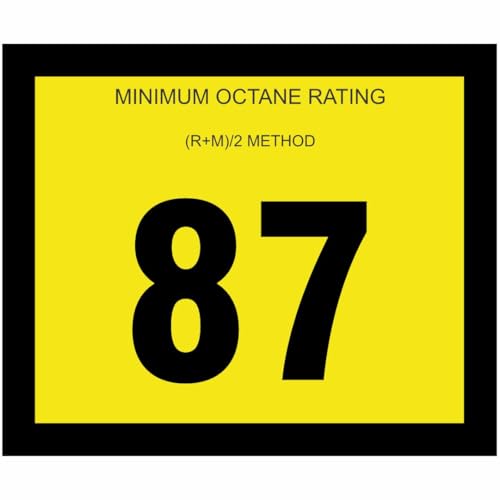
- Regular (87 Octane): The standard fuel for the vast majority of cars on the road.
- Mid-Grade (89 Octane): A blend of regular and premium, rarely required by modern cars.
- Premium (91-93 Octane): The required fuel for high-compression or turbocharged engines to prevent knock.
Myth vs. Fact
Myth: Higher octane fuel is more powerful and burns hotter.
Fact: Higher octane fuel is more stable and burns slightly slower and more controlled to prevent knock in high-compression engines. It does not contain more energy.
What Actually Happens When You Use 93 Octane in an 87-Rated Engine?
In a car that takes 87 octane, putting in 93 octane fuel results in no harm and no benefit. Your car’s computer, the Engine Control Unit (ECU), is the key player here. It’s programmed with a specific “recipe” or map for operating with 87 octane fuel, including when to fire the spark plug, an action known as spark timing.
Here is the chain of events when you fill up with premium:
1. You pump 93 octane fuel into your tank.
2. The fuel is sent to the engine for combustion.
3. The car’s ECU refers to its factory programming, which is optimized for 87 octane.
4. The ECU does not advance the spark timing, because it has no instructions to do so and the knock sensor isn’t detecting any problems that would require an adjustment.
5. The 93 octane fuel burns just like 87 octane would have, producing the same amount of power and yielding the same fuel economy.
The Verdict: Safe, But Useless. The premium fuel’s primary benefit—its extra stability against knock—is never used. The engine doesn’t need it, and the ECU isn’t programmed to take advantage of it. The only real effect is on your wallet.
Why Doesn’t Premium Gas Add Horsepower or Improve MPG in a Regular Engine?
Premium gas does not increase horsepower or MPG in a regular car because all gasoline grades have the same energy content. The idea that premium fuel is “more powerful” is a common myth. Horsepower and fuel economy are products of the energy in the fuel and the engine’s efficiency at converting it to motion.
Performance gains from higher octane only happen when an engine is specifically tuned for it. In a high-performance car, the ECU is programmed to advance the spark timing to the very edge of knock to extract maximum power. It relies on premium fuel’s stability to do this safely.
Your standard car’s engine is simply not tuned for it. It’s designed for optimal performance with 87 octane. Without the aggressive timing adjustments, the extra stability of 93 octane fuel goes completely to waste. It’s like serving a gourmet five-course meal to someone who only eats hot dogs—the potential is there, but it won’t be appreciated or utilized.
The Bottom Line: You can’t add power by simply changing the fuel. Power comes from the engine’s design and tuning, which dictates the fuel it requires.
Is It Ever Worth Paying More for 93 Octane in an 87 Car?
No, it is not worth the extra money to put 93 octane in a car that takes 87. You are paying for a higher knock resistance your engine cannot use. The price difference between regular and premium can be significant, often costing $0.50 to $1.00 or more per gallon. Over a year, that adds up to hundreds of dollars spent with zero return.
A common argument for using premium fuel is that it “cleans your engine better.” This confuses octane with detergent additives. All gasoline sold in the U.S. is required by the EPA to contain detergents to prevent fuel injector clogs and intake valve deposits. Some oil companies put a more robust additive package in their premium grade, but there’s a better way to ensure engine cleanliness.
Look for the “Top Tier” logo at the gas station. Top Tier is a voluntary performance standard developed by automakers that requires a higher concentration of quality detergent additives than the EPA minimum. The best part? This standard applies to all grades of fuel at a certified station, including regular 87 octane.
| Feature/Aspect | Regular Gas (87 Octane) | Premium Gas (93 Octane) |
|---|---|---|
| Manufacturer Recommendation | Recommended for standard engines | Not required; offers no benefit |
| Engine Performance | Optimal performance as designed | No noticeable increase |
| Fuel Economy | Baseline as per EPA rating | No significant improvement |
| Engine Safety | Perfectly safe | Perfectly safe, but unnecessary |
| Cost Per Gallon | Lower Price | Higher Price (e.g., $0.50-$1.00+ more) |
| Verdict for an 87-Rated Car | Correct Choice | Waste of Money |
What Happens If You Put 87 Octane in a Car That Requires 93?
If you put 87 octane in a car that requires 93, you will likely experience reduced performance, lower fuel economy, and potentially audible engine knock. This is the reverse scenario, and it is the one you need to worry about. High-performance and turbocharged engines need the stability of premium fuel to prevent damaging pre-ignition.
Modern engines are equipped with knock sensors that listen for the tell-tale “pinging” of pre-ignition. If a knock is detected, the ECU will immediately “retard” the ignition timing—firing the spark plug a little later—to protect the engine from damage. While this is an effective safety measure, it comes at a cost:
* Reduced Horsepower: The engine can no longer operate at its peak timing, causing a noticeable loss of acceleration.
* Worse Fuel Economy: The engine is running less efficiently, which hurts your gas mileage.
* Check Engine Light: The ECU may trigger a check engine light to alert you to the problem.
* Potential for Long-Term Damage: While the ECU can protect against immediate catastrophe, prolonged use of the wrong fuel can still lead to excess wear and potential damage, and could even void your manufacturer’s warranty.
⚠ Warning: Always follow the fuel requirement printed on your car’s gas cap or in the owner’s manual. If it says “Premium Fuel Required,” use it. If it says “Premium Fuel Recommended,” you have more flexibility, but using premium will likely yield the best performance.
FAQs About can you put 93 in a car that takes 87
What happens if I mix 87 and 93 octane gas?
Nothing harmful will happen; you will simply create a mid-grade octane level in your tank. If you mix equal parts 87 and 93, you’ll have an octane level of approximately 90. Modern car engines can easily adjust to this slight variation without any issue. Gas stations with a single nozzle for all three grades do this same blending automatically.
Will using 93 octane cause carbon buildup?
No, using a higher octane fuel will not cause carbon buildup. In fact, some premium fuels may contain a more robust package of detergent additives than the legal minimum. However, the best way to ensure your engine stays clean is to use “Top Tier” certified gasoline, which guarantees a high level of detergents in every grade, including 87 octane.
Does premium gas last longer or burn slower?
While 93 octane fuel has a slightly slower, more controlled burn, it does not last longer in your tank. Fuel economy is determined by the engine’s efficiency and the energy content of the fuel, not the octane rating. Since 87 and 93 octane gasoline have the same amount of energy, using premium in a regular car will not improve your gas mileage.
I accidentally filled my 87 car with 93. What should I do?
You don’t need to do anything at all. There is no harm in using one tank of 93 octane in a car that takes 87. Just drive the car as you normally would. The only negative effect is the extra money you spent. When it’s time to refuel, simply go back to using 87 octane.
Why do some cars that recommend 87 octane get slightly better performance with 93?
This applies only to a specific subset of modern engines, often turbocharged, where the manufacturer notes this flexibility. For these cars, the ECU is programmed with an adaptive timing map. It’s tuned for 87 but can advance timing to take advantage of 93 octane for a small power boost. If your owner’s manual only lists 87 octane, this does not apply to your car.
Key Takeaways: Using 93 Octane in an 87 Car Summary
Navigating the world of fuel grades doesn’t have to be complicated. After breaking down the facts and myths, the conclusions are clear and consistent. Here are the most important points to remember next time you are at the gas pump.
- Safe But Useless: Putting 93 octane in a car that requires 87 is completely safe but provides no benefits to performance or fuel economy.
- Octane is Stability, Not Power: Octane rating measures a fuel’s resistance to engine knock, not its energy content. All grades of gasoline have the same amount of power.
- Your Engine Isn’t Tuned for It: A car designed for 87 octane has an engine computer (ECU) that is not programmed to take advantage of the higher stability of 93 octane fuel.
- The Opposite is Dangerous: Putting 87 octane in a car that requires 93 is risky and can lead to engine knock, reduced performance, and potential long-term damage.
- For Cleaning, Focus on “Top Tier”: If you want a cleaner engine, look for the “Top Tier” logo. This certification ensures high levels of detergents in all fuel grades, not just premium.
- Mixing is Harmless: Accidentally mixing 87 and 93 octane fuel is not a problem and simply results in a mid-grade octane level in your tank.
- Check Your Manual: The definitive source for your car’s fuel requirement is always the owner’s manual or the sticker on your fuel door.
Final Thoughts on can you put 93 in a car that takes 87
Ultimately, the science and engineering are clear. Using 93 octane fuel in a car designed for 87 is a decision that affects your wallet far more than your vehicle. You are paying a premium for a fuel property your car is not equipped to use. By sticking with the manufacturer’s recommended 87 octane fuel, you are making the smartest choice for both your finances and your car’s intended operation.
Save your money and have peace of mind. Check your owner’s manual or fuel door, use the specified grade, and look for Top Tier certified gasoline if you want to give your engine the best care. Driving smart starts with fueling smart.
![How to Clean a Car Duster Safely Extend Its Life [year] Guide](https://i0.wp.com/carxplorer.com/wp-content/uploads/2026/02/How-to-Clean-a-Car-Duster-Safely-Extend-Its-Life-year-Guide-2.jpg?resize=60%2C60&ssl=1 "How to Clean a Car Duster Safely Extend Its Life [year] Guide 3")


