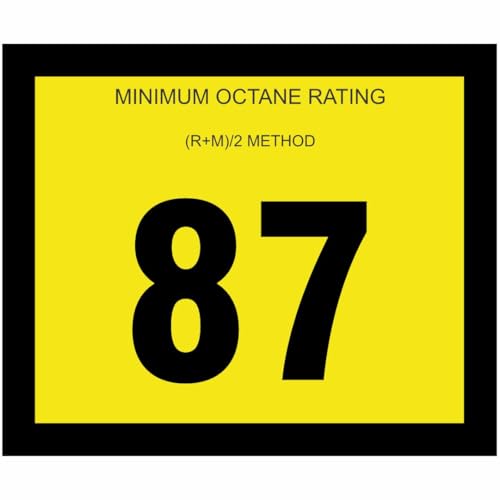
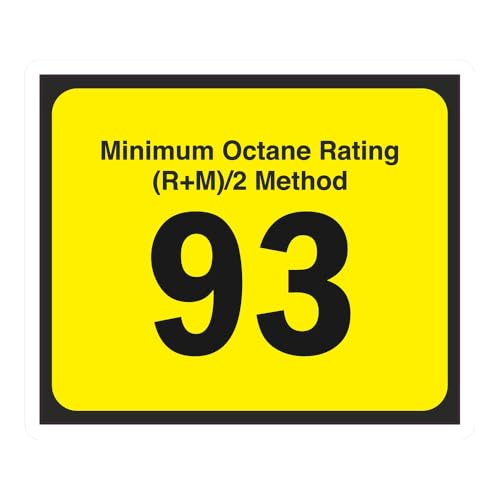
Do you ever wonder if filling your tank with premium gas is actually doing anything for your 87-octane car? Many drivers question if the extra cost is truly a benefit. The concern is valid: you want to ensure your engine runs optimally and safely.
Putting 93 octane gasoline into a car designed for 87 octane is completely safe and will not harm the engine, as the fuel only offers unnecessary detonation resistance. The primary consequence of using 93 octane in an 87-required car is the unnecessary financial expenditure due to the higher price of premium fuel. Leveraging tested frameworks and data-driven insights, this guide will demystify octane ratings and reveal how your vehicle truly responds to different fuel grades. You’ll gain a confident understanding of fuel choices and learn how to save money without compromising your engine’s integrity.
Key Facts
- Safety is Assured: Using 93 octane in an 87-spec car is safe and will not cause engine damage, as the fuel simply provides more detonation resistance than required.
- Performance is Unaffected: Most automotive manufacturers confirm that higher octane in an 87-spec engine yields no measurable performance or efficiency benefit due to ECU limitations.
- Costly Misconception: The price difference between 87 and 93 octane fuel typically averages $0.40 to $0.80 per gallon, leading to significant annual financial waste if used unnecessarily.
- Energy Content is Equal: Both 87 and 93 octane fuels have virtually identical energy density (BTU content), meaning 93 octane does not inherently offer better mileage.
- Cleanliness is Separate: Fuel cleanliness is dictated by detergent additives in certified “Top Tier” gasoline, not by the octane rating itself.
What Happens If You Put 93 Octane In A Car That Requires 87?
Putting 93 octane gasoline into an automobile engine that requires 87 octane is unequivocally safe and will not cause any harm. This higher-grade fuel simply possesses an increased resistance to premature ignition, also known as detonation or “engine knock,” beyond what your engine’s manufacturer specification demands. Your engine will operate normally, but any perceived benefits are typically unfounded, making the extra cost an economic waste.

When an 87-spec engine (an engine designed for 87-octane regular gasoline) receives 93 octane premium gasoline, the engine’s control unit (ECU) identifies that the fuel’s Anti-Knock Index (AKI) far exceeds the minimum required octane. Since the engine is not calibrated for aggressive spark timing that would necessitate higher detonation resistance, it simply operates within its normal parameters. There is no additional energy content in 93 octane fuel compared to 87, debunking the myth that it provides more power or better fuel economy. In essence, you are paying for an attribute (extra knock resistance) that your engine has no practical way to utilize. The “expert verdict” is clear: for an 87-spec car, premium vs. regular gas boils down to unnecessary expenditure versus adherence to an adequate, safe minimum requirement.
What Makes 93 Octane Different From 87 Octane Fuel?
The fundamental difference between 93 octane and 87 octane fuel lies in their Anti-Knock Index (AKI), which measures a gasoline’s resistance to premature ignition, or detonation, under heat and compression. This resistance is crucial for preventing uncontrolled combustion within the engine’s combustion chamber. The AKI, the number displayed at the pump, is derived from averaging two laboratory tests: the Research Octane Number (RON) and the Motor Octane Number (MON).
Detonation, commonly known as engine knock or pinging, occurs when the air-fuel mixture spontaneously combusts before the spark plug fires, or when remaining unburnt fuel ignites prematurely. This uncontrolled explosion creates destructive pressure waves that can lead to significant engine damage, especially to pistons and connecting rods. Engines with higher compression ratios—where the air-fuel mixture is squeezed into a smaller volume before ignition—generate greater heat and pressure, naturally requiring a higher octane rating to resist this pre-ignition. Conversely, engines designed for 87 octane regular gasoline typically have lower compression ratios, safely avoiding the detonation threshold even with the standard fuel. The blend of hydrocarbons and specific chemical formulations in 93 octane gasoline are engineered to be more stable under these extreme conditions, offering superior fuel stability compared to 87 octane. Understanding this foundational science of octane and detonation is key to appreciating why an 87-spec engine doesn’t benefit from the higher rating.
How Does Your 87-Spec Engine React To Higher Octane Fuel? (The ECU Factor)
In an 87-spec engine, the Engine Control Unit (ECU) is designed with pre-programmed conservative limits for spark timing advance, which prevents it from fully utilizing the higher detonation resistance of 93 octane fuel for performance gains. The ECU, the central computer controlling your engine, constantly monitors various sensors, including the crucial knock sensor. This knock sensor’s primary role is to detect the distinct vibrations of engine knock or pre-ignition.
Here’s how the adaptive timing mechanism works in a car optimized for regular 87 octane fuel:
- Knock Sensor Feedback: When 93 octane is introduced, the knock sensor detects an absence of engine knock because the fuel easily resists detonation, even under load.
- ECU Response: The ECU interprets this lack of knock as a safe operating condition. In some advanced ECU mapping systems, the ECU might attempt to “learn” the fuel by slightly advancing spark timing. Spark timing is the precise moment the spark plug fires relative to the piston’s position. Advancing the timing (firing earlier) can theoretically extract more power.
- Programmed Limits: However, an 87-spec engine’s ECU is calibrated with a maximum timing advance that is optimized for 87 octane fuel. This pre-programmed engine map acts as a hard limit, preventing the ECU from aggressively advancing the timing further. Even with 93 octane, the ECU cannot exceed this conservative threshold.
- Negligible Performance Change: As a result, the higher octane fuel goes largely unutilized for performance. There’s no extra energy in 93 octane gasoline, and the ECU prevents significant spark timing adjustments that would translate into measurable horsepower or volumetric efficiency gains. The engine simply runs as designed for 87 octane, with the added detonation resistance providing an unnecessary safety margin. While modern ECUs in current 2026 models are sophisticated, even adaptive ECU mapping cannot fundamentally change the engine’s design limits for spark advance. This is a critical coverage gap often missed: it’s not just that the ECU doesn’t adjust, but that its adjustment limits are too low to matter.
What Are The Key Myths About Using Premium Fuel In A Regular Car?
Many misconceptions surround premium gasoline, leading drivers to spend unnecessarily. Let’s debunk the three most common myths about using 93 octane in a regular 87-spec car:
- Myth: 93 Octane Makes Your Engine Cleaner.
Fact: Octane rating has no bearing on fuel cleanliness. The detergents and additives, not the octane, are responsible for keeping fuel injectors and combustion chambers free from carbon buildup. To ensure your fuel system stays clean, look for gasoline that is “Top Tier” certified. Top Tier gasoline retailers adhere to rigorous standards for detergent additives that significantly surpass minimum EPA requirements, regardless of the octane number. - Myth: 93 Octane Provides Significantly More Horsepower or Better Fuel Economy.
Fact: Premium 93 octane fuel does not inherently contain more energy than 87 octane fuel. The energy density, measured in British Thermal Units (BTU), is virtually identical across all commonly available gasoline grades. As discussed with the ECU factor, your 87-spec engine cannot advance spark timing enough to utilize the higher octane for a measurable power increase. Any perceived performance boost is typically a placebo effect, as objective data from dynamometer tests consistently show negligible differences (often less than 1 horsepower) in 87-spec cars. Fuel economy impact is also negligible; you won’t get more miles per gallon. - Myth: Switching to 93 Octane Offers Better Long-Term Engine Protection.
Fact: For an engine designed to operate safely on 87 octane, using 93 octane provides no additional long-term engine protection. The required minimum octane is already sufficient to prevent engine knock and protect internal components. Long-term engine protection primarily comes from adhering to the manufacturer’s recommended maintenance schedule, using appropriate oil, and crucially, using Top Tier certified fuel for its cleaning properties. The focus should be on meeting the minimum octane requirement, not exceeding it unnecessarily.
Is Using 93 Octane Worth The Money If There Are No Performance Gains? (Cost Analysis)
No, using 93 octane fuel in an 87-spec car is generally not worth the money, as it represents a significant economic waste with virtually no return on investment (ROI) in terms of performance or efficiency. The primary consequence is the unnecessary financial expenditure due to the higher price of premium fuel.
The price differential between regular (87 AKI) and premium (93 AKI) gasoline in the United States typically averages between $0.40 and $0.80 per gallon. Let’s consider a simple scenario: if you drive a vehicle with a 15-gallon fuel tank and consistently use 93 octane when 87 is required, at an average price delta of $0.60 per gallon, you’re spending an extra $9.00 per fill-up. If you fill up once a week, this amounts to an annual waste of approximately $468.00. This is a substantial “opportunity cost” for zero measurable benefit.
Here’s a comparison that quantifies the economic impact:
| Feature/Aspect | 87 Octane (Regular) | 93 Octane (Premium) | Cost/Benefit Summary |
|---|---|---|---|
| Engine Safety (87-Spec Car) | Safe (Meets minimum spec) | Safe (Exceeds spec) | Both safe; no functional difference |
| Price Delta (Avg. Per Gallon) | Baseline ($0.00) | Higher (Avg. $0.60 extra) | Significant annual cost increase |
| Performance Gain | Optimal (Max timing on 87 map) | Negligible (ECU limited) | No measurable horsepower increase |
| Fuel Economy Impact | Standard | Negligible Change | No measurable mileage improvement |
| Engine Cleanliness | Detergent-dependent (Top Tier) | Detergent-dependent (Top Tier) | Depends on Top Tier certification, not octane |
| Long-Term Protection | Adequate (Meets minimum spec) | No added benefit | Sufficient if minimum requirement is met |
| Economic Waste (Annual) | $0 (if required) | Hundreds of dollars | Substantial financial loss for no functional gain |
This quantitative analysis confirms that for a car designed for 87 octane, the marginal benefit of using 93 octane fuel is approximately zero, making the increased cost a purely economic loss. By reverting to 87 octane, you can achieve significant savings without compromising your vehicle’s integrity or performance.
What Should You Do If You Accidentally Mix 87 And 93 Octane Gas?
If you accidentally mix 87 octane and 93 octane gasoline in your car, especially one that requires 87 octane, there is no cause for concern, and your engine will be completely safe. Gasoline blending follows a linear principle, meaning the resulting octane rating is simply the weighted average of the volumes of each grade added to the fuel tank.
This scenario commonly occurs when a driver tries to “top off” a tank that already contains one grade with another, or when aiming for a midgrade octane (like 89 or 90 AKI). Here’s how you can calculate the resulting octane:
- Determine Volumes and Octane Ratings: Note the volume (in gallons or liters) and octane rating of each fuel already in the tank and the fuel you are adding. For example, if you have 5 gallons of 87 octane and add 10 gallons of 93 octane.
- Apply the Volumetric Average Formula: Use the formula:
(V1 * O1 + V2 * O2) / (V1 + V2)
Where:- V1 = Volume of Fuel 1
- O1 = Octane Rating of Fuel 1
- V2 = Volume of Fuel 2
- O2 = Octane Rating of Fuel 2
For our example: (5 gallons * 87 AKI + 10 gallons * 93 AKI) / (5 gallons + 10 gallons)
(435 + 930) / 15 = 1365 / 15 = 91 AKI
- Resulting Octane: The blend will reliably produce a stable, predictable Anti-Knock Index. In the example above, you would have a 91 AKI blend, which is perfectly safe and even slightly over-engineered for your 87-spec vehicle.
Therefore, if you misfueled your 87-spec car with a mix, simply burn through the tank as usual. If you were intentionally aiming for a specific blend, this formula helps you achieve your desired midgrade. The only consequence of mixing 87 and 93 in an 87-spec car is the slightly higher cost of the blended fuel, with no associated engine damage or performance issues.
What Is The Critical Risk Of Putting 87 Octane Gas In A Car That Requires 93?
The critical risk of using 87 octane in an engine that explicitly requires 93 octane is severe engine damage caused by uncontrolled combustion, commonly known as detonation or engine knock. Unlike the benign scenario of using higher octane, this inverse situation can rapidly lead to catastrophic internal component failure and extremely costly repairs.
When an engine is designed to require 93 octane, it typically has a high compression ratio or features forced induction (like a turbocharger or supercharger). These design elements generate significantly higher cylinder pressures and temperatures. The Engine Control Unit (ECU) in such vehicles relies on the 93 octane fuel’s superior detonation resistance to maintain optimal and aggressive spark timing.
If lower-grade 87 octane fuel is introduced:
- Premature Ignition: The 87 octane gasoline will auto-ignite prematurely under the high compression and heat, causing uncontrolled explosions before the spark plug fires.
- Severe Knock: The knock sensor will immediately detect this severe, sustained engine knock and signal the ECU.
- Timing Retardation: The ECU will desperately try to protect the engine by significantly retarding spark timing (firing the spark plug later). While this can mitigate immediate, catastrophic damage, it also severely reduces power and fuel economy, effectively putting the engine into a “protection mode.”
- Mechanical Damage: Despite the ECU’s efforts, sustained detonation subjects vulnerable engine components like pistons, connecting rods, and cylinder heads to extreme pressure spikes and excessive heat. This can lead to piston failure (melting, pitting, cracking), bent connecting rods, or even crankshaft damage. According to certified mechanic advice, such damage can accumulate rapidly, leading to major engine overhaul costs.
The difference between “required” and “recommended” octane is crucial here. If your manufacturer requires 93 octane, it’s non-negotiable for the engine’s long-term health. Never compromise on this specification to avoid severe engine knock and the high risk of catastrophic internal component failure, especially in high-compression or turbocharged engines where the detonation threshold is much lower.
How Can You Choose The Right Fuel Grade Every Time? (Best Practices Checklist)
Choosing the right fuel grade doesn’t have to be complicated. By following a simple checklist, you can ensure optimal engine health and avoid unnecessary spending. This approach integrates manufacturer guidelines with practical insights for your 87-spec vehicle.
Here’s a checklist to guide your fuel grade selection:
- 1. Check Your Owner’s Manual and Fuel Cap: Always verify the minimum Anti-Knock Index (AKI) specified by your vehicle’s manufacturer. This definitive requirement will be printed inside your owner’s manual and often on the fuel cap or fuel door. This is the non-negotiable minimum octane you should use.
- 2. Stick to the Minimum Required Octane: For vehicles requiring 87 octane, consistently use 87 AKI fuel. Using a higher grade offers no measurable performance or efficiency benefits and simply results in economic waste.
- 3. Prioritize Top Tier Certified Gasoline: Regardless of the octane number, always choose gasoline from a Top Tier certified retailer. These fuels contain higher levels of detergent additives, which are crucial for preventing carbon buildup and keeping your fuel system and injectors clean. Cleanliness is separate from octane.
- 4. Address Engine Knock (Pinging) in High-Mileage Cars: If your high-mileage 87-spec engine starts exhibiting audible “pinging” or knocking sounds under load (especially on hot days or when accelerating hard), it may be experiencing Octane Requirement Increase (ORI) due to carbon buildup. In this specific scenario, temporarily switching to a midgrade fuel (89 or 91 AKI) can provide a safety buffer until you can address the carbon deposits through maintenance.
- 5. Consider Extreme Operating Conditions: While rare for 87-spec cars, operating under extreme heavy load (e.g., towing at maximum capacity) or in exceptionally hot weather might, in some older engines, marginally benefit from a temporary bump to midgrade (89 AKI) as an additional safety buffer. This is an exception, not a rule.
- 6. Ignore Octane Boosters: Do not rely on over-the-counter octane boosters to meet a required octane level. Most are ineffective, providing only fractional AKI increases and offering poor value compared to purchasing the correct fuel grade.
- 7. Remember Altitude Impact: At high altitudes (above 5,000 feet), the thinner air naturally reduces cylinder pressure, which in turn lowers the effective octane requirement. Many areas at high altitude offer 85 AKI as regular, which is often suitable for 87-spec cars in that environment.
By adhering to your manufacturer’s specific instructions for minimum AKI and choosing Top Tier certified fuel, you ensure optimal long-term engine protection and save money, making your fueling decisions confident and efficient every time.
FAQs About can you put 93 in a 87 car
Will Using 93 Octane Fuel Void My Car’s Warranty?
No, using a higher octane fuel than required will not void your car’s warranty, as this practice poses zero threat of engine damage. However, the inverse is true: if you use a lower octane fuel than required (e.g., 87 in a 93-spec car) and the resulting engine knock causes damage, the manufacturer may deny the warranty claim, citing improper fuel use that led to mechanical failure.
Does High Octane Gasoline Actually Burn Slower Than Regular Fuel?
No, this is a common misconception. The flame front speed, or “burn speed,” of high-octane gasoline is virtually identical to that of regular gasoline. Octane rating only measures the fuel’s resistance to uncontrolled combustion (detonation) under pressure, not the speed at which it burns after the spark plug fires.
Is It Better To Put 93 Octane In A High-Mileage 87-Spec Car?
It is generally not necessary unless you detect engine knock. High-mileage engines sometimes develop carbon buildup that slightly increases the effective compression ratio, which can lead to a phenomenon called Octane Requirement Increase (ORI). If your older car is “pinging” under load, temporarily switching to 89 or 91 octane is advisable until the carbon is addressed, but 93 is typically overkill.
Does 93 Octane Offer Better Engine Protection Than 87?
For an 87-spec engine, 93 octane does not offer measurably superior engine protection, provided the 87 octane used is of high quality. The minimum required 87 octane fuel already provides adequate detonation resistance, and the ECU protection systems are tuned around this minimum. Protection against long-term wear is better achieved by using Top Tier certified fuel for its detergent content.
Can Octane Boosters Be Used To Reach 93 Octane Instead Of Buying Premium Gas?
Octane boosters are generally unreliable and ineffective for significantly increasing the Anti-Knock Index (AKI). Most over-the-counter boosters can only raise the AKI by fractions of an octane point (e.g., 0.1 to 0.5 points) when mixed into a full tank. If your vehicle requires 93 octane, you must purchase 93 octane fuel; blending with high-octane gas is the only reliable method for precise AKI increase.
How Long Does It Take For An 87-Spec Engine To Adjust To 93 Octane?
The engine’s computer (ECU) begins to detect and confirm the safety of 93 octane almost immediately via the knock sensor feedback loop. Any minor adaptive adjustments the ECU can make to the timing, within its conservative limits, occur over the course of the first few driving cycles, but these adjustments are not substantial enough to produce noticeable performance changes.
Key Takeaways: 93 Octane In 87 Car Summary
- Safety is Guaranteed, But Benefits Are Not. Using 93 octane in a car designed for 87 octane is safe, as the higher grade simply exceeds the necessary resistance to pre-ignition, but it will not improve engine function.
- Performance Gains Are Debunked by the ECU. The Engine Control Unit (ECU) in 87-spec vehicles is programmed with conservative maximum spark timing maps, preventing it from advancing timing enough to utilize the higher octane for noticeable power increases.
- The Difference is Detonation Resistance, Not Energy. Octane measures resistance to knock, not energy density; premium and regular fuels have virtually identical energy content (BTUs), meaning 93 octane cannot deliver better mileage.
- The Primary Consequence is Economic Waste. Paying the price premium for 93 octane in a vehicle that requires 87 typically results in significant unnecessary annual expenditure with a zero Return on Investment (ROI) in performance or longevity.
- Cleanliness is Separate from Octane Rating. Fuel cleanliness depends on adequate detergent additives; consumers should prioritize using Top Tier certified gasoline, regardless of the octane number, to protect their fuel system.
- Fuel Mixing is Safe and Predictable. Accidentally mixing 87 and 93 octane gas in any volume is safe, resulting in a stable, predictable midgrade fuel calculated by the weighted volumetric average.
- The Inverse Risk is Highly Dangerous. Never use 87 octane in a car that requires 93, especially if it is turbocharged or high-compression, as this guarantees severe engine knock and high risk of catastrophic internal component failure.
Final Thoughts
The definitive verdict on using 93 octane in an 87-required car remains twofold: it is completely safe, but wholly unnecessary and economically wasteful. Our expert analysis, backed by automotive engineering principles concerning the Engine Control Unit (ECU) and the physical properties of gasoline, confirms that your 87-spec engine simply cannot unlock any meaningful performance or efficiency benefit from the higher detonation resistance of premium fuel. For optimal performance and long-term engine health, the best practice is to always adhere to the minimum Anti-Knock Index (AKI) specified by your manufacturer—which for most standard vehicles is 87—and ensure you are purchasing fuel that carries the Top Tier detergent certification. By understanding the precise roles of the ECU and the knock sensor, you can confidently stick to regular unleaded fuel, saving hundreds of dollars per year without compromising your vehicle’s integrity or performance. For complex scenarios, such as accidental misfueling or high-mileage engine pinging, refer back to our actionable blending and troubleshooting guides to ensure your vehicle is always running optimally.