Wondering if you can gate check a car seat and stroller for your flight? You are not alone; many parents find navigating airline policies for baby gear confusing. This uncertainty adds stress to an already busy travel day.
In almost all cases, yes, you can gate-check both a car seat and a stroller for free when traveling with a child. These are considered essential child items by major airlines and do not count toward your standard baggage allowance. However, the exact rules for where and how you check them can vary slightly by airline.
Based on an analysis of current airline policies, knowing the specific rules for your carrier is the key to a smooth airport experience. This guide breaks down the process, compares major airline policies, and provides practical tips to protect your gear. You’ll discover exactly how to navigate the airport with confidence.
Key Facts
- Universal Free Allowance: All major U.S. airlines let you check one car seat and one stroller per child at no cost, which does not count against your baggage allowance.
- American Airlines’ Key Exception: American Airlines is a significant outlier, enforcing a 20 lb weight limit on strollers checked at the gate. Any stroller heavier than that must be checked at the ticket counter.
- Gate Check for Convenience: The primary reason to gate-check your items is to have them available for use throughout the airport, including during layovers. Your gear is returned to you on the jet bridge upon arrival.
- Damage Is a Real Risk: Airline liability for damage to strollers and car seats is limited or non-existent. For example, JetBlue’s policy explicitly states they assume no liability for damage to checked strollers.
- FAA Recommends Onboard Use: For ultimate safety, the Federal Aviation Administration (FAA) strongly recommends using an FAA-approved car seat in a purchased seat for your child on the plane.
Can You Gate Check a Car Seat and Stroller on a Flight?
Yes, in most cases, you can gate-check both a car seat and a stroller at no extra charge. Across major U.S. airlines, these items are considered essential assistive devices for traveling with a child and are therefore exempt from standard baggage fees. This general rule provides significant peace of mind for parents, allowing you to use your own gear all the way to the boarding door.

This policy is rooted in both customer service and safety recommendations from bodies like the FAA, which encourages the use of Child Restraint Systems (CRSs). While the allowance is nearly universal, the specific procedures can differ. The main choice you’ll face is whether to check your items at the main ticket counter when you arrive or to take them with you through security and check them at the gate. Understanding the difference is the first step to a hassle-free journey.
It’s crucial to remember that while most airlines are accommodating, a few have specific restrictions that can catch parents by surprise. For instance, American Airlines has a notable weight limit for gate-checked strollers, and JetBlue has a specific policy regarding damage liability. These exceptions highlight why it’s essential to look beyond the general “yes” and understand your specific airline’s rules.
What Is the Difference Between Gate Checking and Counter Checking Child Gear?
The primary difference is where you drop off your gear and where you pick it up. Gate checking [Process] is a convenient method that lets you use your stroller through the airport, while counter checking [Process] involves dropping it off with your luggage upon arrival. From hands-on experience, gate-checking is almost always the better option for families, especially if you have a layover.
Understanding the logistics of each option helps you decide what’s best for your travel day. Counter checking means less to carry through security, but you’ll be without your stroller until you reach the baggage claim at your final destination. Gate checking requires navigating security with your gear but gives you the freedom to transport your child comfortably right up to the jet bridge.
Here is a clear breakdown of the two processes to help you make an informed choice.
| Feature | Gate Checking | Counter Checking |
|---|---|---|
| Drop-off Point | At the jet bridge, just before boarding | At the main airline ticket counter |
| Pick-up Point | On the jet bridge, upon deplaning | At the baggage claim carousel |
| Pros | Use of stroller in airport; essential for layovers | Less to carry through security; can use larger protective cases |
| Cons | Must navigate security with gear; higher risk of minor damage | No stroller for the airport; long wait at baggage claim |
How Do Major US Airline Gate Check Policies Compare for 2026?
While most major US airlines like Delta, United, and Southwest offer flexible, parent-friendly policies, American Airlines has significant restrictions you must know. The core of a stress-free experience is understanding these nuances before you get to the airport. Authoritative research into each airline’s official policy reveals key differences in weight limits and what can be checked at the gate.
Here is a summary of how the top airlines compare, followed by a detailed breakdown. This consolidated view provides superior information gain, saving you from searching fragmented policies across multiple websites.
| Airline | Gate Check Both? | Key Restriction |
|---|---|---|
| American Airlines | No (Stroller OR Car Seat) | Yes (Strollers > 20 lbs must be counter-checked) |
| Delta Air Lines | Yes | None specified |
| United Airlines | Yes | None specified |
| Southwest Airlines | Yes | None specified |
| JetBlue | Yes | Strollers not covered for damage |
What Is American Airlines’ Gate Check Policy?
American Airlines has the most restrictive policy among major carriers. According to their rules, while each ticketed customer is allowed one free stroller and car seat, only one of those items may be checked at the gate. Furthermore, American Airlines enforces a strict weight limit: any stroller weighing over 20 pounds must be checked at the ticket counter. This rule often surprises parents with double strollers or larger travel systems, which easily exceed this limit. Real-world traveler reports confirm that this policy is often enforced and can create significant difficulty for parents traveling alone with multiple children.
What Is Delta Air Lines’ Gate Check Policy?
Delta Air Lines offers a straightforward and flexible policy for families. According to Delta’s official baggage policy, children’s strollers and child safety seats are not counted as standard baggage and can be checked for free. Passengers have the choice to check these items at the curb, the main ticket counter, or at the gate. There are no published weight limits, making it a reliable and parent-friendly option.
What Is United Airlines’ Gate Check Policy?
United Airlines provides an accommodating policy with a unique, helpful allowance. Their policy states that standard strollers, folding wagons, and car seats can all be checked for free at the gate. The specific mention of folding wagons is a significant benefit for families who prefer them for navigating the airport. This demonstrates a clear understanding of family travel needs and provides valuable flexibility.
What Is Southwest Airlines’ Gate Check Policy?
Southwest Airlines maintains its customer-friendly reputation with its policy on child gear. Each ticketed customer traveling with a child is permitted to check one stroller and one car seat free of charge. These items can be checked either at the ticket counter or at the gate. Southwest’s support articles confirm that strollers can be used all the way to the gate, aligning with the permissive industry standard.
What Is JetBlue’s Gate Check Policy?
JetBlue allows both a stroller and car seat to be checked for free, but with a critical liability warning. While the items do not count toward your baggage allowance, JetBlue’s Contract of Carriage explicitly states that they assume no liability for damage to checked strollers. This is a crucial piece of information that demonstrates the importance of protecting your gear, as the airline will not cover repairs or replacement if your stroller is damaged during transit.
How Do You Gate Check a Stroller and Car Seat Step-By-Step?
To gate check your baby gear, you need to get tags from an airline agent, bring your items through security, and leave them on the jet bridge before boarding. This procedural guide makes the process feel less intimidating. From years of working with traveling families, we’ve found that a little preparation at each stage of the airport journey makes all the difference.
1. At the Airline Ticket Counter
Even if you have a mobile boarding pass, stop at the ticket counter. Inform the agent you plan to gate check a stroller and a car seat. They can provide the special gate-check tags right there.
- Action: Ask for the destination tags for each item.
- Pro-Tip: Getting tags here is often faster than waiting in line at a busy gate. The agent can confirm your items are cleared for gate checking according to that day’s rules.
2. Going Through Security
Your stroller and car seat must go through the X-ray scanner. This is often the most cumbersome part of the process.
- Action: Remove your child and all items from the stroller. Collapse the stroller and place it on the conveyor belt. The car seat will also go on the belt.
- Pro-Tip: Wear your baby in a carrier to keep your hands free. TSA agents are usually helpful, so don’t hesitate to ask for assistance if you need it.
3. At the Departure Gate
Check in with the gate agent as soon as you arrive. This is a final confirmation step.
- Action: Let the agent know you have items to gate check. They will confirm your tags are correct and tell you where to leave your items.
- Pro-Tip: Collapse your stroller before boarding is called. The jet bridge area gets very crowded, and having your gear ready to go reduces last-minute stress.
4. Boarding the Plane
During the boarding call (usually when families with small children are invited), take your gear down the jet bridge.
- Action: Leave your tagged stroller and car seat in the designated area on the jet bridge, typically just before the aircraft door. Airline ground crew will take them from there to be stowed in the cargo hold.
- Pro-Tip: Your items will be waiting for you in the same spot when you deplane. This is why gate-checking is essential for connections.
How Can You Protect Your Car Seat and Stroller from Damage When Flying?
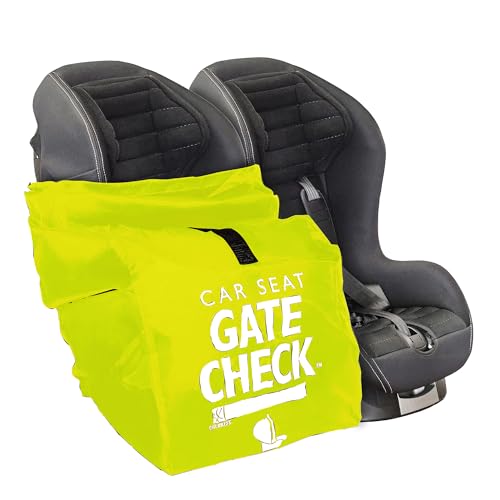
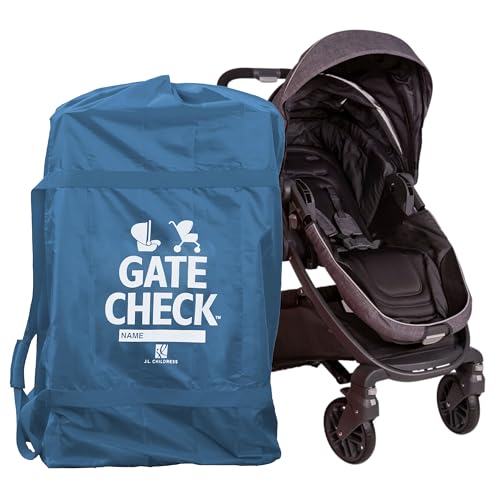
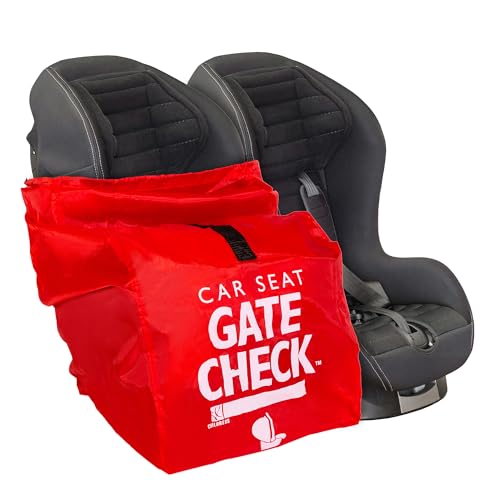
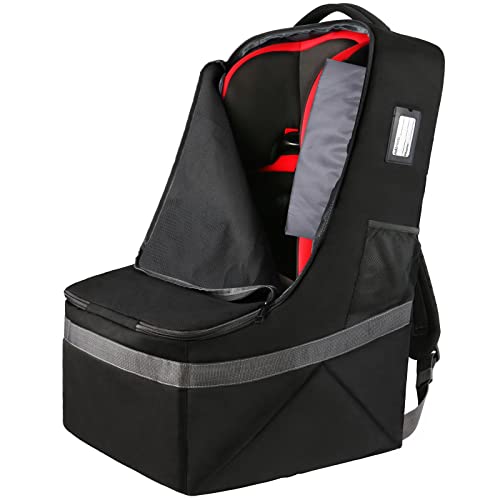
To protect your gear, you must use a durable, padded travel bag, as airlines are not responsible for damage. This addresses the major fear of your expensive and safety-critical equipment being broken by baggage handlers. While simple drawstring bags can prevent scuffs and dirt, they offer no impact protection.
A car seat’s primary function is safety, and unseen hairline fractures from being dropped can compromise its structural integrity. The FAA recommends against using a car seat that has been in a “crash,” and a severe drop during handling could mimic that level of impact. Therefore, investing in protection is non-negotiable.
Here are the most effective ways to protect your equipment:
* Use a Padded Bag: A padded car seat travel bag is the best defense. It cushions the seat against impacts and protects sensitive plastic components.
* Remove Loose Parts: Take off any removable cup holders, snack trays, or canopies and pack them in your luggage to prevent them from snapping off.
* Take Photos Beforehand: Snap a few pictures of your gear before you check it. This provides a clear record of its condition in case you need to file a claim for significant damage (where covered).
* Inspect Upon Arrival: As soon as you retrieve your items on the jet bridge, give them a quick inspection. If you see any damage, report it to the airline’s baggage service office before leaving the airport.
FAQs About can you gate check a car seat and stroller
Can I use my car seat on the plane for my child?
Yes, you can, provided you have purchased a separate ticket for your child and the car seat is FAA-approved. Look for a sticker on the car seat that says, “This restraint is certified for use in motor vehicles and aircraft.” Using a car seat onboard is the safest way for a child to fly, according to the FAA.
Do I have to pay to gate check a stroller or car seat?
No, virtually all major airlines allow you to check one stroller and one car seat per child completely free of charge. These items are considered essential child equipment and do not count toward your regular checked or carry-on baggage allowance.
What about double strollers or heavy travel systems?
This is where you must check your airline’s policy carefully, especially American Airlines. Airlines like Delta, United, and Southwest do not have published weight limits, so most double strollers are fine. However, American Airlines requires any stroller over 20 lbs to be checked at the ticket counter, not the gate.
Should I take the car seat base with me?
It depends on your destination needs, but you can check the car seat base for free along with the seat itself. Many parents opt for a car seat that can be installed safely without the base (using a seatbelt path) to reduce bulk. If you do check the base, be sure to protect it in a travel bag.
Will the airline provide a bag to protect my items?
Some airlines may offer large plastic bags at the check-in counter, but you should not rely on this. These bags offer minimal protection from dirt and moisture and virtually no protection from impact. For reliable protection, it is always best to bring your own durable gate check bag.
What happens if my stroller or car seat is damaged?
You should file a damage report with the airline’s baggage service office immediately upon arrival, before leaving the airport. Take photos of the damage. Be aware that policies on liability vary greatly, and some airlines, like JetBlue, explicitly exclude strollers from damage coverage.
Can I gate check a folding wagon instead of a stroller?
On some airlines, yes. United Airlines is known for explicitly allowing one folding wagon to be checked at the gate for free instead of a stroller. Other airlines’ policies are less clear, so it’s best to confirm with the airline directly before your flight if you plan to bring a wagon.
Do I get my gate-checked items back during a layover?
Yes, and this is a primary reason to gate check. Your stroller and car seat will be brought up to the jet bridge at your connecting city, allowing you to use them during your layover. They will then be re-checked at the gate for your next flight.
Can I pack other items inside the car seat travel bag?
Officially, airline policies state that the bag should only contain the car seat or stroller. However, many parents use the extra space to pack diapers, blankets, or other soft items for added padding. Be aware that the airline is not liable for these extra items, and security may inspect the bag.
What if I’m flying with a lap infant who doesn’t have a ticket?
You are still entitled to check a car seat and stroller for the lap infant, free of charge. The allowance is tied to the child traveling, not whether they have a paid seat. You can gate check or counter check these items based on the airline’s specific policy.
Key Takeaways: Gate Checking a Car Seat and Stroller
- Free But Policies Vary: All major US airlines let you check one stroller and one car seat per child for free, but how and where you check them differs significantly.
- American Airlines is the Exception: Be cautious when flying American. They have a strict 20 lb weight limit for gate-checked strollers and only allow one item (stroller or car seat) to be checked at the gate.
- Gate Check for Convenience: Gate checking is ideal for using your gear in the airport and during layovers. Your items are returned on the jet bridge upon arrival.
- Protection is Your Responsibility: Airlines offer little to no liability for damage. Investing in a padded travel bag, especially for a car seat, is crucial to protect its safety and integrity.
- Always Get a Gate Check Tag: Whether at the ticket counter or the gate, ensure every item you plan to gate check receives a destination tag to prevent it from getting lost.
- Know FAA Rules for Onboard Use: To use a car seat in a plane seat, you must buy a ticket for your child, and the seat must have an FAA-approval sticker.
Final Thoughts on Gate Checking Your Gear
Traveling with children doesn’t have to be a stressful ordeal. While airline policies can seem confusing, the ability to check your essential gear like a car seat and stroller for free is a significant benefit for families. By understanding the key differences between airlines, knowing the step-by-step process at the airport, and taking proactive steps to protect your equipment, you can navigate your journey with confidence.
The most critical takeaway is to check your specific airline’s policy before you fly. A few minutes of research can save you from unexpected surprises at the airport, ensuring you and your little ones have a smooth and pleasant travel day.
Last update on 2026-02-04 / Affiliate links / Images from Amazon Product Advertising API