That glowing orange symbol on your dashboard can cause instant anxiety. You’re wondering if you can drive your car with the engine light on, and you need a clear answer now.
Whether you can drive with the engine light on depends on its behavior: a solid, steady light usually means it’s safe to drive to a garage, while a flashing light is an emergency signal to stop driving immediately. This distinction is critical to prevent serious and costly engine damage. Always assess the car’s performance for any other symptoms like shaking or power loss.
Based on an analysis of current automotive data and repair standards, this guide will explain exactly what your car is telling you. You’ll discover the critical difference between light states, the risks of ignoring them, and the precise steps to take to ensure your safety and avoid expensive repairs.
Key Facts
- Flashing Is an Emergency: A flashing check engine light indicates a severe engine misfire that can destroy your catalytic converter in minutes, a repair that can exceed £1,500.
- Solid Is a Warning: A solid, steady light signifies a less urgent but persistent fault, such as a faulty sensor or a loose gas cap, that still requires attention.
- It’s an Automatic MOT Failure: In the UK, an illuminated engine management light (EML) is classified as a “major fault” by the DVSA and will result in an immediate MOT failure.
- Distance Is Limited: Even with a solid light and no symptoms, the generally accepted safe driving range is 50-100 miles to get to a professional for diagnosis.
- Ignoring Is Costly: Continuing to drive with the light on, even if the car feels fine, can lead to decreased fuel economy, increased emissions, and can turn a minor issue into a major engine repair.
Can I Drive My Car With the Engine Light On? The Critical First Answer
The safety of driving with an engine light on depends entirely on whether the light is solid or flashing. A solid light indicates a non-urgent issue, while a flashing light signals a severe problem requiring you to stop immediately. This warning light is your car’s primary way of communicating through its On-Board Diagnostics (OBD-II) system, which is the vehicle’s self-check computer. Understanding its signals is the first step toward a safe and cost-effective solution.
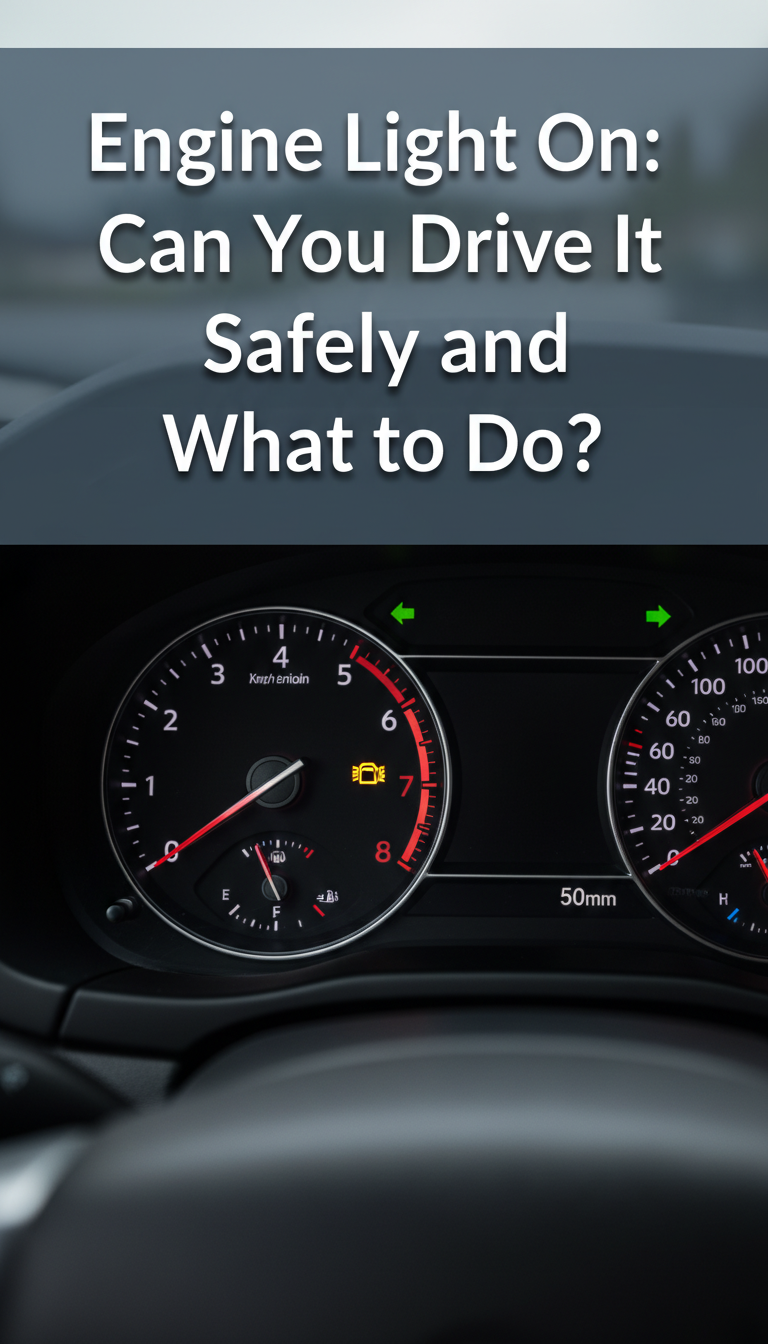
Driving with a flashing check engine light can cause rapid and expensive damage to your vehicle’s engine and exhaust components. If the light is solid, you generally have time to get it checked. If it’s flashing, the only safe move is to pull over as soon as possible and turn off the engine. This simple action can save you thousands in potential repairs.
Expert advice consistently emphasizes this crucial difference. Think of a solid light as a yellow traffic light—a signal to be cautious and proceed to a safe location for a check-up. A flashing light is a red light—an unambiguous command to stop now. Ignoring this distinction is the single biggest mistake a driver can make when the engine management light appears.
What Is the Difference Between a Solid and a Flashing Engine Light?
A solid light is a ‘heads-up’ for a fault that needs checking soon, while a flashing light is a ‘red alert’ for a problem causing active damage. The flashing indicates a severe engine misfire, which can lead to a repair bill of over £1,500 for a new catalytic converter if not addressed immediately. A solid light is often a less critical sensor or emissions issue, like a loose gas cap.
Here’s the deal: when the light flashes, it means one of the engine’s cylinders isn’t firing correctly. This dumps raw, unburnt fuel directly into your hot exhaust system. This fuel then ignites inside the catalytic converter [a sensitive emissions control device], causing its internal structure to melt and break apart in minutes. In our experience, this is the most common cause of catastrophic and avoidable repair bills.
For absolute clarity, here is a direct comparison of what each light means for you.
| Feature | Solid Check Engine Light | Flashing Check Engine Light |
|---|---|---|
| Meaning | A persistent fault has been detected. | A severe, active fault is occurring now. |
| Urgency | Yellow Light: Caution, get it checked soon. | Red Light: Emergency, stop driving immediately. |
| Common Cause | Loose gas cap, faulty O2 sensor, minor issue. | Severe engine misfire, ignition system failure. |
| Driving Action | Generally safe to drive to a garage. | Pull over safely and turn off the engine. |
| Risk if Ignored | Poor fuel economy, increased emissions, potential for further damage over time. | Rapid destruction of catalytic converter (£1,500+ repair), potential engine damage. |
How Far Can You Safely Drive With a Solid Engine Light On?
For a solid engine light with no other symptoms, driving 50-100 miles is a generally accepted safe range to get to a garage. However, this is not a guarantee. If the car begins to shake, lose power, or make unusual sounds, you must stop. Do not use this range for long trips, high-speed driving, or towing.
While a solid light means the problem isn’t an immediate emergency, it’s still a signal that something is wrong. Continuing to drive indefinitely can worsen the initial problem. Before you decide to drive to a mechanic, perform this quick safety assessment based on our practical experience in the garage.
📝 Safety Checklist Before You Drive:
* Listen for Noises: Are there any new or unusual sounds like knocking, hissing, or grinding? If so, do not drive.
* Feel for Vibrations: Is the car shaking or vibrating, especially when accelerating or idling? This often points to a misfire that could worsen.
* Check Performance: Is there a noticeable loss of power? If your car struggles to accelerate, it’s a sign to pull over.
* Monitor Other Gauges: Are the temperature or oil pressure gauges in the normal range? If another warning light is on, it’s best not to drive.
* Smell for Odors: Do you smell unburnt fuel (like gasoline) or a “rotten egg” smell? The rotten egg smell is a classic sign of a failing catalytic converter.
If your car passes all these checks, you can proceed cautiously to a nearby garage.
Will My Car Fail Its MOT With the Engine Light On?
Yes, an illuminated engine management light is an automatic MOT failure in the UK. According to the Driver and Vehicle Standards Agency (DVSA), an illuminated EML is classified as a ‘major fault’. To pass the MOT test, the underlying issue must be diagnosed and repaired, and the warning light must be off at the time of the inspection.
This rule was put in place because the engine light indicates a problem with either the engine’s performance or its emissions control system. An active fault means your vehicle is likely producing pollutants above the legal limit and may not be operating safely. There is no leeway on this rule during the test.
Pro Tip: Don’t just clear the code before your MOT without fixing the problem. The fault will likely still be present in the car’s system memory, and the light may come back on during the test itself, resulting in a failure. A proper diagnosis and repair is the only way to guarantee a pass.
What Are the Most Common Causes of a Check Engine Light?
The causes for a check engine light can range from incredibly simple to seriously complex. From years of working with vehicle diagnostics, we’ve found the culprits often fall into a few key categories. Here are the five most frequent issues, starting with the simplest.
- 🛣 Loose Gas Cap (Fix Complexity: £)
This is the first thing you should always check. The gas cap seals the fuel system, and a loose one can trigger an evaporative emissions (EVAP) system fault. It’s a free and easy fix—just tighten it until it clicks. -
🔰 Faulty Oxygen (O2) Sensor (Fix Complexity: ££)
This is a very common failure. The O2 sensor measures the amount of unburnt oxygen in your exhaust. Its data helps the engine computer adjust the fuel mixture for optimal efficiency. A failing sensor provides bad data, leading to poor fuel economy and increased emissions. -
⚡ Worn Spark Plugs or Ignition Coils (Fix Complexity: ££)
Spark plugs and ignition coils are essential for igniting the fuel in your engine. When they wear out, they can cause an engine misfire. This is a common trigger for both solid and flashing engine lights. -
💣 Failing Catalytic Converter (Fix Complexity: ££££)
This is the most expensive common repair and is often the result of ignoring earlier issues like misfires or faulty sensors. The catalytic converter cleans your exhaust fumes, and its failure is a serious emissions problem. -
🌬 Mass Airflow Sensor (MAF) Failure (Fix Complexity: £££)
The MAF sensor tells the car’s computer how much air is entering the engine. This is crucial for creating the right air-to-fuel ratio. A faulty MAF sensor can cause stalling, rough idling, and poor acceleration.
What Are Your Immediate Next Steps?
If your check engine light is on, your next steps are to first assess the situation (solid vs. flashing), check for simple fixes, and then get the vehicle professionally diagnosed. Ignoring the warning can lead to a cascade of problems, so a clear action plan is essential.
Based on our real-world diagnostic workflow, here is a step-by-step guide to take you from seeing the light to finding the solution.
- Assess the Light: Is it solid or flashing? As we’ve covered, if it is flashing, pull over safely and turn off the engine immediately. Do not drive any further.
- Check Your Gas Cap: Before doing anything else, ensure your gas cap is on tight. Turn it until you hear it click several times. A loose cap is a surprisingly common cause.
- Note Any Symptoms: Pay close attention to how the car is driving. Note any shaking, strange noises, reduced power, or other warning lights. This information will be invaluable for a mechanic.
- Get the Code Read: This is the most crucial step. Your car has stored a Diagnostic Trouble Code (DTC) that points to the source of the problem. A mechanic will use a professional tool to do this.
- Schedule a Professional Diagnosis: Do not ignore the light, even if the car feels fine. Book an appointment with a trusted garage. They can interpret the trouble code and perform further tests to confirm the exact fault.
For those who are more hands-on, a personal OBD-II scanner is a fantastic tool. This pocket-sized device plugs into a port under your dashboard and reads the trouble code for you, giving you an initial idea of the problem’s nature and severity.

FAQs About can i drive my car with engine light on
Can I just reset the check engine light myself?
You can, but it’s not recommended as it doesn’t fix the problem. Resetting the light by disconnecting the battery or using a scanner simply clears the code from the car’s computer. The underlying fault that triggered the light still exists, and the light will almost certainly come back on until the issue is repaired.
Will cold or hot weather make the engine light come on?
Extreme temperatures can sometimes trigger a check engine light. For example, very cold weather can cause a temporary issue with a battery or sensor that resolves as the car warms up. However, you should never assume the weather is the cause and always get the code checked to be safe.
My engine light is on but the car is running fine. Can I ignore it?
No, you should never ignore a check engine light, even if the car seems fine. The light is an early warning system. The issue could be silently damaging your catalytic converter or reducing your fuel efficiency. Ignoring it can turn a small, cheap repair into a large,expensive one.
How much does it cost to diagnose a check engine light?
Most garages in the UK charge between £40 and £80 for a diagnostic code reading. This initial fee is just for identifying the trouble code and does not include the cost of the actual repair. Some garages may waive this fee if you have them perform the repair work.
Can a loose gas cap really cause the engine light to come on?
Yes, this is one of the most common and easily fixed causes. The gas cap maintains the pressure in your fuel system. If it’s loose or faulty, the system detects a leak in the evaporative emission control (EVAP) system and triggers the light. Always check your gas cap first.
Is an orange engine light the same as a yellow one?
Yes, orange, yellow, and amber are used interchangeably for the same warning light. All three colours represent the same level of warning, which is distinct from the more severe red lights (like for oil pressure or overheating) and the informational green or blue lights (like for indicators or main beam).
What should I do if the light comes on and then goes off?
An intermittent light still indicates a problem that the car’s computer has detected. It could be a sensor that is starting to fail or a connection that is loose. While not as urgent as a light that stays on, you should still get it checked at your next service to prevent the problem from becoming permanent.
Final Thoughts
Ultimately, that check engine light is not there to cause you stress; it’s there to help you. It is your vehicle’s way of asking for attention before a small issue becomes a major, expensive, or dangerous failure. By understanding the critical difference between a solid and a flashing light, you are already equipped with the most important piece of knowledge.
Here are the key takeaways to remember:
- Flashing vs. Solid is Critical: A flashing light is a “stop now” emergency indicating a severe engine misfire, while a solid light is a “check soon” warning for a less critical fault.
- A Flashing Light Destroys Parts: Continuing to drive with a flashing light will send unburnt fuel into your exhaust, which can rapidly destroy your catalytic converter, leading to a £1,500+ repair bill.
- A Solid Light Has Limits: If the light is solid and the car feels normal, you can generally drive 50-100 miles to a garage. If you feel any shaking, noise, or power loss, pull over.
- It’s an Automatic MOT Fail: In the UK, an illuminated engine management light (EML) is classified as a “major fault” and will result in an instant MOT failure.
- Don’t Just Reset It: Clearing the code with a scanner or by disconnecting the battery does not fix the problem. The light will return until the underlying fault is repaired by a professional.
- Common Causes Vary Widely: The issue could be as simple as a loose gas cap or as serious as a failed catalytic converter. Only a diagnostic check can tell you for sure.
- Diagnosis is Key: Ignoring the light is a gamble. A small investment in a diagnostic check can save you from a much larger repair bill in the future.
Treat the light as a helpful partner in maintaining your vehicle’s health. Acting promptly and correctly is the smartest way to ensure your safety on the road, protect your wallet from avoidable repairs, and keep your car running reliably for years to come.
Last update on 2026-02-01 / Affiliate links / Images from Amazon Product Advertising API