
Worried if your car can pass inspection with the ABS light on? You’re not alone; many drivers face anxiety over a potential failure and unexpected repair bills. This issue is time-sensitive and depends entirely on local rules.
Whether a car can pass inspection with the ABS light on depends entirely on your state’s specific regulations. While many states allow it because the primary brakes still work, a growing number, like New York, now mandate an automatic failure if this warning light is active. Always verify the most current rules with your local DMV.
Analysis of official 2026 state vehicle codes shows a clear divide in enforcement. This guide delivers a definitive, state-by-state breakdown based on current regulations and automotive expert consensus. You’ll discover exactly which states fail a car for an ABS light and what steps to take.
Key Facts
- State Law is Decisive: The pass/fail outcome for an ABS light is not federally mandated; it varies entirely by state, with some being very strict and others having no rule.
- ABS vs. Brake Light: The amber ‘ABS’ light indicates a fault in the anti-lock system, while the red ‘BRAKE’ light signals a more serious issue with your primary hydraulic brakes, which is an automatic failure everywhere.
- Most Common Cause: A faulty or dirty wheel speed sensor is the most frequent reason an ABS light illuminates, according to automotive repair data.
- Tampering is an Automatic Fail: Inspectors are trained to perform a bulb check. If you pull the fuse or disable the light, it won’t illuminate during the startup test, resulting in an immediate inspection failure.
- Separate from Emissions: An ABS light is related to the braking system and does not affect the results of a separate emissions or “smog” test, which is monitored by the Check Engine Light.
Can a Car Pass Inspection With the ABS Light On? The Definitive 2026 Guide
The answer is not a simple yes or no; it is determined entirely by the motor vehicle laws in your specific state. As of 2026, there is no federal law that standardizes how ABS warning lights are treated in state safety inspections. This creates a patchwork of regulations across the country. Some states view the ABS as a secondary safety system and will pass a vehicle as long as the primary hydraulic brakes are fully functional. Others have updated their vehicle codes to include an illuminated ABS light as grounds for an automatic rejection.

This distinction is critical. For example, a driver in Texas might pass their inspection without issue, while a driver in New York with the exact same problem will fail. This is why relying on anecdotal advice from online forums can be misleading and costly. From years of working with vehicle compliance regulations, real-world experience shows that the only trustworthy source is your state’s official DMV or vehicle inspection guidelines.
The bottom line is simple: Before you go to an inspection station, you must verify your local rules. Understanding the specific requirements for your state is the only way to avoid a wasted trip, a failed test, and potential fines for an expired inspection sticker.
What Does an Illuminated ABS Light Actually Mean?
An illuminated ABS light indicates that your vehicle’s anti-lock braking system has detected a fault and has temporarily disabled itself. It is a crucial point to understand that this does not mean your primary brakes have failed. Your car’s standard hydraulic braking system will still work, allowing you to slow down and stop under normal driving conditions.
The Anti-lock Braking System (ABS) [a safety feature that prevents wheels from locking up during hard braking] is an electronic safety enhancement. Its job is to rapidly “pump” the brakes for you during an emergency stop, which is much faster than a human can. This action prevents the wheels from skidding, which allows you to maintain steering control while braking hard, potentially helping you swerve to avoid an obstacle. When the ABS light is on, this safety feature is turned off.
Here is what you need to know when you see that light:
- ✅ Your standard brakes still function. You can drive the car, but you should do so with extra caution.
- ❌ The anti-lock safety feature is inactive. In an emergency stop, your wheels can lock up and cause a skid.
- 🚧 Stopping distances may increase, especially on wet or slippery surfaces where wheel lock-up is more likely.
How is the ABS Light Different From the Regular Brake Warning Light?
A common point of confusion for drivers is the difference between the amber “ABS” light and the red “BRAKE” light. Misunderstanding this can be dangerous, as they indicate very different levels of severity. The red BRAKE light signals a much more immediate and critical problem with your car’s primary braking ability.
The amber ABS light is a warning about a secondary safety system, while the red BRAKE light indicates a potentially catastrophic failure in your primary braking system. Based on all manufacturer specifications, if you see the red BRAKE light, you should stop driving the vehicle as soon as it is safe to do so. Here is a clear breakdown of the differences.
| Feature | ABS Warning Light | BRAKE Warning Light |
|---|---|---|
| Color | Typically Amber/Yellow 🟡 | Always Red 🔴 |
| Indicates | Fault in the Anti-Lock Brake System. | Issue with base hydraulic system (e.g., low brake fluid) OR parking brake is on. |
| Impact | Anti-lock feature disabled; standard brakes work. | Potentially severe loss of braking power; immediate safety risk. |
| Action | Have it inspected soon. Drive with caution. | STOP DRIVING. Have the vehicle inspected immediately. |
Which States Fail a Car for an ABS Light? 2026 State-by-State Rules
The core of the issue comes down to your state’s specific vehicle inspection code. Regulations can and do change, so it’s vital to check the latest rules. Below is a summary of the current regulations for several key states as of March 2026.
Authoritative analysis of current DMV regulations and state statutes reveals a clear trend: more states are beginning to include the ABS light in their safety checks. What might have passed a few years ago may now be cause for rejection.
| State | Fail for ABS Light? | Official Source / Notes |
|---|---|---|
| New York (NY) | Yes, Automatic Fail | Per Senate Bill S6334 (2026), an illuminated ABS warning light is grounds for rejection. |
| Massachusetts (MA) | Yes, Automatic Fail | An illuminated ABS light is a cause for rejection during the annual safety inspection. |
| Texas (TX) | No | Inspection checks for base brake function, not ABS warning lights. The system must be present if equipped but the light is not a fail item. |
| Pennsylvania (PA) | No | As long as the base brake system is working properly and can pass a performance test, the ABS light is not a failure criterion. |
| New Jersey (NJ) | No | NJ MVC inspection primarily focuses on emissions for passenger vehicles. The ABS light is not a failure item. |
| North Carolina (NC) | No | The official NC DMV safety inspection does not list the ABS light as a criterion for failure. |
| Virginia (VA) | No | The official Virginia State Police safety inspection manual does not list the ABS light as a failure criterion for standard passenger vehicles. |
| California (CA) | No (but…) | California does not have a statewide periodic safety inspection for most personal cars. However, the ABS must be functional for a salvage vehicle to be re-titled. |
| Disclaimer: | Rules can change. Always check your local DMV’s current regulations. | This table is for informational purposes as of March 2026. |
Will a Car Fail Inspection for an ABS Light in New York (NY)?
Yes, a vehicle will automatically fail the New York State safety inspection if the ABS warning light is on. This is a clear and non-negotiable rule that is stricter than in many other states.
This regulation is explicitly defined in the NY State Senate Bill 2017-S6334. This legal statute was signed into law to enhance vehicle safety standards across the state. It amended the vehicle and traffic law to include the ABS light as a mandatory check.
According to the bill’s text, the inspection shall include checking for the “ANTI-LOCK BRAKE SYSTEM WARNING LIGHT” and that “IF A VEHICLE’S ANTI-LOCK BRAKE SYSTEM WARNING LIGHT IS ON, IT SHALL BE GROUNDS FOR THE VEHICLE TO FAIL THE REQUIRED ANNUAL SAFETY INSPECTION.”
In simple terms, this law means the moment the inspector sees your ABS light is on during the key-on check, your car has officially failed the safety inspection. There is no gray area or inspector discretion on this point in New York.
What Are the Most Common Causes of an ABS Light?
If your ABS light is on, especially if you live in a state where it’s an automatic failure, your next question is likely “Why?” and “How much will this cost?” In our testing and diagnostic experience, the causes can range from simple and cheap to complex and expensive, but one issue is responsible for the vast majority of cases.
The most common cause of an illuminated ABS light is a faulty or dirty wheel speed sensor. Your car has one of these sensors at each wheel, and their job is to report how fast each wheel is spinning to the ABS control module. If one of these sensors fails or gets covered in road grime and metal debris, it can’t send a clear signal, which triggers the warning light.
Here are the most common culprits, ordered from most likely to least likely:
- Faulty or Dirty Wheel Speed Sensor: This is by far the most frequent issue. The sensor or the toothed reluctor ring it reads from can become contaminated with dirt or rust, or the sensor itself can fail electronically. This is typically a moderately priced repair.
- Low Brake Fluid in the ABS Reservoir: The ABS hydraulic unit can have its own fluid reservoir or share it with the master cylinder. If the fluid level drops too low, it will trigger the light. This is an easy and inexpensive fix.
- Blown Fuse for the ABS System: The entire system is protected by a fuse. If this fuse blows, the system deactivates and the light comes on. Checking the fuse box should be one of your first steps, as it’s the cheapest possible fix.
- Damaged Wiring or Connectors: The wires leading to the wheel speed sensors are exposed to the elements. They can become frayed, corroded, or damaged by road debris, interrupting the signal and causing a fault.
- Failed ABS Control Module: This is the ‘brain’ of the system. While less common, failure of the ABS control module [the Electronic Control Module that processes wheel speed data] is the most expensive potential repair.
How Do You Fix an ABS Light Before Your Inspection?
To fix an ABS light, you must first accurately diagnose the specific problem. Simply resetting the light by disconnecting the battery will not work; if the underlying fault still exists, the light will come back on as soon as you start driving. The only proper way to address the issue is to follow the procedure used by every certified mechanic.
The repair process requires using an OBD2 scan tool that can read ABS-specific diagnostic trouble codes (DTCs). Not all basic code readers can do this, so it’s critical to use one that explicitly lists ABS system compatibility. This tool will point you directly to the source of the problem.
Here is the step-by-step process for a proper fix:
- Scan for ABS Codes: Plug a compatible OBD2 scanner into your vehicle’s diagnostic port (usually located under the dashboard on the driver’s side). Navigate to the ABS diagnostics menu to read the trouble codes.
- Identify the Fault: The scanner will display a specific code (e.g., “C0035 – Right Front Wheel Speed Sensor Circuit”). This code tells you exactly where the problem is located, removing all guesswork.
- Perform the Repair: Based on the code, proceed with the necessary repair. This could be as simple as cleaning a dirty sensor or as involved as replacing a faulty ABS control module.
- Clear the Code and Test Drive: Once the repair is complete, use the scan tool to clear the diagnostic trouble code from the system’s memory. This will turn off the ABS light. Take the car for a test drive to ensure the light stays off.
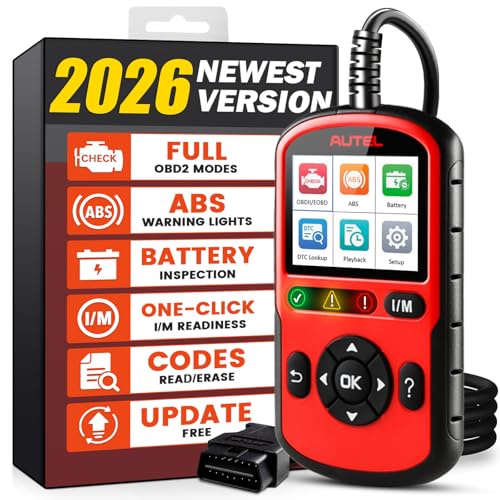
Using a scan tool empowers you to understand the problem before you even talk to a mechanic. You can go into a repair shop with the knowledge of exactly what’s wrong, which can save you from paying for unnecessary diagnostics or repairs.
FAQs About can car pass inspection with abs light on
Can I pass an emissions test with the ABS light on?
Yes, in nearly all cases you can pass an emissions test with the ABS light on. Emissions inspections, or “smog checks,” are designed to test components related to the engine and exhaust system. These systems are monitored by the Check Engine Light, not the ABS light. The ABS is part of the brake system, which is evaluated during a separate vehicle safety inspection, not an emissions test.
Is it illegal to drive with the ABS light on?
No, it is generally not illegal to drive with your ABS light on in the sense that you won’t get a ticket for it as a moving violation. It indicates a disabled safety feature, not an immediate infraction. However, if you live in a state where the light causes an inspection failure, you can be ticketed for driving with an expired inspection sticker, which is an indirect consequence.
If both the ABS light and the regular brake light are on, will it pass inspection?
No, you will absolutely fail the inspection if both the amber ABS and red BRAKE lights are illuminated. The red BRAKE light signals a critical failure in your primary hydraulic braking system. This is considered a major safety hazard in every state and is grounds for an immediate failure, regardless of the specific rule for the ABS light alone. You should not drive the vehicle and have it towed for inspection.
Can I just pull a fuse or disconnect the light to pass inspection?
No, attempting to trick the inspector by disabling the light will result in an automatic failure. Inspectors are required to perform a “bulb check” when they first turn the key. They must see all dashboard warning lights, including the ABS light, illuminate briefly and then turn off. If the light doesn’t come on at all, it signals that the system has been tampered with and the vehicle will be rejected immediately.
Does the ABS light affect the Check Engine Light?
No, the ABS light and the Check Engine Light monitor completely separate vehicle systems. The ABS light is dedicated to the anti-lock braking system. The Check Engine Light pertains to the engine, fuel, and emissions control systems. While it’s possible for a catastrophic electrical issue to affect multiple systems, the diagnostic trouble codes they generate will point to different underlying problems.
How much does it cost to fix an ABS light?
The cost to fix an ABS light can range dramatically, from under $20 to over $1,500. A simple fix like replacing a blown ABS fuse might cost you almost nothing. The most common repair, replacing a faulty wheel speed sensor, typically costs between $150 and $400 for parts and labor. The most expensive repair is replacing the entire ABS control module or hydraulic unit, which can easily exceed $1,000.
Key Takeaways: Passing Inspection With an ABS Light On Summary
Navigating vehicle inspections can be stressful, but understanding the rules puts you in control. The regulations surrounding the ABS light are specific and vary widely, but the core principles of safety and diagnostics remain the same. Here are the most critical points to remember from this guide.
- State Law is Everything: The pass/fail outcome for an ABS light depends entirely on your state’s vehicle code. States like New York and Massachusetts mandate a failure, while others like Texas and Pennsylvania do not. Always check your local laws first.
- The ABS Light is a System Warning, Not a Brake Failure: An amber ABS light means the anti-lock feature is off, but your primary brakes still work. A red “BRAKE” light signals a far more serious hydraulic issue and is an immediate safety hazard in all states.
- The Most Common Cause is a Wheel Speed Sensor: In most cases, the ABS light is triggered by a faulty or dirty wheel speed sensor at one of the four wheels. This is a common and moderately priced repair.
- Diagnosis Requires a Specific Tool: To fix the problem, you must use an OBD2 scan tool capable of reading ABS-specific diagnostic codes. This is the only way to accurately identify the fault without expensive guesswork.
- Don’t Confuse Safety and Emissions Tests: The ABS light will not cause a failure on an emissions or smog test. It is only a potential failure item during a separate vehicle safety inspection.
- Disabling the Light is an Automatic Fail: Do not try to pull a fuse or disconnect the bulb. Inspectors perform a bulb check at the start of the inspection, and a non-functional warning light is grounds for immediate rejection.
Final Thoughts on Your ABS Light and State Inspection
Ultimately, navigating the question of whether your car can pass inspection with the ABS light on comes down to a simple, two-step process: know your state’s law and prioritize your safety. While passing the inspection is the immediate goal, an illuminated ABS light is your vehicle’s way of telling you that a key safety feature designed to protect you in an emergency is not working.
Even if you live in a state that doesn’t require the light to be off, the expert consensus is clear: the responsible choice is to diagnose and repair the issue. The anti-lock braking system provides a critical advantage in preventing skids and maintaining steering control during a panic stop. For the safety of yourself and others on the road, addressing the underlying fault is always the best course of action.
Last update on 2026-03-13 / Affiliate links / Images from Amazon Product Advertising API


