
Wondering if your Prius can jump-start another car? You’re not alone, and it’s a critical question when a dead battery is involved. Many struggle with the conflicting information found online, creating confusion in a stressful situation.
Yes, a Toyota Prius can be used to jump-start another car, but it is not recommended by Toyota due to the risk of damaging the Prius’s sensitive electronics. The Prius’s 12V system has limited power and is not designed to provide the high cranking amps needed by a standard car. This action carries a significant risk of costly repairs.
Based on an analysis of official manufacturer warnings and real-world technician reports, this guide provides a complete picture. You’ll discover the specific risks involved, why the Prius is different, and the one “unofficial” method that minimizes danger if you must proceed. This reveals exactly how to protect your vehicle from expensive damage.
Key Facts
- Official Warning: The Toyota Owner’s Manual for most Prius models explicitly states not to use the vehicle to jump-start another car, as it can cause serious damage to the hybrid system.
- High Financial Risk: The primary component at risk is the inverter/converter assembly, a repair that can cost thousands of dollars and may be denied under warranty if the damage is from an improper jump.
- Low-Amperage Design: The Prius’s 12V auxiliary battery is small and designed only to power up the car’s computers and accessories, not to provide the high cranking amps needed to start a conventional engine.
- Dedicated Jump Terminal: For safety, the Prius has a dedicated jump-start terminal in the engine bay, which should always be used instead of connecting directly to the 12V battery in the trunk.
- Safer Alternative Exists: Portable jump starters are a purpose-built, safer alternative that eliminates the risk to the Prius by not connecting the two vehicles’ electrical systems together.
Can a Prius Really Jump Start Another Car?
Yes, you can jump-start another car with a Prius, but it comes with significant risks and is officially discouraged by Toyota. The core of the issue is that the Prius’s 12-volt auxiliary battery is not designed for the high-amperage draw required to crank a conventional engine. Attempting to do so can potentially damage the Prius’s expensive inverter or other sensitive electrical components. If you absolutely must proceed, a specific, safer method is required to mitigate these dangers.

The situation creates a conflict between what is technically possible and what is financially wise. Many people have successfully used their Prius for a jump start without immediate, obvious damage. However, this is a gamble. The electrical system is simply not built for this kind of output. The risk isn’t just theoretical; it’s a scenario that certified hybrid technicians warn against based on real-world repair cases.
Think of it this way: you are asking a system designed for precision and efficiency to perform a brute-force task it was never intended for. Before you connect any cables, it’s crucial to understand the “why” behind the warnings and the specific components you are putting at risk. This guide will walk you through the manufacturer’s reasoning, the unique nature of the Prius electrical system, and the step-by-step procedure for the least risky method if you have no other choice.
Why Does Toyota Officially Warn Against Using a Prius to Jump Start Another Car?
Toyota warns against using a Prius to jump another car to prevent damage to its sensitive and costly electrical system. Unlike a conventional car, the Prius has a complex hybrid architecture where a small 12V battery works in tandem with a high-voltage system. The main concerns cited by the manufacturer are overloading the 12V battery, damaging the inverter, and blowing critical fuses.
Manufacturer Advisory: The Toyota Owner’s Manual for most Prius models contains a clear and direct warning, often stating something similar to: “Do not use your vehicle to jump-start another vehicle. The sudden voltage change can damage your vehicle.”
This warning is not just a casual recommendation; it’s a safeguard to protect you from extremely expensive repairs. Here are the primary risks involved:
- 💥 Inverter Damage: This is the number one concern. The inverter is a complex piece of electronics that manages power between the hybrid battery, the electric motors, and the 12V system. It is not designed to handle the massive and unstable power draw of jump-starting another car. A voltage spike or improper connection can fry the inverter, a repair that often costs thousands of dollars.
- 🔧 Blown Fuses: The Prius has several critical fuses, including a main fusible link, that protect its electrical systems. The high current demand from a jump start can easily blow these fuses, potentially leaving your Prius completely disabled and unable to start, even though it was running moments before.
- 📱 Electronic System Failure: Beyond the inverter, the Prius is filled with sensitive control modules for everything from the engine to the brakes. An unexpected voltage fluctuation during a jump start can damage these computers, leading to a host of electronic gremlins that are difficult and costly to diagnose and repair.
How Does a Prius’s Electrical System Make It Different?
A Prius electrical system has two distinct batteries: a large high-voltage (HV) battery for propulsion and a small 12V auxiliary battery for accessories and computer startup. This dual-battery setup and the absence of a traditional alternator are what make it fundamentally different from a regular car and ill-suited for giving jump starts. Understanding this difference is key to appreciating the risk.
The core of the system is the relationship between its main components:
- High-Voltage (HV) Traction Battery: This is the large, powerful battery pack (often 200+ volts) that actually powers the electric motors to move the car. During a jump start, this battery is isolated and does not provide power to the jumper cables.
- 12V Auxiliary Battery: This is a small battery, often similar in size to one for a motorcycle. Its only job is to power the car’s lights, radio, and, most importantly, boot up the computers that control the hybrid system. It does not have the high “cranking amps” needed to turn over a conventional gas engine.
- DC-DC Converter: The Prius does not have a traditional alternator. Instead, it uses a DC-DC converter to step down voltage from the main HV battery to recharge the small 12V auxiliary battery. This converter is designed for steady, low-amperage charging, not for the sudden, massive power surge a jump start demands.
Here is a clear comparison of the systems:
| Feature | Conventional Car | Toyota Prius |
|---|---|---|
| Primary Battery | Single 12V lead-acid battery | Small 12V auxiliary + Large High-Voltage pack |
| 12V Battery’s Job | Provide high cranking amps to start engine | Power computers and accessories only |
| Charging System | Engine-driven alternator | Electronic DC-DC Converter |
| Jump Start Design | Built to both give and receive jumps | Designed only to receive a jump safely |
This design means when you try to jump another car with a Prius, you are demanding hundreds of amps from a small 12V battery and a charging system that were designed to handle a fraction of that load. This overload is what puts the entire electronic system at risk.
How Do You Safely Jump Start Another Car With a Prius? (The Unofficial Method)
Before you begin, understand this is an unofficial procedure that goes against manufacturer recommendations and carries real risk. This method is designed to minimize that risk by using the Prius as a battery charger rather than a high-amperage cranking source. Proceed with extreme caution.
- 🚗 Preparation: Park the Prius close enough for the cables to reach the other car, but do not let the vehicles touch. Engage the parking brake on both cars and turn them completely off.
- 🔍 Locate Prius Jump Terminal: Open the Prius hood. Do NOT go to the battery in the trunk. Locate the main fuse box in the engine bay. Open its plastic cover to reveal the dedicated jump-start terminal, which is usually covered by a small red plastic cap marked with a “+”.
- 🔴 Connect Positive (Red) Cable: Attach one red clamp to the Prius’s positive (+) jump-start terminal. Then, attach the other red clamp to the positive (+) terminal post on the dead car’s battery.
- ✋ Connect Negative (Black) Cable: Attach one black clamp to the dead battery’s negative (-) terminal post. Crucially, attach the other black clamp to an unpainted, solid metal bolt or bracket on the dead car’s engine block, away from the battery. This is the chassis ground.
- ⏲ Charge the Dead Battery: Start the Prius and let it run in the “Ready” mode for at least 5 minutes. Do NOT rev the engine. You are now slowly and safely transferring charge from the Prius’s system to the dead battery.
- 🔧 Attempt to Start: CRITICAL STEP: Before the other person tries to start their car, turn the Prius completely OFF. This disconnects its sensitive electronics from the circuit, protecting it from the massive power draw of the other car’s starter.
- 🚦 Start the Dead Car: With the Prius turned off, have the other person try to start their car. If it starts, great. If not, you can repeat step 5 for another 5 minutes of charging, but do not attempt to crank the dead car while the Prius is running.
- 🔨 Disconnect Cables: Once the other car is running, carefully remove the cables in the exact reverse order you connected them: black clamp from the chassis ground, black clamp from the battery, red clamp from the dead battery, and finally the red clamp from the Prius.
What Are the Signs of Damage After Using a Prius for a Jump Start?
If an improper jump start has damaged your Prius, the signs can range from subtle electronic quirks to a car that won’t start at all. Here are the most common symptoms to watch for, listed from most to least severe.
- Hybrid System Warning Light: An amber or red warning light on the dashboard, often looking like a car with an exclamation point or text that reads “Check Hybrid System,” is the most serious sign. If you see this, stop driving immediately and have the car inspected by a hybrid specialist.
- Car Won’t Go into “Ready” Mode: You might be able to turn the car on (powering the accessories), but the green “Ready” indicator on the dash will not illuminate. This means the hybrid system is not engaging, and the car cannot be driven. This often points to a blown main fuse or an inverter issue.
- Total Power Failure: The car is completely unresponsive, with no lights or sounds when you press the power button. This almost always indicates that the main fusible link has blown, completely cutting off power from the 12V battery to the rest of the car.
- Blown Accessory Fuses: A less severe but still problematic sign is when specific electronics stop working. The radio, power outlets, interior lights, or power windows may be dead. This indicates that a smaller, specific fuse blew from the voltage irregularity, and you were lucky the damage wasn’t more widespread.
Is a Portable Jump Starter a Safer and Better Alternative?
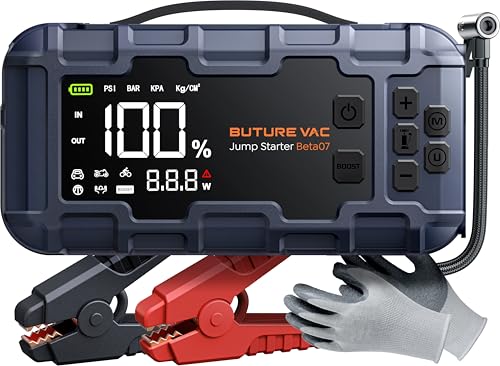
Yes, a portable jump starter is an infinitely safer, more reliable, and all-around better alternative to using a Prius. These devices are specifically designed for one purpose: to deliver the high cranking amps needed to start a dead battery safely. For any Prius owner, a portable jump starter is not just an accessory; it’s essential safety equipment.
Using a portable jump starter completely eliminates the primary risk because you are not connecting the Prius’s sensitive electrical system to another vehicle. It is a self-contained power source that bypasses the need for a second car entirely.
Here’s how the two methods stack up:
| Feature | Using a Prius for a Jump | Using a Portable Jump Starter |
|---|---|---|
| 🛢 Risk to Prius | High (potential for thousands in damage) | Zero |
| 💰 Cost | Free (but a huge financial gamble) | $50 – $150 (one-time investment) |
| 🔧 Simplicity | Complex, multi-step, high-risk procedure | Simple, two-clamp connection, low risk |
| 🚘 Convenience | Requires two cars parked nose-to-nose | Self-contained, works anywhere, anytime |
| ⏰ Speed | Slow (requires minutes of charging) | Provides instant cranking power |
The conclusion is clear. The small, one-time cost of a quality portable jump starter provides complete peace of mind and protects the significant investment you have in your hybrid vehicle. It’s the responsible choice for any Prius owner.
FAQs About can a prius jump start another car
Can a Prius jump start a truck or SUV?
It is extremely inadvisable to try and jump-start a large vehicle like a truck or SUV with a Prius. The large engines in these vehicles require a very high number of cranking amps, far exceeding what the Prius’s small 12V system can safely provide. Attempting this dramatically increases the risk of damaging your Prius’s inverter and electrical system.
Can a Prius Prime or Prius c jump start another car?
The same warnings apply to all Prius models, including the Prime, C, and V. While the exact battery and system configurations may vary slightly, they all operate on the same principle: a small 12V auxiliary battery that is not designed to provide high-amperage jump starts. The risk of damaging sensitive electronics remains high across the entire Prius family.
Can you jump-start the Prius itself?
Yes, absolutely. The Prius is designed to receive a jump start safely. You connect the jumper cables to the dedicated jump-start terminal under the hood (for most models) just as you would when giving a jump. The system is built to accept this incoming charge without issue.
Is the Prius 12V battery in the trunk?
On many popular Prius models (like the 3rd and 4th generation liftback), the 12V battery is located in the trunk or rear cargo area. This is why it’s critical to use the dedicated jump-start terminal under the hood for all jumping procedures (both giving and receiving). Accessing the trunk battery directly is unnecessary and more difficult.
What happens if I connect the jumper cables directly to the Prius battery in the trunk?
While technically possible, it is not the recommended procedure. It’s more difficult, and the primary risk is connecting the cables in reverse polarity in a cramped space. The dedicated jump-start post under the hood is the manufacturer-provided, safest point of connection for any jump-starting activity.
How long should I run my Prius after it has been jump-started?
After receiving a jump start, you should leave your Prius in the “Ready” mode for at least 20-30 minutes. You do not need to rev the engine. Simply letting the hybrid system run will allow the DC-DC converter to recharge the 12V auxiliary battery. If the battery dies again shortly after, it likely needs to be replaced.
Can a Prius jump start a motorcycle or lawnmower?
This is less risky but still not recommended. While a motorcycle has a much smaller battery, there is still a risk of voltage-related issues. The safest method for any vehicle, large or small, is to use a dedicated portable jump starter, which avoids connecting the Prius’s electrical system to another vehicle entirely.
Will jumping another car void my Prius warranty?
It could, especially if the jump-start leads to electrical damage. If a technician determines that a failure of the inverter or another electronic component was caused by an improper jump start (which is explicitly warned against in the manual), the manufacturer could deny the warranty claim for that repair.
What kind of jumper cables should I use?
If you must use jumper cables, use a heavy-gauge set (4-gauge or lower is ideal). Thicker cables can handle electricity with less resistance and are safer. However, a high-quality portable jump starter is a far better investment for any Prius owner than expensive jumper cables.
Is it really that bad to use my Prius to jump start another car?
Yes, the risk is real and the potential cost is high. While many people have done it without apparent issue, they were lucky. A new inverter can cost thousands of dollars to replace. Compared to the ~$100 cost of a quality portable jump starter, the risk is simply not worth the reward.
Key Takeaways: Prius Jump Start Safety Summary
- Official Warning is Clear: Toyota explicitly warns against using a Prius to jump-start another vehicle in the owner’s manual. The primary reason is to protect the expensive and sensitive inverter and other electronics from damage.
- The Risk is Financial: The core of the problem is the Prius’s small 12v auxiliary battery and its reliance on a DC-DC converter instead of a robust alternator. An improper jump can cause thousands of dollars in damage, which may not be covered by warranty.
- The “Charger” Method is Safest: If you absolutely must proceed, the safest unofficial method is to use the Prius as a battery charger, not a cranking source. Connect the cables correctly, let the Prius run in “Ready” mode for 5-10 minutes, then turn the Prius OFF before the other car attempts to start.
- Use the Under-Hood Terminal: Always use the dedicated jump start terminal located in the engine bay’s fuse box for any jump-starting procedure. Never try to connect directly to the 12V battery if it is located in the trunk.
- A Portable Jump Starter is the Best Solution: The single best and safest option is to avoid the risk entirely. A quality portable jump starter is a small investment that completely protects your Prius and is more convenient than jumper cables.
- Know the Warning Signs: After a jump, a hybrid system warning light or the car failing to go into “Ready” mode are serious signs of damage that require immediate attention from a qualified hybrid technician.
- Receiving a Jump is Perfectly Safe: While giving a jump is risky, a Prius is designed to safely receive a jump start when its own 12V battery is dead.
Final Thoughts on Using Your Prius for a Jump Start
Ultimately, while it is physically possible to jump-start another car with a Prius, the significant risk of causing thousands of dollars in damage to the electrical system makes it an unwise choice. The vehicle’s architecture—from its small 12V auxiliary battery to its sensitive inverter—is simply not engineered for the brute force of cranking another car’s engine. Every time you do it, you are taking a significant financial gamble.
The most responsible and expert-recommended action for any Prius owner is to shift their thinking from “can my car do this?” to “what is the proper tool for this job?” In this case, the proper tool is a portable jump starter. Investing in one is a small, one-time cost that provides complete peace of mind, ensures you can help yourself or others safely, and protects the complex, valuable technology in your Prius for years to come.
Last update on 2026-03-13 / Affiliate links / Images from Amazon Product Advertising API


