
Wondering if your car can pass inspection with the airbag light on? You’re not alone; many drivers worry when this specific warning appears right before their inspection is due. It creates uncertainty about unexpected failures and costly repairs.
Whether a car can pass inspection with the airbag light on depends entirely on your state’s specific regulations. While many states will automatically fail a vehicle because the light indicates a safety system malfunction, some states do not include the airbag system as part of their standard inspection. Always check your local 2026 DMV rules for a definitive answer.
Based on an analysis of official state inspection guidelines, this guide breaks down the complex rules. We will clarify why the answer varies so much and provide a state-by-state breakdown for key areas. You will discover exactly which dashboard lights matter and what your next steps should be.
Key Facts
- State Law is Supreme: A vehicle’s ability to pass with an airbag light on is determined exclusively by state-level regulations, not a federal standard.
- Automatic Failure in Many States: In states with stringent safety checks like New York and Massachusetts, an illuminated airbag light is grounds for an immediate inspection failure.
- Not All Inspections are Equal: A safety inspection is different from an emissions or “smog” test. An airbag light will not cause you to fail an emissions test.
- Recent Rule Changes: Some states, like Virginia, have recently changed their laws, making them more lenient and no longer failing vehicles for this issue as of late 2023.
- Resetting is Not a Fix: Simply clearing the code without repairing the underlying fault is ineffective. The light will reappear once the system runs its self-check, usually upon starting the car.
Can a Car Pass Inspection With the Airbag Light On?
The answer is not a simple yes or no; it depends entirely on your state’s vehicle safety standards. An illuminated airbag light indicates a fault within the Supplemental Restraint System (SRS), which is a critical safety feature. For this reason, many jurisdictions will fail a car for it. However, since there is no federal law governing inspection criteria, the rules vary significantly from one state to another.

Real-world experience shows that states like New York have a zero-tolerance policy, while others, such as Texas, do not include the SRS system in their standard safety check. Some states have even changed their rules recently. For example, a 2026 Virginia state police bulletin updated their criteria, showing how fluid these regulations can be. Do you know your state’s current rule? It is crucial to distinguish between a safety inspection, which checks components like brakes and lights, and a separate emissions test that measures exhaust pollutants.
Key Takeaway: You must verify the specific 2026 rules for your state. Never assume the law is the same everywhere.
Why Is There No Single “Yes or No” Answer for an Airbag Light Inspection?
The primary reason for varied airbag light rules is that safety inspections are governed by individual states, not a single federal law. This creates a patchwork of regulations across the country. Understanding the “why” behind this inconsistency helps you navigate your local requirements effectively.
Here is the breakdown of why a universal answer doesn’t exist:
- State-Level Enforcement: While Federal Motor Vehicle Safety Standard 208 (FMVSS 208) mandates that cars are manufactured with airbags, it does not dictate how states must inspect them. Each state’s Department of Motor Vehicles (DMV) or State Police sets its own criteria for annual inspections.
- Safety vs. Emissions Inspections: Many drivers confuse these two separate tests.
- A safety inspection checks the operational integrity of your car’s safety systems. This includes brakes, steering, lights, and in many states, the Supplemental Restraint System (SRS).
- An emissions test (or smog check) only measures the pollutants your vehicle’s exhaust system releases. This test is primarily concerned with the Check Engine Light, not the airbag light.
- Varying Priorities: Some states place a heavy emphasis on all manufacturer-installed safety equipment, viewing any fault light as a critical failure. Other states have a more limited checklist, focusing only on essential systems like brakes and tires, and do not consider the airbag system a checkable item.
Think of it like state speed limits; although safe driving is required everywhere, the specific rules change the moment you cross a state line. The same principle applies to vehicle inspections.
Which States Fail a Car for an Airbag Light? (State-by-State Rules for 2026)
Because the answer to the core question is location-dependent, knowing your state’s specific rules is essential. Below is a breakdown of the regulations for several commonly searched states based on the latest 2026 information.
What Are the Airbag Inspection Rules in New York (2026)?
Verdict: FAIL
No, your car will fail the New York State safety inspection if the airbag light is illuminated. NY DMV inspection regulations (specifically CR-79) require that the Supplemental Restraint System (SRS) performs its self-test correctly. When you start the car, the airbag light should turn on briefly and then go off. A light that stays on indicates a failure of this test and is considered an automatic inspection failure.
What Are the Airbag Inspection Rules in Virginia (2026)?
Verdict: PASS
Yes, a car can now pass the Virginia safety inspection with the airbag light on. This is a recent and significant change. A Virginia State Police bulletin issued on October 19, 2023, instructed all official inspection stations to no longer fail vehicles for an illuminated airbag warning light. This update makes Virginia one of the more lenient states for this specific issue.
What Are the Airbag Inspection Rules in Texas (2026)?
Verdict: PASS
Yes, your car will pass the Texas safety inspection with the airbag light on. According to the Texas Department of Public Safety, the standard one-year vehicle inspection checklist does not include the Supplemental Restraint System (SRS). Therefore, an active airbag warning light is not grounds for failure. This contrasts sharply with stricter states like New York.
Which Other Dashboard Warning Lights Will Fail a Safety Inspection?
The airbag light is just one of many potential warnings you might see on your dashboard. Knowing which ones are critical for an inspection can save you time and stress. Based on a review of multiple state guidelines, here is how different lights generally affect safety and emissions tests.
| Warning Light | Will It Fail a SAFETY Inspection? | Will It Fail an EMISSIONS Test? | General Rule & Nuance |
|---|---|---|---|
| Check Engine Light | Almost Always FAIL | Almost Always FAIL | Indicates an engine or emissions system fault. Critical failure. |
| Airbag (SRS) Light | Often FAIL (State-Dependent) | Almost Never | Indicates a safety system fault. Not related to emissions. |
| ABS Light | Sometimes FAIL (State-Dependent) | No | Indicates an Anti-lock Braking System fault. Critical in some states. |
| Brake Warning Light | Almost Always FAIL | No | Indicates a serious hydraulic brake system issue (low fluid/pressure). |
| TPMS Light | Almost Never | No | Tire Pressure Monitoring System. Considered an informational warning. |
Expert Insight: The Check Engine Light is the most serious for passing any type of inspection, as it points to faults in systems that affect both safety and emissions. The primary Brake Warning Light is also a universal failure, as it signals a direct and immediate safety hazard.
What Causes the Airbag Light to Turn On and How Can You Fix It?
An illuminated airbag light means the onboard computer has detected a fault in the Supplemental Restraint System (SRS). While it’s a cause for concern, the problem is often one of a few common issues. Simply resetting the light is not a solution, as it will return until the underlying problem is fixed.
Here are the most common causes for an airbag system malfunction:
- Faulty Sensors: Modern cars have numerous sensors, including in the seat belts, front bumper, and passenger seat. The passenger occupant sensor, which determines if the passenger airbag should be active, is a frequent point of failure.
- Damaged Clockspring: The clockspring is a special rotary electrical connector in your steering column that allows the steering wheel to turn while maintaining a connection to the driver-side airbag. Over time, this part can wear out and break, triggering the light.
- Low Battery Voltage: Sometimes, a weak or dying car battery can cause a temporary glitch in the SRS module, logging a fault code and turning on the light.
- Stored Fault Code from a Previous Accident: Even a minor fender bender that didn’t deploy the airbags can be enough for the crash sensors to log a “fault code” in the airbag control module. This code often needs to be cleared with a specialized tool.
The first step to a proper fix is diagnosis. You need an OBD2 scan tool that is specifically designed to read SRS codes. A basic code reader will only check for engine faults and won’t see the airbag system.
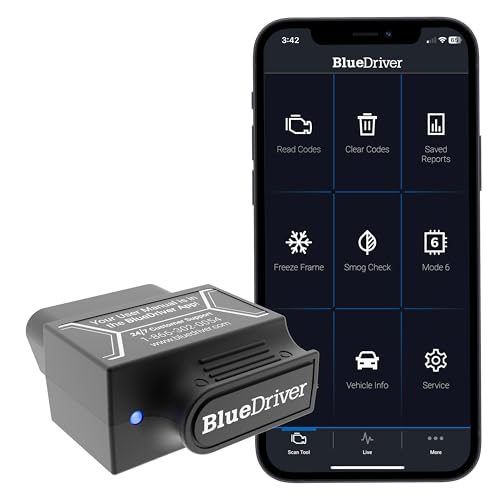
Using a capable scanner will give you a specific Diagnostic Trouble Code (DTC) that points to the exact component that is failing. For example, it can tell you if the fault is in the “driver-side pretensioner” or the “passenger occupant sensor.” Without this code, you would just be guessing at the repair. An ASE certified technician will always start with a scan before replacing any parts.
FAQs About can a car pass inspection with the airbag light on
Can I just reset or clear the airbag light to pass inspection?
No, you generally cannot just reset the airbag light to pass inspection. If the underlying fault that triggered the light has not been repaired, the system’s self-test will fail again upon starting the car, and the light will immediately turn back on. Inspection stations are aware of this and check that the light properly illuminates and then turns off.
Is it illegal to drive with the airbag light on?
While it is generally not illegal to drive with the airbag light on, it is extremely unsafe. The light signifies that the airbags may not deploy in a crash. In some jurisdictions, if you are in an accident and your airbags don’t deploy, you could face additional liability. Furthermore, selling a car with a known safety defect can have legal consequences.
Will a flashing airbag light fail inspection more than a steady one?
Yes, a flashing light is often considered a more severe fault and is just as likely, if not more so, to fail an inspection. A steady light indicates a current fault, while a flashing light can indicate a critical system malfunction or a fault in the diagnostic system itself. Both conditions mean the system is not operational and will result in a failure in states where airbags are inspected.
Does the passenger airbag “Off” light cause an inspection failure?
No, the passenger airbag “Off” light will not cause an inspection failure. This light is a normal part of the Occupant Classification System. It is designed to illuminate when the seat is empty or a lightweight object is in the seat, indicating that the passenger airbag is safely deactivated. It is not a fault indicator.
My airbag light is on because of a recall. Will it still fail?
Yes, even if the light is on due to a known recall, it will still fail inspection in a state that checks the SRS system. The inspection station’s job is to verify the current operational status of the vehicle, not the reason for the failure. You must have the recall service performed by a dealer to fix the fault and turn off the light.
How much does it cost to fix an airbag light?
The cost to fix an airbag light can range from under $100 to over $1,500. A simple diagnostic and reset might cost around $100-$150. A common repair like replacing a clockspring could be $300-$700. However, if the issue is with the airbag control module or multiple sensors, the cost can easily exceed $1,000.
Can a mechanic just disconnect the airbag light bulb?
No, this is illegal and fraudulent. Tampering with the dashboard warning lights to deceive an inspection is a crime in most states. Furthermore, inspection technicians are trained to watch for the bulb to illuminate during the initial “bulb check” when the car starts. If the light doesn’t turn on at all, it will also fail the inspection.
Does the airbag light affect an emissions or smog test?
No, the airbag light has no effect on an emissions or smog test. Emissions tests are concerned only with the vehicle’s exhaust output and the systems that control it, which are monitored by the Check Engine Light. The SRS is a completely separate system.
Can I sell a car with the airbag light on?
You can legally sell a car with the airbag light on in most places, but you must disclose it to the buyer. Failing to disclose a known safety defect like a non-functional airbag system can lead to lawsuits for fraudulent misrepresentation, especially if an accident occurs. It will also significantly lower the vehicle’s resale value.
Key Takeaways: Passing Inspection With an Airbag Light On
- State Law is a Decisive Factor – Whether you pass or fail is not a universal rule; it is determined entirely by your specific state’s vehicle inspection laws, which can change over time.
- Safety vs. Emissions Inspections are Different – The airbag light is a safety system issue and will not affect a separate emissions or smog test, which is primarily linked to the Check Engine Light.
- A Warning Light Means a Real Problem – An illuminated SRS light means one or more components of your airbag system are faulty and likely will not deploy in an accident. It should never be ignored.
- Diagnosis is the First Step to a Fix – Before spending money on repairs, use an OBD2 scanner capable of reading SRS codes or visit a certified mechanic to diagnose the exact fault.
- Resetting the Light is Not a Fix – Simply clearing the code without repairing the underlying issue will not work, as the light will return after the system’s self-test.
- Know Your Other Warning Lights – While an airbag light’s impact varies, a Check Engine Light or a primary Brake Warning Light will almost universally result in a failed inspection.
Final Thoughts
Navigating a vehicle inspection with a dashboard light on can be stressful, but understanding the rules is the first step toward a solution. The most important takeaway is that an airbag light is a critical safety warning that should be addressed, regardless of your state’s inspection laws. While some jurisdictions may allow you to pass, the system’s failure means you and your passengers are not protected as intended.
For peace of mind and ultimate safety, your best course of action is to have the system professionally diagnosed and repaired. By following the guidance in this article, you are now equipped with the knowledge to understand your local requirements, differentiate between warning lights, and take the correct steps to ensure your vehicle is both compliant and, more importantly, safe for the road.
Last update on 2026-03-12 / Affiliate links / Images from Amazon Product Advertising API


