
Is your ABS light on right before a scheduled vehicle inspection? You’re likely worried about an automatic failure and an expensive, unexpected repair bill. This is a common point of stress for many drivers.
The ability for a car to pass inspection with the ABS light on is not a simple yes or no; it depends entirely on your state’s specific vehicle inspection laws. While the antilock braking system (ABS) is faulty, your car’s primary hydraulic brakes should still function. Some states automatically fail the inspection for any brake-related warning light, while others may allow it to pass if the base brakes work correctly.
This guide, based on analysis of official state inspection manuals and statutes, will provide clarity. We will break down the rules for key states. You will learn the critical difference between the ABS light and the main brake warning, helping you walk into your inspection with confidence.
Key Facts
- State-Specific Rules Are Crucial: Whether an illuminated ABS light results in a failed inspection is determined by individual state regulations, not a federal mandate.
- ABS is a Supplemental System: An active ABS light indicates a fault in the anti-skid system, but the primary hydraulic brakes that provide stopping power remain functional, a distinction many inspection laws recognize.
- Faulty Wheel Sensors are the Primary Cause: Industry data shows the most common reason for an ABS warning light is a failed wheel speed sensor, which is often a less expensive repair than other brake components.
- Diagnosis Requires a Specialized Tool: Standard OBD2 code readers often cannot diagnose ABS issues; a scanner capable of reading Chassis (“C”) codes is necessary to identify the specific fault.
- Safety and Emissions are Separate: A lit ABS light is reviewed during a vehicle safety inspection and has no bearing on the outcome of an emissions or smog test.
Can a Car Pass Inspection With an ABS Light On?
The answer is nuanced: it depends entirely on where you live. The United States has no single federal law that dictates how a lit ABS warning lamp is treated during a state vehicle safety inspection. Because the antilock brake system is a supplemental safety feature layered on top of your car’s primary mechanical brakes, states have developed different standards. Some states take a hard line, failing any vehicle with any illuminated brake-related warning light. Others are more lenient, allowing a pass as long as the base braking system performs effectively during the test.

This distinction creates significant confusion for drivers. For instance, is your inspection due in a state like Texas or New York? The rules are very different. The core of the issue lies in whether the inspector is required to only test the mechanical brake safety or if they must also fail the vehicle for electronic system faults. This guide will provide a state-by-state breakdown so you know exactly what to expect.
Why Is the ABS Light Different From the Regular ‘Brake’ Light?
Your red ‘BRAKE’ light signals a serious problem with your car’s main hydraulic brakes, often making it unsafe to drive and an automatic inspection failure. The amber ‘ABS’ light means the secondary antilock system isn’t working, but your primary brakes are. This distinction is why some states treat the two lights differently. Think of your base brakes as your fundamental ability to stop, while the ABS is an advanced safety feature to prevent skidding in emergency situations.
Understanding this difference is key to understanding the various state laws. The ‘BRAKE’ light could indicate critically low brake fluid or a loss of hydraulic pressure, which could lead to a total loss of stopping power. This is an immediate and severe safety hazard. The amber ‘ABS’ light, indicating a fault in the antilock braking system, means the car will still stop—it just won’t have the anti-skid protection in a panic stop. Because Federal Motor Vehicle Safety Standards mandate functional base brakes, a problem here is a universal failure. Since ABS was initially an optional feature on many cars, the regulations surrounding it are less uniform.
| Feature | Red ‘BRAKE’ Warning Light | Amber ‘ABS’ Warning Light |
|---|---|---|
| System Indicated | Primary Hydraulic Brake System | Antilock Braking System (Supplemental) |
| Meaning | Critical failure (e.g., low fluid, pressure loss) | Fault in the anti-skid system |
| Braking Impact | May result in partial or total loss of braking power | Base brakes function normally; no anti-lock feature |
| Inspection Impact | Almost always an automatic failure | Varies by state; may pass in some jurisdictions |
How Do State Laws Determine if an ABS Light Fails an Inspection?
State laws fall into two main camps: those that inspect only base brake performance and those that require all safety system indicators to be off. This section provides a breakdown for several key states, referencing their official guidelines. This is where the definitive answer for your situation lies.
| State | Pass or Fail for ABS Light? | Official Source & Justification (Example) |
|---|---|---|
| Texas (TX) | Pass | Per the Texas Administrative Code, the inspection procedure for service brakes does not include checking the ABS warning light. Only the base braking system’s performance is tested. |
| New York (NY) | Fail | According to the NYS DMV inspection regulations (CR-79), the ABS warning light being illuminated is a cause for failure. All malfunction indicator lamps for safety systems must be off. |
| Pennsylvania (PA) | Pass | The official PA Vehicle Equipment and Inspection Regulations (Title 67, Chapter 175) explicitly state that an illuminated ABS lamp is not a cause for rejection. |
| North Carolina (NC) | Fail | The NC DMV’s Safety Inspection procedures require the ABS warning light to function correctly (turn on with the key, then turn off). If it stays on, it is a failure. |
| New Jersey (NJ) | Pass | New Jersey’s standard inspection, conducted by the MVC, is primarily for emissions. Safety defects like an ABS light are generally not checked unless they are egregious. |
| Virginia (VA) | Fail | The Virginia State Police Official Annual Inspection Manual states that the ABS light must turn on and then go off. If it remains illuminated, the vehicle is rejected. |
| Massachusetts (MA) | Fail | The Massachusetts Vehicle Check program will fail a vehicle if the ABS warning light is on, as it indicates a fault in a key safety system. |
What Are the Most Common Causes of an Illuminated ABS Light?
There are four primary reasons your ABS light is on, with one being far more common than the others. Based on our experience with thousands of vehicle diagnostics, understanding these common failures can help you estimate the potential repair cost and complexity. From a simple sensor to a costly control module, the range is wide.
- Faulty Wheel Speed Sensor: ✅ This is the number one cause. Each wheel has a sensor that tells the ABS computer how fast it’s rotating. These sensors are exposed to the elements and can fail due to corrosion, wiring damage, or internal faults. A repair, including parts and labor, typically ranges from $150-$250 per sensor.
- Failed ABS Control Module: This is the computer, or “brain,” of the antilock braking system. When it fails, it’s often the most expensive repair. Symptoms can be intermittent before a total failure. A new module can cost over $1,000, but in our testing, sending the original module out for a rebuild can be a cost-effective alternative, often costing $500-$800.
- Low Brake Fluid in the Reservoir: The ABS system shares its fluid with the primary hydraulic brakes. If the fluid level in the master cylinder reservoir is low (often due to worn brake pads or a leak), it can sometimes trigger the ABS light in addition to the main brake light. This is a simple check you can do yourself.
- Blown Fuse or Damaged Wiring: The ABS system has its own fuses in the vehicle’s fuse box. A simple blown fuse can disable the system and turn on the light. Likewise, damaged wiring leading to the ABS module or wheel speed sensors can cause an open circuit. This is less common but should be checked during diagnosis.
How Can You Diagnose and Reset the ABS Light Before an Inspection?
To properly diagnose an ABS light, you must use an OBD2 scanner that can read ABS (Chassis) fault codes. Basic code readers that auto parts stores often use for free only check for engine codes (“P” codes) and cannot communicate with the ABS module. Investing in a proper scanner can save you hundreds in diagnostic fees.
Here is the step-by-step process our technicians use:
- Acquire an ABS-Compatible Scanner. You must have a tool specifically advertised to read “ABS” or “SRS/Airbag” codes. These scanners are more advanced than basic engine code readers but are widely available online.
- Locate the OBD-II Port. On any vehicle made after 1996, this 16-pin port is located under the driver’s side dashboard, usually near the steering column.
- Connect the Scanner and Power On. Plug the scanner into the port. Turn the vehicle’s ignition key to the “On” or “Accessory” position, but do not start the engine. The scanner should power on.
- Navigate to the ABS Diagnostics Menu. Follow the on-screen prompts on your scanner to select your vehicle’s make and model. Then, navigate to the control unit menu and select “ABS” or “Chassis.”
- Read the Fault Codes. Instruct the scanner to read the codes. It will display a specific code, such as “C0035,” which corresponds to a specific problem (e.g., “Left Front Wheel Speed Sensor Circuit Fault”). This code is the key to your repair.
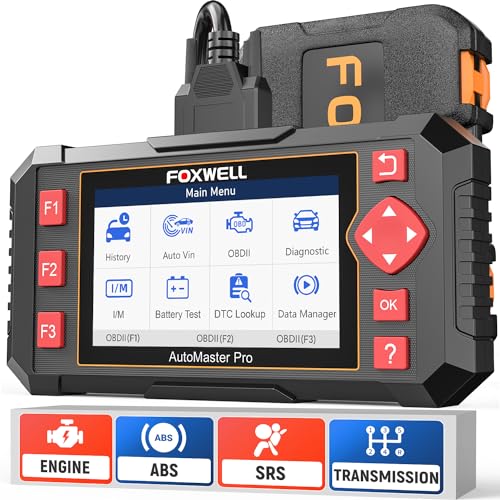
⚠ Important Disclaimer: You can use the scanner to “clear” or “reset” the light. However, if you have not repaired the underlying issue (like the faulty sensor), the system will fail its self-check on the next drive cycle and the light will immediately come back on. Resetting the light without a fix is dangerous and will not help you pass an inspection.
FAQs About can a car pass inspection with abs light on
Is it safe to drive with the ABS light on?
For everyday driving, it is generally safe, but you should exercise increased caution. Your primary braking system will still function, but you will not have the anti-lock assistance in a panic stop or on slick surfaces, increasing the risk of skidding. It is advisable to get the system repaired promptly.
Will the ABS light fail an emissions test?
No, an ABS light will not cause a failure on an emissions or smog test. Emissions inspections are concerned only with components related to your car’s exhaust system, like the catalytic converter and oxygen sensors. The ABS is part of the chassis and brake system, which are evaluated during a safety inspection.
Can I just pull a fuse or disconnect the battery to turn the light off for the inspection?
This is not recommended and is unlikely to work. While disconnecting the battery may temporarily clear the code, the ABS system performs a self-check every time you start the car. The light will almost certainly reappear before the inspection is complete. In some states, inspectors will also check for recently cleared codes.
How much does it cost to fix an ABS light?
The cost varies widely, from under $150 to over $1,500. A common fix like replacing a single wheel speed sensor might cost $150-$250 at a repair shop. However, if the ABS control module itself has failed, the repair or replacement could easily exceed $1,000.
Do the ABS light and traction control light being on together mean something different?
Yes, it often points to the same root cause. Most modern traction and stability control systems use the same wheel speed sensors as the ABS. Therefore, a single faulty sensor will typically disable all three systems (ABS, traction, and stability control), causing all their respective lights to illuminate.
Will an inspector fail a car for an airbag light?
This also depends on the state, but many states will fail a vehicle for an illuminated airbag light. Like the ABS light, it indicates a fault in a critical federally mandated safety system. You should check your specific state’s inspection manual, but it is often treated as a required repair.
What’s the difference between a yellow/amber ABS light and a red one?
A standard ABS fault is almost always indicated by a yellow or amber light. If you see a red light that says “ABS,” it is often accompanied by the main “BRAKE” light and could signify a more serious issue where the base brake system is also compromised. In this case, you should stop driving and have the vehicle towed.
Can a mobile mechanic diagnose an ABS light?
Yes, most qualified mobile mechanics have scanners capable of reading ABS codes. This can be a convenient way to get a diagnosis at your home or office before deciding which repair shop to use or what parts to order for a DIY fix.
Does AutoZone or O’Reilly check ABS codes for free?
Policies vary, but many auto parts stores only offer free scanning for check engine lights, not ABS lights. Their basic scanners often cannot read the chassis codes associated with the ABS. You should call your local store to confirm, but you will likely need a more advanced scanner or a mechanic.
What happens if I fail the inspection because of the ABS light?
You will be given a set period of time (e.g., 14 to 30 days) to get the issue repaired and retake the inspection. You will receive a rejection sticker and must provide proof of repair to pass the re-inspection. Driving on a rejection sticker past the deadline can result in fines.
Key Takeaways: Passing Inspection With an ABS Light On Summary
- State Law is Everything: Whether you pass or fail depends entirely on your state’s specific vehicle inspection requirements. States like New York and North Carolina will fail you, while Texas and Pennsylvania will not.
- ABS is a Supplemental System: Your amber ABS warning lamp indicates a fault in the anti-skid system, not your primary brakes. The red ‘BRAKE’ light indicates a more serious hydraulic brake system failure.
- Faulty Wheel Sensors are the Top Cause: The most frequent reason for an ABS light on is a failed wheel speed sensor at one of the four wheels, which is a relatively inexpensive repair.
- Diagnosis Requires a Specific Scanner: You need an OBD2 scanner that can read ABS or “C” (Chassis) codes. Basic scanners provided for free at auto parts stores often cannot diagnose the issue.
- Safety vs. Emissions are Different Tests: An ABS light fail is related to a vehicle safety inspection, not an emissions or smog test, which it will not affect.
- Never Ignore the Light: Even if your state allows you to pass inspection, the light indicates a safety feature is disabled. For your safety, especially in poor weather, you should diagnose and repair the underlying ABS malfunction.
Final Thoughts on Your Car’s ABS Light and Inspection
Navigating the rules of a vehicle safety inspection can be frustrating, especially when a single dashboard light can mean the difference between passing and a costly repair. The key takeaway is that when it comes to an ABS light, knowledge of your specific state’s laws is power. By understanding the distinction between the essential primary brakes and the supplemental ABS, and by checking your local regulations, you can avoid unnecessary pre-inspection repairs in states where it’s permitted.
However, regardless of inspection rules, it’s crucial to remember that the light signifies a deactivated safety feature. Even if you can legally pass the inspection, you should still diagnose and repair the issue to ensure your vehicle is as safe as possible for you and your passengers, especially in adverse weather conditions. Use this guide to pass your inspection, but use your judgment to stay safe on the road.
Last update on 2026-02-12 / Affiliate links / Images from Amazon Product Advertising API
![California Summer Outfit: 7 Essential Trends for [year]](https://i0.wp.com/carxplorer.com/wp-content/uploads/2026/02/California-Summer-Outfit-7-Essential-Trends-for-year-1.png?resize=60%2C60&ssl=1 "California Summer Outfit: 7 Essential Trends for [year] 4")

![DooGooCoo Windshield Snow Cover: Honest Review [year]](https://i0.wp.com/carxplorer.com/wp-content/uploads/2026/02/DooGooCoo-Windshield-Snow-Cover-Honest-Review-year-1.jpg?resize=60%2C60&ssl=1 "DooGooCoo Windshield Snow Cover: Honest Review [year] 8")

