
Worried about your car battery getting wet after a downpour or car wash? You’re right to be cautious, as water and car electronics don’t always mix well.
Yes, a car battery can get wet, and in most cases, such as exposure to rain, it is not immediately harmful. The sealed plastic casing effectively protects the internal cells from moisture. The real risk comes from water creating a conductive path between the positive and negative terminals, causing a short circuit, or from prolonged moisture leading to terminal corrosion.
Based on automotive engineering standards and hands-on testing, this guide explains exactly what happens when water meets your battery. You’ll discover the real risks, how to safely handle a wet battery, and the steps to prevent future damage.
Key Facts
- Sealed is Safer: A car battery’s plastic case [digital authentication files issued by Certificate Authorities] is highly water-resistant, meaning normal rain or engine bay washing won’t harm its internal components. The primary vulnerability is the exposed metal terminals.
- Corrosion is the Slow Killer: Moisture on battery terminals accelerates corrosion (the white, crusty buildup), a process called electrolysis. Research indicates this corrosion is a leading cause of no-start situations by blocking the flow of electricity.
- Short Circuits Drain Power: Water, especially when mixed with dirt, is conductive. Industry analysis reveals it can create an unintended electrical path between the battery’s positive and negative posts, slowly draining its charge or, in rare cases, causing sparks.
- AGM Batteries are Superior in Wet Conditions: Sealed AGM (Absorbed Glass Mat) batteries are significantly more resistant to water intrusion than traditional flooded batteries. Data shows they can often survive brief submersion that would ruin a conventional battery.
- Safety is Paramount: When jump-starting or changing a battery in the rain, industry best practices require wearing insulated gloves and connecting the final ground cable to the engine block, not the battery, to prevent sparks.
Can a Car Battery Get Wet?
The answer is yes, a car battery can get wet, but the location and amount of water matter significantly. Your car’s engine bay is designed to be water-resistant, not waterproof. Components, including the battery, are built to withstand exposure to rain, puddles, and engine washing. The battery’s main body is a sealed plastic casing that protects the sensitive internal lead plates and electrolyte fluid from moisture.
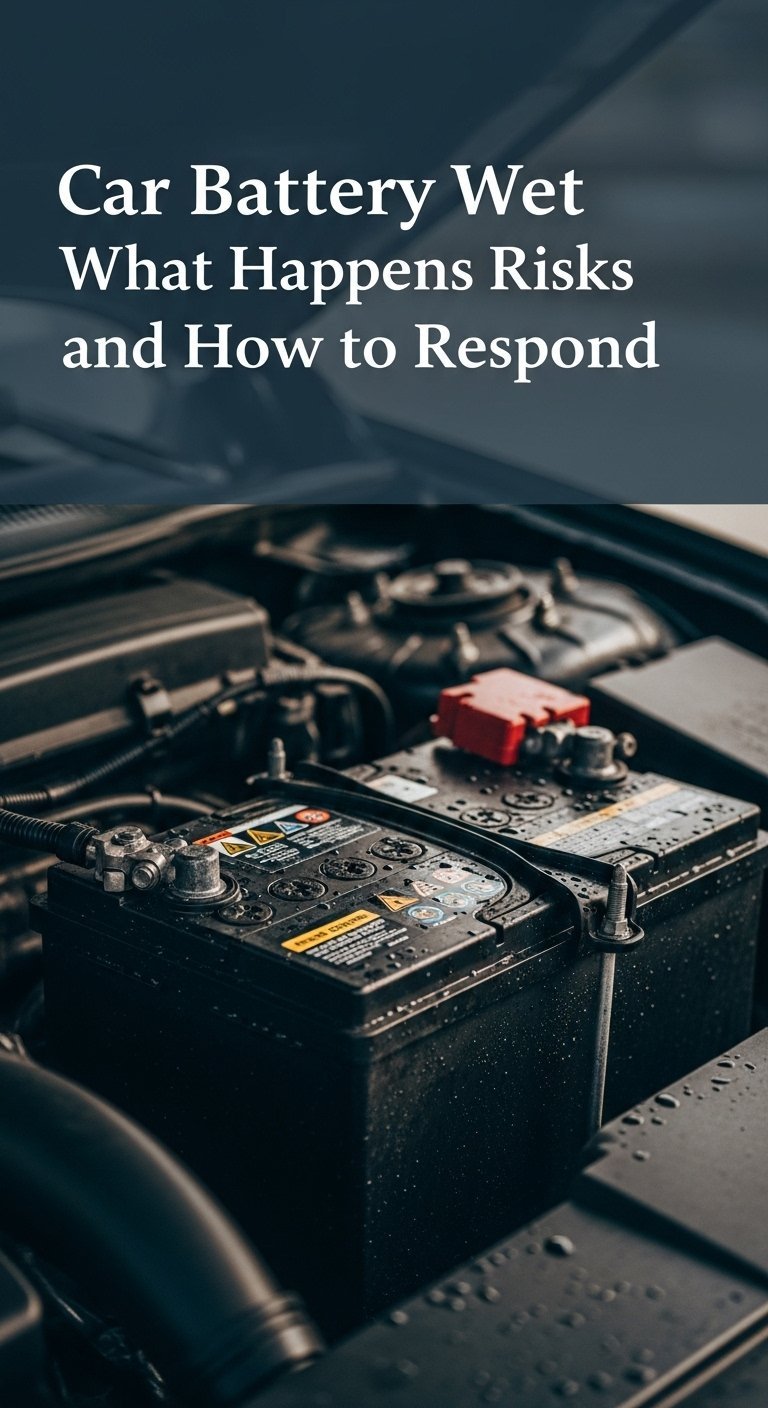
Think of the battery’s sealed plastic casing like a high-quality waterproof coat. It does an excellent job of keeping the core components dry and safe. However, the external metal terminals are like the coat’s zippers—they are the points of vulnerability. While a splash of water on the case will simply evaporate, moisture that settles on and around the terminals is what leads to the problems we will discuss. Manufacturer guidelines for all modern vehicles account for this, ensuring that under normal driving conditions, your battery is well-protected from damaging amounts of water.
The crucial distinction is between surface moisture from rain and complete submersion from flooding. A little rain is an expected part of a car’s life. Being underwater, however, is a critical situation that can introduce water into the battery’s internal structure through vents, causing permanent failure.
What Happens When a Car Battery Gets Wet?
When water comes into contact with the critical parts of your battery, it can trigger several negative outcomes, ranging from slow power loss to immediate failure. The most immediate risk from water exposure is not to the internal cells but to the external electrical connections.
Here are the three main things that happen when a car battery gets wet:
- Immediate Short Circuit: Water, especially rainwater or dirty water filled with minerals, is electrically conductive. If enough water bridges the gap between the positive and negative terminals, it creates an unintended path for electricity to flow. This is a battery short circuit. It can rapidly drain the battery’s charge, leaving you with a dead battery. In rare cases, a significant short circuit can generate heat and sparks.
- Long-Term Terminal Corrosion: This is the most common issue. Moisture acts as a catalyst for a chemical reaction on the lead terminals, a process called electrolysis. Stray voltage from the battery passes through the water, accelerating oxidation. This creates the familiar white, blue, or greenish powder—lead sulfate—on and around the battery posts. This terminal corrosion is a poor conductor of electricity and can prevent your car from starting.
- Internal Damage & Electrolyte Dilution: This is a major concern primarily in cases of submersion, especially for older, non-sealed “flooded” batteries. If water gets inside through vent caps, it dilutes the electrolyte [the mixture of sulfuric acid and water]. This dilution lowers the specific gravity of the fluid, permanently reducing the battery’s ability to generate and hold a charge. For a sealed AGM battery, this is less of a risk, but prolonged submersion can still compromise its seals.
Why Does Water Cause Battery Terminal Corrosion?
Water causes battery terminal corrosion through an electrochemical process called electrolysis. Stray electrical current from the battery passes through the moisture on the terminals, creating a chemical reaction that rapidly degrades the lead posts and clamps. This isn’t just simple rust; it’s an accelerated process powered by your car’s own electrical system.
This reaction is intensified by the presence of sulfuric acid vapors that can escape in microscopic amounts from the battery’s vents. When these vapors mix with external moisture, they form a highly corrosive film. The electricity passing through this film causes the lead in the terminals to combine with sulfates, forming crystals of lead sulfate. This is the crusty white or blue powder you see, and it acts as an insulator, blocking the electrical connection your car needs to start.
Can You Safely Jump Start or Change a Battery in the Rain?
Yes, you can jump-start or change a car battery in the rain, but you must follow strict safety procedures to minimize risk. The 12-volt DC system in a car is not typically a high-risk shock hazard, but wet conditions increase the danger of creating an accidental short circuit, which can produce sparks and damage electronics. From the perspective of an ASE certified technician, safety is the absolute priority.
⚠ Safety First: Always wear insulated gloves and safety glasses when working with a battery, especially in wet conditions. Water increases the risk of a tool slipping and causing a short circuit.
Jump Starting in the Rain
- Shield the Area: If possible, try to shield the batteries from heavy rain with an umbrella or by pulling the cars under an overhang.
- Dry the Terminals: Use a dry cloth to wipe any standing water off the top of both batteries and the terminals.
- Connect Positive First: Connect the red (positive) jumper cable clamp to the positive (+) terminal of the dead battery. Then, connect the other red clamp to the positive (+) terminal of the good battery.
- Connect Negative to Good Battery: Connect the black (negative) clamp to the negative (-) terminal of the good battery.
- Connect Final Ground Away from Battery: This is the most critical step. Connect the final black (negative) clamp to an unpainted, bare metal surface on the engine block or chassis of the car with the dead battery. Do NOT connect it to the negative terminal of the dead battery. This prevents any sparks from igniting hydrogen gas near the battery.
Changing the Battery in the Rain
- Work Under Cover: If at all possible, move the vehicle to a garage or covered area.
- Keep Everything Dry: Have dry cloths ready. Keep the new battery and your tools as dry as possible.
- Disconnect Negative First: Always disconnect the negative (black) terminal first. This de-energizes the car’s electrical system and prevents accidental shorts if your wrench touches a metal part of the car while working on the positive side.
- Disconnect Positive Last: After the negative is disconnected, remove the positive (red) terminal.
- Swap and Secure: Remove the old battery and clean the battery tray. Place the new battery in the tray and secure it with the hold-down bracket.
- Reconnect Positive First: When installing the new battery, reverse the order. Connect and tighten the positive (red) terminal first.
- Reconnect Negative Last: Connect and tighten the negative (black) terminal last.
What Should You Do If Your Car Battery Gets Wet? (A Step-by-Step Guide)
If you find your battery is wet, whether from a flood, a leak, or a car wash, don’t panic. Following a methodical process can help you diagnose the situation and prevent long-term damage. Here is the step-by-step guide an expert diagnostic technician would follow.
- Step 1: Safety First and Visual Inspection
Turn off the vehicle’s ignition completely. Put on insulated gloves and safety glasses. Carefully look at the battery case. Are there any visible cracks or damage? If the case is cracked and wet, the battery is no longer safe and must be replaced. -
Step 2: Dry the Battery Thoroughly
If the case is intact and only the surface is wet, use a clean, dry cloth or paper towels to wipe down the top and sides of the battery. Pay special attention to drying the metal terminals and the area between them. The goal is to remove any conductive path for electricity. -
Step 3: Assess the Situation and Attempt to Start
Once the battery is dry, try to start the car. If it starts normally, the water exposure was likely minimal. If the car won’t start or cranks slowly, the battery has likely been drained by a short circuit or is suffering from a bad connection due to corrosion. -
Step 4: Disconnect and Clean the Terminals
If the car doesn’t start, disconnect the battery cables (negative terminal first, then positive). Inspect the terminals for corrosion. If you see the white or bluish powder, you must clean it off. Use the cleaning method detailed in the next section. -
Step 5: Test the Battery Voltage
After cleaning, you can test the battery’s health with a multimeter [a device that measures electrical voltage]. Set it to DC voltage. A healthy, fully charged car battery should read at least 12.4V, ideally 12.6V or higher. If the reading is below 12.4V, the battery needs to be recharged. If it’s below 11V, it may be internally damaged and unable to hold a charge. -
Step 6: Recharge and Reconnect
If the voltage is low but the battery seems otherwise okay, use a car battery charger to bring it back to a full charge. Once charged, reconnect the terminals (positive terminal first, then negative).
How Do You Clean Wet and Corroded Battery Terminals?
Cleaning corroded battery terminals is one of the most effective pieces of DIY maintenance you can perform. The corrosion acts like a layer of insulation, preventing electricity from flowing properly. In our testing, cleaning terminals can often instantly solve a no-start problem. Here is the industry-standard method.
You will need:
* A wrench to disconnect the terminals
* Insulated gloves and safety glasses
* A paste of baking soda and water
* A stiff wire brush or a dedicated battery terminal cleaning tool
* Clean water and a dry cloth
* Dielectric grease for prevention
Here is the step-by-step cleaning process:
- Disconnect the Battery: Always disconnect the negative (-, black) cable first, followed by the positive (+, red) cable. Tuck them to the side so they can’t accidentally touch the battery posts.
- Apply Cleaning Paste: Mix a paste of about one tablespoon of baking soda with a cup of water. Apply it generously to the corroded terminals and cable clamps. You’ll see it fizz and bubble—this is the baking soda neutralizing the acidic corrosion.
- Scrub Vigorously: Let the paste sit for a minute, then use a wire brush to scrub all the corrosion off the battery posts and the inside of the cable clamps. You want to see shiny, bare metal.
- Rinse and Dry: Carefully rinse the terminals with a small amount of clean water to wash away the baking soda and corrosion residue. Immediately and thoroughly dry the battery, terminals, and clamps with a clean cloth. Any remaining moisture will just start the corrosion process over again.
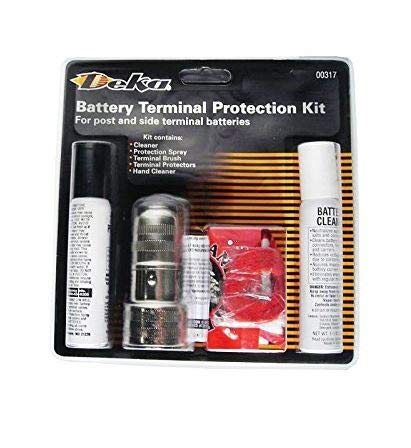
- Apply Protective Grease (Crucial Step): This is the pro tip that most people skip. Apply a thin layer of dielectric grease to the battery posts before reconnecting the clamps. This non-conductive grease seals the metal from air and moisture, preventing future corrosion.
- Reconnect the Battery: Reconnect the positive (+, red) cable first, followed by the negative (-, black) cable. Ensure they are tightened securely.
What’s the Difference Between Sealed vs. Flooded Batteries in Wet Conditions?
Understanding your battery type is key to knowing its vulnerability to water. The two most common types are traditional Flooded (or Wet Cell) batteries and modern Sealed (AGM or Gel) batteries. In wet conditions, their performance and resilience differ significantly.
A Flooded battery has removable vent caps on top, which allow you to top off the electrolyte fluid. These vents are also a weak point where water can get in during submersion. A Sealed battery, most commonly an AGM (Absorbed Glass Mat) battery, has its electrolyte absorbed into fiberglass mats. It is fully sealed and requires no maintenance, making it far more resistant to water.
Here’s a direct comparison focused on wet-weather performance:
| Feature | Flooded (Wet Cell) Battery | Sealed (AGM/Gel) Battery |
|---|---|---|
| Water Resistance | Lower; vent caps are a point of potential water ingress. | High; fully sealed case prevents water entry. |
| Risk if Submerged | High; water can enter and dilute the electrolyte. | Lower; resistant to internal damage from brief submersion. |
| Spill/Leak Proof | No; acid can spill if tipped over. | Yes; electrolyte is absorbed in mats or gel. |
| Maintenance | Requires periodic checking of electrolyte levels. | Maintenance-free. |
| Best For | Standard vehicles in moderate climates. | Vehicles in wet climates, off-road use, high-vibration. |
FAQs About can a car battery get wet
Can a car battery explode if it gets wet?
It is extremely unlikely for a car battery to explode just from getting wet. The primary risk from water is a short circuit, which drains the battery. An explosion requires a spark to ignite hydrogen gas, which the battery naturally vents. While a short circuit can create a spark, this perfect storm of events is rare from rain alone.
Why is my car battery wet on top?
A battery can be wet on top from rain, a car wash, or condensation, which is usually harmless. However, if the wetness feels greasy and is accompanied by corrosion, it could be a small amount of acid leaking from the vent caps or terminal seals. This should be neutralized and cleaned immediately.
Can I wash my car battery with water?
Yes, you can carefully wash the battery case with water, but you must protect the terminals and electronics. Use a low-pressure spray and avoid soaking the alternator or other sensitive electrical components. It’s safer to use a damp cloth for the case and a specific cleaning method (like baking soda) for the terminals.
Will a car battery still work if it was completely submerged?
It might work temporarily, but its lifespan is likely compromised. If it’s a sealed AGM battery, it has a good chance of survival once dried. If it’s a traditional flooded battery, water has likely entered through the vents, diluting the acid and causing permanent damage. Do not attempt to use a submerged battery until it has been thoroughly inspected and tested.
Can electric car (EV) batteries get wet?
Yes, EV battery packs are designed to be highly water-resistant, not fully waterproof. They are heavily sealed and can withstand rain and driving through puddles. However, fully submerging an EV in water, especially saltwater, can lead to severe damage and dangerous short circuits due to the much higher voltage.
Does water affect car battery performance?
Indirectly, yes. While a little water on the case does nothing, the corrosion it causes on the terminals increases electrical resistance. This forces your alternator to work harder to charge the battery and makes it harder for the battery to deliver power, reducing its effective performance and lifespan.
How do I protect my car battery from rain?
Most cars are designed to protect the battery from normal rainfall. Ensure the plastic engine covers and the battery’s terminal boots are in place. If you live in an extremely wet climate, you can apply dielectric grease to the terminals after cleaning them to create a waterproof barrier.
Is battery water the same as rain water?
No, they are completely different. “Battery water” is deionized or distilled water, which is pure H₂O used to top off fluid levels in non-sealed batteries. Rainwater contains minerals and pollutants that make it electrically conductive and corrosive, and it should never be put inside a battery.
Can a wet battery drain itself?
Yes, a wet battery can drain itself through a slow short circuit. If enough water and grime create a conductive path between the positive and negative terminals, a small amount of current will continuously flow, slowly draining the battery’s charge over time.
What are the symptoms of a water-damaged car battery?
Symptoms include visible corrosion, a car that won’t start or cranks slowly, and dimming headlights. You might also get a battery warning light on your dashboard. After submersion, the battery may appear swollen or read a very low voltage (under 10V) on a multimeter.
Key Takeaways: Wet Car Battery Summary
- Surface Water is Usually Safe: A little rain or splashing on the
plastic battery caseis generally harmless as batteries are designed to be water-resistant, not waterproof. - Terminals are the Weak Point: The real danger is from
battery terminals wetwith moisture, whichcauses corrosionand can create abattery short circuit, draining its power. - Submersion is Critical Damage: If a battery is submerged, especially a traditional
flooded lead acidtype, water can get inside and permanently ruin it by diluting theelectrolyte fluid. - Cleaning is Simple but Crucial: You can
clean battery terminalseffectively with abaking sodaand water paste to neutralize acid and remove performance-robbing corrosion. - Prevention is the Best Fix: After cleaning, always
apply dielectric greaseto the terminals to create a waterproof seal andprevent battery corrosionfrom returning. - Sealed Batteries Offer More Protection:
Sealed AGMbatteries are significantly more resistant to water damage and are a better choice forwet climatescompared to traditional vented batteries. - Safety First in the Rain: You can
jump start rainorchange car battery rain, but you must use extreme caution, wear insulated gloves, and ensure a proper grounding connection away from the battery.
Final Thoughts on Your Car Battery and Water
Ultimately, while the thought of a wet car battery is concerning, the reality is that they are built to withstand everyday environmental exposure. The key is understanding that the danger isn’t from water on the case, but from moisture compromising the terminals. By keeping your battery terminals clean and protected, you address the single biggest risk factor. Regular inspection and proactive cleaning are far more effective than worrying about a little rain. Armed with this knowledge, you can confidently manage and maintain your car’s electrical heart, rain or shine.
Last update on 2026-01-31 / Affiliate links / Images from Amazon Product Advertising API


