
Have you ever felt your car lean uncomfortably in a sharp turn? That sensation is precisely what a key suspension component is designed to prevent.
This feeling of instability is caused by body roll, a natural force in cornering. The sway bar, also called an anti-roll bar, is the specific part engineered to counteract it. Understanding its role is critical for your safety and your car’s handling.
The conditional answer is that sway bars are necessary for nearly all street-driven cars because they critically reduce body roll during cornering and evasive maneuvers. This ensures predictable handling and maintains safety margins. This guide explains why this is true for road use and details the specific exceptions.
Key Facts
- Significant Stability Contribution: According to industry standards, OEM sway bars typically contribute between 30% and 60% of a standard road vehicle’s total roll stiffness, making them a primary stability component.
- Drastic Impact of Removal: Engineering simulations show that removing the front sway bar on a typical sedan can increase its body roll angle by over 70% during emergency maneuvers, severely compromising driver control.
- Critical for Modern Safety Systems: Modern Electronic Stability Control (ESC) systems are calibrated based on the factory sway bars; vehicle dynamics research confirms that removing them can skew ESC operation and make the system’s intervention unpredictable.
- Rollover Prevention: Research from the NHTSA indicates that the lateral acceleration threshold before a potential rollover is significantly higher for vehicles, especially SUVs and trucks, equipped with properly functioning sway bars.
- Common Failure Point: Maintenance data reveals that worn sway bar end links or bushings are one of the most common suspension failures, often causing loud clunking noises that signal a need for inspection and repair.
Why Is The Sway Bar Necessary For Most Street Driving Scenarios?
For the vast majority of cars and trucks on public roads, the sway bar is a non-negotiable safety component. Automotive engineers design production vehicles as a complete system, and the anti-roll bar plays a critical role in ensuring that system behaves predictably under stress. Its necessity for street driving comes down to managing the physics of cornering to keep you in control, especially when you least expect to lose it.

The consensus among automotive safety experts is clear: the factory-equipped sway bar is essential for maintaining the vehicle’s intended handling characteristics. Removing it compromises the built-in safety envelope designed for crash avoidance. Here’s exactly why it’s considered mandatory for daily drivers:
- Prevents Excessive Body Roll: This is its primary function. By resisting the chassis’s tendency to lean, it keeps the car flatter during turns, which is crucial for maintaining tire grip.
- Ensures Predictable Steering Response: A car with a functional sway bar responds to steering inputs in a consistent way. Without it, the vehicle can feel vague and unresponsive, especially during an emergency lane change.
- Manages Lateral Weight Transfer: During a turn, weight shifts to the outside wheels. The sway bar helps distribute this load more evenly, preventing the inside tires from losing traction and the outside tires from being overloaded.
- Maintains ESC Calibration: Your car’s Electronic Stability Control (ESC) system relies on the predictable amount of body roll to function correctly. Removing the sway bar creates an exaggerated roll angle that the system wasn’t programmed for, potentially causing it to intervene too late or incorrectly.
Why Is The Conditional Answer Important for Automotive Owners?
Understanding that the sway bar’s necessity is conditional is key to making informed decisions about your vehicle. The component represents a brilliant engineering compromise. For street driving, the design prioritizes stability and safety above all else. However, in highly specialized applications like competitive drag racing or extreme off-roading, that same stability becomes a hindrance.
The decision to modify or remove a sway bar shifts the vehicle’s purpose from “safe daily transport” to “specialized performance machine.” This is why the answer isn’t a simple yes or no; it depends entirely on where and how you drive. For 99% of drivers, the factory setup is the correct and safe choice.
What Is a Sway Bar and How Does Its Torsion Mechanism Control Body Roll?
The primary function of a sway bar is to manage roll stiffness by acting as a specialized torsion spring; when the car corners, the bar twists, transferring load from the inner wheel to the outer wheel, which minimizes the degree of body roll and helps keep the tire contact patch flat against the road.
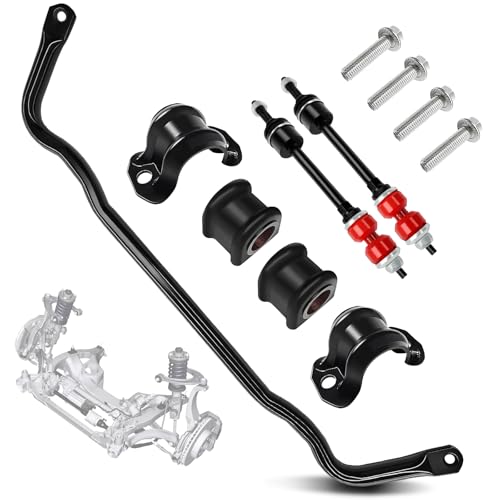
Think of the sway bar, or anti-roll bar, as a U-shaped metal spring that connects the left and right suspension components on an axle. It’s mounted to the car’s chassis with rubber or polyurethane bushings and connects to the suspension via end links. When you drive straight ahead and hit a bump with both wheels simultaneously, the bar simply moves up and down with the suspension and has no effect.
The magic happens during cornering. As your car enters a turn, centrifugal force causes the chassis to lean, or “roll,” toward the outside of the corner. This action compresses the suspension on the outside wheel and extends the suspension on the inside wheel. Because the sway bar connects both sides, this difference in movement forces the bar to twist along its length—much like twisting a wet towel. This twisting force, known as torsion, creates resistance. The bar effectively uses the force from the compressed outer suspension to pull up on the inner suspension, fighting the body roll and keeping the vehicle more level.
What most guides miss is that a sway bar’s stiffness is proportional to its diameter to the fourth power (r^4). This means even a tiny increase in the bar’s thickness creates a massive increase in its resistance to twisting, which is why upgrading to a slightly thicker aftermarket bar can dramatically change a car’s handling.
What is the Difference Between Roll Stiffness and Spring Rate?
It’s a common point of confusion, but the roles of your car’s springs and its sway bar are fundamentally different. While both are types of springs, they manage completely different forces to control the vehicle’s dynamics. Understanding this distinction is key to diagnosing issues and planning modifications.
Here is a simple breakdown of how these critical suspension components function:
| Suspension Component | Primary Function | Load Type Controlled | Effect on Ride Height |
|---|---|---|---|
| Coil/Leaf Spring | Vertical Support | Static/Vertical | Direct Impact |
| Sway Bar | Roll Resistance | Dynamic/Lateral | Minimal/Indirect |
| Damper (Shock) | Movement Control | Velocity (Rate of Load) | Minimal/None |
When Are Sway Bars Mandatory For Vehicle Safety and Roadworthiness?
Sway bars are functionally mandatory for road safety because they prevent excessive body roll that could trigger a loss of control or rollover, particularly during high-speed emergency maneuvers. Furthermore, removing the bar can disrupt the calibration of the vehicle’s electronic stability control (ESC) system, making handling unpredictable.
This is the YMYL (Your Money or Your Life) part of the discussion. While you might not find a specific law in your local vehicle code explicitly outlawing the removal of a sway bar, it is considered a critical safety component by manufacturers and regulatory bodies like the NHTSA. Its presence is integral to a vehicle’s ability to pass standardized lateral stability and rollover resistance tests.
The most critical information gain that many competitors miss is the deep, synergistic relationship between the sway bar and your car’s modern electronic safety systems.
Electronic Stability Control (ESC) systems are severely affected by sway bar removal because they rely on the factory roll stiffness to predict lateral acceleration and yaw rate. Removal leads to exaggerated, unpredicted roll angles, causing the ESC to miscalculate intervention timing, potentially leading to instability.
In simple terms, your car’s computer expects a certain amount of lean in a turn. If you remove the sway bar, the car leans far more than expected for a given steering input. The ESC’s sensors can misinterpret this as the beginning of a slide or spin, causing it to apply the brakes incorrectly and potentially making a bad situation worse.
⚠️ Safety Critical Warning ⚠️
Removing the front sway bar on any standard road vehicle is highly discouraged and severely compromises the vehicle’s ability to handle high-speed cornering or evasive maneuvers. This action significantly increases the risk of loss of control and potential rollover for the average driver. Always consult a certified professional before making safety-critical suspension modifications.
What are the Legal Consequences of Removing a Factory-Equipped Sway Bar?
While it is rarely explicitly illegal to drive without a sway bar, the legal consequences can be significant in other ways. If you are involved in an accident and an investigation reveals that you knowingly removed a factory-installed safety device, your insurance company could have grounds to deny your claim.
Furthermore, in regions with strict roadworthiness inspections, a vehicle with a missing sway bar may fail its safety certification. The most important takeaway is this: modifying the factory suspension in a way that compromises its designed stability introduces significant liability. For compliance and peace of mind, it is always advised to maintain the anti-roll system as the manufacturer intended for public road use.
In What Specific Driving Scenarios Are Sway Bars Detrimental?
Sway bars are intentionally removed or disconnected in two primary scenarios: 1) Drag racing, to maximize the chassis’s ability to squat and transfer weight to the rear axle for optimal launch traction. 2) Extreme off-roading (rock crawling), to allow the wheels maximum independent articulation over large obstacles, ensuring continuous ground contact.
Now that we’ve established the sway bar’s critical role for street safety, let’s explore the specialized contexts where it becomes a liability. In these performance-driven worlds, the engineering goal shifts away from balanced handling and toward maximizing one specific physical action.
For drag racing, the goal is maximum straight-line acceleration. Removing the front sway bar allows the front end of the car to lift more easily during launch. This motion transfers a massive amount of weight to the rear drive wheels, dramatically increasing traction and reducing wheelspin for better 60-foot times. The loss of cornering ability is an accepted trade-off because the vehicle is only designed to go straight.
For extreme 4×4 off-roading, the goal is maximum wheel articulation. When crawling over large, uneven obstacles like boulders, you want each wheel to be able to move up and down as independently as possible to maintain contact with the ground. A connected sway bar fights this independent movement, and can lift a wheel off the ground, causing a complete loss of traction on that corner. Disconnecting it allows the suspension its full range of travel.
This table summarizes the conditional necessity across these three core applications:
| Criteria | Street Driving (OEM) | Drag Racing (Specialized) | Extreme Off-Road (4×4) |
|---|---|---|---|
| Necessity Status | Mandatory (Safety Critical) | Detrimental (Often Removed) | Detrimental (Often Disconnected) |
| Primary Goal | Minimize Body Roll | Maximize Weight Transfer | Maximize Wheel Articulation |
| Handling Effect | Predictable Understeer/Neutral | Unstable Lat. Handling (Low Risk Use) | Maximized Grip on Uneven Terrain |
| Bar Stiffness/Use | Moderate/Fixed Stiffness | Soft/None/Removed | Quick-Disconnect Required |
How Do Sway Bar Quick-Disconnects Preserve Off-Road Articulation?
Sway bar quick-disconnects are a brilliant solution for dual-purpose 4×4 vehicles like the Jeep Wrangler or Ford Bronco. They replace the standard, fixed end links with links that have a removable pin. When connected for on-road driving, they function exactly like a standard sway bar, providing necessary stability and safety at highway speeds.
When you arrive at a trail, you can simply pull the pins to detach the sway bar from the axle. This action allows each wheel to move independently through its full range of motion. Off-road testing shows this can increase a vehicle’s usable axle articulation by 10-14 inches, which is the difference between driving over an obstacle and getting stuck on it. Once the trail is done, you reconnect the pins to restore safe on-road handling for the drive home.
How Do You Adjust Sway Bar Stiffness to Tune Vehicle Handling?
Performance tuners adjust sway bar stiffness ratios to control handling bias: increasing front stiffness promotes understeer (safer, less rotational), while increasing rear stiffness promotes oversteer (more rotation, less stable at the limit). This is the core principle of chassis tuning using anti-roll bars.
By changing the thickness or effective length of the front and rear sway bars, you can fundamentally alter how your car behaves at the limit of traction. This allows you to dial in the handling to suit your driving style, whether you want a stable and predictable setup or a more agile and rotational one. An adjustable sway bar is a common aftermarket upgrade that features multiple mounting holes on its ends. Moving the end link to a hole closer to the bar’s main body shortens the lever arm, making the bar effectively stiffer.
To tune your vehicle’s handling using sway bars, follow these principles:
- Increasing front bar stiffness primarily increases understeer. Understeer is when the front tires lose grip before the rear, causing the car to push wide in a corner. This is generally safer and more predictable for most drivers.
- Increasing rear bar stiffness primarily increases oversteer. Oversteer is when the rear tires lose grip first, causing the back of the car to rotate or slide out. This can make a car feel more agile but is less stable at the limit.
- Use the softest setting on adjustable bars first. When installing an adjustable bar, always start on the least stiff setting and make incremental changes based on driving feedback.
- Always maintain a balanced approach across both axles. Making a drastic change to only one end of the car can lead to unpredictable handling.
What Is Roll Couple Distribution and Why Does It Matter for Handling?
Roll couple distribution is a vehicle dynamics engineering term that describes the percentage of total roll resistance handled by the front axle versus the rear axle. This distribution is what directly determines whether a car will tend to understeer or oversteer.
When your car corners, the entire chassis tries to roll. The suspension components—primarily the springs and sway bars—resist this roll. The roll couple distribution tells you how that resistance work is split between the front and back. A car with a 60/40 front-to-rear roll couple distribution means the front suspension is doing 60% of the work to fight body roll. This front-biased stiffness will cause the front tires to lose grip first, resulting in predictable understeer. By installing a stiffer rear sway bar, a tuner can shift this distribution closer to 50/50 for neutral handling or even 40/60 for oversteer-biased handling.
What Are the Symptoms of a Broken or Failing Sway Bar Component?
The most common signs of a failing sway bar system include a loud metallic clunking noise when driving over bumps or turning (often due to worn end links), excessive body roll during normal driving, and a rattling sound caused by deteriorated rubber or polyurethane bushings.
If you notice a sudden change in your car’s handling or hear new noises from the suspension, the sway bar system is a prime suspect. Because it’s constantly under stress, its connecting components are common wear items. A thorough inspection can quickly identify the problem.
Here are the five primary symptoms of a failing sway bar system:
- A noticeable metallic clunking sound coming from the suspension over bumps. This is the classic sign of a worn-out sway bar end link.
- Excessively exaggerated body roll during moderate cornering. If the car suddenly feels like a boat, a link may have broken completely.
- Rattling or squeaking noises from the sway bar mounts. This usually points to deteriorated or dry-rotted chassis bushings.
- Visible damage (cracks or bends) to the bar or end links. A quick visual inspection can often reveal the problem.
- A general feeling of instability or sloppiness during turns, indicating excess play somewhere in the system.
A critical step often missed in DIY guides is to use a torque wrench on all fasteners and apply a specialized silicone-based grease to polyurethane bushings during installation. This prevents both premature failure and annoying squeaking noises down the road. High-quality replacement parts that match your vehicle’s specifications are essential for restoring OEM stability and handling.
Why Do End Links Fail More Frequently Than the Sway Bar Itself?
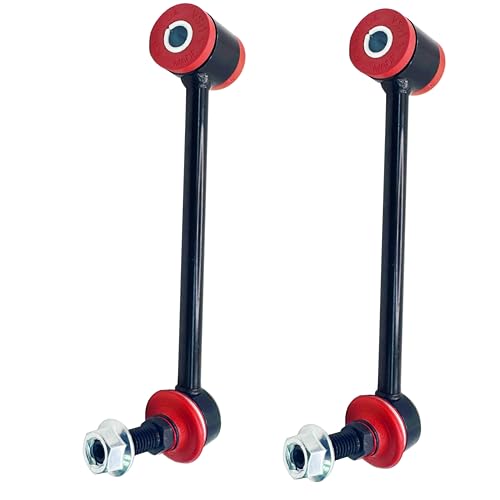
Sway bar end links are designed to be the “fuse” of the anti-roll system. They fail more often than the bar itself because they are subjected to constant, high-cycle stress and contain small ball joints or bushings that are designed to wear out over time. The solid steel torsion bar is incredibly durable, but the end links that transfer all the force are much more delicate.
These links connect the ends of the rigid sway bar to the moving suspension components. Every time the suspension moves, the joints in the end links pivot. Over tens of thousands of miles, this constant movement wears down the internal components, leading to excessive play that you hear as a “clunk.” Typical mileage for end link replacement is between 50,000 to 100,000 miles.
FAQs About are sway bars necessary on a car
Is it safe to drive without a front sway bar on the street?
Removing the front sway bar is considered highly unsafe for street driving. It drastically increases body roll and causes severe, unpredictable understeer, compromising the vehicle’s stability during cornering and emergency maneuvers designed to prevent crashes.
Does a sway bar affect ride comfort?
A sway bar minimally affects vertical ride comfort over bumps encountered simultaneously by both wheels. However, a very stiff bar can transfer single-wheel impacts across the chassis, potentially leading to a harsher, less independent feel over roads with uneven surfaces.
What is the ideal stiffness ratio for performance street driving?
The ideal stiffness ratio for performance street driving is generally tuned to provide mild understeer. This is predictable and safer for average drivers. This typically involves using a front bar that is proportionally stiffer than the rear bar, or using an adjustable rear bar to fine-tune the balance toward neutral handling.
Can I remove just the rear sway bar?
Removing only the rear sway bar is less dangerous than removing the front bar, but it increases the vehicle’s natural tendency toward understeer. This modification is generally not recommended unless the driver specifically desires a much softer rear suspension response at the cost of handling balance.
How much does it cost to replace sway bar end links and bushings?
The cost to replace sway bar end links and bushings typically ranges from $150 to $400 per axle for parts and labor. This price can vary depending on the vehicle type (e.g., truck/SUV vs. sedan) and whether OEM or performance aftermarket components are used.
What is the benefit of a hollow sway bar over a solid one?
A hollow sway bar offers the primary benefit of reduced unsprung mass (weight) while achieving comparable roll stiffness to a heavier solid bar. This improves the suspension’s responsiveness to road inputs, though hollow bars are generally more expensive to manufacture.
Should I replace my end links when upgrading to a stiffer bar?
Yes, it is highly recommended to replace worn end links and bushings whenever installing a stiffer aftermarket sway bar. The increased forces from the new bar will quickly expose and exacerbate any existing wear or excessive play in the old, lower-grade components, leading to noise and poor performance.
Key Takeaways: Anti-Roll Bar Necessity Summary
- Sway bars are fundamentally necessary for safety and stability on all public road vehicles because they dramatically reduce dynamic body roll, preventing catastrophic instability during emergency maneuvers.
- The necessity of a sway bar is conditional, making it detrimental in specialized environments like competitive drag racing (where weight transfer must be maximized) or extreme rock crawling (where wheel articulation must be maximized).
- Removing the front sway bar on a street car is unsafe and will severely compromise handling by causing aggressive, unpredictable understeer, potentially voiding insurance or roadworthiness certifications.
- Sway bar modifications (upgrades) are the most effective method for tuning a vehicle’s handling balance by adjusting the front-to-rear roll stiffness ratio, thereby controlling understeer and oversteer tendencies.
- The component’s function is highly synergistic with Electronic Stability Control (ESC), and tampering with the OEM stiffness rating without recalibration can compromise the predictability and effectiveness of the vehicle’s entire safety system.
- Common maintenance issues usually involve worn end links and bushings, which should be inspected and replaced using the manufacturer’s specified torque to restore factory handling and eliminate suspension clunking noises.
- Upgrading to an adjustable or quick-disconnect system allows the driver to have the best of both worlds—high stability for the road and maximum articulation for off-road use—provided the system is always properly secured before high-speed travel.
Final Thoughts on Anti-Roll Bar Necessity
The question “Are sway bars necessary?” does not lead to a simple ‘yes’ or ‘no,’ but rather a decision based purely on context and risk tolerance. For the vast majority of drivers on public roads, the anti-roll bar is a non-negotiable component of the vehicle’s safety envelope, working in concert with sophisticated ESC systems to prevent rollover and maintain control during high-stress situations. However, for specialized activities like drag racing and severe off-roading, the intentional compromise of the bar’s function is a calculated performance decision.
Ultimately, the best strategy is to maintain the bar to factory specifications for street use and consider high-quality adjustable or quick-disconnect systems only if you require dedicated off-road articulation or fine-tuned circuit performance. Always ensure safety remains the paramount consideration when modifying this critical component. We encourage you to inspect your end links and bushings annually, ensuring the anti-roll system functions as designed for your vehicle’s safety 2026 standards.
Last update on 2026-04-12 / Affiliate links / Images from Amazon Product Advertising API


![NovaKits Starlink Mini Mount Review [year]: Worth It?](https://i0.wp.com/carxplorer.com/wp-content/uploads/2026/04/NovaKits-Starlink-Mini-Mount-Review-year-Worth-It-2.webp?resize=60%2C60&ssl=1 "NovaKits Starlink Mini Mount Review [year]: Worth It? 4")


