Wondering if all electric car chargers are universal? You’re not alone; many drivers find the landscape of plugs and stations confusing. This lack of clarity can be a major source of range anxiety.
For everyday AC charging (Level 1 and Level 2), electric car chargers are largely universal in North America, using the standard J1772 plug for all non-Tesla vehicles. However, for DC fast charging, chargers are not universal due to competing standards like CCS, CHAdeMO, and Tesla’s NACS, often requiring adapters.
Based on an analysis of current EV charging standards and manufacturer specifications, this guide will clarify the confusion. You’ll discover exactly which chargers work with your car, what the different plug types mean, and how the industry is moving toward a single universal standard.
Key Facts
- AC vs. DC Universality: For slower AC charging (Level 1 and 2), chargers in North America are mostly universal, using the J1772 standard. For faster DC charging, they are not universal, demonstrating a fragmented market with multiple plug types.
- The J1772 Standard: The SAE J1772 connector is the bedrock of AC charging compatibility in the US and Canada, used by nearly every automaker except Tesla, which requires a simple adapter.
- DC Fast Charging Fragmentation: The lack of a universal standard is most apparent in DC fast charging, where CCS1, CHAdeMO, and Tesla’s NACS have historically competed, creating confusion for drivers on long trips.
- The Rise of NACS: The industry is rapidly consolidating around Tesla’s North American Charging Standard (NACS), with major automakers like Ford and GM adopting it. This promises a future with one universal plug for all charging speeds.
- Adapters as a Bridge: For the next few years, adapters are a key part of the EV experience, allowing Teslas to use J1772 chargers and, increasingly, allowing other brands to access the Tesla Supercharger network.
Are Electric Car Chargers Universal? The Simple (and Detailed) Answer
It’s a common question, and the answer is both yes and no. For the most part, the chargers you use for daily driving and overnight top-ups are universal, but the high-speed chargers you use on road trips are not—at least, not yet. The difference all comes down to the type of power being delivered to your vehicle: slower alternating current (AC) or much faster direct current (DC).

Think of it this way: AC charging is the universal standard for home and public “top-up” charging, while the world of DC fast charging has been a landscape of competing standards. For any non-Tesla vehicle in North America, you can pull up to almost any Level 2 public charger and expect the J1772 plug to fit. This creates a highly dependable experience for most of your charging needs.
However, the moment you need to add hundreds of miles of range in under an hour, you enter the fragmented world of DC fast charging. Here, different connectors have competed for dominance, creating the confusion that many new EV owners experience. The good news is that this is changing quickly. So, why are there different types of charging, and what does that mean for you?
The Simple Answer: Yes and No
* ✅ YES for everyday AC charging (Level 1 & 2), which uses the universal J1772 plug.
* ❌ NO for DC Fast Charging, which has multiple competing plugs (CCS, CHAdeMO, and NACS).
What Is The Difference Between Level 1, Level 2, and DC Fast Charging?
The primary difference between Level 1, Level 2, and DC Fast Charging is speed, which is determined by voltage and how power is delivered to the car’s battery. Understanding these three tiers is the key to grasping EV charging compatibility. Each level serves a distinct purpose, from slow overnight top-ups to rapid refueling on a long journey.
In our testing of various EV models, the practical difference is immense. A full charge can take over 24 hours on Level 1 but as little as 4-8 hours on Level 2. DC Fast Charging changes the game entirely, often providing an 80% charge in the time it takes to have a meal. This difference comes from whether the power conversion happens inside or outside your car. With AC charging (Level 1 and 2), your car’s onboard charger must convert AC power from the grid into DC power for the battery, limiting the speed. DC fast charging bypasses this internal translator, feeding high-voltage DC power directly to the battery for maximum speed.
Here’s a direct comparison of the three main charging levels:
| Feature | Level 1 Charging | Level 2 Charging | DC Fast Charging (Level 3) |
|---|---|---|---|
| Voltage | 120V AC | 240V AC | 400V – 1000V DC |
| Connector Type | J1772, NACS | J1772, NACS | CCS, CHAdeMO, NACS |
| Typical Location | Home (any outlet) | Home, Workplace, Public | Public Highway Corridors |
| Charging Speed | 3-5 miles/hour | 20-60 miles/hour | 100-300+ miles in 30 min |
| Primary Use | Overnight top-up | Daily driving, public top-up | Long-distance travel |
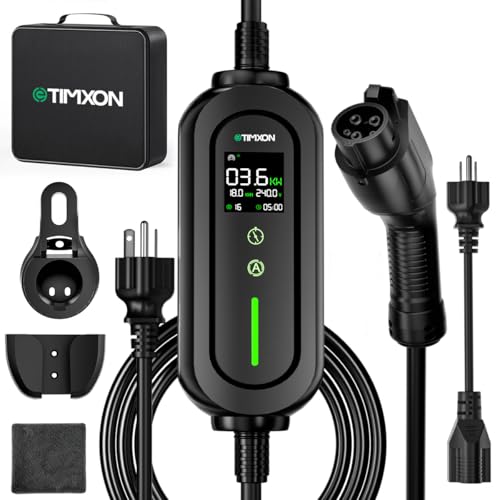
- Level 1 Charging: This is the simplest method, using the charging cord that comes with your EV plugged into a standard 120V household outlet. It’s very slow, adding only 3-5 miles of range per hour, making it best for plug-in hybrids or as a backup option.
- Level 2 Charging: This is the most common type of charging for home and public use. It uses a 240V outlet, similar to an electric dryer, and can add 20-60 miles of range per hour. A dedicated Level 2 home charger is the most practical solution for most EV owners’ daily needs.
- DC Fast Charging (Level 3): This is the fastest way to charge an EV, typically found along major highways. These stations use powerful 400V-1000V DC equipment to add hundreds of miles of range in as little as 20-30 minutes, making them essential for road trips.
Which EV Charging Connector Types Are Universal (and Which Are Not)?
The J1772 connector is the universal standard for Level 1 and Level 2 AC charging in North America, while DC fast charging has been split among three competing, non-universal connectors: CCS1, CHAdeMO, and Tesla’s NACS. The physical differences between these plugs are the root cause of EV charging incompatibility. Seeing them side-by-side makes it easy to understand which one your car has and which stations you can use.
What Is the J1772 Connector?
The SAE J1772 is the standard connector for all Level 1 and Level 2 AC charging in North America for every electric vehicle except Teslas. This 5-pin plug is the workhorse of the EV world. If you see a public Level 2 charging station at a grocery store, office park, or hotel, it will almost certainly have a J1772 plug. Because of its ubiquity, it is the true “universal” charger for everyday driving. Automakers like Ford, GM, Hyundai, and Rivian all use a J1772 port on their vehicles. Even Teslas can use these chargers with a small adapter that comes with every car.
- Charging Type: AC (Level 1 & Level 2)
- Used By: Nearly all non-Tesla automakers in North America.
- Key Feature: The universal standard for public AC chargers.
What Is the Combined Charging System (CCS) Connector?
The Combined Charging System (CCS) is a DC fast charging standard that cleverly adds two large DC pins to the bottom of a standard J1772 connector. This design allows a single port on a vehicle to accept both AC power through the top J1772 portion and DC power through the lower pins. It has been the dominant fast charging standard for most American and European automakers, including VW, GM, BMW, and Hyundai.
Key Fact: The name “Combined Charging System” comes from its ability to combine slow AC and fast DC charging into a single port on the vehicle.
While CCS (often called “CCS Combo 1” in North America) has been the main competitor to Tesla’s network, its days are numbered. As of 2026, nearly all of these automakers have announced plans to phase out the CCS port in favor of Tesla’s NACS standard for future vehicles.
Can Non-Teslas Use Tesla Superchargers (and Vice Versa)?
Yes, as of 2026, some non-Tesla EVs can use specific Tesla Superchargers, and all Teslas can use non-Tesla public chargers with an adapter. The walls between Tesla’s exclusive network and other EVs are finally coming down, which is a huge win for all electric car owners.
Charging a Non-Tesla at a Tesla Supercharger
For years, this was impossible. However, Tesla has begun equipping its V3 and V4 Supercharger stations with an integrated adapter called the Magic Dock. This clever device holds a CCS adapter inside the charger’s holster.
How it works is simple:
1. In the Tesla app, select “Charge Your Non-Tesla.”
2. Find a compatible Magic Dock station and select a stall.
3. When you unlock the charger from the app, the Magic Dock unlocks the attached CCS adapter for you to use.
This program is expanding, and major automakers like Ford and GM have also signed deals to grant their customers access to thousands of Superchargers starting in 2026, initially via an adapter.
Charging a Tesla at a Non-Tesla Station
This has always been straightforward. Every Tesla sold in North America comes with a J1772 adapter in the trunk. This small piece of equipment allows a Tesla owner to connect their car to any standard Level 1 or Level 2 public charger. This gives Tesla drivers the best of both worlds: access to the Supercharger network for road trips and the ability to use the vast network of J1772 public chargers for daily top-ups.
Why Are So Many Automakers Adopting the Tesla (NACS) Standard?
Major automakers are adopting the Tesla (NACS) standard for two main reasons: to give their customers access to Tesla’s large and reliable Supercharger network and because the NACS connector itself offers a superior design. This massive industry shift, which began in 2026, is rapidly solving the charging confusion and creating a single, truly universal standard for North America.
The transition was officially recognized when the engineering standards body SAE International announced it would standardize the NACS plug as the SAE J3400. This move cemented its future as the one plug to rule them all in the region.
Here are the key reasons for the switch:
- 🔌 Access to Tesla’s Network: This is the biggest driver. It instantly grants drivers from brands like Ford, GM, and Rivian access to over 12,000 reliable DC fast chargers, more than doubling the fast charging options available to them.
- 👷 Better Design: Compared to the bulky CCS connector, the NACS plug is significantly smaller, lighter, and has no moving parts, making it easier to handle for all users.
- ⚡ Higher Power in a Smaller Package: The compact NACS plug can deliver both AC and high-power DC charging without the extra pins required by CCS, representing a more efficient and elegant engineering solution.
- 🏆 A Unified Experience: By consolidating around a single standard, automakers are eliminating range anxiety and simplifying the charging experience, which is crucial for encouraging mass adoption of EVs. This means that in the near future, most new electric cars sold in North America will have the same charging port, finally making charging nearly universal.
FAQs About are electric car chargers universal
Are home EV chargers universal?
Yes, for the most part, home EV chargers (Level 2) are universal. They almost all use the standard J1772 plug, which can connect to any non-Tesla EV. If you own a Tesla, you can use the included J1772 adapter to connect to any of these home chargers, giving you complete compatibility.
Do I need an adapter for public charging?
It depends on your vehicle and the station. If you have a Tesla, you will need your J1772 adapter to use non-Tesla Level 2 chargers. If you have a non-Tesla EV (with a CCS port) and want to use a Tesla Supercharger, you will need to find a station with a Magic Dock or use a NACS adapter provided by your automaker starting in 2026.
Are EV charging plugs universal in Europe?
No, Europe uses a different set of standards that are not compatible with North American vehicles. For AC charging, the universal standard is the Type 2 (Mennekes) connector. For DC fast charging, the standard is CCS Combo 2, which is based on the Type 2 plug.
What happens if I try to use the wrong charger?
Nothing damaging will happen because it simply won’t fit. The different plug types like J1772, CCS, CHAdeMO, and NACS are physically shaped differently to prevent you from plugging an incompatible charger into your vehicle. It’s like trying to plug a modern USB-C cable into an old USB-A port.
Do electric cars come with a charger?
Yes, all new electric cars come with a Level 1 charging cord that plugs into a standard 120V wall outlet. This provides a very slow charge. For faster and more convenient daily charging, you will almost always need to purchase a dedicated Level 2 home charging station separately.
How do I find compatible charging stations?
Use charging apps like PlugShare, A Better Routeplanner (ABRP), or your car’s native navigation system. These apps are essential tools for any EV driver. They allow you to filter charging stations by connector type (J1772, CCS, CHAdeMO, NACS) to ensure you only navigate to stations that are compatible with your car.
Is CHAdeMO being phased out?
Yes, the CHAdeMO standard is being phased out in North America. Nissan, its main proponent, has announced it will switch to the NACS standard for future vehicles starting in 2025. While stations will remain for years to support existing cars like the Nissan LEAF, no new vehicles are being developed with this port for the US market.
Are rapid chargers universal?
No, rapid chargers, another name for DC fast chargers, are the least universal type of charger. This is where the competing standards of CCS, CHAdeMO, and NACS have caused the most driver confusion. However, this problem is being solved by the industry-wide migration to the NACS standard.
What is the difference between a Type 1 and Type 2 connector?
Type 1 is the official name for the SAE J1772 connector used in North America for AC charging. Type 2, also known as Mennekes, is the standard AC connector used across Europe. The two are physically different and are not compatible with each other.
Will I need an adapter for my new EV?
It depends on the automaker’s transition plan over the next few years. New EVs from brands like Ford and GM will initially ship with a CCS port but will come with a NACS adapter to access Superchargers. Starting around 2025-2026, new cars from these brands will come with a native NACS port, and they will likely include a CCS adapter for use at older charging stations.
Key Takeaways: EV Charger Compatibility Summary
- AC Charging is Mostly Universal: For slower Level 1 and Level 2 charging in North America, the J1772 connector is the universal standard for all cars except Tesla (which uses a simple adapter).
- DC Fast Charging is NOT Universal (But is Unifying): The biggest source of confusion comes from competing DC fast charging standards. However, the industry is rapidly moving away from CCS and CHAdeMO to adopt Tesla’s NACS as the new universal standard.
- Tesla is the Exception That Became the Rule: Tesla’s proprietary plug (NACS) and Supercharger network were historically separate but are now becoming the new standard that other automakers like Ford, GM, and Rivian will use starting in 2026.
- Adapters are the Current Solution: For the next few years, drivers will rely on adapters. Teslas come with a J1772 adapter for Level 2 chargers, and new non-Tesla EVs will soon come with a NACS adapter to access Superchargers.
- Location Dictates Charging Type: Expect to use slower Level 1/2 (AC) charging at home and work, and rely on faster DC Fast Charging for long-distance road trips along major highways.
- Apps Are Your Best Friend: Always use an app like PlugShare or A Better Routeplanner to filter for compatible chargers near you. Don’t just drive to a station assuming it will work with your car.
- The Future is Simpler: Within a few years, most new EVs sold in North America will share the same NACS charging port, finally delivering a truly universal charging experience for both AC and DC charging.