Stuck with a dead motorcycle battery and a car nearby? You’re not alone, but the fear of frying your bike’s sensitive electronics is real. Many riders hesitate, worried they’ll cause expensive damage.
Yes, you can safely jump a motorcycle battery with a car, but it is absolutely critical that the car’s engine is turned OFF. This prevents the car’s alternator from creating a voltage surge that can fry your motorcycle’s sensitive electronics, like the ECU. Both vehicles must use a 12-volt battery system.
Based on extensive analysis of proven methods and electrical safety standards, this guide provides the exact steps to get you back on the road. You’ll discover the critical “why” behind each action, ensuring you can perform the jump without risking damage to your bike’s charging system or its electronic brain.
Key Facts
- Engine Off is Non-Negotiable: The most critical rule is that the car’s engine must be off during the entire process, preventing a damaging power surge from its alternator that can destroy a motorcycle’s ECU.
- Voltage Must Match: You can only jump a 12-volt motorcycle battery with a 12-volt car battery. Mismatched voltages will cause immediate and severe electrical damage.
- Amperage is a Myth: The car battery’s high amperage capacity is not the primary danger. A motorcycle only draws the amps it needs; the real risk is the unregulated high voltage from a running car’s alternator.
- Grounding is Key to Safety: The final jumper cable connection (negative) must be made to the motorcycle’s metal frame, not the battery’s negative terminal, to prevent sparks near potentially flammable battery gases.
- Lithium Batteries are an Exception: You should never jump-start a modern lithium (LiFePO4) motorcycle battery with a car, as it can damage the battery’s internal management system (BMS) and pose a fire risk.
Can You Jump a Bike Battery With a Car? The Definitive Safety Guide
The answer is a qualified yes: you can jump-start a motorcycle with a car, but only if you follow one crucial, non-negotiable rule. The car’s engine must be turned completely off throughout the entire procedure. This single action is the most important step in protecting your motorcycle’s delicate electrical system from catastrophic damage. While both vehicles use a 12-volt system, a running car’s alternator produces power at a much higher and more unstable voltage than your bike is designed to handle.

Think of the car’s alternator as a powerful fire hose and your bike’s electronics as a delicate garden sprinkler. Turning the hose on full blast will instantly destroy the sprinkler. By keeping the car’s engine off, you are simply using its battery as a stable, 12-volt power source—the fire hose is turned off, and you’re just drawing from the water tank.
Expert Warning: The most critical rule when jumping a motorcycle with a car is to ensure the car’s engine is not running. This prevents its alternator from sending a damaging power surge, or transient voltage spike, to the bike’s sensitive electronics like the ECU (Electronic Control Unit).
This guide will walk you through the correct, manufacturer-approved method for this emergency procedure. Understanding the principles behind the process will give you the confidence to perform it safely and get your motorcycle running again without a costly trip to the mechanic.
What Are The Risks Of Jumping a Motorcycle With a Car?
The main risk is permanently damaging your motorcycle’s sensitive electronics due to a voltage spike from the car’s alternator. When a car is running, its charging system can produce voltage spikes far exceeding the stable 12 volts your bike is designed for. This power surge can instantly destroy the motorcycle’s Electronic Control Unit (ECU), which is the bike’s computer brain, along with other expensive parts.
A common myth is that a car battery’s high amperage will “fry” a bike battery. This is incorrect. Based on the principles of Ohm’s Law, a device only draws the amperage it needs. Your motorcycle’s starter will only pull the 50-100 amps required to start it, even if the car battery can supply 500 amps. The real danger is unregulated voltage, not amperage capacity.
Here are the specific components at risk:
- 💻 Electronic Control Unit (ECU): This is the most expensive and vulnerable component. A voltage spike can render it useless, preventing the bike from ever starting again without a costly replacement.
- ⚡ Voltage Regulator/Rectifier: This part is designed to manage the power from the bike’s own small charging system. A surge from a car’s alternator can easily overwhelm and destroy it.
- 🔋 Battery Damage: While less common than ECU damage, an extreme voltage spike can cause a lead-acid battery to overheat, warp its internal plates, or even crack the casing.
- 💥 Blown Fuses and Melted Wires: The surge can blow multiple fuses in your bike’s fuse box and, in severe cases, melt parts of the wiring harness.
What Is The Difference Between Jumping a Lead-Acid and a Lithium Motorcycle Battery?
Do NOT jump-start a lithium (LiFePO4) motorcycle battery with a car. This is a critical safety exception. Lithium batteries, increasingly common in modern bikes from brands like Ducati and KTM, contain a sensitive internal Battery Management System (BMS). This “brain” within the battery protects the cells from overcharging and discharging. An unregulated jump from a car can easily overwhelm and permanently damage the BMS, rendering the expensive battery useless. In the worst-case scenario, it could even lead to thermal runaway, which is a dangerous fire risk. Always use a jump starter specifically designed for lithium batteries.
What Tools Do You Need To Jump a Motorcycle?
Before you begin, gathering the correct tools is the first step toward a safe and successful jump-start. Using undersized cables or skipping safety gear can turn a simple fix into a dangerous situation. From years of hands-on experience, a methodical setup is key.
Required Tools:
- Jumper Cables: A set of 10-gauge or 12-gauge cables is sufficient for a motorcycle. Shorter cables are often easier to manage in tight spaces.
- Donor Vehicle: A car or truck with a known-good 12-volt battery. Remember, the engine must remain OFF.
- Safety Gear: At a minimum, wear safety glasses to protect your eyes from potential sparks and non-conductive gloves.
- Tools for Access: The correct screwdriver or wrench to remove your motorcycle’s seat or battery cover panel.
Recommended Tools:
- Multimeter: This is a highly recommended tool. Before you even connect the cables, a multimeter can confirm if your battery is actually the problem by testing its voltage. A healthy, fully charged battery should read around 12.6 volts; a battery below 12.0 volts is considered discharged and may not start the bike.
How Do You Jump Start a Motorcycle With a Car Safely? (A Step-by-Step Guide)
This is the core of the procedure, where the order of operations is critical for safety. Following this proven method ensures you avoid sparks and protect your bike’s electrical system. Each step is designed to control the flow of electricity and minimize risk.
Step 1: How To Prepare The Vehicles and Safety Gear
Your first priority is setting the stage for a safe connection. Do not rush this setup phase.
- Position the Vehicles: Park the car close enough to the motorcycle so the jumper cables can reach both batteries comfortably, but ensure the vehicles are not touching each other. This prevents an accidental ground path.
- Turn Everything Off: Turn the car’s ignition completely OFF and remove the key. Do the same for the motorcycle.
- Gear Up: Put on your safety glasses and gloves now, before you touch any batteries or cables.
- Access the Bike Battery: Remove the motorcycle’s seat or side cover to get clear, easy access to the positive (+) and negative (-) terminals of the dead battery.
Step 2: How To Connect The Jumper Cables in The Correct Order
This sequence is the most important part of the entire process. The final connection is specifically chosen to create any potential spark far away from the battery itself, which can vent flammable hydrogen gas.
- Connect the Positive (Red) to the Motorcycle: Attach one of the red clamps to the positive (+) terminal of the dead motorcycle battery. Ensure it has a firm, metal-to-metal connection.
- Connect the Positive (Red) to the Car: Attach the other red clamp to the positive (+) terminal of the car’s battery.
- Connect the Negative (Black) to the Car: Attach one of the black clamps to the negative (-) terminal of the car’s battery.
- Connect the Final Negative (Black) to the Motorcycle’s FRAME: This is the crucial final step. Attach the last black clamp to a bare, unpainted metal bolt on the motorcycle’s frame or engine block. A good ground point is an engine cooling fin or a main frame bolt, well away from the battery and any fuel lines. DO NOT connect it to the motorcycle battery’s negative terminal.
With all four clamps securely connected, wait about a minute. Now, try to start the motorcycle. It should crank and start. If it doesn’t, do not crank for more than a few seconds. Double-check your connections and try again.
What Should You Do Immediately After Jump-Starting Your Bike?
Once the bike starts, you must immediately disconnect the cables in the reverse order and then let the bike run for an extended period to recharge its battery. A jump-start is not a full charge; it’s just enough power to get the engine started. Your bike’s own charging system, the stator and rectifier, now needs to do its job.
Follow these steps precisely:
- Disconnect Black from Bike Frame: Remove the black clamp from the motorcycle’s frame first.
- Disconnect Black from Car Battery: Remove the black clamp from the car’s negative terminal.
- Disconnect Red from Car Battery: Remove the red clamp from the car’s positive terminal.
- Disconnect Red from Bike Battery: Finally, remove the last red clamp from the motorcycle’s positive terminal.
Now that the cables are safely disconnected, you must allow the motorcycle’s charging system to replenish the battery. Ride the motorcycle for at least 20-30 minutes at speeds above idle. Simply letting it idle may not be enough to generate a sufficient charge. This ride will help ensure your battery has enough power for your next start.
What Are Safer Alternatives to Using a Car Battery?
While jumping from a car works in an emergency, it carries inherent risks if done incorrectly. For regular riders, investing in a safer, purpose-built solution is a much better strategy. Here’s how the alternatives stack up.
Portable Jump Starters (Jump Packs)
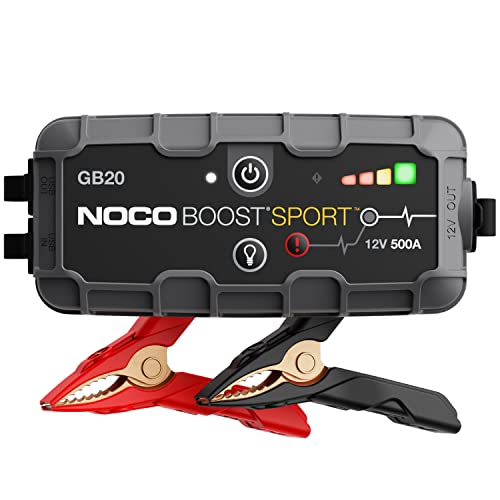
These are the mechanic-recommended solution. A modern, compact jump starter is a small lithium-ion power bank with jumper leads. They are designed with built-in safety features like reverse polarity protection and short-circuit prevention, making them virtually foolproof.
Bump Starting (Push Starting)
This is a no-tools, old-school method that works only on motorcycles with a manual transmission. It involves getting the bike rolling (usually by pushing it or rolling down a hill) and then quickly releasing the clutch in second gear to use the wheel’s momentum to turn over the engine. It’s physically demanding and doesn’t work if the battery is completely dead on a fuel-injected bike.
Battery Tenders (Preventative Maintenance)
The best solution to a dead battery is preventing it from happening in the first place. A battery tender is a “smart” trickle charger that you leave connected to your bike when it’s parked for extended periods. It monitors the battery’s voltage and delivers a slow, safe charge only when needed, dramatically extending battery life and ensuring it’s always ready to go.
| Feature | Car Jump-Start | Portable Jump Pack | Bump Starting |
|---|---|---|---|
| Safety | High Risk (if done wrong) | Very Safe | Low Electrical Risk |
| Convenience | Requires a second vehicle | Self-sufficient | Requires space & effort |
| Cost | Free (if cables owned) | $50 – $150 | Free |
| Best For | Last-resort emergencies | All riders, everyday carry | Manual bikes, no tools |

FAQs About can you jump a bike battery with a car
Does a car battery have too many amps for a bike?
No, this is a common myth. A motorcycle’s starter will only draw the amount of amperage it needs to operate. The car battery’s high amperage capacity is irrelevant; the real danger is the high, unregulated voltage from a running car’s alternator, not the battery’s amperage.
How long should you leave jumper cables on a motorcycle?
Only leave the cables connected long enough to start the motorcycle, which should only take a few seconds. As soon as the bike’s engine is running, you should begin the disconnection process immediately to minimize any risk to the electrical system. Do not use the car to “charge” the bike’s battery.
Can you jump-start a fuel-injected motorcycle?
Yes, you can jump-start a fuel-injected motorcycle using the same safety procedures, especially keeping the car’s engine off. In fact, fuel-injected bikes cannot be bump-started if the battery is completely dead because the fuel pump and ECU require electrical power to function.
Can a motorcycle jump-start a car?
No, this is not recommended and is generally impossible. A motorcycle battery has a much lower capacity and cold cranking amps (CCA) than a car battery. It simply does not have enough power to turn over a much larger car engine and attempting to do so could damage the motorcycle’s battery.
What happens if you connect jumper cables the wrong way?
Connecting jumper cables incorrectly (reverse polarity) can cause a dangerous spark, short-circuit the batteries, and severely damage the electronics on both vehicles. This can blow fuses, melt wires, and destroy the sensitive ECUs, leading to thousands of dollars in repairs. Always double-check your connections.
How do I know if my motorcycle battery is dead or if it’s the alternator/stator?
A quick way to check is to jump-start the bike. If the bike starts and runs with the jump but dies as soon as you disconnect the power source, you likely have a bad alternator/stator. If it fails to start even with a jump, the problem might be something else, like a starter or ignition issue. A multimeter is the best tool for a definitive diagnosis.
Can you jump-start a 6V motorcycle with a 12V car?
Absolutely not. You must never connect batteries of different voltages. Connecting a 12-volt car battery to a 6-volt motorcycle system will instantly overwhelm and destroy the bike’s battery, light bulbs, and any other electrical components, potentially causing a fire.
Can you jump a bike with a car if the bike’s battery is completely removed?
No, you should not do this. The motorcycle’s battery acts as a buffer to smooth out the electrical current. Attempting to run the bike directly off the car battery and jumper cables can expose the bike’s sensitive electronics to raw, unregulated power, causing severe damage.
Is it better to use a battery tender or jump-start?
It is always better to use a battery tender for preventative maintenance. A battery tender slowly and safely charges your battery, extending its life. Jump-starting is an emergency procedure that puts stress on the system. Regular use of a tender, especially during winter storage, is the best way to avoid a dead battery.
What do I do if my motorcycle makes a clicking sound but won’t start?
A rapid clicking sound is a classic symptom of a battery that has enough power to engage the starter solenoid but not enough to turn the engine over. This is a strong indication that your battery is dead or very low and needs to be jump-started or recharged.
Key Takeaways: Safely Jumping a Motorcycle With a Car
- Car Engine MUST Be OFF: This is the single most important rule. A running car’s alternator can send a voltage spike that will destroy your motorcycle’s ECU and other sensitive electronics.
- Voltage Must Match: Only attempt to jump-start a 12-volt motorcycle with a 12-volt car. Never cross different voltage systems.
- It’s About Voltage, Not Amps: The risk isn’t from the car battery’s high amperage (a myth), but from the car alternator’s high voltage when the engine is running.
- Correct Cable Order is Critical: Always connect in the proper sequence (Red to Bike+, Red to Car+, Black to Car-, Black to Bike Frame) to prevent sparks near the battery. Disconnect in the exact reverse order.
- Portable Jump Packs Are Safer: For a long-term, safe, and convenient solution, investing in a quality motorcycle-specific portable jump starter is the expert-recommended choice.
- A Jump Is Not a Full Charge: After a successful jump-start, you must ride the motorcycle for at least 20-30 minutes to allow its own system to begin recharging the battery.
- Never Jump a Lithium Battery: Do not use this method on modern lithium (LiFePO4) batteries, as you can damage their internal Battery Management System (BMS). Use a lithium-specific charger or jump pack.
Final Thoughts on Jumping a Bike Battery with a Car
You absolutely can use a car to bring a dead motorcycle back to life, but as we’ve detailed, it’s a procedure that demands respect and precision. Think of it as a last-resort field operation, not a routine fix. The knowledge that the car’s engine must remain off is your single greatest tool for protecting your bike’s expensive electronic brain. By following the step-by-step guide and understanding the risks, you’ve moved from being a stranded rider to a capable, informed owner.
For the future, the smartest move is to invest in prevention. A simple battery tender can save you from ever facing this situation, and a compact portable jump starter in your bag provides peace of mind and a far safer solution. Ride safe, and keep that battery healthy.
Last update on 2026-03-13 / Affiliate links / Images from Amazon Product Advertising API