
Wondering if you can drive a company car without your own insurance? You’re not alone in facing this complex question, as many drivers struggle to understand their personal liability and coverage needs. The answer is critical for your financial protection.
Typically, you do not need your own personal car insurance to drive a company car for business purposes, as your employer’s commercial auto policy is the primary coverage. Most personal auto policies contain a “furnished for regular use” exclusion, which prevents your insurance from covering a vehicle your employer provides for your ongoing use.
Based on an analysis of current insurance industry standards, this guide will demystify the rules. You’ll discover the key differences between personal and commercial policies, who is liable in an accident, and what steps you can take to ensure you are fully protected.
Key Facts
- Primary Coverage Source: Your employer’s commercial auto insurance is designed to be the primary source of coverage when you’re driving a company vehicle for business, demonstrating that the business assumes the primary risk.
- The “Furnished for Regular Use” Exclusion: This is a standard clause in nearly all personal auto insurance policies that explicitly denies coverage for vehicles, like a company car, that are regularly available for your use, highlighting a significant coverage gap.
- Vicarious Liability: Employers are generally held responsible for the actions of their employees during the scope of employment under a legal principle called “vicarious liability,” which is why their commercial policy is structured to cover such incidents.
- Personal Use is a Gray Area: Coverage for personal use of a company car is not automatic and depends entirely on the employer’s specific policy and written permissions; unauthorized personal use often voids coverage completely.
- Supplemental Coverage Exists: Employees can secure additional protection through endorsements like “Extended Non-Owned Auto Coverage,” which provides personal liability protection that fills gaps left by commercial and personal policies.
Can I Drive a Company Car Without My Own Insurance?
Yes, you can typically drive a company car for business-related activities without your own personal auto insurance providing coverage for that vehicle. The primary insurance responsibility rests with your employer, who must maintain a commercial auto insurance policy. This policy is specifically designed to cover the company’s vehicles and the employees who operate them within the scope of their employment. Your personal insurance is generally not needed for the company car itself because it’s intended for your private vehicle.
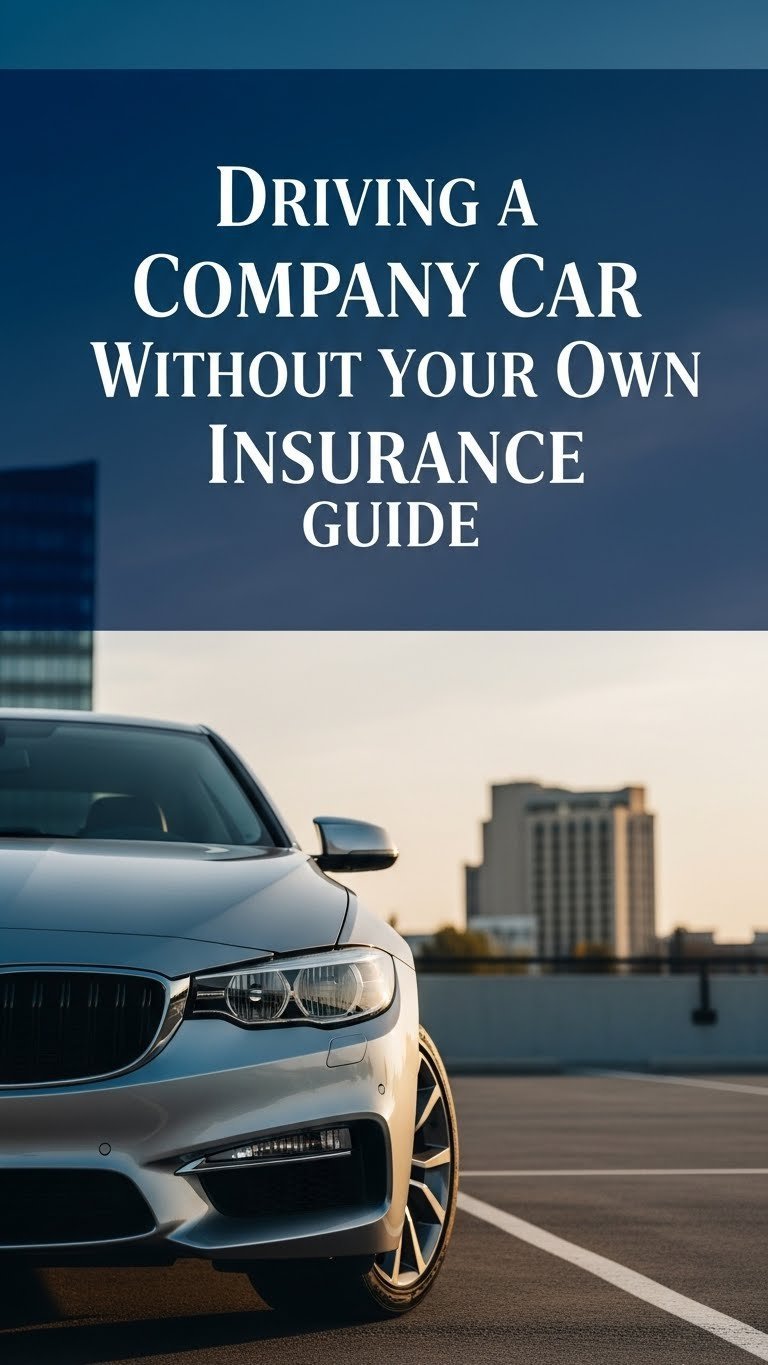
This distinction is a core principle in the insurance world. A commercial auto policy [insurance covers employee] actions, while a personal auto policy is meant for individual, non-business risks. Trying to use personal insurance for a company vehicle often leads to a denied claim because the risks associated with business driving are different and require a different type of coverage. Understanding these differences is the first step in ensuring you are protected.
What Are the Fundamental Differences Between Personal and Commercial Auto Insurance?
The fundamental difference lies in their purpose: personal auto insurance covers individual, private use, while commercial auto insurance covers vehicles used for business operations. This distinction influences everything from liability limits to who is covered. A personal auto policy [insurance applies to] you and your family members for non-commercial activities like commuting to a single office, running errands, or going on vacation.
In contrast, a commercial auto policy [employer provides coverage] for employees driving for work-related tasks, such as visiting clients, making deliveries, or traveling between job sites. Because business use often involves higher mileage, more drivers, and greater liability risks, commercial policies are structured differently. They typically offer higher liability limits to protect the company’s assets. This separation is why you cannot simply use one for the other’s purpose.
| Feature/Aspect | Personal Auto Insurance | Commercial Auto Insurance |
|---|---|---|
| Primary Purpose | Personal, non-business use | Business operations, company vehicles |
| Who it Covers | Insured driver & family for private use | Employees driving for business, company assets |
| Liability Limits | Often lower, tailored for individual risk | Often higher, tailored for business risk |
| Exclusions | “Furnished for regular use”, business use | Personal use beyond company policy |
| Typical Users | Individuals, families | Businesses, corporations, non-profits |
Why Might My Personal Auto Policy Not Cover a Company Vehicle?
Your personal auto policy will likely not cover a company vehicle due to specific clauses known as exclusions, which are written into the policy to limit the insurer’s risk. The most significant of these is the “furnished for regular use” exclusion. This clause is a standard part of most personal auto policies and is designed to prevent your personal insurance from acting as free coverage for a vehicle you don’t own but use consistently.
Insurance companies include these exclusions for a clear reason. The risk profile of a daily-use company car belongs on a commercial policy, which has premiums calculated for business-related risks. Allowing personal policies to cover these vehicles would mean personal policyholders would be subsidizing commercial risks.
Here are the key reasons your personal policy likely denies coverage:
- ➤ “Furnished for Regular Use” Exclusion: This is the primary barrier. Since your employer provides the car for your ongoing use, it falls squarely under this exclusion.
- ➤ Business Use Exclusion: Many personal policies have limitations or outright exclusions for any type of business use, especially if it’s more than just a simple commute.
- ➤ Unlisted Vehicle: The company car is not listed on your personal policy’s declaration page, so it is not a covered vehicle.
Who Is Liable if I Have an Accident in a Company Car?
In most cases, liability for an accident in a company car during authorized business use falls on the employer’s commercial auto insurance policy. This is based on a legal doctrine known as “vicarious liability” or “respondeat superior,” which holds an employer responsible for the negligent acts of an employee performed within the scope of their employment. Essentially, because you are acting on the company’s behalf, the company’s insurance is the first line of defense.
This framework protects employees from personal financial ruin for accidents that happen while they are doing their job. However, this protection is not absolute. The phrase “scope of employment” is critical. If your actions fall outside of your job duties or violate company policy, you could find yourself personally liable for damages.
An employee can be held personally responsible in several specific situations:
- Gross Negligence or Reckless Driving: If the accident was caused by behavior that goes far beyond simple carelessness, such as racing or excessive speeding.
- Driving Under the Influence (DUI): Operating a company vehicle while intoxicated is a criminal act and an immediate violation of any company policy, placing liability squarely on the employee.
- Unauthorized Personal Use: If you use the company car for a personal trip that was explicitly forbidden by your employer, you are likely outside the scope of employment.
- Allowing an Unauthorized Driver: Letting a friend or family member drive the company car is a common policy violation that can shift liability to you.
What Is the ‘Furnished for Regular Use’ Exclusion, and How Does It Impact Coverage?
The “furnished for regular use” exclusion is a standard clause in personal auto insurance policies that denies coverage for any vehicle you use regularly but do not own, such as a company car. Its purpose is to ensure that vehicles are insured based on their primary use. Insurers reason that if a car is available to you all the time, it presents a consistent risk that should be properly underwritten and paid for, typically through a commercial policy by the vehicle’s owner (your employer).
This exclusion directly impacts your coverage by creating a clear boundary. When your employer hands you the keys to a company car, your personal insurance company effectively steps back. They will not pay for damages to the company car, nor will they cover liability claims from an accident you cause while driving it for business. This prevents your personal policy from becoming a substitute for the employer’s responsibility to insure its own fleet.
The practical implications of this exclusion are significant:
- ⛔ No Physical Damage Coverage: Your personal policy’s collision or comprehensive coverage will not pay to repair the company car.
- ⛔ No Liability Coverage: Your personal liability protection will not cover injuries or property damage you cause to others in an accident.
- ⛔ Reliance on Employer’s Policy: You become entirely dependent on the quality and limits of your employer’s commercial auto insurance.
- ⛔ Potential for Gaps: If the employer’s policy has low limits or specific exclusions you’re unaware of, you could be left exposed.
Does Employer Insurance Cover Personal Use of a Company Car?
Coverage for personal use of a company car depends entirely on the employer’s specific commercial auto insurance policy and their written company vehicle agreement. There is no universal “yes” or “no” answer. Some employers purchase endorsements for their commercial policy that explicitly allow for personal use, while others strictly prohibit it to reduce liability and control costs. Unauthorized personal use is a major risk, as it can completely void the employer’s insurance coverage in an accident.
This is why reviewing your company’s vehicle use policy is not just a formality—it’s a critical step in protecting yourself. The document should clearly define what constitutes “personal use” and what is permitted. For example, using the car for your daily commute might be allowed, but using it for a weekend trip or for a side job is almost certainly not.
Here’s how coverage for personal use typically breaks down:
- Permitted Personal Use: If your company policy allows personal use (e.g., commuting, minor errands), the commercial auto insurance generally extends to cover these activities.
- Unauthorized Personal Use: If you have an accident while using the car in a way that is forbidden by the policy, the insurer can deny the claim. In this scenario, the liability would fall directly on you.
- Use by Others: Policies almost always prohibit non-employees, such as spouses or family members, from driving the car. Allowing them to do so is a form of unauthorized use.
How Can Employees and Employers Ensure Adequate Insurance Coverage?
To ensure adequate insurance, employees should clarify their company’s policy and consider supplemental coverage, while employers must maintain a robust commercial policy and enforce clear usage rules. This proactive, two-sided approach is the most effective way to close potential coverage gaps and mitigate financial risk for both parties. It moves beyond simply assuming “someone is covered” to actively verifying and structuring that protection.
For employees, this means reading the company vehicle policy carefully and asking questions. Don’t assume personal use is okay. For employers, it means working with a qualified insurance broker to secure a commercial auto policy that aligns with how their vehicles are actually used, including any permitted personal use.
What is Non-Owned Auto Coverage, and How Does It Protect Employees?
Non-owned auto coverage is an endorsement you can add to your personal auto insurance policy that provides liability protection when you are driving a vehicle you do not own, such as a company car. This coverage is secondary, meaning it typically only kicks in after the primary insurance (in this case, your employer’s commercial policy) has been exhausted. It is a safety net for your personal assets.
Its primary benefit is protecting you in a worst-case scenario. Imagine you cause a major accident in your company car, and the damages exceed the liability limits of your employer’s policy. Without non-owned auto coverage, the remaining costs could come out of your pocket. This endorsement helps cover that gap. It is a relatively inexpensive way to add a significant layer of personal liability protection and is highly recommended for anyone who regularly drives a vehicle they don’t own.
What Are Employer Best Practices for Company Car Insurance Policies?
From years of working with risk management for company fleets, there are several proven strategies employers should implement to protect their business and their employees. These best practices for company car insurance go beyond simply buying a policy; they involve creating a culture of safety and clear communication.
Here are some essential best practices for employers:
- ✅ Create a Clear Written Policy: Develop a detailed company vehicle agreement that outlines rules for authorized use, personal use restrictions, accident reporting procedures, and consequences for violations.
- ✅ Maintain High Liability Limits: Work with an insurance broker to secure a commercial auto policy with liability limits high enough to cover a major accident, protecting both company and employee assets.
- ✅ Regularly Review Driving Records: Conduct annual Motor Vehicle Record (MVR) checks for all employees who drive company cars to ensure they maintain a safe driving history.
- ✅ Provide Driver Safety Training: Implement regular safety training programs to reinforce defensive driving techniques and educate employees on company policies.
- ✅ Define Personal Use Explicitly: The policy must be crystal clear about what, if any, personal use is permitted. Ambiguity is a major source of liability.
What Should I Do After an Accident Involving a Company Vehicle?
After an accident in a company vehicle, your first priority is to ensure everyone’s safety, then immediately notify both emergency services and your employer. Following a clear, systematic procedure is crucial for a smooth claims process and for fulfilling your obligations to your company. Panicking can lead to missed steps that may complicate the situation later.
The process is similar to any car accident but includes the critical step of involving your employer from the very beginning. They own the vehicle and the insurance policy, so they must be kept in the loop. Always refer to your company’s specific accident reporting protocol, which should be outlined in your employee handbook or vehicle use agreement.
Follow these steps immediately after an accident:
- Prioritize Safety: Check yourself and others for injuries. If it’s safe to do so, move the vehicles out of traffic. Turn on your hazard lights.
- Contact Authorities: Call 911 if there are any injuries or significant property damage. A police report is an essential document for any insurance claim.
- Notify Your Employer: Call your direct supervisor or the designated contact person for accidents as soon as possible. They will guide you on the company’s specific procedures.
- Gather Information and Evidence: Exchange contact and insurance information with the other driver. Use your phone to take pictures of the accident scene, vehicle damage, and any relevant road signs or conditions. If there are witnesses, get their names and contact details.
- Do Not Admit Fault: Stick to the facts when speaking with the other party and the police. Avoid saying “it was my fault,” as liability will be determined by the insurance companies.
- Complete Required Reports: Fill out your company’s internal accident report and cooperate fully with the insurance adjuster who will investigate the claim.
FAQs About can i drive a company car without my own insurance
Do I need to inform my personal insurer about a company car?
Yes, it’s highly advisable to inform your personal auto insurance provider that you have a company car. While they won’t cover the car itself, this transparency allows them to give you accurate advice. They can confirm how the “furnished for regular use” exclusion applies and recommend supplemental coverage, like an extended non-owned auto endorsement, to protect your personal liability.
Can a company car be used by family members?
Typically, no. Most company vehicle policies strictly prohibit use by anyone other than the authorized employee. Allowing a family member or friend to drive the car is a serious policy violation. If they were to have an accident, it would almost certainly not be covered by the company’s insurance, leaving you and the driver personally responsible for all damages.
What if I drive a company car in another state or country?
Driving in another U.S. state is generally covered by your employer’s commercial policy, but international travel is a different matter. Most U.S. commercial policies do not extend coverage to Mexico, Canada, or overseas without a specific endorsement. Before crossing any borders, you must verify with your employer that they have secured the necessary international insurance coverage to remain protected.
Is an employee liable for damage to a company car?
Generally, an employee is not liable for normal accidental damage to a company car if the incident occurred during authorized business use. The employer’s commercial policy is designed to cover these repairs. However, you could be held financially responsible for damage caused by gross negligence, a DUI, an intentional act, or use that violates company policy.
What is a named non-owner policy, and is it useful for company car drivers?
A named non-owner policy provides liability insurance for someone who drives but doesn’t own a car. It can be useful for a company car driver who does not own a personal vehicle and therefore has no personal auto insurance. It acts as secondary liability coverage, but it’s important to understand it will not cover physical damage to the company car itself.
Who pays the deductible for a company car accident?
The employer’s vehicle use policy dictates who pays the deductible. In many cases, if the employee was not at fault and was following all rules, the company will cover the deductible. However, some policies state that the employee is responsible for paying it, especially if they were at fault or violated a policy. Always check your company’s written agreement.
What happens if my personal insurance lapses but I still drive a company car?
A lapse in your personal insurance does not directly affect the coverage on the company car, as that is provided by your employer’s commercial policy. However, it can have other consequences. Many employers require employees who drive company vehicles to maintain a valid personal driver’s license and sometimes proof of personal insurability, so a lapse could violate company policy.
Can I use a company car for side jobs or ride-sharing services?
Absolutely not. Using a company car for any commercial activity outside of your employment, such as Uber, Lyft, or any other side hustle, is strictly prohibited. This is considered unauthorized commercial use and would instantly void the employer’s insurance coverage. If you had an accident in this situation, you would be 100% personally liable for all damages.
What are common company car policy exclusions employees should know?
Common exclusions include any illegal activities, driving under the influence, unauthorized personal use, and allowing unauthorized individuals to drive the vehicle. Other typical exclusions are using the car for racing, towing, or for-hire services. Violating any of these will likely result in the denial of an insurance claim and significant personal liability.
How does company car insurance work for employees, generally speaking?
Company car insurance works by having the employer’s commercial auto policy act as the primary coverage for the employee while they operate the vehicle for business purposes. The employee is considered an “insured” driver under this policy. This means the employer’s insurance covers liability, collision, and comprehensive claims, and the employee does not need to rely on any personal insurance for business-related driving.
Final Thoughts on Driving a Company Car Without Your Own Insurance
Navigating the complexities of driving a company car involves a crucial understanding of insurance coverage. As this guide underscores, the common misconception that personal auto insurance automatically extends to a company-provided vehicle is often incorrect due to standard “furnished for regular use” exclusions. The primary line of defense is your employer’s commercial auto insurance, which is designed to cover business operations and employee actions within the scope of employment.
However, a robust understanding of your company’s specific vehicle use policy, combined with a clear grasp of potential employee liabilities for negligence or unauthorized use, is paramount. Both employees and employers share a responsibility in ensuring adequate protection. Employees should proactively clarify personal use provisions and consider supplementary personal liability coverage like Extended Non-Owned Auto. Employers, in turn, must establish transparent policies and maintain comprehensive commercial insurance. By adhering to these guidelines, individuals can confidently drive company cars, minimizing risks and maximizing peace of mind.




![What Car Is Chevy Bringing Back in [year]? New Lineup Revealed](https://carxplorer.com/wp-content/uploads/2026/01/What-Car-Is-Chevy-Bringing-Back-in-year-New-Lineup-Revealed-1-1-60x60.jpg "What Car Is Chevy Bringing Back in [year]? New Lineup Revealed 11")