
Wondering if a passenger can drink in the car? You’re not alone; many people struggle with the confusing and conflicting rules. This gray area in traffic law can lead to serious legal trouble if you guess wrong.
The legality of a passenger drinking in a car is mostly prohibited in the U.S. and is determined by individual state open container laws, not a single federal rule. These laws typically ban any open container of an alcoholic beverage inside a vehicle’s passenger area while it is on a public road, with specific exceptions varying significantly by state.
Based on an analysis of current state statutes and official government guidelines, this guide will clarify the complex rules. You will discover exactly which states have exceptions, what penalties you could face, and the best practices to avoid any legal issues.
Key Facts
- Federal Influence, Not Mandate: There is no direct federal law banning passenger drinking, but federal programs like the Transportation Equity Act for the 21st Century (TEA-21) incentivize states to adopt strict open container laws by tying it to highway funding.
- State Law is Supreme: The vast majority of states, influenced by federal incentives, have enacted laws that prohibit passengers from possessing or consuming alcohol from an open container in a vehicle.
- A Few Exceptions Exist: A small number of states, including Mississippi, Missouri, and Virginia, have more lenient laws or specific exceptions that may permit passengers to drink under certain conditions, though local ordinances can still apply.
- Broad Definition of “Open Container”: An “open container” is not just a can someone is drinking from. Legally, it’s any bottle, can, or receptacle with a broken seal or from which contents have been partially removed, making even a resealed wine bottle illegal in the passenger area.
- Significant Penalties for Passengers: A passenger violating open container laws can face consequences ranging from a simple infraction and a fine of around $100-$500 to a misdemeanor charge, depending on the state.
What Does “Can a Passenger Drink in the Car” Legally Mean in the U.S.?
In the U.S., whether a passenger can legally drink alcohol in a car is governed almost entirely by state-specific open container laws, which overwhelmingly prohibit it. While there isn’t a federal law making it a crime, the federal government strongly encourages states to ban open containers for all vehicle occupants. This means the general rule across the country is that it is illegal for any passenger to possess an open alcoholic beverage on public roadways.
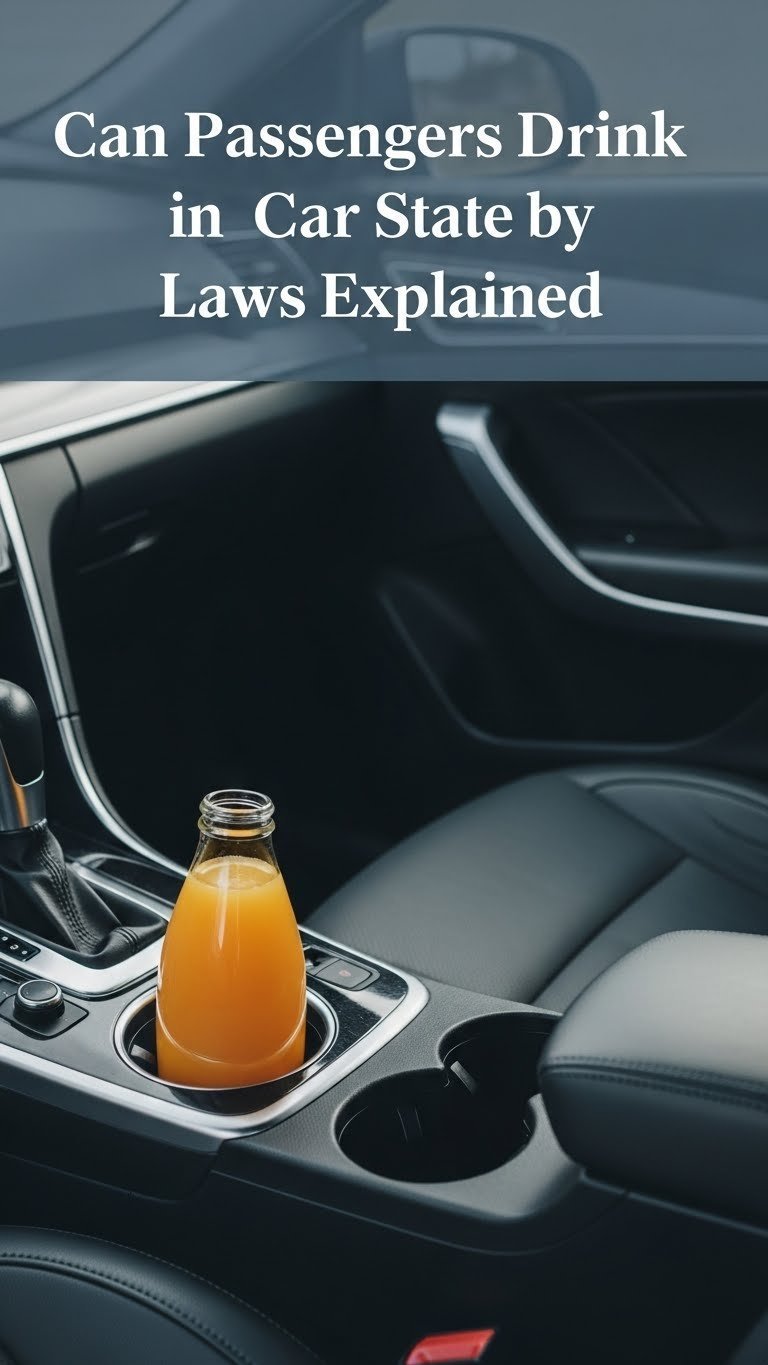
This legal framework is designed to reduce the risks associated with drinking and driving. Even if the driver is sober, an open container accessible to them can create a dangerous temptation. Understanding this concept is the first step in navigating traffic laws explained in this guide. The core of these regulations is the “open container law,” a piece of basic legal terminology that has major implications for both drivers and passengers.
Key points to understand about the general legal landscape include:
* Most states make it illegal for any occupant, not just the driver, to have an open container.
* These laws apply to vehicles on public highways, roads, and shoulders.
* The goal is to prevent the driver from having easy access to alcohol.
Disclaimer: This article provides general information and does not constitute legal advice. Laws are subject to change and vary by jurisdiction. For legal counsel, please consult a licensed attorney.
How Do Open Container Laws Define “Open Container” and “Passenger Area”?
An “open container” is commonly defined as any bottle, can, or other receptacle containing an alcoholic beverage that is open, has a broken seal, or has had its contents partially removed. This is a critical distinction because it means a container doesn’t have to be actively used to be illegal. The “passenger area” refers to any part of a vehicle designed for passengers, including the glove compartment, but generally excludes the trunk or a securely stored area.
To provide more clarity, let’s break down these definitions. The term “open container” is interpreted broadly by law enforcement to prevent loopholes. A simple twist-cap on a bottle of liquor that has been previously opened makes it an open container. Similarly, a wine bottle with the cork put back in is still considered open.
What qualifies as an “open container”:
* A beer can that has been opened.
* A bottle of liquor with a broken seal, even if the cap is back on.
* A flask containing alcohol.
* An insulated cup or mug containing an alcoholic beverage.
* A growler of beer that has been unsealed.
The “passenger area” is also defined with the principle of “ready access” in mind. If a driver or passenger can reasonably reach the container while the vehicle is in operation, it’s likely within the prohibited zone. This is why a vehicle’s trunk is almost universally accepted as a legal place to store open containers of alcohol, as it is inaccessible to occupants.
Which States Allow Passengers to Drink Alcohol in a Car? (State-by-State Overview)
The majority of U.S. states have open container laws that prohibit passengers from drinking alcohol in a car. However, a small number of states have notable exceptions or no statewide ban, though local city or county ordinances may still apply. It is crucial to check local laws before assuming it is permitted.
Our analysis of state statutes shows a clear trend toward prohibition, largely driven by federal highway funding incentives. Below is a detailed breakdown of the laws regarding passenger alcohol consumption. This state-by-state overview provides the specific details you need to know before traveling.
| State | Passenger Drinking Allowed? | Key Provisions/Notes |
|---|---|---|
| States Largely Prohibiting | No | Most states (40+) including California, Florida, Georgia, New York, and Texas have strict open container laws that apply to all occupants of a vehicle. Storing open containers is only legal in the trunk or another area not readily accessible to passengers. |
| Arkansas | Conditional | Passengers may consume alcohol in a moving vehicle. However, the driver can be charged with a DUI if their Blood Alcohol Content (BAC) is 0.08% or higher, and the presence of a drinking passenger could be used as evidence. |
| Connecticut | Conditional | Passengers are permitted to have an open container of alcohol. The law primarily targets the driver. |
| Delaware | Conditional | Passengers are allowed to consume alcohol from an open container. The state’s laws focus on the driver’s sobriety. |
| Mississippi | Yes | Mississippi has no statewide open container law, making it legal for passengers (and even drivers, as long as they stay under the 0.08% BAC limit) to drink in a moving vehicle. Local ordinances may exist. |
| Missouri | Conditional | Passengers are legally allowed to drink in a vehicle, but some municipalities have local laws prohibiting it. St. Louis, for example, has its own open container ban. |
| Virginia | Conditional | Passengers are permitted to have open containers and consume alcohol, but it cannot be in the driver’s possession or reach. |
For all other states not listed with exceptions, you should assume it is illegal for a passenger to drink alcohol or possess an open container in the passenger area of a car.
Are There Specific Exceptions to Open Container Laws for Passengers?
Yes, exceptions to open container laws for passengers typically include specific vehicle types like limousines, party buses, or recreational vehicles (RVs) where the consumption occurs in a designated area not accessible to the driver. Some states also permit consumption on private property.
Even in states with strict open container bans, the law often recognizes that certain vehicles are designed for entertainment or as living spaces. The key factor is usually whether the passengers are in a compartment separate from the driver.
Here are some of the most common exceptions:
- Commercial Vehicles (Limos, Taxis, Party Buses): Many states allow passengers to drink in commercial livery vehicles. The logic is that these passengers are separated from the professional driver, who is responsible for safe operation. Imagine you’re in a hired limo for a wedding—the law often permits celebratory drinks in the back.
- Recreational Vehicles (RVs) and Campers: The living quarters of an RV are typically considered a temporary residence, not a passenger compartment. Therefore, passengers are often allowed to consume alcohol in the kitchen or living area of an RV while it’s in motion, as long as no open containers are in the front cab area with the driver.
- Private Property: Open container laws generally apply to public highways and roads. In some jurisdictions, consuming alcohol in a vehicle on private property (with the owner’s permission) may not be a violation, but this can be a very gray area.
It is critical to remember that these exceptions are not universal. The specific rules for a “party bus” in California may differ from those in Nevada. Always verify the local laws for your specific situation.
What Are the Penalties and Consequences for a Passenger Drinking in a Car?
Penalties for a passenger drinking in a car or possessing an open container typically include fines ranging from $100 to $500, court fees, and potentially a misdemeanor on their record. In some cases, the driver could also face charges for knowingly allowing the violation.
While a passenger won’t get a DUI, the consequences are still serious and should not be underestimated. The specific penalty depends heavily on the state and sometimes even the county or city where the violation occurs. Traffic court rulings show that these charges are enforced regularly.
Here are the potential consequences a passenger might face:
- Fines: The most common penalty is a monetary fine. This can range from a relatively minor ticket to several hundred dollars.
- Misdemeanor Charge: In some stricter states, an open container violation is classified as a misdemeanor. This creates a criminal record that can have future implications for employment and background checks.
- Driver Liability: A driver can also be held responsible. If a police officer determines the driver knowingly permitted the passenger to possess an open container, the driver could receive a separate citation.
- Points on License: While rare for a passenger, in some jurisdictions, an open container violation could add points to a person’s driving record if they have one.
- Vehicle Impoundment: In extreme or repeated cases, the vehicle could be impounded, leading to significant costs and inconvenience.
How Can Passengers and Drivers Avoid Open Container Violations?
Passengers and drivers can avoid open container violations by ensuring all alcohol is in sealed containers, stored in the trunk or a locked glove compartment, and never consumed in the vehicle’s passenger area on public roads. Communication and knowledge are the best tools for prevention.
Based on traffic law attorney advice and law enforcement policy, following a few simple best practices can prevent legal trouble. These steps are easy to implement and eliminate any ambiguity during a traffic stop.
Tips for Passengers
- Know Before You Go: Before getting into a car with alcohol, understand the passenger drinking rules for that specific state.
- Keep it Sealed: Do not open any alcoholic beverage inside the car. Wait until you have arrived at your destination.
- Store it Properly: If you are transporting an already opened bottle (like a bottle of wine from a restaurant), insist that it is placed in the trunk.
Tips for Drivers
- Educate Your Passengers: As the operator of the vehicle, you have a responsibility. Before starting a trip, politely inform your passengers of the open container laws.
- Set Clear Rules: Make it a firm policy that no alcohol is to be opened in your car. A simple statement like, “Hey everyone, just a reminder to keep all drinks sealed until we get there,” can prevent issues.
- Use the Trunk: Make the trunk the designated storage area for any alcohol being transported. This physically separates it from the passenger area and demonstrates compliance.
What Are the Federal Laws Regarding Open Containers in Cars?
There is no direct federal law that makes it illegal to possess an open container of alcohol in a motor vehicle; however, the federal government encourages states to adopt such laws through incentives. States that do not comply with federal recommendations for open container laws may face a transfer of a portion of their federal highway funds to alcohol countermeasures programs.
This explains why there is so much consistency—yet still some variation—among state laws. The federal government uses a “carrot and stick” approach. The key federal legislation is the Transportation Equity Act for the 21st Century (TEA-21). This act outlines minimum requirements that a state’s open container law should meet to be in compliance.
These requirements generally include:
* Prohibiting possession of any open alcoholic beverage container.
* Applying the law to all occupants of a vehicle.
* Covering the entire passenger area of a vehicle.
* Applying to all public highways and roads.
So, why do a few states still allow passenger drinking? Those states have made a legislative decision to forgo a portion of their federal highway funds or redirect them, choosing to maintain their own statutes. This federal-state dynamic is a core concept in understanding why U.S. laws are not always uniform.
FAQs About can a passenger drink in the car
Can a passenger get a DUI for drinking alcohol in a car?
Generally, a passenger cannot receive a DUI (Driving Under the Influence) charge as DUI laws apply to individuals operating or in physical control of a vehicle. However, a passenger can be charged with other offenses like an open container violation, public intoxication, or, if underage, minor in possession of alcohol.
What if the alcohol is in the trunk, is that allowed?
Yes, in nearly all states, transporting alcoholic beverages in the trunk of a car is legal, even if the container is open. The trunk is legally considered outside the “passenger area” and is not readily accessible to vehicle occupants, which is the key standard for open container laws.
Are ride-share passengers allowed to drink alcohol (e.g., Uber/Lyft)?
No, passengers in ride-share vehicles like Uber or Lyft are generally not allowed to consume alcohol. These vehicles are subject to the same state open container laws as private cars. Furthermore, ride-share companies have their own policies that explicitly prohibit passengers from consuming alcohol to ensure safety and legal compliance.
Can an underage passenger have an open container, even if not drinking?
No, an underage passenger is strictly prohibited from possessing an open container of alcohol, regardless of whether they are drinking it. This act would likely violate two separate laws: the state’s open container law and its “minor in possession” (MIP) law, which carries its own set of serious penalties.
Can a passenger drink non-alcoholic beer in a car?
Yes, a passenger can legally drink non-alcoholic (NA) beer in a car in all U.S. states. Beverages are legally defined as “alcoholic” if they contain more than 0.5% alcohol by volume. Since NA beer falls below this threshold, it is not subject to open container laws.
What is the definition of a ‘passenger area’ regarding open containers?
The ‘passenger area’ generally refers to any part of a motor vehicle designed to seat the driver and passengers, including the glove compartment, console, and any area readily accessible to occupants. This typically excludes a locked glove compartment, the trunk, or the area behind the last upright seat in an SUV or hatchback if it’s not easily reachable.
What are common misconceptions about passenger drinking laws?
Common misconceptions include believing that laws only apply to the driver, that drinking is fine if the car is parked, or that hiding a can in a koozie makes it legal. In reality, most laws apply to all occupants on public roads, whether moving or temporarily stopped, and any container with a broken seal is considered “open.”
How do open container laws vary by state for passengers?
Open container laws for passengers vary significantly: most states have a complete ban, a few allow it with no statewide restriction (like Mississippi), and others permit it under specific conditions (like in Connecticut or Missouri). These differences often depend on vehicle type (e.g., RVs) and whether regulation is left to local cities or counties.
What should a passenger do if pulled over with an open container?
If pulled over, a passenger should remain calm, be polite, and avoid making sudden movements to hide the container. You should provide identification if requested but are not required to answer incriminating questions. It is always within your rights to politely state that you wish to speak with an attorney.
Does Florida allow passengers to drink in a car?
No, Florida has a strict open container law, Statute 316.1936, that prohibits both drivers and passengers from possessing an open container of alcohol within the passenger area of a vehicle on a public road. Legal storage is limited to the trunk or a locked glove compartment.
What are Georgia’s open container laws for passengers?
Georgia’s Open Container Law (O.C.G.A. § 40-6-253) strictly prohibits any occupant of a motor vehicle, including passengers, from having an open alcoholic beverage on a public highway. Georgia’s law is known for being one of the stricter in the nation, with very few exceptions.
Is it legal to drink as a passenger in California?
No, California Vehicle Code 23222 makes it illegal for a passenger to have an open container of alcohol in a vehicle on a public highway. Exceptions are made for passengers in commercial vehicles for hire, such as a bus, taxi, or limousine, where the drinking occurs in a part of the vehicle designated for passengers.
What about drinking as a passenger in a car in New York?
New York Vehicle and Traffic Law § 1227 makes it illegal for passengers to have an open container of alcohol in a motor vehicle on a public highway. This law applies broadly to all occupants and aligns with the strict prohibitions seen in most other states.
What are the rules for open alcohol in a car in the UK?
In the UK, it is generally not illegal for a passenger to drink alcohol in a private car. Unlike the U.S., UK law focuses almost exclusively on penalizing the driver for drink-driving offenses rather than regulating passenger consumption or open containers. However, police can intervene if a passenger’s behavior becomes a public order issue.
Final Thoughts
Navigating the rules around whether a passenger can drink in the car reveals a complex legal landscape where state law is king. While the idea of enjoying a beverage as a passenger might seem harmless, the reality is that most states have strict open container laws that apply to everyone in the vehicle, not just the driver. The financial and legal penalties for a violation are significant enough to warrant caution.
Ultimately, the safest and most legally sound approach is always to err on the side of caution.
* Know the Law: Before any trip, a quick check of the state’s open container laws can prevent a major headache.
* Keep It Sealed and Stored: The simplest rule is to keep all alcoholic beverages sealed and in the trunk until you reach your destination.
* Communicate Clearly: Drivers should feel empowered to set a no-open-container rule for their vehicle to protect themselves and their passengers.
By understanding these nuances, you can ensure your travels remain safe, enjoyable, and free from legal complications. What’s been your experience with these varied laws during your travels?


![What Car Is Chevy Bringing Back in [year]? New Lineup Revealed](https://carxplorer.com/wp-content/uploads/2026/01/What-Car-Is-Chevy-Bringing-Back-in-year-New-Lineup-Revealed-1-1-60x60.jpg "What Car Is Chevy Bringing Back in [year]? New Lineup Revealed 11")