
Is your back pain more than just a temporary ache after a recent collision? You’re wondering if a car accident could truly result in a spinal curve like scoliosis. Many struggle with persistent discomfort and visible changes, leaving them questioning the link. This matters now for understanding your symptoms.
A car accident can indeed cause scoliosis, particularly a type known as traumatic scoliosis, through severe spinal injuries like fractures, ligament damage, or vertebral displacement. It can also significantly worsen pre-existing idiopathic or degenerative scoliosis due to the immense forces involved in a collision, altering spinal alignment or accelerating degenerative changes.
Based on extensive medical analysis and real-world case studies, this guide reveals why understanding the specific mechanisms of spinal trauma is crucial. You’ll discover exactly how an auto accident impacts spinal health, covering diagnostic pathways and legal considerations systematically.
Key Facts
- Car accidents can cause new-onset traumatic scoliosis: This occurs when direct spinal injury, such as fractures or severe ligament damage, leads to an abnormal spinal curve.
- Existing scoliosis can be aggravated by vehicular trauma: A car crash’s impact can significantly worsen a pre-existing idiopathic or degenerative spinal curvature, increasing pain and progression.
- Scoliosis symptoms may have a delayed onset: Adrenaline or initial soft tissue swelling can mask pain, leading to visible symptoms or pain appearing weeks or months after the accident.
- Comprehensive diagnostic imaging is essential: Accurate diagnosis requires detailed physical exams, neurological assessments, and advanced imaging like X-rays, MRI, and CT scans.
- Legal claims require proven causation: Meticulous medical documentation and expert testimony are critical to establish a direct causal link between the car accident and the development or worsening of scoliosis for legal purposes.
What is Traumatic Scoliosis, and How Does a Car Accident Lead to It?
Traumatic scoliosis is a type of spinal curvature that develops suddenly as a direct consequence of physical trauma, such as a severe car accident. The immense forces during a collision can cause vertebral compression fractures, ligamentous damage, or muscle and soft tissue injury, destabilizing the spine and leading to an abnormal curve where none existed previously. This condition differs from more common forms of scoliosis by having a clear, identifiable traumatic event as its origin.
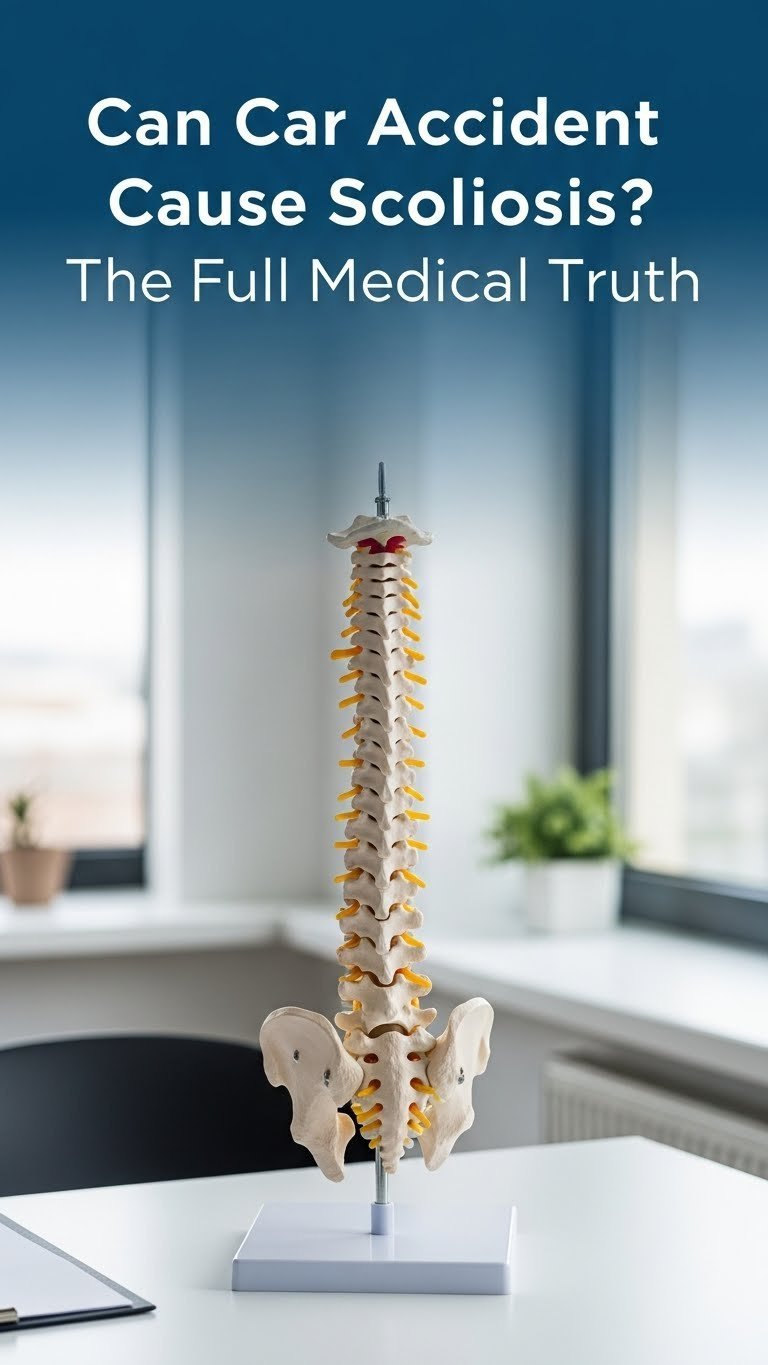
When a car accident occurs, the body is subjected to sudden, violent biomechanical forces. These forces, often far exceeding the spine’s natural tolerance, can directly damage the structural components of the spine, leading to a spinal deformity. Peer-reviewed studies on scoliosis after car accidents highlight how impact can result in fractures to the vertebrae, the bones that make up the spinal column, or significant stretching and tearing of spinal ligaments. Such injuries destabilize the spine, forcing it into an unnatural position or accelerating an existing minor deviation. The pathophysiology of traumatic scoliosis involves a direct mechanical disruption or a severe muscular imbalance that pulls the spine out of its normal alignment.
This direct damage can initiate a new spinal curve where none was present before the collision, leading to a condition known as de novo traumatic scoliosis. It’s a critical distinction from other types of scoliosis, such as idiopathic (of unknown cause) or degenerative (due to aging). The suddenness and direct link to the auto accident make traumatic scoliosis a specific and challenging diagnosis. Understanding spinal trauma and its effects on the anatomy of the human spine is key to recognizing this type of scoliosis.
What Specific Spinal Injuries from a Car Accident Can Trigger Scoliosis?
Car accidents can trigger scoliosis through various spinal injuries, including vertebral compression fractures, facet joint injuries, severe ligamentous tears leading to instability, and disc herniations that alter spinal mechanics. These specific types of trauma directly compromise the structural integrity and stability of the vertebral column. According to clinical guidelines for spinal injury, the type and severity of damage are crucial factors in the development of post-traumatic spinal deformity.
Specific spinal injuries from a car accident that can trigger scoliosis include:
- Vertebral Compression Fractures: Direct damage to the bones of the spine, where vertebrae crack or collapse under extreme pressure. This can instantly alter the alignment of the spinal column.
- Ligamentous Instability: Tearing or significant stretching of ligaments, which are essential for holding vertebrae together, severely compromising spinal support. This instability allows abnormal movement and curvature.
- Facet Joint Injuries: Damage to the small joints connecting vertebrae, often due to hyperextension or hyperflexion. Such injuries can lead to chronic inflammation and misalignment, contributing to a scoliotic curve.
- Severe Muscle Imbalance/Damage: Trauma to the paraspinal muscles, which run along the spine, can cause spasms, weakness, or atrophy. This imbalance can pull the spine into an abnormal posture, leading to functional scoliosis or exacerbating structural issues.
- Disc Herniation: When the cushioning discs between vertebrae rupture or bulge, it can put pressure on nerves and alter the mechanical forces acting on the spine, leading to compensatory curves.
These injuries, whether solitary or in combination, can destabilize the spine’s delicate balance. The resulting vertebral damage or ligament damage to the spine can directly lead to a new spinal curvature. It’s why immediate medical evaluation after an accident is vital to identify these potential scoliosis triggers.
Can a Car Accident Worsen Existing Scoliosis, and How Does This Happen?
Yes, a car accident can significantly worsen existing scoliosis, even a previously stable curve, through several mechanisms. The sudden, violent forces can disrupt the delicate balance of the already curved spine, leading to increased pain, accelerated curve progression, new nerve impingement, or the development of additional spinal instabilities in areas previously compensating for the curve. Orthopedic surgeon’s perspectives highlight that an already compromised spine is more vulnerable to the jarring impact of a collision.
For individuals with pre-existing scoliosis, a car crash presents a unique risk. The spinal column, already deviating from its natural alignment, possesses altered spinal biomechanics and compensatory mechanisms. A violent impact, even one considered minor by some, can overwhelm these compensatory strategies. The sudden jolt can lead to new micro-fractures, ligamentous strains, or disc injuries in segments adjacent to or within the existing curve. This exacerbation of existing scoliosis can trigger new or significantly increased localized pain, radiating discomfort, or even neurological symptoms if nerves become compressed.
Furthermore, the trauma can accelerate degenerative changes in the spine. Areas that were previously stable or experiencing mild degeneration might rapidly progress due to the impact, leading to increased stiffness and pain. According to expert medical opinion on scoliosis, understanding how trauma affects an already compromised spine is crucial for effective treatment. An accident can cause increased muscle spasms as the body attempts to protect the injured areas, further pulling the spine into an even more pronounced curve or disrupting existing spinal health.
What are the Common Ways Pre-Existing Scoliosis Worsens After Trauma?
Common ways pre-existing scoliosis worsens after trauma include increased localized or radiating pain, accelerated spinal curve progression, the onset of new neurological symptoms, and a significant decrease in mobility or functional capacity. These changes indicate that the collision has disrupted the spine’s delicate balance, exacerbating the pre-existing condition. Patient outcomes research related to trauma and scoliosis progression confirms that impact can significantly alter an already curved spine.
Common ways pre-existing scoliosis worsens after trauma include:
- Increased Pain: New or exacerbated localized back pain, sometimes radiating into the limbs, is a primary indicator. This can result from new soft tissue injuries, disc problems, or increased stress on facet joints.
- Curve Progression: A measurable increase in the Cobb angle, which is the standard measure of spinal curvature, indicates further spinal deviation. This progression can occur rapidly after a traumatic event.
- Neurological Symptoms: Onset of numbness, tingling, weakness, or radiating pain in the extremities due to nerve compression or damage. This often signifies disc herniation or increased pressure from altered vertebral alignment.
- Decreased Mobility: Reduced range of motion in the spine, increased stiffness, or functional impairment in daily activities. Movements that were once easy may become difficult or painful.
- Muscle Spasms: Persistent and painful muscle contractions around the spine, often in an attempt to protect injured areas. These spasms can contribute to pain and further pull the spine into a more pronounced curve.
- Postural Changes: Visible shifts in body alignment, such as leaning more to one side, uneven shoulders, or a more prominent rib hump, may become noticeable.
It is essential for individuals with pre-existing spinal curves to meticulously track their symptoms post-accident. Any significant changes in pain levels, function, or appearance should prompt immediate consultation with a spinal specialist.
What Symptoms Suggest Scoliosis After a Car Accident?
Symptoms suggesting scoliosis after a car accident include persistent or worsening back pain, visible spinal asymmetry (uneven shoulders, hips, or rib cage), changes in posture, fatigue, neurological deficits like numbness or weakness, and difficulty maintaining balance. These indicators can signal either new-onset traumatic scoliosis or the aggravation of a pre-existing condition. Clinical guidelines for spinal injury emphasize recognizing these signs promptly for timely diagnosis.
Symptoms that may suggest scoliosis after a car accident often include:
- Persistent Back Pain: New or increased pain in the back, neck, or buttocks that doesn’t resolve with typical rest. This pain can be localized or radiate along nerve pathways.
- Visible Asymmetry: Observable unevenness in the body, such as one shoulder appearing higher than the other, one hip being more prominent, an uneven waistline, or a noticeable rib hump when bending forward.
- Postural Changes: A noticeable lean to one side, difficulty standing completely straight, or feeling unbalanced. These changes often indicate a shift in spinal alignment.
- Muscle Spasms: Localized muscle tightness, cramping, or persistent soreness around the spine, resulting from the body’s attempt to stabilize an injured or misaligned segment.
- Neurological Symptoms: The onset of numbness, tingling, weakness, or shooting pain in the arms, legs, or other extremities, indicating nerve impingement or damage.
- Fatigue: Generalized tiredness that goes beyond normal exhaustion, potentially stemming from the increased effort muscles must exert to support a compromised or misaligned spine.
- Limited Mobility: A reduced range of motion in the back, making twisting, bending, or lifting more challenging and painful than before the accident.
Recognizing these acute scoliosis symptoms after an accident is crucial. Even subtle changes in appearance or persistent discomfort should be evaluated by a medical professional, as early diagnosis can significantly impact treatment outcomes.
How Long After a Car Accident Can Scoliosis Symptoms Appear?
Scoliosis symptoms can appear immediately after a car accident, but it is also common for them to have a delayed onset, manifesting days, weeks, or even months later. This delay often occurs because adrenaline can mask initial pain, soft tissue swelling can obscure underlying spinal issues, or the spinal instability might gradually worsen over time, leading to noticeable curvature and discomfort. A neurologist’s assessment of spinal trauma confirms that delayed symptom presentation is a recognized phenomenon.
The initial shock of an auto accident triggers the body’s fight-or-flight response, releasing adrenaline which can temporarily reduce pain perception. Once this adrenaline subsides, often hours or days later, the true extent of injuries, including those contributing to scoliosis, may become apparent. Additionally, soft tissue swelling and inflammation following the collision can initially hide the underlying structural changes to the spine. As this swelling resolves, or as spinal instability progressively worsens, symptoms like visible asymmetry, pain, or nerve issues may emerge.
In some cases, the slow progression of spinal damage or the development of compensatory curves can mean symptoms like a measurable spinal curve change only become noticeable weeks or months after the initial trauma. This delayed onset scoliosis symptoms following car trauma can pose challenges for diagnosis and for legal claims, making meticulous documentation of all changes, no matter how minor, critically important.
How is Scoliosis Diagnosed After a Car Accident?
Diagnosing scoliosis after a car accident typically involves a multi-faceted approach. This begins with a detailed physical examination and neurological assessment by a spinal specialist to check for asymmetry, pain, and function. Crucially, standing full-spine X-rays are taken to measure the Cobb angle of the curve, supplemented by MRI or CT scans to identify specific injuries like fractures, disc herniations, or nerve impingement. This comprehensive medical evaluation is essential for diagnostic accuracy in accident cases.
The diagnostic process usually includes:
- Detailed Medical History and Physical Examination: A spinal specialist will inquire about the accident, your symptoms, and any pre-existing conditions. A physical examination assesses posture, spinal flexibility, muscle strength, reflexes, and checks for visible signs of scoliosis, such as uneven shoulders, hips, or a rib prominence.
- Neurological Assessment: This evaluates nerve function to detect any signs of nerve damage after the accident, such as numbness, tingling, or weakness in the limbs, which might indicate spinal cord or nerve root compression.
- Standing Full-Spine X-rays: These are the primary diagnostic tool for scoliosis. X-rays taken while standing allow doctors to visualize the entire spine and accurately measure the Cobb angle, quantifying the degree of spinal curvature.
- Magnetic Resonance Imaging (MRI): An MRI provides detailed images of soft tissues, including intervertebral discs, ligaments, and the spinal cord. It is invaluable for identifying disc herniations, spinal cord compression, soft tissue injuries, and other subtle damages not visible on X-rays.
- Computed Tomography (CT) Scan: A CT scan offers cross-sectional images of bone structures, providing superior detail for detecting subtle fractures, bony abnormalities, and vertebral displacement that may contribute to scoliosis.
This combination of process action keywords and advanced imaging (medical imaging MRI CT scan) helps medical professionals make an accurate diagnosis. The orthopaedic specialist or neurologist consultation is vital in piecing together the full clinical picture.
Who is the Best Doctor to See for Scoliosis from a Car Accident?
For scoliosis resulting from a car accident, the best doctors to consult typically include a multidisciplinary team. This team often comprises an Orthopedic Spinal Surgeon for structural issues and surgical considerations, a Neurologist if nerve damage is suspected, and Physical Therapists or Chiropractors for conservative management and rehabilitation. Board-certified spinal specialists are generally recommended for their expertise.
The selection of the most appropriate medical professional depends on the nature and severity of your spinal injuries:
- Orthopedic Spinal Surgeon: These specialists are best suited for diagnosing and treating structural issues of the spine, including fractures, significant spinal deformities, or cases where surgical intervention like spinal fusion might be considered. Their expertise lies in the physical correction of spinal misalignment.
- Neurologist: If you experience neurological symptoms such as numbness, tingling, weakness, or radiating pain, a neurologist should be consulted. They specialize in disorders of the nervous system and can diagnose and manage nerve damage after the accident or spinal cord involvement.
- Physical Therapist: For conservative management, rehabilitation, and pain relief, a physical therapist is crucial. They design personalized exercise programs to strengthen core muscles, improve posture, increase flexibility, and restore functional movement.
- Chiropractor: Some individuals seek chiropractic care after a car accident for spinal alignment and conservative treatment, especially for functional scoliosis caused by muscle imbalances or pain. However, severe structural injuries should be evaluated by an orthopedic specialist first.
- Pain Management Specialist: For chronic pain management, these specialists offer a range of treatments, from medication to interventional procedures, to help alleviate persistent discomfort stemming from accident-induced scoliosis.
A multi-disciplinary approach, starting with a comprehensive evaluation by an orthopedic spinal surgeon or neurologist, ensures all aspects of your spinal health are addressed, leading to an optimal recovery plan.
What Treatment Options Are Available for Car Accident-Related Scoliosis?
Treatment options for car accident-related scoliosis are tailored to the individual, considering the severity of the curve, associated spinal injuries, and neurological impact. Conservative approaches often include physical therapy to strengthen core muscles, bracing to prevent further progression in growing individuals, and pain management techniques. In severe cases, or when neurological function is compromised, surgical intervention like spinal fusion may be necessary to stabilize the spine and correct the curvature. Proven treatment protocols from clinical guidelines for spinal injury guide these decisions.
The range of treatments spans conservative to surgical, depending on the diagnosis:
- Physical Therapy: A cornerstone of non-surgical treatment, physical therapy focuses on strengthening the core and back muscles, improving posture, increasing flexibility, and reducing pain. Rehabilitation protocols for complex spinal injuries emphasize targeted exercises to support the spinal column and alleviate muscle imbalances.
- Bracing: For certain types of scoliosis, especially in adolescents or when curves are progressing, a brace may be prescribed to prevent further worsening of the spinal curvature. The brace provides external support, helping to guide spinal growth or maintain existing alignment.
- Pain Management: This can include medication (over-the-counter or prescription anti-inflammatories, muscle relaxants), injections (epidural or facet joint), or nerve blocks to manage acute and chronic pain stemming from the accident and subsequent scoliosis.
- Chiropractic Care: For functional scoliosis or mild misalignments, chiropractic adjustments may help improve spinal mechanics and alleviate pain. This is often used in conjunction with physical therapy.
- Surgical Intervention (Spinal Fusion): Reserved for severe cases, rapidly progressing curves, significant instability, or neurological compromise. Spinal fusion involves joining two or more vertebrae together using bone grafts and instrumentation (rods, screws) to correct the curvature and stabilize the spine. Surgical vs non-surgical options for post-trauma scoliosis are carefully weighed by specialists.
The choice of treatment is a collaborative decision between the patient and a spinal specialist, based on the specific injury, curve magnitude, symptoms, and the patient’s overall health and lifestyle.
What Are the Legal Implications of Scoliosis Caused by a Car Accident?
If scoliosis is caused or aggravated by a car accident, it may form the basis for a personal injury claim. Key legal implications involve proving a direct causal link between the accident and the scoliosis, requiring meticulous medical documentation, expert medical opinions (e.g., from an orthopedic surgeon), and a clear timeline of symptom onset and treatment. Consulting an attorney specializing in car accident injuries is highly recommended to navigate these complexities.
Proving that a car accident caused or exacerbated scoliosis presents a significant challenge. The legal implications hinge on establishing a causal link, meaning the accident directly resulted in the condition or made a pre-existing condition substantially worse. This often requires:
- Comprehensive Medical Documentation: Detailed records from emergency services, doctors, specialists, and therapists are crucial. This includes initial diagnoses, imaging results (X-rays, MRI, CT scans), treatment plans, medication prescribed, and records of physical therapy. It’s essential to document any pre-accident spinal health to clearly show new development or significant worsening.
- Medical Expert Testimony: An orthopedic surgeon or neurologist may need to provide expert testimony personal injury claims. They can explain how the biomechanical forces of the accident could realistically cause the specific spinal trauma observed and how that trauma led to the scoliosis. This also addresses ethical considerations in injury claims.
- Timeline of Symptom Onset: A clear chronology showing that symptoms of scoliosis began or worsened shortly after the car accident, even with delayed onset, strengthens the claim. This helps rule out other potential causes.
- Proof of Damages: Beyond medical expenses, compensation for accident-induced spinal condition may include lost wages, pain and suffering, loss of earning capacity, and the cost of long-term care.
Engaging a personal injury lawyer specializing in car accident cases is vital. They can help gather necessary medical evidence, communicate with insurance companies, and represent your interests to secure fair settlement for scoliosis.
FAQs About Can a Car Accident Cause Scoliosis? The Full Medical Truth
Can a minor car accident cause mild scoliosis?
Yes, even a minor car accident, while less likely than a severe one, can potentially cause mild scoliosis or aggravate a pre-existing mild curve. The sudden jolt and impact forces can still lead to spinal micro-traumas, muscle spasms, or subtle vertebral misalignments that, over time, manifest as a new mild curve or exacerbate an existing one. It’s crucial to monitor symptoms and seek medical evaluation.
Is scoliosis from a car accident permanent?
The permanence of scoliosis caused by a car accident depends on the type, severity, and timeliness of treatment. Functional scoliosis, often due to muscle spasms or pain, may resolve with conservative treatment. However, structural scoliosis resulting from vertebral damage or significant ligamentous instability may be permanent without surgical intervention, requiring ongoing management.
Can whiplash lead to scoliosis?
Yes, whiplash, particularly severe or chronic cases, can indirectly lead to functional scoliosis or contribute to the progression of existing curves. The violent head and neck movement in whiplash injuries can cause significant damage to soft tissues, ligaments, and muscles in the cervical and thoracic spine, leading to muscle imbalances, pain, and compensatory postural changes that can manifest as a scoliotic curve.
How does a car accident impact spinal alignment?
A car accident impacts spinal alignment through sudden, forceful external forces that can cause direct trauma to vertebrae, discs, and ligaments. This can result in fractures, subluxations, disc herniations, or significant muscle damage, all of which disrupt the spine’s natural balance and lead to abnormal curvature or exacerbate pre-existing misalignments, altering the overall biomechanics.
What is the difference between idiopathic and traumatic scoliosis?
Idiopathic scoliosis is the most common type, with no known cause, typically appearing during adolescence, while traumatic scoliosis develops as a direct result of a significant physical injury, such as a car accident. Idiopathic forms are often genetic, whereas traumatic scoliosis is a clear consequence of external force causing spinal damage, creating a new curve where none existed.
What are the long-term effects of a car accident on spinal curvature?
The long-term effects of a car accident on spinal curvature can include chronic pain, progressive increase in the Cobb angle, nerve impingement, and decreased mobility. For those with pre-existing scoliosis, it can accelerate degeneration. Unaddressed trauma-induced curves can lead to significant functional limitations, respiratory issues, and persistent discomfort over many years.
Can physical therapy help accident-induced scoliosis?
Yes, physical therapy is often a crucial component in managing accident-induced scoliosis, particularly for functional curves or to support pre-existing ones. It focuses on strengthening core muscles, improving posture, increasing flexibility, and managing pain, which can help stabilize the spine, reduce muscle imbalances, and prevent further curve progression.
How to prove scoliosis was caused by car accident for a legal claim?
To prove scoliosis was caused by a car accident for a legal claim, you need strong medical evidence. This includes initial and subsequent diagnostic imaging (X-rays, MRI), medical expert testimony establishing a direct causal link, a clear timeline of symptom onset post-accident, and documentation of prior spinal health to show new development or significant worsening.
What to do if you suspect scoliosis after an accident?
If you suspect scoliosis after a car accident, immediately seek a thorough medical evaluation from a spinal specialist or orthopedic surgeon. Document all symptoms, the accident details, and any pre-existing conditions. Early diagnosis and documentation are vital for both effective treatment and any potential legal claims.
Does insurance cover scoliosis treatment from an accident?
Generally, car insurance, specifically the at-fault driver’s bodily injury liability coverage or your personal injury protection (PIP) coverage, should cover scoliosis treatment if it’s proven to be a direct result of a car accident. However, coverage specifics vary by policy and state, and establishing causality is critical for claim approval.
Key Takeaways
- Car Accidents Can Cause or Worsen Scoliosis: A car crash can directly lead to new-onset traumatic scoliosis through spinal trauma or significantly aggravate existing curves, increasing pain and progression.
- Two Main Pathways to Scoliosis Post-Accident: New traumatic scoliosis results from direct damage like fractures or ligament tears, while aggravation occurs when impact destabilizes a pre-existing idiopathic or degenerative curve.
- Symptoms May Be Delayed: Scoliosis symptoms, including pain, asymmetry, or neurological issues, might not appear immediately after an accident, sometimes manifesting weeks or months later.
- Comprehensive Diagnosis is Crucial: Accurate diagnosis involves physical exams, neurological assessments, and advanced imaging (X-rays, MRI, CT) to evaluate spinal structure and nerve involvement.
- Treatment Varies by Severity: Options range from conservative approaches like physical therapy and bracing to surgical intervention (spinal fusion) for severe or progressive cases.
- Legal Implications Require Expert Proof: Proving a car accident caused or worsened scoliosis for a personal injury claim requires meticulous medical documentation, a clear causal link, and often expert medical testimony.
- Seek Specialized Medical and Legal Help: Consulting orthopedic spinal specialists, neurologists, physical therapists, and personal injury attorneys is vital for optimal health outcomes and potential compensation.
Final Thoughts
A car accident’s impact on spinal health, particularly concerning scoliosis, is a complex issue requiring careful medical and, at times, legal consideration. While not every collision will result in a spinal curve, the potential for a car accident to cause new-onset traumatic scoliosis or significantly worsen an existing condition is medically recognized. Understanding the mechanisms of injury, recognizing the diverse symptoms—even if delayed—and pursuing a timely, comprehensive diagnostic process are paramount. Should you suspect a link between a vehicular trauma and spinal curvature, consulting with specialized medical professionals and knowledgeable personal injury attorneys is your crucial next step. Prioritizing your spinal health and seeking expert guidance ensures you receive the care and, if applicable, the justice you deserve.


![What Car Is Chevy Bringing Back in [year]? New Lineup Revealed](https://carxplorer.com/wp-content/uploads/2026/01/What-Car-Is-Chevy-Bringing-Back-in-year-New-Lineup-Revealed-1-1-60x60.jpg "What Car Is Chevy Bringing Back in [year]? New Lineup Revealed 9")
