
Thinking of using vinegar to clean your car? Many wonder if this common household cleaner is a secret weapon for achieving a spotless finish or a hidden risk that could ruin your paint. You need a clear answer before you spray.
Yes, vinegar can hurt car paint if used improperly. Its primary component, acetic acid, is corrosive enough to etch the protective clear coat and strip away essential wax and sealants. This leaves the paint vulnerable to dulling, oxidation, and sun damage, so safe usage requires heavy dilution and immediate rinsing.
Based on professional car detailing advice and paint science, this guide breaks down exactly how vinegar interacts with your car’s finish. You will learn the science behind the risk, the one specific method for safe application, and the expert-recommended alternatives that deliver better results without the danger.
Key Facts
- High Acidity is the Core Problem: Standard white vinegar has a pH of around 2.5, making it highly acidic compared to the neutral pH of 7 that car paint is designed to withstand, which explains its corrosive potential.
- It Strips Protective Layers: Acetic acid acts as a solvent, chemically dissolving and removing essential protective layers like car wax and paint sealants, leaving the clear coat exposed.
- Drying Increases Damage: If vinegar is allowed to dry on a car’s surface, the acid concentrates as the water evaporates, dramatically increasing the risk of permanent etching and dull spots.
- Damage Extends Beyond Paint: The risks are not limited to the paint itself; vinegar can also dry out, fade, and cause plastic trim and rubber seals to become brittle over time.
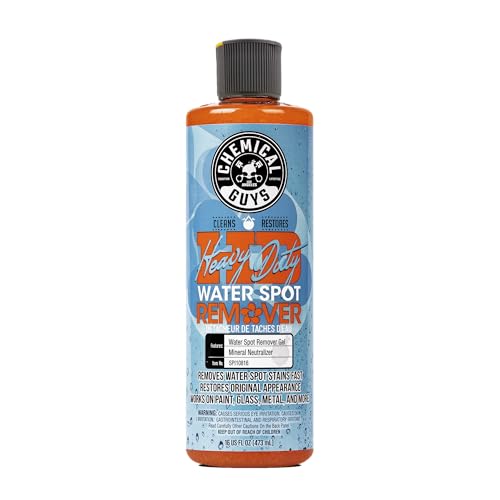
- Professional Alternatives are Formulated for Safety: Dedicated automotive water spot removers are pH-balanced and contain lubricants, designed specifically to dissolve minerals without harming the clear coat or stripping protection.
Will Vinegar Hurt Car Paint? The Definitive Answer
The answer is a firm “it depends on how you use it, but the risk is significant.” Vinegar can indeed harm your car’s paint, and professional detailers generally advise against it for general cleaning. The danger lies in its main component: acetic acid. While useful in the kitchen, this acid is strong enough to cause microscopic damage to your car’s delicate clear coat, the transparent protective layer that gives your paint its gloss and shields it from UV rays.

When used improperly—undiluted, left on for too long, or applied to a hot surface—vinegar can etch this clear coat, creating dull or hazy spots. It also acts as a powerful solvent that strips away any wax or paint sealant you’ve applied. This removes the crucial barrier against environmental contaminants and sun damage. While a heavily diluted solution can be used with extreme caution for a very specific task like removing hard water spots, it is not a safe all-purpose cleaner for your vehicle’s exterior.
How Does Acetic Acid in Vinegar Actually Affect Car Paint?
Understanding why vinegar is risky comes down to basic chemistry. Your car’s paint isn’t just a single layer of color; it’s a complex system designed for both beauty and durability. The acetic acid in vinegar attacks this system in three primary ways. From paint science insights, we know that the acidic nature of vinegar directly reacts with the polymers and protective coatings on your vehicle.
- ⛔ It Etches the Clear Coat: The clear coat is the top protective layer of your paint. The low pH of acetic acid chemically eats away at the polymers in this layer, creating microscopic pits and imperfections on the surface. This damage, known as etching, scatters light instead of reflecting it evenly, which is what makes the paint appear dull or hazy.
- 💦 It Strips Wax and Sealants: Car wax and paint sealants form a sacrificial barrier over your clear coat. Vinegar’s solvent properties dissolve the oils and polymers that make up these protective layers. This action effectively washes them away, leaving the clear coat completely exposed to harmful UV radiation, bird droppings, acid rain, and other contaminants.
- 💔 It Causes Dulling and Fading: By both etching the clear coat and removing its protection, vinegar accelerates the aging process of your paint. A damaged clear coat can no longer provide a deep, glossy shine. Without wax or sealant, the sun’s UV rays can penetrate to the color coat underneath, causing it to fade and oxidize over time.
What Is the Role of Vinegar’s pH Level?
The key to vinegar’s corrosive power is its position on the pH scale, which measures acidity. This scale runs from 0 (most acidic) to 14 (most alkaline), with 7 being perfectly neutral, like pure water. Your car’s paint and its clear coat are engineered to be most stable and durable in a pH-neutral environment.
Standard household white vinegar has a pH of approximately 2.5, making it highly acidic. This significant difference in acidity is why it can act as a corrosive agent on your paint.
- Vinegar: pH of ~2.5 (Highly Acidic)
- Safe Car Wash Soap: pH of ~7.0 (Neutral)
Professional car shampoos are carefully formulated to be pH-neutral specifically to avoid causing any chemical damage. Using a strong acid like vinegar is the chemical equivalent of cleaning your paint with a very fine liquid sandpaper; it slowly wears away the surface.
How Does Vinegar Strip Wax and Sealants?
Vinegar’s ability to strip protection is due to its solvent properties. Think of how soap breaks down grease on a dish; vinegar works similarly on the oils and polymers in waxes and sealants. These protective coatings are designed to be a sacrificial layer, and vinegar effectively dissolves and removes that layer.
- For Natural Waxes: Products like carnauba wax are rich in natural oils. The acetic acid in vinegar breaks down and dissolves these oils, causing the wax layer to disintegrate.
- For Synthetic Sealants: Paint sealants are made of tightly-linked polymers. Vinegar’s acid attacks and weakens these polymer bonds, breaking the sealant down and making it easy to wipe away.
Once this protective barrier is gone, your clear coat is left defenseless against the elements until you can apply a new coat of wax or sealant.
How Can You Use Vinegar on Car Paint Safely for Water Spots?
While the risks are real, there is one specific scenario where a vinegar solution can be used with extreme caution: removing stubborn hard water spots. These spots are mineral deposits (calcium and magnesium) left behind when water evaporates, and the acid in vinegar is effective at dissolving them. If you choose to proceed, you must follow established detailing practices precisely to minimize the risk of damage.
⚠ CRITICAL WARNING: This method is a last resort before using professional products. Always test on a small, inconspicuous area first. Never perform this process in direct sunlight or on a hot paint surface, as heat will accelerate the acidic reaction and cause immediate etching.
Here is the step-by-step process for the safest possible application:
- Create a 50/50 Mix: Combine exactly one part distilled white vinegar with one part distilled water in a clean spray bottle. Using distilled water is crucial, as tap water contains minerals that can cause more water spots.
- Work in the Shade on a Cool Surface: Ensure the car panel is completely cool to the touch. Heat is the biggest enemy in this process.
- Spray and Dwell Briefly: Lightly mist the solution directly onto the water spots. Do not saturate the entire panel. Let it sit for no more than 30-60 seconds.
- Wipe Gently, Don’t Scrub: Use a clean, plush microfiber towel to gently wipe the area. The goal is to lift the dissolved minerals, not to scrub the paint.
- Rinse and Neutralize Immediately: This is the most important step. Thoroughly rinse the entire panel with a strong stream of clean water. To be completely safe, wash the area with a pH-neutral car soap to neutralize any remaining acid.
- Apply New Protection: You must assume that all wax or sealant in the treated area has been stripped. Dry the panel and apply a fresh coat of paint sealant or car wax to restore protection.
What Are the Primary Risks of Using Vinegar on a Car’s Exterior?
Even when you are careful, using vinegar on your car comes with several significant risks. From years of working with automotive finishes, we’ve observed that the most common mistakes when using vinegar on car paint often lead to irreversible damage that is costly to repair. The danger extends beyond just the paint to other materials on your vehicle.
- 🔥 Permanent Paint Etching: If the vinegar solution is too concentrated or left on the surface for too long (especially in the sun), it will chemically eat into the clear coat. This creates dull, cloudy spots that cannot be washed away and require machine polishing and paint correction to remove.
- 🛡️ Stripped Protection: As detailed earlier, vinegar will reliably strip any wax or sealant. This leaves your paint immediately vulnerable to UV damage, which causes fading, and makes it easier for dirt and grime to stick to the surface.
- 💀 Dull and Faded Appearance: Repeated use of vinegar, even when diluted, will degrade the clear coat over time. This continuous micro-damage and lack of protection robs the paint of its ability to reflect light, resulting in a permanently dull and lifeless finish.
- 🚫 Damage to Trim and Seals: Vinegar is harmful to more than just paint. It can dry out and cause black plastic trim to fade to a chalky gray. It can also make rubber window seals and gaskets brittle, leading to cracking and potential water leaks.
- 🧼 Discoloration of Metals: If the vinegar solution comes into contact with bare aluminum or chrome accents, prolonged exposure can cause spotting, hazing, or discoloration on these surfaces.
What Are Safer and More Effective Alternatives to Vinegar?
Given the high risks associated with vinegar, professional car detailing advice always points toward using products specifically designed for automotive use. These products are formulated by chemists to be effective at their intended task while remaining completely safe for your car’s delicate finish. They are a far better choice for maintaining your vehicle’s appearance and value.
The table below compares the DIY vinegar solution against two professional-grade products designed for similar tasks.
| Feature | DIY Vinegar Solution | Dedicated Water Spot Remover | Quality Detailing Spray |
|---|---|---|---|
| Primary Use | Dissolving light mineral spots | Removing stubborn hard water spots | Light dust, fingerprints, water spots |
| Paint Safety | Low (risk of etching, strips wax) | High (pH-balanced for clear coats) | High (contains lubricants) |
| Effectiveness | Moderate | Very High | Low to Moderate |
| Cost | Very Low | Moderate | Low to Moderate |
| Ease of Use | High (but requires extreme caution) | High (spray on, wipe off) | Very High |
FAQs About will vinegar hurt car paint
Is apple cider vinegar safe for car paint?
No, apple cider vinegar (ACV) is not safe and should be avoided. ACV contains natural sugars and impurities in addition to acetic acid. These can leave a sticky residue on your paint that is difficult to remove and can attract more dirt. Always use distilled white vinegar if you must use vinegar, as it is free of these additives.
What happens if vinegar dries on car paint?
If vinegar dries on car paint, it can cause permanent damage. As the water evaporates, the concentration of acetic acid increases dramatically, accelerating the etching process on the clear coat. This often results in a dull, hazy spot that cannot be washed off and will require machine polishing or paint correction to repair.
Can I mix vinegar with car wash soap?
It is not recommended to mix vinegar with car wash soap. Car soaps are carefully formulated to be pH-neutral to protect your car’s finish. Adding acidic vinegar disrupts this balance, reducing the soap’s effectiveness and potentially making the solution harmful to your paint’s wax and sealant layers. Wash with soap first, then treat spots separately.
How long can vinegar stay on car paint?
Vinegar should stay on car paint for the shortest time possible, ideally no more than 60 seconds. This is just enough time for the acid to begin dissolving mineral deposits from water spots without causing significant damage to the clear coat. Always work in a small section and rinse immediately after wiping.
Does vinegar remove car wax?
Yes, vinegar absolutely removes car wax. The acetic acid acts as a solvent that effectively breaks down and strips away both natural carnauba waxes and synthetic paint sealants. After using a vinegar solution on any part of your car, you must assume the protection is gone and reapply wax or sealant to that area.
Will vinegar hurt a ceramic coating?
Yes, vinegar can potentially damage a ceramic coating. While ceramic coatings are much more durable and chemically resistant than waxes, their hydrophobic properties can be degraded by repeated exposure to acidic cleaners. It is always best to use pH-neutral shampoos and dedicated ceramic coating maintenance products recommended by the manufacturer.
Can I use vinegar to clean car windows?
Yes, a diluted vinegar solution is generally safe and effective for cleaning car windows. Unlike paint, glass is not susceptible to damage from mild acids. A 50/50 mix of vinegar and distilled water is excellent for removing stubborn films and streaks. Be careful to avoid overspray onto the surrounding paint and rubber seals.
How do I fix car paint that has been damaged by vinegar?
Minor damage like dullness may be fixed with a polishing compound. If the vinegar has caused light etching, a quality car polish or swirl remover applied with a machine or by hand can smooth the clear coat and restore gloss. For severe etching, you may need a more aggressive cutting compound and professional paint correction.
Is distilled white vinegar safer for car paint?
Distilled white vinegar is safer than other types, but it is not inherently safe. “Safer” in this context means it lacks the sugars and impurities of apple cider vinegar. However, it still contains acetic acid and carries all the same risks of etching the clear coat and stripping protection. Heavy dilution and cautious use are still required.
Should you use vinegar on black car paint?
You should be extra cautious using vinegar on black or other dark-colored car paint. These colors show imperfections like etching and dull spots more readily than lighter colors. Any damage caused by the acid will be far more noticeable, so the risk is visually higher. It is highly recommended to use a dedicated product instead.
Key Takeaways: Will Vinegar Hurt Car Paint Summary
- Vinegar is Inherently Risky: The acetic acid in all types of vinegar is corrosive to your car’s clear coat and should be treated with extreme caution. It is not a gentle, all-purpose cleaner for automotive paint.
- It Strips All Protection: Vinegar’s primary chemical action is to dissolve and strip away vital protective layers, including car wax and paint sealants, leaving your paint finish vulnerable to the elements.
- Dilution and Rinsing are Critical: If used, a solution must be at least 50% distilled water, applied to a cool surface for less than 60 seconds, and rinsed off immediately and thoroughly to minimize damage.
- Damage Can Be Permanent: Allowing vinegar to dry on the surface can cause permanent etching in the clear coat, resulting in dull spots that require machine polishing and paint correction to fix.
- Professional Products are a Safer Choice: Dedicated automotive water spot removers and pH-neutral car shampoos are chemically engineered to be effective and safe for your car’s finish, making them a far superior alternative.
- Beware of Damage to Trim and Rubber: The risks aren’t limited to paint; vinegar can also dry out, fade, and cause premature aging in black plastic trim and rubber seals.
- Always Re-Apply Protection: After using vinegar on any section of your car, you must re-apply a layer of wax or sealant to restore protection to the treated area.
Final Thoughts on Using Vinegar on Car Paint
While the allure of a cheap, DIY cleaning solution is strong, the evidence is clear: using vinegar on your car’s paint is a significant gamble. Its acidic nature poses a direct threat to the clear coat, wax, and sealants that protect your vehicle’s finish and value. The potential for permanent etching and the guaranteed removal of protective layers mean that any short-term cleaning benefit is vastly outweighed by the long-term risks.
For the health and longevity of your car’s paint, sticking to pH-neutral, specially formulated car care products is always the wisest choice. They are designed to clean effectively without compromising the integrity of the finish. While vinegar has its place in household cleaning, it’s best to keep it in the kitchen and away from your car’s exterior.
Last update on 2026-03-26 / Affiliate links / Images from Amazon Product Advertising API
![Luxury Car Interiors: Discover 11 Stunning Designs & Tech for [year]](https://i0.wp.com/carxplorer.com/wp-content/uploads/2026/03/Luxury-Car-Interiors-Discover-11-Stunning-Designs-Tech-for-year-1.jpg?resize=60%2C60&ssl=1 "Luxury Car Interiors: Discover 11 Stunning Designs & Tech for [year] 4")


