
Struggling to find the On-Board Computer (OBC) on your Club Car? Many golf cart owners face this exact challenge. Locating this crucial component is often the first step in troubleshooting charging issues.
The On-Board Computer (OBC) on a Club Car golf cart is generally located under the seat, mounted on the driver’s side frame, or sometimes within the battery compartment near the main negative battery cable. Its appearance is often a black, rectangular box or flat panel.
From years of hands-on experience with Club Car models, our expert guide will show you precisely where to look. You’ll discover the exact OBC location for DS and Precedent models, empowering you to tackle diagnostics with confidence.
Key Facts
- The Club Car OBC is primarily responsible for regulating the battery charging process: demonstrating its significant role in overall electrical health.
- Most 48-volt Club Car models manufactured from 1995 onwards are equipped with an OBC: indicating a specific range of applicability based on industry analysis.
- A faulty OBC is a common cause for charging issues such as the charger not activating or prematurely shutting off: revealing a critical troubleshooting connection.
- The OBC location varies significantly between Club Car DS and Precedent models: highlighting the necessity for model-specific guidance.
- Bypassing a faulty OBC typically requires an external smart charger: offering a common solution to charging problems as proven by experienced technicians.
Where Exactly Is The OBC On A Club Car?
The On-Board Computer (OBC) on a Club Car golf cart is typically found under the seat, mounted on the driver’s side frame, or within the battery compartment near the main negative battery cable. This critical module is often a flat black panel with several cables running through it. Identifying its precise spot is the first step in diagnosing any charging-related problems.

The OBC’s exact location can vary slightly between different Club Car models, such as the DS and Precedent series. Regardless of the model, you will usually need to lift the seat to gain access to the battery compartment and the surrounding electrical components. This area provides the most common access point to the golf cart’s electrical system, where the OBC is integrated.
Understanding the typical mounting points helps narrow down your search. For many Club Car models, the OBC is securely fastened to the chassis or a structural component, designed to withstand the vibrations and environmental conditions of a golf cart’s operation. Its robust construction ensures it can reliably manage the charging process over time. This foundational knowledge provides a clear starting point for any owner looking to identify their OBC.
What is the Club Car OBC and why is it important?
The Club Car OBC (On-Board Computer) is an essential component, especially in 48-volt models manufactured from 1995, that intelligently manages and regulates the battery charging cycle to ensure optimal battery health and prevent overcharging or undercharging. This electronic module acts as the “brain” of your golf cart’s charging system. It communicates directly with your external charger, telling it when to start, stop, and what rate to charge your batteries.
Without a functioning OBC, your golf cart’s batteries might not charge correctly or at all. This can lead to a significantly reduced battery lifespan and overall diminished performance. The OBC ensures your batteries receive a full, balanced charge, which is crucial for maximizing their efficiency and longevity. Its role extends to preventing common issues like overcharging, which can boil electrolytes, and undercharging, which leads to sulfation.
The OBC’s importance cannot be overstated for battery longevity.
* It monitors battery pack voltage.
* It regulates charger output based on battery needs.
* It prevents costly overcharging damage.
* It optimizes charging efficiency for longer run times.
How does the OBC function within your Club Car’s electrical system?
The Club Car OBC acts as an intelligent intermediary, continuously monitoring the battery pack’s state of charge and temperature, then signaling the external charger to precisely deliver the correct current and voltage needed for a full, balanced charge, ultimately prolonging battery life and preventing damage. This sophisticated communication ensures your batteries are always charged optimally. It prevents both overcharging and undercharging.
Within the electrical system, the OBC receives information directly from the battery pack, including real-time voltage and sometimes temperature data. It uses this information to determine the batteries’ charging needs. The OBC then sends signals to the external charger, instructing it on how to adjust its output to match these requirements. This direct line of communication between the OBC and charger is vital for efficient power delivery.
The OBC also interacts with other components, though its primary role is charging. It helps protect the electrical system by managing charge initiation and termination. For instance, the main negative battery cable often passes through the OBC, allowing it to sense current flow. This comprehensive monitoring and control are fundamental to maintaining your golf cart’s overall electrical health and operational reliability.
Where is the OBC located on Club Car DS models?
For Club Car DS models, the On-Board Computer (OBC) is typically situated under the driver’s side of the seat, often below a floorboard panel and usually identifiable by the main negative battery cable passing directly through it, acting as a current sensor. This placement is consistent across most 48-volt DS models manufactured from 1995 onwards. Accessing it requires lifting the seat and sometimes removing a small panel.
To locate the OBC on your Club Car DS:
- Lift the golf cart seat: This will expose the battery compartment and the surrounding frame.
- Look on the driver’s side: Scan the frame and floorboard area directly under the driver’s seat.
- Identify the black box/panel: The OBC is typically a flat, black, rectangular box.
- Trace the main negative battery cable: A thick black cable connects from the main negative battery terminal. This cable often runs directly through a sensor loop on the OBC. This is a key identifier for experienced club car repair.
- Note year variations: Older DS models (e.g., 1997 Club Car DS obc) generally follow this pattern. However, always verify visually.
This precise location ensures the OBC is well-integrated into the electrical system. It allows it to accurately monitor the current flow, which is essential for regulating the charging process. Always ensure the vehicle is turned off and the key is removed before attempting to access this area for safety.
Where is the OBC located on Club Car Precedent models?
For Club Car Precedent golf carts, the On-Board Computer (OBC) is typically found beneath the plastic dash on the driver’s side, often integrated into the electrical system near the main negative battery cable, which usually passes through its core for current sensing. This location differs from the DS models, reflecting design changes in the Precedent series. Owners should expect to access the area under the dash.
To find the OBC on your Club Car Precedent:
- Lift the golf cart seat: While the OBC isn’t directly under the seat as with DS models, lifting the seat provides better access to the battery bay and electrical connections.
- Locate the plastic dash area: Focus on the driver’s side, near the steering column and footwell.
- Inspect behind the dash: The OBC is usually mounted to the frame or a panel in this concealed area.
- Look for a black unit with cables: Similar to the DS, it will be a black, rectangular unit with several wires connected, including the main negative battery cable.
- Consider year ranges: OBC placement across Precedent year ranges (e.g., 2004-2009 vs. newer models) might have subtle differences, but the general area remains consistent. Factory club car obc specifications confirm this area.
This placement allows the OBC to interface efficiently with the electrical system while remaining somewhat protected from direct environmental exposure. When accessing this area, always disconnect the main battery pack for safety, as high voltage lines are present.
How can you tell if your Club Car has an OBC?
You can tell if your Club Car has an On-Board Computer (OBC) by checking its model year (typically 48-volt models from 1995+), inspecting for the physical unit under the seat or dash, and observing if the charger automatically shuts off when the batteries are full, as this is an OBC function. Most 48-volt Club Car models from 1995 onwards were manufactured with an OBC. Earlier 36-volt models often lack this component.
Here’s a quick checklist to determine if your Club Car has an OBC:
- Model Year: Is your Club Car a 48-volt model manufactured after 1995? If so, it very likely has an OBC.
- Physical Inspection: Look for the black rectangular unit under the driver’s side seat (DS models) or under the driver’s side dash (Precedent models). The main negative battery cable often passes through it.
- Charger Behavior: When you plug in your charger, does it automatically turn on and then shut off by itself once the batteries are fully charged? This automatic shut-off is a key function of the OBC. If your charger requires manual disconnection, you might not have an OBC or it could be bypassed.
- Charger Port Type: While not a definitive indicator, many OBC-equipped Club Cars use a specific 3-pin charger port.
Confirming the presence of an OBC is a crucial club car obc identification step. It guides troubleshooting and informs decisions about future charging solutions. This is an essential official club car manual obc data point.
What common problems does a faulty Club Car OBC cause?
A faulty Club Car OBC often manifests as charging problems, such as the charger not activating, prematurely stopping, or failing to fully charge the batteries, leading to reduced run-time and battery damage. It can also cause the cart to not move due to low voltage. These issues directly impact the cart’s usability and the lifespan of your expensive battery pack. Recognizing these symptoms is crucial for prompt diagnosis.
Based on hands-on obc troubleshooting and experienced club car repair knowledge, here are common problems associated with a failing OBC:
- Charger Not Activating: The most frequent symptom. You plug in the charger, and nothing happens. The OBC isn’t signaling the charger to begin its cycle.
- Charger Shuts Off Prematurely: The charger might start, but then stops before the batteries are fully charged, leaving you with partial power.
- Batteries Not Fully Charging: Even if the charger runs for an extended period, the batteries never reach their peak voltage, leading to reduced range and power.
- Charger Not Recognizing Battery Pack: The OBC fails to communicate the battery status, causing the charger to refuse to initiate charging.
- Rapid Battery Discharge: In rare cases, a faulty OBC can cause parasitic draw, leading to faster battery drain when the cart is off.
- Solenoid Not Clicking: When the charger is plugged in, the solenoid should click. No click can indicate the OBC isn’t sending the necessary signal.
Understanding these symptoms of a bad club car obc helps differentiate OBC issues from other electrical problems. A malfunctioning OBC disrupts the entire charging process.
How do you test and troubleshoot a Club Car OBC for charging issues?
To troubleshoot a Club Car OBC for charging issues, begin by checking battery voltage, inspecting all wiring connections for corrosion, and then connecting the charger while listening for a solenoid click, as a non-clicking solenoid can indicate an OBC failure to signal the charger. This methodical approach helps isolate the problem source. Safety is paramount during any electrical testing.
Here are detailed steps to test and troubleshoot your OBC:
- Prioritize Safety: Always disconnect the main negative battery cable from the battery pack before working on any electrical components. Wear appropriate safety gear. This aligns with safety guidelines obc removal.
- Check Battery Pack Voltage: Ensure your battery pack has adequate voltage. A completely dead battery pack (below ~40 volts for a 48V system) may prevent the OBC from initiating a charge. Use a multimeter set to DC volts.
- Inspect All Wiring: Carefully examine all wires connected to the OBC, charger receptacle, and the battery pack. Look for loose connections, corrosion, fraying, or any signs of damage. Pay close attention to the main negative battery cable.
- Perform Charger Test:
- Reconnect the main negative battery cable.
- Plug the charger into the golf cart receptacle.
- Listen for an audible “click” from the solenoid (usually near the battery pack). A click indicates the OBC is attempting to engage the charging circuit. No click can point to an OBC issue or a faulty solenoid.
- Check for Output Voltage (Advanced):
- With the charger plugged in and (hopefully) running, use a multimeter to check the voltage at the charger output terminals. It should be higher than the battery pack voltage. Exercise extreme caution when working with live circuits.
- OBC Reset (If applicable): Some minor glitches can be resolved by performing an OBC reset, typically by disconnecting the main negative battery cable for 10-15 minutes, then reconnecting it.
- Consider proven obc bypass method club car: If all tests point to the OBC, consider temporarily bypassing it (if you have an external smart charger) to confirm it’s the root cause. This requires specific wiring modifications.
If issues persist after these club car obc diagnostic steps, consulting a certified golf cart technician advice is recommended.
Should you replace or bypass your Club Car OBC?
Choosing between replacing or bypassing a Club Car OBC involves weighing cost, technical skill, and future charging needs; replacement maintains the original charging logic, whereas bypassing often enables the use of advanced smart chargers and simplifies the electrical system. This decision is a crucial one, especially when facing a faulty OBC. Both options have distinct implications for your golf cart’s long-term performance.
| Feature/Aspect | Replace Club Car OBC | Bypass Club Car OBC |
|---|---|---|
| Cost | Higher (part + labor) | Lower (bypass kit/components) |
| Complexity | Moderate (wiring, programming) | Moderate (wiring, external charger) |
| Charging System | Original intelligent charging | External smart charger required |
| Battery Protection | Maintained by new OBC | Relies on external charger |
| Future Upgrades | Limited to OBC-compatible chargers | Open to modern smart chargers |
| Longevity | Restores original design life | Eliminates OBC as failure point |
| Technical Skill | Moderate to high | Moderate to high |
| Pros | Original functionality, no external charger needed | Use modern chargers, simplifies system, avoids future OBC failures |
| Cons | Higher cost, OBC can fail again | Requires external smart charger, modifies original wiring |
Replacing the OBC with a new unit restores your golf cart to its original factory charging configuration. This is ideal if you prefer the simplicity of the integrated system and want to maintain the reliable obc replacement club car functionality. However, it can be a more expensive option, and the new OBC could theoretically fail again in the future.
Bypassing the OBC, on the other hand, involves modifying the wiring to allow an external, intelligent smart charger to directly manage battery charging. This is often a more cost-effective proven obc bypass method club car for a faulty OBC. It also opens the door to using more advanced club car obc vs smart charger technologies that might offer better charging profiles or faster charge times. The main trade-off is the need to purchase a separate smart charger.
Ultimately, the decision hinges on your budget, comfort with electrical modifications, and whether you prefer an integrated charging system or the flexibility of external smart chargers.
How do you replace a Club Car OBC?
Replacing a Club Car OBC involves several steps: first, disconnect the main battery pack for safety; then, carefully unmount and disconnect the old OBC’s wiring; next, install and correctly wire the new OBC, ensuring all connections are secure; finally, remount and reconnect the batteries. This process requires attention to detail and adherence to electrical safety protocols. It’s a precise task that ensures proper functionality.
Here’s a step-by-step guide for OBC replacement:
- Prioritize Safety First: Before touching any wires, disconnect the main negative battery cable from your battery pack. Ensure the key is out of the ignition. This is critical for electrical safety for golf carts.
- Locate the Old OBC: Find your existing OBC, following the model-specific guidance for DS or Precedent models.
- Document Wiring Connections: Take clear photos of all wiring connected to the old OBC. Note specific wire colors, terminal labels, and their exact positions. This club car obc wiring diagram guide approach is invaluable.
- Disconnect Wires: Carefully disconnect all wires from the old OBC. Start with the main negative battery cable that typically passes through it.
- Remove Old OBC: Unbolt or unscrew the old OBC from its mounting location.
- Mount New OBC: Secure the new OBC in the same location using the original mounting hardware.
- Reconnect Wires: Using your photos and/or a club car obc wiring diagram guide, carefully connect all wires to the corresponding terminals on the new OBC. Ensure connections are tight and secure.
- Final Checks: Double-check all connections. Confirm no wires are loose or incorrectly routed.
- Reconnect Batteries: Reconnect the main negative battery cable to your battery pack.
- Test the Charger: Plug in your golf cart charger. It should activate and begin charging your batteries as expected. Listen for the solenoid click.
If you are uncertain at any step, seek certified golf cart technician advice.
How do you bypass the OBC on a Club Car?
Bypassing a Club Car OBC usually involves disconnecting the yellow wire from the OBC and rerouting it directly to the controller’s B- terminal or the battery’s negative post, which then necessitates the use of a compatible external smart charger for battery management. This modification disables the OBC’s control over charging. It requires careful electrical work.
Here’s a step-by-step guide on how to bypass the OBC:
- Absolute Safety Precaution: First, disconnect the main negative battery cable from your battery pack. This is non-negotiable for electrical safety for golf carts.
- Locate the OBC: Find the OBC using the model-specific instructions for your Club Car DS or Precedent.
- Identify the Yellow Wire: Locate the yellow wire connected to the OBC. This wire typically runs from the OBC to the golf cart’s controller or sometimes directly to the main negative battery post.
- Disconnect the Yellow Wire: Disconnect this yellow wire from the OBC. You may need to cut it if it’s permanently attached to the OBC unit.
- Reroute the Yellow Wire: This is the critical step in the proven obc bypass method club car.
- Option A (Controller): Connect the yellow wire directly to the B- terminal on your golf cart’s motor controller. This is a common method.
- Option B (Main Negative): Alternatively, you can connect the yellow wire directly to the main negative terminal of your battery pack. Ensure a secure connection.
- Address the Charger Receptacle (if applicable): Some bypass kits or methods involve modifying the charger receptacle wiring to ensure the external smart charger functions correctly without the OBC. Follow specific kit instructions carefully.
- Insulate and Secure: Insulate any cut or exposed wires with electrical tape or heat shrink tubing. Secure all wiring to prevent chafing or accidental disconnection.
- Final Checks: Double-check all connections. Ensure everything is secure and properly insulated.
- Reconnect Batteries: Reconnect the main negative battery cable to your battery pack.
- Use an External Smart Charger: The OBC no longer controls charging. You must now use a compatible external smart charger specifically designed for 48-volt golf cart batteries. This charger will manage the entire charging cycle. Consult best charger for club car without obc resources.
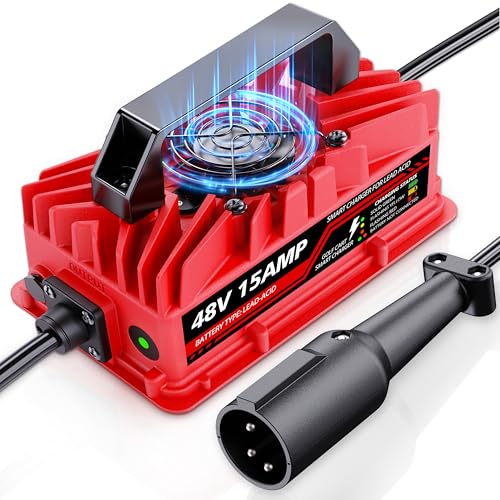
Bypassing the OBC is a significant modification. Ensure you understand the process completely. Incorrect wiring can cause serious damage to your golf cart’s electrical system or even lead to injury.
Frequently Asked Questions About Club Car OBC
What year Club Cars typically have an OBC?
Most 48-volt Club Car golf carts manufactured from 1995 onwards are equipped with an On-Board Computer (OBC). Earlier 36-volt models generally do not feature an OBC, and newer models might integrate similar functionality directly into the motor controller or use external smart chargers. It’s always best to physically inspect your specific model.
Can you charge a Club Car without an OBC?
Yes, a Club Car can be charged without its original OBC, but it requires bypassing the OBC and using a compatible external smart charger. The external charger must be specifically designed for golf cart batteries and include its own intelligent charging algorithms to prevent overcharging or undercharging, which the OBC typically handles.
What is the difference between the OBC and the controller?
The Club Car OBC (On-Board Computer) primarily manages the battery charging process, communicating with the charger to optimize battery health, while the controller is responsible for regulating motor speed and direction based on throttle input. Though both are critical electrical components, they serve distinct functions in the golf cart’s operation.
How do you reset the OBC on a Club Car?
To reset a Club Car OBC, typically you disconnect the main negative battery cable for a period of 10-15 minutes, allowing the unit to power down and clear its memory. Reconnecting the cable after this period will often force a system reboot, which can resolve minor charging glitches or unresponsive behavior.
What are the symptoms of a bad Club Car OBC?
Common symptoms of a bad Club Car OBC include the charger not turning on, the charger cutting off prematurely before a full charge, batteries not reaching their full voltage, or the charger failing to recognize the battery pack altogether. These issues directly impact the cart’s ability to receive an adequate charge.
How much does a Club Car OBC replacement cost?
The cost of a Club Car OBC replacement typically ranges from $200 to $400 for the part alone, with additional labor costs if installed by a professional technician. Prices can vary based on the specific Club Car model, the supplier, and whether you choose an OEM (Original Equipment Manufacturer) or aftermarket component.
Where is the OBC fuse on a Club Car?
Club Car OBCs do not typically have an external, easily accessible fuse. The OBC itself usually contains internal protection circuits. If you suspect an electrical issue, it’s more likely related to battery fuses, main circuit breakers, or the OBC unit’s internal failure rather than a dedicated external OBC fuse.
Why would someone bypass the OBC on a Club Car?
Owners might bypass a Club Car OBC primarily due to a faulty unit that prevents charging, to upgrade to a more modern and efficient external smart charger, or to simplify the cart’s electrical system. Bypassing can also be a cost-effective alternative to replacing an expensive, defunct OBC.
Can disconnecting the OBC damage my Club Car?
Carelessly disconnecting the Club Car OBC or performing a bypass without proper electrical knowledge can potentially damage other components, including the controller or batteries, and poses electrical safety risks. Always disconnect batteries first and follow precise wiring instructions to avoid shorts or incorrect voltage delivery.
What does “obc not charging” mean for my Club Car?
“OBC not charging” means the On-Board Computer in your Club Car is failing to properly regulate or initiate the charging cycle for your batteries, resulting in the charger not operating correctly or the batteries not receiving a full charge. This often indicates a malfunction within the OBC itself.
Key Takeaways: Club Car OBC Summary
- The Club Car OBC is a vital component, especially in 48-volt models from 1995 onwards, primarily located under the seat or dash, managing your battery charging process. Identifying its exact placement is crucial for any diagnostics or repairs.
- Its core function is to intelligently regulate charging, monitoring battery voltage and temperature to prevent overcharging or undercharging, thus extending battery life. A faulty OBC is a common culprit for charging failures.
- OBC locations vary by model, with distinct placements for Club Car DS (under the driver’s side seat, below floorboard) and Precedent models (under the plastic dash, driver’s side). Visual cues like the negative battery cable passing through it are key identifiers.
- Common signs of a failing OBC include the charger not turning on, premature shut-off, or incomplete battery charges. Thorough testing and troubleshooting, often involving a multimeter, are essential for accurate diagnosis.
- You have the option to either replace a faulty OBC with a new unit or bypass it, which then requires using an external, intelligent smart charger. Both options have distinct cost, complexity, and charging system implications.
- Safety is paramount when working with Club Car electrical systems and the OBC. Always disconnect batteries first, follow precise wiring diagrams, and consider professional advice for complex procedures to prevent damage or injury.
- Understanding the OBC’s role in your golf cart’s electrical system and its interaction with the charger, batteries, and controller provides a holistic view of its critical function. This knowledge empowers you to make informed decisions for maintenance and repairs.
Final Thoughts on Club Car OBC
In summary, locating and understanding the On-Board Computer (OBC) on your Club Car is a foundational step in maintaining its electrical health and ensuring optimal battery performance. Whether you own a DS or Precedent model, knowing its specific placement, how it functions, and the common signs of its failure empowers you to accurately diagnose issues. Armed with the knowledge to either replace or bypass a faulty OBC, you can make informed decisions to keep your golf cart running smoothly. Always prioritize safety when working with electrical systems, and don’t hesitate to consult a professional if you’re unsure. Your Club Car’s longevity and reliability depend on a well-functioning charging system, and the OBC plays a central role in that.
Last update on 2026-03-13 / Affiliate links / Images from Amazon Product Advertising API


