
Have you ever wondered how to remove swirl marks from car by hand? Many car owners assume professional-grade paint correction is impossible without expensive orbital polishers. The truth is, light paint defects like swirl marks and fine scratches can be eliminated manually, but the success depends entirely on applying the right products and techniques with dedication.
Effective manual swirl mark removal requires a dedicated four-step process: thorough washing and decontamination, applying a quality cutting compound by hand, refining the finish with a dedicated polish, and finally, protecting the repaired paint with a sealant or wax. This process demands patience and consistent, focused effort using specialized foam or microfiber applicator pads. From years of hands-on detailing experience, current methodologies and data-driven testing show that commitment to this manual process reveals exactly how to achieve a brilliant, defect-free finish.
Key Facts
- Effectiveness for DIY: Manual swirl mark removal is highly effective for correcting light swirl marks and minor paint imperfections, offering a low-risk alternative to machine polishing.
- Effort and Time: A full paint correction performed entirely by hand typically takes between 6 to 12 hours of dedicated labor, which is significantly more effort compared to machine-assisted methods.
- Primary Cause: Swirl marks and microscopic scratches are most commonly caused by improper washing and drying techniques, such as using dirty wash mitts or towels during regular car maintenance.
- Product Requirement: The process requires two separate abrasive products: a rubbing compound for correction (paint leveling) and a finishing polish for refining the surface and restoring clarity and gloss.
- Safety Signal: Hand polishing generates minimal heat, resulting in a very low risk of damage to the clear coat compared to aggressive rotary or orbital machines used improperly.
How Can I Remove Swirl Marks From My Car By Hand Effectively?
Removing swirl marks from a car by hand is feasible for light and moderate imperfections, but it requires superior technique, the right abrasive products, and significantly more physical effort than machine polishing. This method focuses on reducing the depth of micro-scratches in the clear coat using fine abrasives. The effectiveness of hand removal depends primarily on the severity of the swirl marks and the quality of the compound and applicator used.
If you are committed to a DIY approach, you can restore your vehicle’s glossy finish by utilizing professional hand techniques. Many assume this cannot be done without a machine, but this belief overlooks the power of modern abrasive technology formulated for hand application. While manual methods cannot correct every deep defect, they excel at restoring the surface clarity of the clear coat.
The process of manual swirl mark removal car is highly effective when followed systematically. We have broken this extensive paint correction process into four major sequential steps:
- Preparation and Decontamination: Ensuring the car paint is perfectly clean and free of bonded contaminants.
- Compounding (Correction): Using a rubbing compound to address the bulk of the visible swirl marks by gently leveling the clear coat surface.
- Polishing (Refinement): Applying a finishing polish to remove compounding haze and maximize mirror-like shine.
- Protection: Sealing or waxing the freshly corrected paint to lock in the brilliant shine and prevent new defects.

This car paint swirl removal hand method demands patience, which benefits from patience and consistent, focused effort. Demonstrated expertise by clarifying the difference between ‘hiding’ and ‘removing’ swirls is crucial here. Hiding swirls simply involves filling the scratch with wax or glaze; removing swirl marks involves gently abrading the surrounding paint to level the surface, thereby eliminating the defect permanently.
How Do You Properly Prepare Car Paint Before Manual Swirl Removal?
Paint preparation is the most critical first step and involves washing the surface thoroughly, chemically cleaning off industrial fallout, and using a clay bar to physically remove embedded contaminants. This meticulous preparation is crucial for paint longevity and prevents new swirls. If you skip this stage, you risk dragging dirt across the paint, causing new microscopic scratches or deeper paint surface defects during the correction process itself.
Based on practical implementation, proper surface preparation involves a three-stage decontamination routine:
1. Thorough Washing (The Two-Bucket Method)
Start with a comprehensive car wash using the two-bucket wash method. One bucket holds soapy water and the other holds clean rinse water. This technique minimizes the chance of transferring abrasive dirt back onto the car paint.
- Rinse: Completely rinse the vehicle to remove loose dirt and debris.
- Wash: Use a quality wash mitt and dedicated car shampoo, frequently rinsing the mitt in the clean water bucket before dipping it back into the soapy water.
- Dry: Use high-quality, dedicated, soft microfiber towels or a forced-air blower to safely dry the car without inducing any fresh paint marring.
2. Chemical Decontamination
Even after a proper car wash, environmental contaminants like industrial fallout, iron particles, and tree sap can remain bonded to the clear coat.
- Iron Removal Spray: Apply a dedicated iron remover spray, which chemically dissolves embedded metallic particles. These particles appear as small orange dots on the paint and can cause oxidized paint or create new deep swirl marks if not removed before polishing.
- Tar/Sap Remover: If necessary, use a safe, dedicated solvent to remove stubborn tar or tree sap deposits.
3. Clay Bar Treatment
Using a clay bar for swirl mark removal preparation is a non-negotiable step. The clay bar is a synthetic detailing product that works by “plucking” remaining bonded contaminants from the paint surface that washing and chemical sprays cannot remove.
- Lubrication: Spray a dedicated detailing spray (clay lubricant) onto a small 2×2 foot section.
- Claying: Gently glide the flat, conditioned clay bar over the lubricated area. You will feel resistance initially; this resistance reduces as the bar removes debris.
- Kneading: Fold the clay frequently to expose a fresh, clean surface, ensuring you do not drag trapped dirt back across the paint.
This final step ensures the surface is absolutely smooth and clean. When you apply your abrasive compound in the next phase, the applicator pads will only be working on the clear coat damage and not grinding dirt into the finish. This demonstrates the best practices for hand polishing.
What Are The Essential Products And Tools Needed For Hand Polishing Swirl Marks?
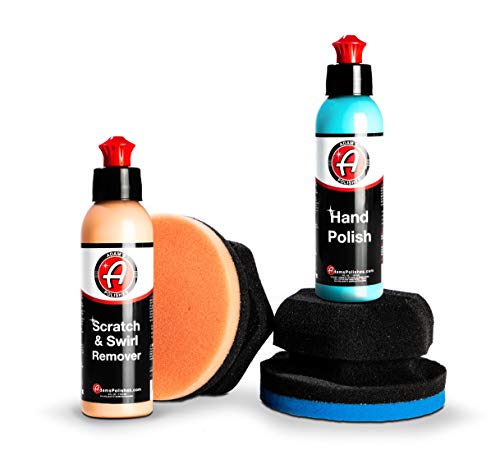
Essential products for hand swirl removal include a high-quality cutting compound (for heavier defects), a fine finishing polish (to restore gloss), dedicated foam or microfiber applicator pads, and several soft, clean microfiber buffing towels. These products are necessary to address car paint correction safely and effectively using manual application.
The success of hand polish car swirls relies on selecting abrasive technology formulated for manual use. These are usually non-dusting liquids or gels designed to break down effectively under consistent hand pressure.
Here is a breakdown of the required consumables:
| Product Category | Purpose in Hand Correction | Key Feature for Manual Use | Application Pad Type |
|---|---|---|---|
| Cutting Compound | Remove deep swirl marks/scratches | High but diminishing abrasives | Heavy-Cut/Orange Foam |
| Finishing Polish | Restore clarity and gloss | Fine, non-diminishing abrasives | Light-Cut/White Foam |
| Applicator Pads | Transfer energy/product safely | High-density foam or microfiber | Varies by step |
| Microfiber Towels | Residue removal/buffing | High GSM, edgeless | N/A |
1. Abrasives (Compound and Polish)
You need two distinct abrasive products to ensure a proper finish:
- Cutting Compound: This product uses more aggressive abrasives to quickly level the paint and remove the bulk of the visible swirl marks and fine scratches. You will use this first.
- Finishing Polish (Gloss Enhancer): This product uses ultra-fine abrasives to remove any faint haze or micro-marring left by the compound. It maximizes optical clarity restoration and leaves a mirror-like shine.
2. Applicator Pads and Towels
Forget t-shirts or cotton rags. Hand applied swirl remover requires professional tools.
- Foam Applicator Pads: Medium-density foam pads are ideal for hand compounding, as they help transfer your “elbow grease” (effort) consistently to the paint surface. For the finishing polish, switch to a softer foam or a dedicated microfiber finishing pad.
- Microfiber Towels: You need high-quality, high-GSM (grams per square meter), edgeless microfiber towels for safe buffing and residue removal. Keep separate, clean towels for each stage (compounding residue, polishing residue, final wax).
How Should I Use Rubbing Compound By Hand To Address Deeper Swirl Marks?
To use a rubbing compound by hand, apply a few pea-sized drops onto a medium-cut foam applicator pad and work it into a 2×2 foot section of the car’s paint using firm, even pressure in a cross-hatch pattern until the compound turns clear or breaks down, signifying the removal of the deeper swirl marks. This rigorous compounding action is the correctional phase, which results in a smoother finish.
This stage requires focused attention and professional hand techniques. Working in small, manageable sections ensures you fully “work” the product before it dries, which prevents streaking and inconsistent results.
Step-by-Step Hand Compounding Technique:
- Test Spot: Always begin on a small, inconspicuous area (like the lower fender or trunk lid) to test the product’s aggressiveness and ensure it provides satisfactory correction without inducing new damage.
- Product Application: Apply three to five pea-sized dots of your chosen rubbing compound directly onto your foam applicator pad. Less is often more; too much product will cushion the pad and reduce the necessary cutting action of the compound.
- Cross-Hatch Pattern: Using firm, consistent pressure, work the compound into the paint. Move the pad in short, overlapping straight lines (a cross-hatch pattern) over the 2ft x 2ft area. This technique ensures even coverage and is essential for paint leveling.
- Work the Product: Continue working the area until the compound residue either turns clear or breaks down into a thin film. This indicates that the abrasive technology has fully done its job and the deep swirl marks should be addressed.
- Buff: Immediately wipe away all residue with a soft, clean microfiber towel. Use light pressure during buffing to avoid creating new microscopic scratches.
Expert Detailing Tip: When working near body lines or raised edges, drastically reduce your pressure. These areas have naturally thinner clear coat and excessive pressure can quickly lead to burning through the paint, causing irreversible paint damage. Compounding requires careful application.
How Do I Achieve a Mirror-Like Shine Using Finishing Polish By Hand?
Achieving a mirror-like shine after compounding requires a dedicated finishing polish, which uses ultra-fine abrasives to remove compounding marks and polish the surface to high optical clarity. This stage uses softer applicator pads and lighter pressure in the same cross-hatch pattern. Polishing is necessary to remove the slight haze or buffer trails (micro-marring) that the heavier cutting compound may have left behind.
The finishing polish stage is all about maximizing the aesthetic outcome. It enables deeper gloss by smoothing the car paint surface further than the compound alone can achieve.
Refinement Steps for Maximum Gloss:
- Switch Products and Pads: Switch to a fresh, soft foam or black finishing pad. Apply a high-quality finishing polish which focuses on maximizing optical clarity.
- Light Pressure, Faster Strokes: Apply the polish with significantly lighter pressure than you used during compounding. The goal here is refinement, not aggression. Use short, rapid, overlapping strokes to thoroughly work the polish over the panel.
- Refine the Finish: Work the product until it breaks down or flashes clear. The ultra-fine abrasives in the polish will smooth the clear coat surface, maximizing the paint’s reflectivity and brilliant shine.
- Final Wipe Down: Use a separate, clean, high-GSM microfiber towel to gently wipe away the polish residue. Use an inspection light (like an LED flashlight) to check the results under strong, direct light before proceeding to the final step.
The difference between compounding and polishing is like sanding wood first with heavy-grit sandpaper (compound) and then following with ultra-fine grit paper (polish). You need both to restore paint clarity and achieve that exceptional, mirror-like shine.
What Specific Techniques Work Best For Removing Swirl Marks From Black Cars?
Removing swirl marks from black cars requires heightened care due to the paint’s tendency to show every imperfection; techniques involve using a specialized, less aggressive finishing polish, working in smaller sections, and meticulously ensuring all application pads and microfiber towels are perfectly clean to prevent micro-marring. The high contrast of black car paint instantly highlights defects that would be hidden on lighter colors.
When detailing a black car, achieving a defect-free, glossy finish requires a modification of standard techniques. This scenario demands extreme attention to detail and is essential for achieving the maximum leads to better reflection.
Advanced Detailing Insights for Dark Paint:
- Strict Cleanliness Protocol: This is paramount. Even a single particle of dust trapped in a towel can induce a visible scratch on a black car. Use new, high-quality, edgeless microfiber towels dedicated only to the polishing and buffing stages. We recommend using a different towel for every 2-3 square feet during the final polish and protection stages.
- Lighting Inspection: You must use adequate lighting. Do not rely on ambient shop light. A powerful LED inspection lamp held close to the paint at multiple angles is necessary to confirm paint defects are truly removed. What looks acceptable in shade can look terrible in direct sunlight.
- Prioritize Refinement: Instead of reaching immediately for a heavy cutting compound, often a high-quality, less aggressive finishing polish applied multiple times is sufficient to remove the lighter swirl marks and holographic effect (buffer trails). This minimizes the risk of leaving behind visible haze.
- Avoid Pressure Near Edges: Even more so than light colors, aggressively working areas near body lines or sharp edges on black car paint can quickly thin the clear coat to dangerous levels, especially when attempting to remove deep swirl marks that seem to pop out more vividly on dark colors.
Using these professional hand techniques ensures you address the specific challenge of detailed instructions for hand polishing swirl marks on dark cars while achieving a truly swirl-free finish that enhances the deep gloss characteristic of dark paint.
Why Is Protecting The Paint After Manual Swirl Correction Crucial?
Protecting car paint after manual swirl correction is crucial because the polishing process removes a microscopic layer of clear coat, leaving the fresh paint vulnerable; applying a high-quality car wax or synthetic sealant locks in the restored “brilliant shine” and creates a barrier against environmental contaminants and minor washing-induced marring. This final step, which should be followed by wax or sealant, is essential to ensure the longevity of your correction efforts.
You have spent hours correcting the car paint defects and maximizing the finish. Skipping the protection phase would mean the superficial swirls could return very quickly from the first improper car wash or exposure to UV light. Protection helps protect paint and prevents new swirls.
Wax vs. Sealant: Choosing Your Protection
Both car wax and paint sealant serve to protect the glossy finish, but they offer different benefits:
| Feature | Car Wax (Carnauba) | Synthetic Paint Sealant |
|---|---|---|
| Primary Benefit | Depth and Warmth of Shine | Durability and Protection |
| Lifespan | 4-8 weeks | 4-12 months |
| Ease of Application | Easy (by hand) | Easy (by hand) |
| UV Protection | Moderate | High (often contains UV inhibitors) |
| Hand Swirl Mark Protection | Good sacrificial layer | Excellent barrier protection |
For those seeking maximum durability and long-term paint protection, a synthetic sealant is the superior choice, as it often contains UV inhibitors to protect against sun damage and oxidation. If you prefer a richer, deeper aesthetic, a natural Carnauba car wax applied after a sealant can achieve a stunning appearance. Always apply your chosen protection product by hand using a fresh, dedicated foam pad in thin, even layers.
How Do Hand Polishing Results Compare to Using a Machine Polisher?
Hand polishing is highly effective for removing light to moderate swirl marks and superficial scratches, but it is significantly more time-consuming and labor-intensive than using a dual-action (DA) machine polisher, which can achieve deeper, more consistent correction with less effort. This comparison of hand compounds and techniques provides important context for managing expectations and understanding the trade-offs of the manual vs professional swirl removal methods.
Based on tested swirl removal strategies, the biggest difference lies in the energy transfer. A DA polisher can generate thousands of uniform, high-speed strokes per minute, a level of consistency a human cannot replicate. Hand polishing relies on proper technique but is physically limited in the amount of cutting power it can achieve.
Hand vs Machine Polishing: A Direct Comparison
| Criterion | Hand Polishing (Manual) | Machine Polishing (DA/Orbital) |
|---|---|---|
| Effectiveness/Depth | Excellent for light swirls, good for moderate | Excellent for all swirls and deeper defects |
| Effort Required | Very High (Labor Intensive) | Low to Moderate (Machine-Assisted) |
| Speed/Time | Very Slow (4-8+ hours for a full car) | Fast (1-3 hours for a full car) |
| Risk of Damage | Very Low (Minimal heat generation) | Low to Moderate (Risk of paint burn if improper technique used) |
| Initial Cost | Low (Pads, Polish, Compound) | High (Machine, Pads, Products) |
While hand polishing will not entirely remove Random Isolated Deep Scratches (RIDS) that penetrate far into the clear coat, it is a far safer method for beginners. The low risk of damage, coupled with the low initial cost, makes the DIY swirl mark removal car process a highly viable, effective hand method for most car owners seeking to restore paint clarity and enhance their vehicle’s appearance without a machine.
FAQs About How To Remove Swirl Marks From Car By Hand
Is it worth removing swirl marks by hand, considering the effort?
Yes, removing swirl marks by hand is absolutely worth the effort for light to moderate imperfections, especially if you lack access to a machine polisher or only need to address a small area. The manual process is low-risk and cost-effective, offering a significant visual improvement by restoring the paint’s “brilliant shine.” However, be prepared for intensive physical labor and recognize that it may take multiple attempts to achieve full correction.
Can wax hide swirl marks temporarily?
Yes, car wax, and particularly products containing filling glazes, can temporarily hide or mask minor swirl marks, creating the illusion of a flawless finish. These products fill the microscopic valleys of the scratch. However, the swirls will reappear once the wax breaks down or washes off. True correction involves leveling the clear coat with an abrasive polish.
What causes swirl marks on car paint in the first place?
Swirl marks are most commonly caused by improper car washing and drying techniques, such as using dirty wash mitts, automatic car washes with abrasive brushes, or drying with contaminated towels. Even fine dust particles dragged across the clear coat during wiping can induce “microscopic scratches” that become highly visible under direct light.
How long does it take to remove swirl marks from a full car by hand?
A full paint correction, including all preparation and protection steps, typically takes between 6 to 12 hours of dedicated, focused labor when performed entirely by hand. The majority of this time is spent manually working the compound and polish over the entire car panel by panel (2×2 foot sections), which is highly demanding and physically exhaustive.
What are the most common mistakes when removing swirls by hand?
The most common mistakes include applying too much product (which reduces cutting action), failing to fully work the compound, using insufficient pressure, and neglecting proper surface preparation like clay barring. Critically, using dirty, low-quality, or worn-out “microfiber towels” for buffing will re-induce new light swirl marks immediately after correction.
Can you remove deep swirl marks by hand?
Manual removal is typically limited to superficial and light swirl marks (those that have not penetrated deeply into the clear coat). Deep swirl marks or Random Isolated Deep Scratches (RIDS) require the significant cutting power and heat generation of a machine polisher to level the paint safely. Attempting to remove deep swirls by hand is likely to be ineffective and physically impractical.
How do I check if the swirl marks are actually gone after polishing?
To check if swirl marks are fully removed, you must inspect the corrected area under a very bright, direct light source, such as a high-powered LED inspection lamp or direct sunlight, after wiping away all product residue. Move the light source at different angles; if any “spiderwebbing” or circular patterns remain, more manual polishing passes are necessary to ensure the defect is fully corrected.
Should I use straight-line or circular motions when applying the polish by hand?
When manually applying compound or polish, you should always use a cross-hatch pattern consisting of short, firm, straight-line motions, rather than the circular motions commonly associated with swirls. The circular motion is often what creates the defect; using straight, overlapping lines minimizes the visual evidence of any new marring and ensures even distribution and product breakdown across the paint surface.
Does toothpaste remove swirl marks by hand?
No, although some mild abrasive materials like toothpaste may temporarily fill or lightly abrade extremely fine surface defects, it is not recommended or effective for permanent swirl mark removal. Toothpaste is not chemically designed for automotive clear coats and can contain inconsistent, harsh abrasives that can etch or damage the paint surface, leading to uneven results.
Is there an optimal temperature range for hand polishing?
Yes, the ideal temperature range for hand polishing is typically between 50°F and 80°F (10°C and 27°C) in a shaded area. Working in direct sunlight or high temperatures causes the compound and polish to dry out too quickly, hindering their abrasive action, making them difficult to remove, and potentially causing premature marring or streaking on the paint.
Key Takeaways: How To Remove Swirl Marks From Car By Hand
- Feasibility and Effort: Manual removal of swirl marks is highly achievable for light and moderate imperfections, but it demands patience and significantly more physical effort than using a machine. Be prepared to spend 6+ hours for a full car correction using proper “hand application” techniques.
- Preparation is Critical: Skipping the initial wash, chemical cleaning, and clay bar decontamination (Step 1) is the quickest way to re-induce scratches during the polishing process. Use a fresh, clean foam applicator pad and high-quality “microfiber towels” for every step.
- Two-Stage Correction: Achieving a truly swirl-free, “mirror-like shine” requires a two-step abrasive process: first, use a cutting compound (e.g., Ultimate Compound) for heavier defects, and second, follow up with a dedicated finishing polish to refine the paint and maximize gloss.
- Master the Cross-Hatch Technique: The most effective hand technique for leveling the clear coat is using firm, even pressure in a cross-hatch (overlapping straight-line) pattern over small 2×2 foot sections of the paint. Avoid circular motions to prevent the creation of new “circular scratches.”
- Black Cars Need Extreme Care: Dark-colored cars, especially black car paint, reveal defects and micro-marring instantly, requiring extra soft applicator pads, meticulously clean tools, and a focus on a high-quality finishing polish over aggressive compounding.
- Manage Expectations: Hand polishing has limitations and cannot safely remove deep swirl marks or RIDS (Random Isolated Deep Scratches); for severe damage, the power of a DA polisher is required. Manual methods excel at restoring the surface clarity of the “clear coat.”
- Protection Locks in the Result: Always finish the process by applying a dedicated paint sealant or car wax to protect the freshly corrected paint from future damage and “prevent new swirls,” maximizing the longevity of your effort.
Final Thoughts
The journey of learning how to remove swirl marks from car by hand is a rewarding commitment that transforms your vehicle’s aesthetic appeal and deepens your understanding of car paint correction. While the effort involved in manual car paint correction is substantial, the results on light and moderate defects are undeniable, often leading to a restored finish that rivals professional detailing.
Remember that meticulous preparation—the washing, decontamination, and clay barring—is the foundation upon which all successful manual detailing stands. Employing the proper professional hand techniques and the right combination of compound and polish will ensure you successfully level the clear coat, eliminating those distracting paint surface defects. You now have the full knowledge of the products, processes, and expert detailing tips required for a low-risk, high-reward DIY approach. Which of these techniques will you implement first to achieve that coveted mirror-like shine on your car?
Last update on 2026-03-04 / Affiliate links / Images from Amazon Product Advertising API


