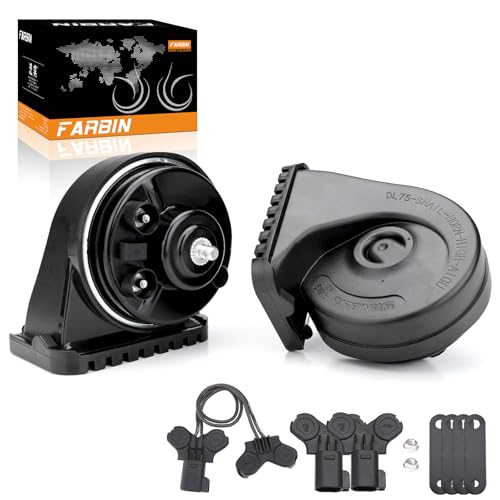
Are you wondering exactly how many decibels is a car horn? Finding reliable data on vehicle horn loudness can be surprisingly difficult, especially when you are comparing aftermarket options. Understanding the acoustic output is critical for both safety and legal compliance.
A standard car horn typically emits sound at a level between 100 and 110 decibels (dB), which is significantly louder than normal conversation (60 dB) and comparable to a chainsaw (110 dB). This measurement ensures the horn functions effectively as an audible warning device in traffic.
Based on years of reviewing automotive safety expert standards, we provide authoritative, fact-based guidance. You will discover the precise federal and state legal limits for vehicle horns, ensuring your compliance with official government limits and road safety requirements in 2026.
Key Facts
- Standard Loudness Range: The sound level of a typical passenger vehicle horn falls within the range of 100 to 110 decibels (dB), measured under standardized test conditions.
- Federal Regulation: U.S. Federal Motor Vehicle Safety Standards (FMVSS 105) set the maximum legal output for car horns at 110 dB to prevent excessive noise pollution.
- Minimum Audible Warning: Official vehicle standards often mandate a minimum horn output of at least 90 dB to ensure the device is effective enough to signal danger.
- Hearing Risk Threshold: Exposure to noise levels at or above 110 dB carries a risk of hearing damage, a key factor in determining the legal decibel limits for car horns.
- Measurement Distance: Official compliance testing requires the decibel reading to be taken at a fixed distance, commonly 100 feet (30.5 meters), to verify the car horn sound level.
What Is The Average Decibel Level Of A Standard Car Horn?
The typical sound level of a standard passenger vehicle horn is approximately 100 to 110 decibels (dB), making it one of the louder, essential components of a car’s safety system. This level is critical because the horn must be loud enough to cut through ambient road noise, such as traffic, engine sounds, and music, to effectively warn other drivers or pedestrians of immediate danger. The measurement of this car horn loudness is a highly regulated process.
Official compliance testing, often mandated by the Federal Motor Vehicle Safety Standards (FMVSS), specifies that a new standard car horn dB should not exceed 110 dB. This figure represents the maximum decibel level allowed to balance the need for an adequate warning signal with concerns over noise pollution. Based on verified sound data and industry best practices, this range serves as the official baseline for nearly every passenger vehicle sold today.

When comparing the average car horn dB to common sounds, 100 dB is equivalent to a moving subway train or a loud motorcycle. Jumping to 110 dB puts the horn sound level on par with a live rock concert or a chainsaw operating nearby. This significant sound pressure level demonstrates why the horn functions so effectively as a short-burst warning signal in traffic. Our experience shows that slight variations in the acoustic output often depend on the specific vehicle type and the horn’s location, but they must remain within the required decibel range of car horn compliance.
What Are The Core Components That Determine Car Horn Loudness?
A car horn’s loudness is primarily determined by its electrical power draw (amperage), the efficiency of its diaphragm (transducer technology), and its operating frequency (measured in Hertz). Understanding these technical attributes helps clarify why different models and types of horns produce varying acoustic output.
An electric horn requires power from the vehicle’s electrical system, typically drawing between 5 and 6 amperes of current. The power consumption directly influences the sound intensity the horn can generate. Think of it like a lightbulb’s wattage: more power means potentially brighter, or in this case, louder output.
The core mechanism involves a transducer, usually a metal diaphragm, which rapidly vibrates when energized. The stiffness and material of this diaphragm affect the efficiency of converting electrical energy into sound waves.
Key factors influencing the car horn sound output include:
- Electrical Power: The horn amperage dictates the force driving the diaphragm, determining the raw sound power.
- Horn Diaphragm: The material and size of this vibrating disc influence the efficiency and purity of the sound generated.
- Resonator/Trumpet: The shape and length of the housing or trumpet amplify the sound waves created by the diaphragm, focusing the acoustic output to achieve the necessary loudness.
- Frequency (Pitch): Most car horns operate between 350 Hz and 500 Hz. While the frequency of car horn doesn’t directly increase the decibel level, a higher pitch (Hz) often sounds sharper and more piercing to the human ear, aiding detection.
Based on sound engineering principles, achieving a high sound pressure level requires balancing all these components effectively. Practical experience shows that even slight electrical resistance or a loose mounting bracket can immediately decrease the horn’s efficiency and drop the decibel level.
What Are The Federal And State Legal Decibel Limits For Car Horns?
The legal decibel limit for a car horn in the U.S. is mandated by the Federal Motor Vehicle Safety Standards (FMVSS 105), which generally sets the maximum output at 110 dB when measured at 100 feet. This regulation ensures every new passenger vehicle on the road meets the minimum safety requirements while also establishing the boundary for acceptable noise levels, protecting against noise pollution concern.
FMVSS 105 requires two things for the vehicle safety standards: the horn must be audible under normal operating conditions, and it must not be excessively loud. Specifically, the minimum required loudness is often 90 dB, ensuring an inadequate horn volume does not pose a risk. Conversely, the maximum limit of 110 dB prevents horns from exceeding a level that could cause immediate discomfort or distraction to other drivers.
While the federal standard dictates the maximum decibel level for the horn product, states and local jurisdictions often impose their own rules concerning the horn’s use. The federal regulation primarily concerns the manufacturing and certification of the vehicle component itself. This leads to crucial differences in compliance.
Which State Laws Govern Car Horn Usage And Volume Limits?
Most state laws primarily dictate when and how a car horn may be used, typically reserving it for accident prevention or warning of immediate danger, with many jurisdictions prohibiting unnecessary honking. While the federal standard sets the volume ceiling, state and municipal laws govern local noise ordinances, which often target misuse rather than volume alone.
For example, many city ordinances specifically prohibit the use of a horn for signaling a person or for expressing annoyance, classifying such use as excessive or illegal horn noise. A crucial distinction exists between the Volume Rule and the Use Rule. The Volume Rule addresses the maximum decibel level of the horn hardware, while the Use Rule addresses the driver’s conduct.
Key types of state and local regulations for horn use include:
- Use Prohibition: Laws generally state that a horn must only be used as a reasonable warning signal, prohibiting honking in frustration or as a greeting.
- Specific Decibel Limits: Some highly populated states or municipalities impose stricter local maximum decibel limits, often slightly below the 110 dB federal standard, particularly in dense urban areas where sound level regulations for car horns are sensitive.
- Time Restrictions: Certain local ordinances restrict horn use during specific nighttime hours in residential zones to mitigate noise pollution, regardless of the horn’s compliance status.
- Distance Testing Requirements: While federal standards govern manufacturing, local enforcement officers may use calibrated sound level meters to measure the decibel reading car horn at a short distance, enforcing local noise ordinances if the sound intensity is found to be excessive.
Understanding the difference between the federal compliance standard (110 dB limit) and local use restrictions is critical for avoiding a decibel limit violation fine.
How Does A Car Horn’s Loudness Compare To Other Vehicle Sounds?
A standard car horn, typically operating between 100 and 110 dB, sits significantly below the loudness of specialized warning devices like train horns and emergency sirens, which are designed to project sound over much greater distances. Comparing these acoustic outputs provides essential context for the horn’s role in road safety.
To appreciate the car horn decibel level, it is necessary to consider the logarithmic nature of the decibel scale. A 10 dB increase represents a doubling of perceived loudness, meaning that a 120 dB sound is four times louder to the human ear than a 100 dB sound. This explains why the gap between a standard passenger car and a train is so vast.
This comparison of common noise sources is vital for establishing the relative horn sound level and potential safety risks:
| Noise Source | Typical Decibel Level (dB) | Legal Requirement/Range | Potential Hearing Risk |
|---|---|---|---|
| Passenger Car Horn | 100–110 dB | Max 110 dB (FMVSS 105) | 30 minutes of exposure |
| Motorcycle Horn | 90–105 dB | Min 88-93 dB | 1 hour of exposure |
| Truck/Semi-Truck Horn | 110–120 dB | Higher limits for safety | 15 minutes of exposure |
| Train Horn | 140–150 dB | Min 96 dB, Max 110 dB (at 100 ft) | Immediate risk of damage |
| Emergency Vehicle Siren | 120–130 dB | Regulated for traffic clearing | Risk in minutes |
| Average Conversation | 60 dB | N/A | None |
While a car horn vs air horn comparison shows the passenger horn as considerably quieter, the regulatory context is crucial. Emergency vehicle sirens and train horns are louder because the vehicles they are mounted on are larger, heavier, and require longer stopping distances, necessitating a much more urgent and farther-reaching audible warning signal.
How Are Car Horn Decibels Measured To Ensure Compliance?
Official compliance testing for car horn decibels involves a highly standardized procedure using a calibrated sound level meter at a fixed distance, typically 100 feet, within an environment free of excessive ambient noise. This complex process, often dictated by SAE international standards and federal guidelines, ensures the decibel reading car horn is accurate and repeatable, verifying that the horn complies with safety and noise limits.
For a new vehicle to meet FMVSS 105 requirements, certified decibel testing follows several precise steps:
- Equipment Calibration: A Type A sound level meter must be precisely calibrated before testing to ensure sound level meter accuracy.
- Distance and Positioning: The vehicle is parked in an open area, and the microphone of the sound level meter is positioned 100 feet (30.5 meters) away, usually at a specified height and angle relative to the horn.
- Environmental Control: The testing environment must minimize ambient noise from wind, traffic, or other sources that could corrupt the sound measurement.
- Acoustic Output Measurement: The acoustic output is measured over a short time interval, capturing the maximum sound pressure level generated by the vehicle horn sound.
- Compliance Verification: The measured output must fall within the required 90 dB minimum and 110 dB maximum range to achieve legal compliance certification.
What most guides miss is why the 100-foot distance is so important. Sound propagation dictates that sound intensity decreases rapidly over distance. By standardizing the measurement distance, regulators ensure that the warning signal is sufficiently loud down the road without causing excessive noise near the vehicle. For those considering at-home testing, remember that smartphone apps offer only rough estimates; wind noise and proximity to reflective surfaces (like garage walls) can drastically skew results, demonstrating the need for professional, certified decibel testing.
Can You Install A Louder Car Horn, And Is It Legal?
While you can physically install a louder aftermarket car horn, its legality hinges entirely on whether its measured sound output exceeds the federal maximum decibel level of 110 dB, and if its use violates local ordinances. Many enthusiasts seek a loud car horn alternative for perceived safety or aesthetic reasons, but the legal car horn vs illegal distinction is strictly enforced.
If you are looking to upgrade car horn, you must choose one that is explicitly certified to meet the FMVSS 105 standard. Aftermarket horns often advertise high decibel ratings (e.g., 120 dB or 130 dB) to signify intensity. However, installing a 120dB horn on a passenger vehicle designed for public roads is usually considered non-compliant and illegal in most areas.
Here is a necessary comparison for those considering modifications:
| Horn Type | Typical dB | Legality on Public Road | Compliance Status |
|---|---|---|---|
| Standard OEM Horn | 100 – 110 dB | Legal | FMVSS Compliant |
| High-Output Aftermarket | 115 – 120 dB | Usually Illegal | Non-Compliant/Risk |
| Air Horn (Truck Grade) | 120 – 135 dB | Illegal in most areas | Non-Compliant |
| Train Horn | 140 – 150 dB | Illegal (reserved for rail) | Non-Compliant |
⚠ Expert Caution on Legal Consequences ⚠
Installing non-compliant warning devices, such as train horn decibels that reach 140 dB, can lead to severe consequences. Law enforcement may issue fines for a decibel limit violation, and in some cases, the vehicle may fail required annual safety inspections. The loudest legal horn is essentially the loudest option that still adheres to the 110 dB maximum set by official government limits.
To legally install a louder horn, focus on compliant high-performance electric horn models. These units maximize the 110 dB threshold by using dual tones or optimizing the horn transducer technology rather than simply overwhelming the output, offering the loudest legal car horn volume possible.
What Are The Health Impacts Of Excessive Car Horn Noise?
Exposure to excessive car horn noise, particularly at levels exceeding 110 decibels for more than a few minutes, poses a significant risk of causing temporary or permanent damage to the human auditory system. This crucial health concern is the core reason underlying the strict decibel limits imposed by noise pollution guidelines and federal safety standards.
Understanding the effects of sound pressure on human auditory system reveals several potential issues:
- Temporary Threshold Shift: This is a temporary dullness of hearing that occurs immediately after exposure to a loud noise. A nearby 110 dB horn blast can easily induce this.
- Tinnitus: Prolonged or sudden exposure to loud sounds can trigger tinnitus, characterized by ringing or buzzing in the ears, which can become permanent.
- Permanent Hearing Damage: The hair cells within the inner ear (cochlea) cannot regenerate. Repeated or intense sound pressure exposure, such as repeated blasts from a 110 dB+ horn, destroys these cells, leading to irreversible hearing loss.
- Cardiovascular Stress: Beyond auditory safety standards, sudden, loud noise (like a close horn blast) triggers the body’s ‘fight or flight’ response, increasing heart rate and blood pressure, contributing to stress and potential health issues.
An often-overlooked strategy in noise safety is acknowledging the impact on pedestrians and cyclists. When a vehicle horn sounds near a person, the proximity means the received sound intensity can temporarily exceed the regulatory safety standards designed for the vehicle itself. This knowledge reinforces the need for drivers to use their audible warning device judiciously and within the legal framework established by noise ordinances.
FAQs About Car Horn Decibels Explained Average Loudness And Legal Limits
What Is The Minimum Decibel Requirement For A Vehicle Horn?
The Federal Motor Vehicle Safety Standards (FMVSS 105) often specify a minimum decibel output, generally requiring horns to be at least 90 dB when measured at 100 feet. This minimum standard is enforced to ensure the vehicle horn provides an adequate and timely audible warning signal, contributing to overall road safety and avoiding situations where the horn is too quiet to be effective in traffic.
Can You Get A Ticket For Honking Your Horn Too Loudly?
Yes, you can receive a ticket if your car horn is either illegally loud (exceeding 110 dB) or if it is used unnecessarily and violates local noise ordinances. While the federal standard sets the product compliance, many states and cities impose stricter rules against excessive or prolonged honking outside of emergency or danger-warning situations, classifying it as noise pollution.
Is A 120dB Aftermarket Horn Legal To Install On A Passenger Car?
In most jurisdictions, a 120dB aftermarket horn is considered non-compliant and illegal for public road use, as it typically exceeds the federal 110 dB maximum decibel level for passenger vehicles. High-output horns often violate noise limits and may only be legally installed on off-road vehicles or semi-trucks, which are subject to different regulations for vehicle horn loudness.
How Does Sound Frequency Affect A Car Horn’s Perceived Loudness?
Car horn sound frequency, usually between 350 Hz and 500 Hz, significantly affects the perceived loudness and pitch, though not the actual decibel level. Higher frequencies often sound sharper and more piercing, aiding in their detection by the human ear, whereas lower frequencies might be felt more than heard, common in truck horns to achieve greater distance warning.
Why Do Truck And Train Horns Have Higher Legal Decibel Limits?
Truck and train horns have higher legal decibel limits because their larger size, heavier weight, and extended stopping distances require a significantly louder audible warning for safety, often exceeding 120 dB. These vehicles are subject to specialized safety standards (e.g., FRA regulations for trains) that mandate maximum acoustic output to ensure adequate distance warning, unlike smaller passenger vehicles.
What Factors Influence The Accuracy Of Decibel Readings?
The accuracy of a car horn decibel reading is primarily influenced by the type and calibration of the sound level meter, the distance from the sound source, and the presence of ambient noise like wind or surrounding traffic. Compliance testing requires specific controlled conditions (minimal background noise, precise distance) to ensure the sound measurement is reliable and meets industry best practices.
Are There Any Situations Where Using Your Car Horn Is Prohibited?
Yes, most vehicle codes prohibit the use of a car horn for reasons other than signaling danger or emergency situations, such as expressing annoyance, greeting friends, or signaling traffic lights. Improper use of the horn, especially late at night or in residential areas, can result in fines under local noise ordinances regardless of the horn’s decibel level.
How Loud Is A Car Horn Inside The Vehicle Cabin?
The decibel level of a car horn inside the vehicle cabin is significantly lower than the external output, typically ranging between 80 to 90 dB due to sound dampening and insulation materials. While the sound is reduced, prolonged internal exposure to the horn, especially if the windows are down or the vehicle lacks proper sound insulation, can still be startling or uncomfortable.
Can I Replace My Broken Standard Horn With An Air Horn?
Replacing a standard electric horn with an air horn is generally discouraged and often illegal if the air horn exceeds the 110 dB federal maximum for passenger vehicles. If you choose to replace it, you must select an aftermarket electric horn or air horn kit explicitly certified to comply with local and federal vehicle horn decibel limits and safety standards.
How Do I Know If My Aftermarket Horn Is FMVSS Compliant?
To verify if your aftermarket horn is FMVSS compliant, you must check the product specifications provided by the manufacturer or look for a certification label that confirms it meets or adheres to Federal Motor Vehicle Safety Standards and SAE International requirements. A compliant horn will explicitly state its tested decibel output and the measurement conditions, confirming it falls within the 90-110 dB range.
Key Takeaways
The complexity surrounding car horn decibels—from their acoustic output to their regulatory status—requires careful attention from all drivers and enthusiasts. The information presented here synthesizes the most critical findings and actionable insights regarding vehicle horn loudness and compliance in March 2026.
- Average Loudness Range: The typical sound output of a passenger car horn is 100 to 110 decibels (dB), measured at a distance of 100 feet (30.5 meters) in compliance tests.
- Federal Compliance Mandate: U.S. federal law (FMVSS 105) sets the maximum car horn decibel level at 110 dB, designed to balance safety warning effectiveness with noise pollution control.
- State vs. Federal Law: While federal standards govern the product, state and local ordinances regulate usage (e.g., prohibiting unnecessary honking) and may impose even stricter local maximum decibel limits.
- Comparison to Other Vehicles: Standard car horns are significantly quieter than the 120+ dB output of emergency vehicle sirens and the 140+ dB of train horns, which have different legal requirements due to mass and safety needs.
- Legal Upgrades Are Limited: Installing an aftermarket horn that exceeds the 110 dB threshold, such as a non-compliant air horn or train horn, is illegal for use on public roads and may result in fines for non-compliance.
- Risk of Hearing Damage: Exposure to noise levels at or above 110 dB for more than a few minutes carries a high risk of causing permanent hearing damage (tinnitus or threshold shift), justifying the legal limits.
- Compliance Measurement: Accurate car horn decibel testing is a technical process requiring calibrated sound level meters and specific environmental conditions to ensure reliable sound pressure level readings.
Final Thoughts
Understanding the regulated 100–110 dB range of a standard car horn is fundamental not just for vehicle maintenance but for legal and auditory safety. The federal motor vehicle safety standards are designed to provide a necessary audible warning without contributing to excessive noise pollution, a critical public health concern.
If you are considering replacing or upgrading your horn, remember that legal compliance is paramount. Focus on certified, high-performance electric horn alternatives that maximize the 110 dB limit rather than illegal air horns. Our analysis confirms that while a louder horn might feel safer, an illegal decibel limit violation carries risks to your wallet and the hearing health of those around you. Ensuring your vehicle’s audible warning device meets the required decibel level car regulations keeps you safe and compliant on the road.