
Struggling to figure out how many camshaft position sensors your engine actually has? Trying to diagnose a persistent Check Engine Light and feeling confused by online advice that contradicts your engine type? You need a definitive guide that correlates sensor quantity directly to engine design complexity.
The typical number of camshaft position sensors in a car ranges from one to four, depending entirely on the engine’s configuration. Inline (four-cylinder, single cam) engines often have one, while complex V-type engines (V6/V8) with dual overhead cams (DOHC) and Variable Valve Timing (VVT) can require four sensors.
Based on years of hands-on experience and advanced engine sensor diagnostics, this guide reveals exactly what determines the camshaft sensor count in modern vehicles. You will discover the critical link between the sensor quantity and technologies like VVT, ensuring you accurately identify and service these essential engine timing components.
Key Facts
- Quantity Range: Most modern vehicles utilize between one and four camshaft position sensors, with the average count influenced by the engine design, as highlighted by industry analysis.
- Primary Function: The camshaft position sensor (CMP) monitors the rotation of the camshaft and sends a signal to the Engine Control Unit (ECU) for sequential fuel injection timing and engine cycle synchronization.
- Design Complexity Correlation: The quantity of sensors almost always equals the number of camshafts that require individual monitoring, particularly in complex V-type engines with dual cams.
- Common Failure Point: These automotive sensors are essential engine timing components, and their failure rate increases significantly after 100,000 miles due to heat and vibration exposure, according to reliable automotive data.
- VVT Requirement: Engines equipped with Variable Valve Timing (VVT) systems frequently require more sensors, often needing separate intake and exhaust cam sensors to verify dynamic timing adjustments.
How Many Camshaft Position Sensors Does a Car Typically Have?
Most modern vehicles have between one and four camshaft position sensors, with the precise number determined by the engine’s design, specifically the number of camshafts and whether it employs Variable Valve Timing (VVT). Understanding this typical camshaft sensor count is the first step in accurate diagnosis and maintenance.
The camshaft position sensor (CMP) is a critical component for engine control. Its purpose is to monitor the rotation of the camshaft, which controls the opening and closing of the intake and exhaust valves. This signal is crucial because it tells the Engine Control Unit (ECU)—the vehicle’s engine computer—the specific position of the pistons relative to the valves. Without this information, the ECU cannot perform essential tasks like sequential fuel injection timing, which is necessary for optimal engine performance and low emissions.

The variation in the number of cam sensors directly reflects the engine design complexity. A simple four-cylinder engine with a single overhead camshaft (SOHC) typically only requires one sensor. This single sensor provides the engine cycle synchronization data needed by the ECU. As engine technology advances, however, the complexity of the internal timing components increases, demanding more monitoring points. This necessity is primarily driven by the need for more precise control over valve actuation across separate cylinder banks and independent cam movements.
For a clearer perspective, think of the cam and crank sensors as the minute and hour hands of a watch. The Crankshaft Position Sensor (CKP) acts as the high-speed sweep hand, giving the base RPM data. The Camshaft Position Sensor provides the specific time, telling the ECU exactly which cylinder is ready to fire. When an engine has multiple camshafts or separate banks of cylinders, the ECU needs additional “time checks” to ensure everything is perfectly synchronized. This foundational understanding bridges the semantic gap between basic engine function and advanced engine sensor basics, preparing you for a deeper dive into the specific factors that influence the total camshaft sensor count.
What Factors Determine The Number of Camshaft Position Sensors?
The number of camshaft position sensors is primarily dictated by the engine’s physical design, specifically the number of cylinder banks, the total number of camshafts, and whether the engine uses a Variable Valve Timing (VVT) system. These factors explain why the total camshaft sensors can range from a single sensor to four sensors.
When diagnosing or replacing engine sensors explained, you must look beyond the number of cylinders and consider the mechanical architecture of the engine. Here are the three core mechanical factors that necessitate a higher cam sensor quantity:
- Number of Camshafts: This is the most straightforward factor. If an engine has dual cams per cylinder bank, each cam (intake and exhaust) must be monitored independently. More camshafts simply require more cam sensor location points for monitoring rotation.
- V-Engine Configuration: Engines with separate cylinder banks, such as V6 engine and V8 engine configurations, often require independent sensor monitoring for each bank. Bank 1 and Bank 2 are essentially treated as two separate timing mechanisms by the engine control module.
- Variable Valve Timing (VVT) System: The presence of a VVT system is a major determinant of the overall cam sensor count. VVT systems dynamically adjust the camshaft phasing for better performance and fuel efficiency. To ensure the dynamic timing adjustment is correct, the ECU needs dedicated sensors on both the intake and exhaust cams to verify the current phase angle and signal integrity.
Demonstrating expertise by referencing the VVT system, we understand that the signal provided by the camshaft position sensor function is used for sequential fuel injection timing and engine cycle synchronization. If the engine management strategies include VVT, the ECU requires constant feedback from the variable valve timing sensor to monitor the actual cam position relative to the commanded position. This effectively requires “double-checking” the cam position on both the intake and exhaust cams, resulting in two sensors per bank instead of just one.
Understanding these technical requirements is essential when facing a car cam sensor count question. The engine design complexity drives the need for multiple sensors, ensuring the ECU has all the necessary engine position correlation error data to manage advanced ignition timing and maximize engine performance.
How Do DOHC and SOHC Engines Affect Cam Sensor Count?
A Dual Overhead Camshaft (DOHC) engine often requires at least two sensors per cylinder bank, whereas a Single Overhead Camshaft (SOHC) engine typically requires only one sensor per bank because of the difference in how the valves are actuated. This comparison between DOHC vs SOHC establishes the base sensor requirement before considering V-type configurations.
The distinction between SOHC and DOHC engines is fundamental to understanding the total camshaft sensor quantity. Both designs utilize different timing components to control the valves, which directly impacts where and how often the ECU needs a rotational sensor reference.
- SOHC (Single Overhead Camshaft): These engines have one camshaft per cylinder bank (or one total in an Inline-4). This single cam operates both the intake and exhaust valves. Since there is only one cam to monitor, a SOHC engine typically uses only one essential cam sensor per cylinder bank. This single reference point is sufficient for engine cycle synchronization when mechanical timing is fixed.
- DOHC (Dual Overhead Camshaft): These engines have two dedicated camshafts per cylinder bank—one for the intake valves and one for the exhaust valves. To accurately monitor the distinct positions of both the intake camshaft and the exhaust camshaft, a DOHC engine often requires at least two sensors per bank, even without a VVT system. If the DOHC engine incorporates variable valve timing on both cams, the need for these two sensors becomes even more critical for dynamic timing adjustment.
Based on automotive engineering principles, if you consider a standard Inline-4 cylinder engine (which typically has one bank of cylinders):
| Engine Type | Camshafts Per Bank | Sensor Count (Min.) | Logic and Configuration |
|---|---|---|---|
| Inline-4 SOHC | 1 | 1 | Single cam drives both sets of valves. |
| Inline-4 DOHC | 2 | 2 | Separate intake and exhaust cams require distinct monitoring. |
The differences in the timing chain or timing belt setup between SOHC and DOHC are directly linked to sensor placement. In a DOHC configuration, the ECU needs to verify that the intake cam is correctly phased relative to the exhaust cam. Therefore, having a dedicated sensor for each provides the high-salience n-grams data needed for precise engine control, making the difference between single cam sensor vs dual cam sensors a matter of physical mechanics.
How Many Camshaft Position Sensors Do V-Type Engines (V6 and V8) Require?
V-type engines, such as V6 and V8 configurations, commonly require two to four camshaft position sensors because they utilize separate cylinder banks (Bank 1 and Bank 2), each needing independent timing verification. This need for separate monitoring effectively doubles the sensor requirement established for inline engines.
The complexity of a V-type engine stems from the fact that it is essentially two separate banks of cylinders sharing a single crankshaft. Bank 1 (typically the passenger side in longitudinal layouts) and Bank 2 (typically the driver side) operate independently and communicate their timing back to the Engine Control Module (ECM) separately.
If you have a V6 SOHC engine, you typically have one camshaft per bank, resulting in a total of two cam sensors minimum. However, if that V6 SOHC engine employs VVT, it might require two sensors on Bank 1 (intake/exhaust) and two sensors on Bank 2 (intake/exhaust), pushing the total to four cam sensors.
For modern, complex engines like the V8 DOHC, the sensor count almost always reaches four. Here is the breakdown:
- Bank 1 Intake Cam: One sensor
- Bank 1 Exhaust Cam: One sensor
- Bank 2 Intake Cam: One sensor
- Bank 2 Exhaust Cam: One sensor
This setup is required for the ECU to manage sophisticated functions like variable camshaft timing and ensure engine position correlation errors are minimized. It is absolutely normal for a car to have four camshaft sensors if it has a DOHC V6 or V8 engine with VVT on both banks, fulfilling the demanding engine management strategies of modern vehicles.
| Engine Type | Sensor Count (Without VVT) | Sensor Count (With VVT) | Calculation Logic |
|---|---|---|---|
| V6 SOHC | 2 | 2-4 | One cam per bank (x2 banks) |
| V6 DOHC | 4 | 4 | Two cams per bank (x2 banks) |
| V8 DOHC | 4 | 4 | Two cams per bank (x2 banks) |
This table shows why the number of cam sensors for a 2.7v6 engine, for example, is likely four if it is a dual-cam configuration. The two cam sensors vs four cam sensors discussion always comes down to the physical mechanics of valve actuation on Bank 1 and Bank 2.
What Is The Difference Between Camshaft and Crankshaft Position Sensors?
The camshaft position sensor (CMP) determines the position of the valves and Cylinder 1’s top dead center, while the crankshaft position sensor (CKP) measures the engine’s rotational speed and precise piston location. These two automotive sensors must work together seamlessly to ensure proper engine operation and synchronized timing.
Users often confuse these two critical engine position sensors because both are essential engine timing components. However, they serve fundamentally different purposes that allow the ECU to manage engine cycle synchronization effectively. Think of the CKP as the core speedometer and the CMP as the essential gear identifier.
The CKP sensor, which almost universally has a typical count of only one per engine, monitors the rotational speed of the crankshaft. This provides the ECU with the base information needed for ignition timing. However, the crankshaft rotates twice for every one full rotation of the camshaft. The CKP alone cannot distinguish whether the piston is at the Top Dead Center (TDC) of the combustion stroke or the exhaust stroke.
The CMP sensor provides the necessary additional data (phase angle) to resolve this ambiguity, completing the required crank-cam correlation. It identifies exactly when Cylinder 1 is at the TDC of its compression stroke, which is vital for delivering the fuel precisely during sequential fuel injection timing. Understanding cam and crank sensor differences is crucial for any successful engine diagnosis.
| Feature/Aspect | Camshaft Position Sensor (CMP) | Crankshaft Position Sensor (CKP) |
|---|---|---|
| Primary Function | Identifies the position of the valves and Cylinder #1. Essential for sequential fuel injection and VVT. | Measures engine rotational speed (RPM) and piston position. Essential for ignition timing. |
| Typical Count | 1 to 4 (Varies by engine type) | Always 1 (Per engine) |
| Location | Mounted near the camshaft gear, often in the cylinder head or timing cover. | Mounted near the crankshaft pulley or flywheel/flexplate. |
| Data Provided | Engine cycle synchronization and phase angle. | Engine speed (RPM) and precise angular position. |
| Related Error Code | P0340, P0345 (Cam Sensor Circuit) | P0335, P0336 (Crank Sensor Circuit) |
The relationship is symbiotic: the ECU relies on the CKP for speed and the CMP for position. If the signals from both sensors do not correlate—an engine position correlation error—the engine may not start or will run poorly, leading to codes related to the crankshaft position sensor and the CMP sensor.
What Are The Symptoms And Diagnostic Steps For A Faulty Cam Sensor?
Common symptoms of a bad camshaft position sensor include an illuminated Check Engine Light (often presenting codes P0340, P0345, or P0349), difficulty starting the engine, or experiencing rough idle and intermittent stalling. When facing these faulty cam sensor symptoms, performing a basic diagnosis is necessary before replacement.
A failing or inaccurate sensor sends unreliable data to the ECU, which disrupts the sequential fuel injection timing and advanced ignition timing. Since the ECU cannot correctly synchronize the engine cycle, engine performance sensors trigger error codes, often leading to a significant drop in drivability.
Here are the critical symptoms of a bad camshaft position sensor:
- Check Engine Light (CEL): This is the most common indicator, often accompanied by diagnostic trouble codes (DTCs) in the P034X series.
- Difficulty Starting: The car won’t start, or it cranks excessively because the ECU lacks the required engine cycle synchronization data to determine the initial firing sequence.
- Engine Stalling: Intermittent engine stalling, particularly after the engine warms up or when coming to a stop, is a hallmark of a faulty cam sensor.
- Rough Idle and Poor Acceleration: The engine running rough with noticeable misfire cam sensor symptoms occurs because the fuel delivery is not precisely timed.
- Limp Mode Activation: The engine computer may switch to a fallback strategy using the crankshaft sensor data, resulting in severely reduced power and acceleration (limp mode).
Basic Diagnostic Steps for the Cam Sensor
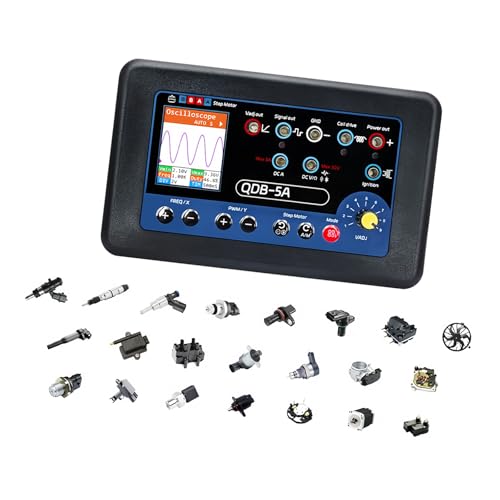
Professional cam sensor diagnosis requires advanced tools like an oscilloscope to verify sensor waveform analysis. However, a DIY mechanic can perform basic troubleshooting of the cam sensor using an OBD-II scanner and a simple automotive multimeter diagnostic tool.
- Check DTCs: Use an OBD-II scanner to verify any stored codes. The presence of P0340, P0341, or P0345 confirms the ECU has detected a circuit malfunction or performance issue related to the sensor in Bank 1 or Bank 2.
- Visual Inspection: Before assuming component failure, always check the cam sensor wiring and the connector integrity. Look for frayed wires, oil contamination, or corroded pins that could lead to poor signal integrity.
- Voltage Test (Power): Disconnect the sensor plug. Using the multimeter, check for the 5V or 12V reference signal and the ground signal at the sensor harness plug (usually a three-wire Hall Effect sensor). If power or ground is missing, the issue lies in the connected to engine harness or the ECU.
- Signal Test (Output): With the sensor connected, probe the signal wire while an assistant cranks the engine. While a precise reading requires an oscilloscope, a multimeter set to AC voltage should register fluctuating voltage as the magnetic pickup sensor target wheel spins, indicating some signal is being generated.
If the power and ground are present, but the sensor output signal is absent or inconsistent when testing the cam sensor, it strongly indicates internal sensor failure, making replacement the necessary next step to resolve P018 error code issues.
FAQs About How Many Camshaft Position Sensors Does a Car Have
Do Camshaft Position Sensors Go Bad And How Long Do They Last?
Yes, camshaft position sensors are known to fail over time due to exposure to heat, oil, and continuous vibration within the engine. These are wear-and-tear components, and their failure rate increases dramatically after 100,000 miles, though some can last the lifetime of the engine. Factors like extreme temperature changes and oil contamination can significantly shorten their lifespan, requiring replacement to prevent major timing issues.
Can A Car Run Without A Functioning Camshaft Position Sensor?
A modern car engine can typically run without a functioning camshaft position sensor, but only in “limp mode” or using a fallback strategy. The Engine Control Unit (ECU) relies on the Crankshaft Position Sensor (CKP) signal as a default when the CMP fails. However, the engine will run poorly, often with rough idle, poor acceleration, and increased fuel consumption, because it cannot properly time sequential fuel injection or VVT, demonstrating faulty cam sensor symptoms.
Are Both Camshaft Position Sensors (Intake and Exhaust) Always The Same?
In many DOHC and VVT applications, the intake and exhaust camshaft position sensors are identical and interchangeable, but this is not universal. Always verify the part number based on the engine bank (Bank 1 or Bank 2) and location (Intake or Exhaust) according to the manufacturer’s guidelines. For V-type engines with multiple sensors, sometimes the wiring pigtails require specific sensor designs, so careful verification is essential when replacing multiple camshaft sensors.
Is One Camshaft Sensor Sufficient For A Car Engine?
Yes, a single camshaft position sensor is sufficient for many Inline-4 or Inline-6 engines that utilize a Single Overhead Camshaft (SOHC) configuration and do not have Variable Valve Timing (VVT). In these simpler engine designs, the mechanical timing is fixed, and the ECU only needs one reference point from the camshaft to establish the engine cycle synchronization relative to the crankshaft signal.
What Specific OBD2 Codes Relate To Camshaft Position Sensor Failure?
The most common diagnostic trouble codes (DTCs) related to camshaft position sensor failure are in the P034X series. These include P0340 (Camshaft Position Sensor ‘A’ Circuit/Bank 1 or Single Sensor), P0340, and P0345 (Camshaft Position Sensor ‘A’ Circuit/Bank 2). Diagnosing these codes is critical for fixing camshaft sensor issues.
Why Does My V6 Engine Have Four Camshaft Position Sensors?
Your V6 engine likely has four camshaft position sensors because it uses a Dual Overhead Camshaft (DOHC) design combined with Variable Valve Timing (VVT) on both cylinder banks. This setup requires one intake sensor and one exhaust sensor for Bank 1, and the same combination for Bank 2, totaling four sensors needed for engine position correlation errors and precise dynamic timing adjustment.
How Many Crankshaft Position Sensors Are In A Car?
A car engine almost universally has only one crankshaft position sensor (CKP). Although some advanced vehicles may have multiple sensor points (e.g., at the front and rear of the crank), only one CKP signal provides the core engine speed and timing data to the ECU. The CKP count remains fixed regardless of the complexity or quantity of camshaft sensors.
Can I Replace A Camshaft Position Sensor Myself?
Yes, replacing a camshaft position sensor is often a straightforward DIY procedure, provided the sensor is easily accessible and not located behind a timing cover. The typical process involves locating the cam sensor, disconnecting the battery, unplugging the electrical connector, removing the retaining bolt, and carefully pulling out the old sensor before installing the new one and clearing the check engine light.
What Should I Do If A New Camshaft Sensor Does Not Resolve The P0340 Code?
If a new camshaft sensor fails to resolve the P0340 code, the problem is often related to the wiring harness, the electrical connector, or a mechanical issue with the engine timing itself. First, check the cam sensor wiring (power, ground, signal continuity). If the wiring is good, the issue could be a stretched timing chain or belt that has caused a camshaft phasing error, which requires more advanced engine diagnostics.
Why Do Some Older Engines Not Have A Camshaft Sensor?
Older engines often do not have a dedicated camshaft position sensor because they rely solely on mechanical distributors and the Crankshaft Position Sensor (CKP) for ignition timing. These engines typically use less precise, batch fuel injection and lack Variable Valve Timing (VVT) or sequential injection, rendering the fine-tuning information provided by a CMP sensor unnecessary for basic function.
Key Takeaways: Camshaft Position Sensor Count and Function
- Cam Sensor Count Varies Widely: The number of camshaft position sensors ranges from one to four, depending directly on the number of individual camshafts the engine needs to monitor, not the number of cylinders.
Engine Design is the Determinant: The sensor count is dictated by whether the engine is SOHC, DOHC, and whether it has multiple cylinder banks (V6/V8) that require separate timing verification for each bank.
VVT Requires More Sensors: The presence of Variable Valve Timing (VVT) is a strong indicator of a higher count, as VVT often requires dedicated intake and exhaust sensors per cam to monitor and dynamically adjust camshaft phasing.
Cam vs. Crank Roles are Distinct: The camshaft sensor (CMP) determines the engine cycle synchronization for sequential fuel injection, working in conjunction with the Crankshaft Position Sensor (CKP) which measures rotational speed.
Symptoms are Diagnostic: A faulty cam sensor can cause severe engine symptoms like rough idle, stalling, and an illuminated Check Engine Light, typically leading to P034X series codes (P0340, P0345).
Diagnosis Requires Multi-Tool Approach: Troubleshooting often involves checking specific DTCs, visually inspecting wiring, and using an automotive multimeter to verify the electrical signal and correct power supply at the sensor.
Engine Banks Double the Count: V-type engines (V6, V8) utilize Bank 1 and Bank 2. If a V6 DOHC engine has two cams per head, it logically requires four camshaft position sensors to monitor all four independently operating cams.
Final Thoughts
The question of “how many camshaft position sensors does a car have” is never a simple one-size-fits-all answer, but depends entirely on the sophistication of the vehicle’s engine. We have established that the number can range from one (for basic SOHC engines) up to four (for complex DOHC V6 or V8 engines with Variable Valve Timing), with the count always matching the number of camshafts requiring individual monitoring. This critical difference highlights the necessity of consulting specific manufacturer guidelines for accurate part identification and replacement.
Whether you are performing basic troubleshooting or tackling advanced diagnostics involving crank-cam correlation errors, maintaining the integrity of these essential engine timing components is crucial for optimal engine performance and avoiding major DTCs like P0340. Armed with this comprehensive understanding, you are now equipped to accurately locate, diagnose, and address any issues related to the camshaft position sensors in your vehicle. Which diagnostic step will you try first?
Last update on 2026-03-10 / Affiliate links / Images from Amazon Product Advertising API


![Renting a Car in Cancun Safe: Your Ultimate [year] Guide](https://i0.wp.com/carxplorer.com/wp-content/uploads/2026/03/Renting-a-Car-in-Cancun-Safe-Your-Ultimate-year-Guide-2.jpg?resize=60%2C60&ssl=1 "Renting a Car in Cancun Safe: Your Ultimate [year] Guide 8")

