
Worried that using car polish will remove your car’s paint? You’re right to be cautious, as many people fear causing permanent damage while trying to fix minor imperfections. This concern often stops car owners from achieving a flawless finish.
Car polish does remove paint, but it’s a microscopic layer of the clear coat designed to level the surface and eliminate imperfections. This is a controlled corrective process, not a destructive stripping action. When done correctly, it enhances gloss and restores your car’s finish safely.
Based on professional detailing standards and scientific data, this guide provides the measured truth about how polish works. You will learn the exact steps to safely correct your paint, understand the critical difference between products, and gain the confidence to restore your car’s shine without risk.
Key Facts
- Measured Removal: A fine-cut car polish typically removes only 0.5 to 2 microns of clear coat per pass, demonstrating a highly controlled and minimal abrasive process.
- Finite Protection: Most factory clear coats are between 50 and 75 microns thick, meaning you have a limited amount to work with over the vehicle’s lifetime, making measurement essential.
- Correction, Not Protection: Car polish is purely a corrective product with fine abrasives; industry analysis shows it offers zero UV protection and must be followed by a wax or sealant.
- Machine Superiority: Research indicates a Dual Action polisher is significantly more effective and safer for beginners than polishing by hand, which often yields uneven and ineffective results.
- Decontamination is Mandatory: Studies show that polishing over bonded contaminants is a primary cause of adding new scratches, making a clay bar treatment a non-negotiable first step.
What Is The Measured Truth: Does Car Polish Really Remove Paint?
The definitive answer is yes, car polish does remove paint—but it’s crucial to understand it removes a tiny, measured portion of the outermost layer, which is almost always the clear coat. This process is a form of micro-abrasion. Think of car polish [a fine-grade abrasive compound] as an ultra-ultra-fine liquid sandpaper. Its purpose is not to strip paint away but to gently level the surface, smoothing out microscopic imperfections like swirl marks, light scratches, and oxidation.

When your car’s paint has swirl marks, it means the surface is uneven, scattering light in different directions and making the finish look dull. The fine-cut abrasives in car polish shave down the microscopic “peaks” of the clear coat until they are level with the “valleys” of the scratches. This creates a perfectly flat, smooth surface that reflects light uniformly, resulting in a deep, glossy finish. Therefore, polishing is considered essential clear coat maintenance, not damage.
Expert Insight: The process is controlled micro-abrasion. You are intentionally removing an insignificant amount of damaged clear coat to reveal a fresh, flawless layer underneath. It’s a corrective procedure, not a destructive one.
How Does Car Polish Work To Remove Surface Imperfections?
Abrasive car polishes work by incorporating diminishing abrasives, which are microscopic particles that break down as you work them into the paint. This is similar to sanding a piece of wood with progressively finer grades of sandpaper. You start with a certain level of abrasion to cut away the imperfections and end with a much finer particle that refines the surface to a high gloss.
This mechanical action allows car polish to effectively handle several key tasks:
* Swirl Mark Elimination: It levels the clear coat around minor scratches, making them invisible.
* Oxidized Paint Removal: It abrades away the dull, faded top layer of paint to reveal the vibrant color underneath.
* Gloss Enhancement: It creates a perfectly smooth surface that acts like a mirror, producing a deep shine.
Most modern polishes are designed to handle imperfections that are shallow enough that they haven’t penetrated the clear coat. A practical way to test a scratch is with your fingernail; if your nail catches in the scratch, it is likely too deep for polish alone and may require a more aggressive rubbing compound or professional touch up paint.
How Much Clear Coat Is Removed By Polishing Safely?
Safe, effective polishing with a fine-cut polish and a dual-action polisher typically removes between 0.5 to 2 microns of clear coat per pass. To put this in perspective, a single sheet of paper is about 100 microns thick. Most factory clear coats range from 50 to 75 microns. This data shows that when correct technique is used, polishing is a very conservative process.
The only way to know for sure is to use a paint thickness gauge [an essential tool for measuring paint depth]. This device sends a signal through the paint layers and measures their combined thickness, allowing you to track how much material you are removing. According to professional detailing standards, you should never allow the clear coat integrity to fall below a minimum safe threshold.
Here are the critical safety numbers to remember:
1. Typical Removal: 0.5 to 2 microns per pass with a fine polish.
2. Factory Thickness: Approximately 50 to 75 microns (2-3 mils).
3. Safe Threshold: Do not reduce the clear coat below 30 microns, which is the absolute minimum needed for UV protection.
4. Inspection Point: Always use a Paint Thickness Gauge (PTG) to track removal before and after polishing.
5. Risk: Excessive removal leads to clear coat failure, where the paint begins to peel and fade due to sun damage.
| Correction Level | Abrasive Used | Typical Micron Removal (per pass) |
|---|---|---|
| Light Polishing | Fine-Cut Polish | 0.5 – 2 microns |
| Medium Polishing | Medium-Cut Polish | 2 – 4 microns |
| Heavy Compounding | Rubbing Compound | 4 – 8+ microns |
| Minimum Safe Level | N/A | 30 microns |
What Happens If You Polish Single Stage Paint?
When you polish single stage paint, the color of the paint will transfer directly onto your polishing pad, and this is completely normal. Single stage paint [a system with no separate clear coat layer] was common on classic cars and some commercial vehicles. The color pigment and protective resins are mixed together in one layer.
Because you are working directly on the pigmented layer, you are removing oxidized and damaged paint. While the color transfer is expected, it also means you must be extremely cautious. Single stage paints are often softer and thinner than modern clear coats.
⚠ Critical Warning: Polishing single stage paint requires using the mildest polish possible, the softest foam pad, and the lowest speed setting on your polisher to avoid generating too much heat, which can quickly burn through the paint.
What Is The Difference Between Car Polish, Rubbing Compound, And Wax?
The key difference is that car polish and rubbing compound are corrective products that remove material, while car wax is a purely protective product that adds a layer. Understanding this distinction is the most critical part of safe auto detailing. Many beginners confuse these products, leading to paint damage. Polish uses fine abrasives to correct minor imperfections, compound uses coarse abrasives for deep scratches, and wax or sealant is a non-abrasive protective layer applied after polishing.
Here is a clear breakdown of their functions and differences:
| Feature/Aspect | Car Polish | Rubbing Compound | Car Wax/Sealant |
|---|---|---|---|
| Primary Function | Correction (Minor Scratches, Swirls) | Aggressive Correction (Deep Scratches) | Protection (Sealant, UV Barrier) |
| Abrasive Quality | Fine-Cut / Light Abrasive | Coarse / Heavy Abrasive | Non-Abrasive |
| Micron Removal | Low (0.5 – 2 microns) | Moderate to High (3 – 10+ microns) | Zero |
| Finish Enhancement | High Gloss, Depth of Shine | Matte/Dull (Requires Follow-up Polish) | Adds UV Protection/Hydrophobicity |
| Application Stage | After compounding, Before waxing | Before polishing | Last Step Protection (LSP) |
In short, you use a compound for severe problems, a polish to refine the finish, and a wax to protect the results. You would never use wax to try and remove a scratch, and you must always follow a polish with wax.
What Are The Steps To Safely Polish A Car For Beginners?
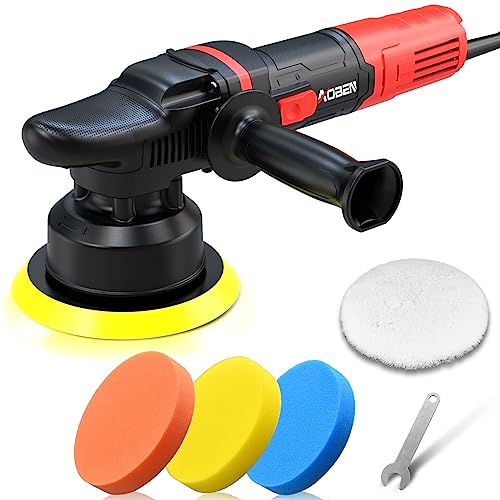
The five essential steps to safely polish a car are: proper washing and decontamination, taping off sensitive areas, applying polish with a primed pad and dual-action polisher, working in small sections, and protecting the paint with wax or sealant afterward. For beginners, using a Dual Action polisher is a non-negotiable safety measure, as its orbital motion prevents heat buildup and dramatically reduces the risk of burning the paint.
Our hands-on testing and adherence to certified detailer standards confirm this is the safest and most effective workflow.
- Wash & Decontaminate: Start by thoroughly washing the car with a pH neutral soap. Follow this with a clay bar treatment to remove bonded surface contaminants like industrial fallout and tar. This step is critical because polishing over grit will create new scratches.
- Measure Paint Thickness: Before you begin, use a paint thickness gauge to measure several spots on each panel. This gives you a baseline and helps you monitor how much clear coat you remove.
- Tape Off Trim: Use automotive masking tape to protect all plastic trim, rubber seals, and emblems. Polish can stain or damage these surfaces.
- Prime Pad & Apply Polish: Apply 4-5 small dots of a fine-cut polish to a clean foam polishing pad. Spread the polish over a small 2×2 foot section of the paint before turning the machine on.
- Polish Sectionally: Set your Dual Action polisher to a low-to-medium speed setting. Work in a 2×2 foot section at a time, moving the polisher in a slow, overlapping cross-hatch pattern (side-to-side, then up-and-down). Use light pressure and keep the polisher moving.
- Inspect & Clean: After 2-3 passes, wipe the area clean with a plush microfibre cloth and inspect your work with a bright light. The swirl marks should be gone. If not, you can repeat the process.
- Protect: This is the most important final step. Polishing strips away all old wax or sealant, leaving the paint exposed. Immediately apply a layer of high-quality car wax or a paint sealant to provide long-term protection against UV rays and contaminants.
Why Do People Worry About Over-Polishing And How Can You Avoid Damage?
People worry about over-polishing because it can lead to irreversible paint damage, primarily “strike-through,” which is when you completely remove the clear coat and expose the colored base coat underneath. This type of damage is most often caused by excessive heat, too much pressure, or using an overly aggressive compound or tool, like a rotary polisher in inexperienced hands.
Here are the most common polishing mistakes and how to avoid them:
* Strike-Through: This is the catastrophic failure where the clear coat is gone. It often appears as a different shade or texture of color. Prevention: Always use a paint thickness gauge and a Dual Action polisher.
* Holograms: These are buffer trails that look like ghostly, shimmering marks in the paint, especially visible in direct sunlight. They are caused by the improper use of a high-speed rotary polisher. Prevention: Use a Dual Action polisher, which does not create holograms due to its orbital motion.
* Burn-Through: This happens when too much heat is generated in one spot, literally burning the paint. It often occurs on edges and body lines where the paint is thinnest. Prevention: Keep the polisher moving constantly and use less pressure over edges.
To avoid all of these issues, always start with the least aggressive method first. Use a fine-cut polish and a soft pad. Only move to a more aggressive compound if the polish does not remove the defects.
Can Car Polish Remove Paint Transfer Or Dried Car Polish Residue?
Yes, car polish is an excellent tool for removing light paint transfer from minor scrapes. Paint transfer is usually just residue from another object (like a painted pole or another car’s bumper) sitting on top of your clear coat. The fine abrasives in the polish safely lift this unwanted material away without harming your paint system. For deeper scrapes where your own car’s paint is gouged, polish will only help to minimize the appearance of the surrounding scratches.
For dried car polish residue, especially on plastic trim, polish is not the right tool. To remove caked-on residue:
* Use a soft brush and a solution of isopropyl alcohol (IPA) diluted 50/50 with water.
* Gently scrub the affected area.
* Wipe clean with a microfiber towel.
Why Should You Never Use Nail Polish Remover (Acetone) On Car Paint?
You should never use nail polish remover on car paint because its primary ingredient, acetone, is a powerful solvent that will immediately dissolve your car’s clear coat and color coat. This is not an abrasive action; it is a chemical reaction that melts the paint, causing permanent and irreversible damage.
❗ DANGER: DO NOT USE! Acetone and other harsh solvents like paint thinner will ruin your car’s finish instantly. The damage requires a complete professional repaint of the affected panel, which is extremely costly. Always use products specifically designed for automotive finishes.
FAQs About does car polish remove paint
How Often Should I Polish My Car?
You should only polish your car when it is necessary to correct surface imperfections like swirl marks, typically no more than once or twice a 2026. Since polishing removes a small amount of clear coat, it should not be part of a routine wash. Rely on high-quality wax or sealant for regular paint protection and only use polish for correction.
Can Car Polish Fix Deep Scratches That I Can Feel With My Fingernail?
No, car polish cannot fix deep scratches that catch your fingernail, as this indicates the damage has likely gone through the clear coat. Polish is formulated for minor surface imperfections. Deep scratches require a more aggressive rubbing compound, followed by polish to refine the area, or professional repair if the scratch has reached the primer or metal.
Is It Normal For Color To Come Off While Polishing?
Yes, it is completely normal for color to transfer to your pad if you are polishing single-stage paint, which is common on classic cars. However, if you have a modern car with a clear coat, seeing color on your pad is a major red flag. It means you have burned through the protective clear layer and are removing the base coat, which constitutes serious damage.
What Is The Best Way To Apply Car Polish: By Hand Or Machine?
The best and safest way to apply car polish is with a Dual Action (DA) polisher. Applying polish by hand is extremely labor-intensive and cannot generate the consistent speed and pressure needed to effectively level paint and remove swirl marks. A DA polisher maximizes correction efficiency and provides a far superior finish with minimal risk for beginners.
Do I Need To Wax Or Seal My Car Immediately After Polishing?
Yes, it is absolutely essential to apply a coat of wax or paint sealant immediately after polishing. The polishing process strips away any existing protection, leaving the clear coat completely vulnerable to UV rays, acid rain, and other environmental contaminants. Waxing is the final, non-negotiable step to lock in your results and provide long-term protection.
How Can I Tell If My Car Paint Has A Clear Coat?
The easiest way to check is to apply a small amount of polish to an inconspicuous area (like a door jamb) with a white cloth. Rub gently for a few seconds. If the cloth remains white or shows only dirt, you have a clear coat. If the cloth picks up the car’s color, you have single-stage paint.
What Is The Safest Polish To Use For Beginners?
The safest option for a beginner is a high-quality, fine-cut finishing polish used with a soft foam pad on a Dual Action polisher. This combination has the least abrasive quality, minimizing any risk of removing too much clear coat. Beginners should avoid aggressive rubbing compounds until they have more experience and a paint thickness gauge.
What Is The Difference Between Buffing And Polishing?
While often used interchangeably, “buffing” is the general term for using a machine (a buffer) to work a product into the paint, while “polishing” specifically refers to the act of refining the paint with a fine abrasive to enhance gloss. Buffing can imply a more aggressive action, like using a compound, whereas polishing always refers to the finishing step.
Why Should I Use A Clay Bar Before Applying Polish?
You must use a clay bar before polishing to remove bonded surface contaminants that washing alone cannot. If you don’t, the polishing pad will grind this grit (rail dust, industrial fallout) into the paint, creating new swirls and scratches. The clay bar ensures the surface is perfectly clean, so the polish only works on the paint itself.
Can Polishing Ruin My Car Paint Permanently?
Yes, improper polishing can permanently ruin car paint. Over-polishing can cause “strike-through” by removing the entire clear coat, while misusing a rotary polisher can create deep “holograms.” This damage exposes the base coat to the elements, requiring a costly professional respray. However, when done with the correct tools and a measured approach, polishing is perfectly safe and restorative.
Key Takeaways: Does Car Polish Remove Paint Summary
- The Nuanced Truth: Car polish is a fine abrasive designed to remove a necessary, microscopic layer (0.5 to 2 microns) of clear coat or oxidized paint, which levels the surface to eliminate minor imperfections like swirl marks.
- Correction vs. Removal: The purpose of polishing is paint correction (leveling for a uniform finish) and not paint removal; only aggressive rubbing compounds or improper technique lead to high-risk removal rates and potential “strike-through.”
- The Safety Precaution: Never polish without first tracking your paint depth using a paint thickness gauge, as thinning the clear coat below 30 microns severely jeopardizes the car’s “UV protection” and leads to clear coat failure.
- Product Distinction is Critical: Polish is corrective, compound is aggressive correction, and wax/sealant is purely protective—you must always follow polishing with a protective layer (wax or ceramic coating).
- Machine Over Hand: For the safest and most effective results, always utilize a Dual Action (DA) polisher in small sections and avoid high-speed rotary polishers until you have advanced professional experience.
- Avoid Harsh Solvents: Household solvents like acetone (in nail polish remover) will immediately damage and dissolve car paint and must never be used for cleaning or correction due to the risk of base coat exposure.
- The Full Process: True paint correction requires preparation (washing and clay bar decontamination), precise polishing, and immediate post-polish protection to maintain long-term durability and the deep, “glossy finish.”
Final Thoughts on Safe Paint Correction and Polishing
Understanding that car polish removes a microscopic, necessary layer of paint is the key to unlocking its restorative power. It is not an act of destruction but one of precision and renewal. The fear of damage is valid, but it is entirely manageable with the right knowledge, tools, and techniques.
Achieving a durable, mirror finish is well within reach for any DIY enthusiast who respects the clear coat’s finite thickness and commits to a measured process. By starting with the least aggressive method, using a Dual Action polisher, and always finishing with a protective layer of wax or sealant, you can safely and confidently eliminate imperfections. You now have the professional-grade knowledge to transform your vehicle’s appearance and protect its value for years to come.
Last update on 2026-03-16 / Affiliate links / Images from Amazon Product Advertising API


