
Is your engine oil level constantly dropping with no puddle on the ground? You might be facing internal engine oil burning.
This guide explains engine oil consumption, where oil is burned inside the engine. This is different from a leak, which leaves a visible puddle. We’ll explore why this happens and what it means for your car.
Engine oil burning is when oil enters the combustion chamber and is burned with fuel, creating blue smoke from the exhaust. This guide will show you how to diagnose the cause, from simple fixes to major repairs, so you can make a smart decision.
Key Facts
- The “Normal” Standard: Many manufacturers consider oil consumption of 1 quart per 1,000 to 1,500 miles to be within acceptable limits for modern engines.
- The Most Common Failure: Worn or clogged piston oil control rings are statistically the most frequent mechanical cause of severe, internal oil loss.
- A Costly Consequence: Ignoring oil burning can destroy your catalytic converter, with replacement costs often exceeding $1,500 due to contamination from oil ash.
- The Definitive Test: A leak-down test is over 90% accurate in distinguishing between piston ring failure and valve seal failure, which is critical for an accurate repair estimate.
- The Simple First Check: A faulty Positive Crankcase Ventilation (PCV) valve can account for up to 25% of easily correctable oil consumption issues and is the cheapest component to check first.
What Is Car Engine Oil Burning And How Is It Different From Leaking?
Oil burning is the combustion of engine lubricant within the cylinder or exhaust system, producing blue or blue-gray smoke, while oil leaking is the external escape of lubricant, typically leaving visible wet spots or puddles under the vehicle. When an engine burns oil, it means the lubricant has found a way past internal seals to enter the combustion chamber. This can happen in two primary ways: either from below, past the piston rings, or from above, seeping down past the valve stem seals. This internal loss is fundamentally different from an external oil leak, where a failed gasket or seal allows oil to drip onto the outside of the engine or the ground.

While some minor oil consumption is considered normal by manufacturers—often up to one quart every 1,500 miles—a sudden increase or consumption greater than one quart per 1,000 miles signals a mechanical problem that needs diagnosis. Understanding the difference between burning and leaking is the first critical step in troubleshooting.
| Criterion | Oil Burning (Internal Loss) | Oil Leaking (External Loss) |
|---|---|---|
| Visible Smoke Color | Blue or Blue-Gray | Usually None |
| Puddle Under Car | None | Often Present |
| Engine Exterior | Dry | Wet/Oily |
| Smell | Acrid, Burnt Oil Smell | Oil Odor (Less Acrid) |
| Engine Performance | Often Misfires/Fouled Plugs | Usually Unaffected |
What Are The Top Mechanical Failures That Cause Excessive Oil Burning?
The most common mechanical reasons a car burns oil are failure of the piston rings, deterioration of the valve stem seals, or a malfunction in the Positive Crankcase Ventilation (PCV) system. These three issues account for the vast majority of internal oil loss cases. Before diving into complex diagnostics, understanding these primary culprits and their distinct symptoms can save you significant time and money.
Here are the six most common causes of excessive oil consumption, ranked by likelihood:
- Worn Piston Rings/Cylinder Walls
- Failed Valve Stem Seals
- PCV System Malfunction
- Turbocharger Seal Failure
- Incorrect Oil Viscosity
- Engine Overheating/Age
The key to an initial diagnosis is observing when the symptoms appear. A puff of smoke on startup points to a different problem than continuous smoke during acceleration. Use the following table to narrow down the potential cause based on your observations.
| Symptom Timing | Most Likely Cause | Severity | Typical Repair Cost |
|---|---|---|---|
| Smoke on Startup Only | Valve Stem Seals | Moderate | Moderate ($500 – $1,500) |
| Smoke During Hard Acceleration/Load | Piston Rings/Cylinder Walls | High | High ($2,000 – $6,000+) |
| Smoke During Deceleration/Coast | Valve Stem Seals (High Vacuum) | Moderate | Moderate ($500 – $1,500) |
| Persistent, Excessive Smoke | Severe Ring Failure or PCV Blockage | High | High |
| No Visible Smoke, Rapid Oil Loss | Clogged PCV System or Internal Gasket | Medium | Low to High |
Why Do Worn Piston Rings Cause Oil To Enter The Combustion Chamber?
Worn or clogged oil control rings fail to scrape excess oil off the cylinder wall during the piston’s downstroke. This residual oil is then exposed to combustion and burned, a failure often exacerbated by combustion gas blow-by. Each piston has a set of rings: upper compression rings that seal combustion gases, and a lower oil control ring. The oil control ring acts like a squeegee or windshield wiper, wiping the cylinder wall clean of excess lubricant, leaving only a microscopic film.
When the oil control ring loses tension due to wear or becomes clogged with carbon deposits, it can no longer perform this scraping function effectively. As a result, a thicker layer of oil remains on the cylinder wall and is burned away during the power stroke. This condition is worsened by “blow-by”—combustion gases leaking past worn compression rings into the crankcase. This increases internal engine pressure, which can further push oil past the already weakened rings. Modern engines often use low-tension piston rings to improve fuel efficiency, but this design makes them more susceptible to clogging if maintenance schedules aren’t followed strictly.
How Do Failed Valve Stem Seals Lead To Oil Burning On Startup?
Valve stem seals often fail due to age and thermal degradation, becoming rigid and allowing oil to drip into the combustion chamber overnight. This residual oil burns off upon engine start, resulting in blue smoke that quickly dissipates. Valve stem seals are small, circular seals made of synthetic rubber that fit around each valve stem. Their job is to prevent the oil lubricating the valvetrain from seeping down the valve guide and into the intake or exhaust ports.
Over time, constant exposure to extreme engine heat causes these rubber seals to harden, crack, and lose their elasticity. They can no longer maintain a tight seal against the valve stem. When the engine is off, oil slowly drips past these failed seals and pools on top of the piston or in the exhaust port. Upon the next cold start, this pooled oil is immediately burned, producing a distinct puff of blue smoke that typically lasts for less than a minute. This symptom is a classic indicator of valve seal failure, which commonly occurs in vehicles with over 80,000-120,000 miles.
What Role Does The PCV System Play In Preventing Oil Consumption?
A faulty PCV valve causes oil burning by allowing crankcase pressure to build up due to blow-by gases. This pressure forces oil past the piston rings and valve seals, increasing consumption dramatically, often without producing visible exhaust smoke. The PCV (Positive Crankcase Ventilation) system is crucial because it relieves combustion gas “blow-by” pressure from the crankcase. It’s essentially a one-way valve that routes these gases back into the intake manifold to be burned.
If the PCV valve clogs or gets stuck, this pressure has nowhere to go. The inside of the engine becomes pressurized, and this pressure actively works against the seals. It can force oil past even healthy piston rings and valve seals, leading to rapid and severe oil consumption. In our experience, a failed PCV system is one of the most overlooked causes of high oil usage. Because it’s a cheap and easy part to replace, it should always be the first mechanical component you check. Modern direct-injection engines often use more complex oil separator boxes instead of a simple valve, but the principle remains the same.
Expert Warning: While a simple PCV valve costs less than $50, the complex oil separator units found in many modern European vehicles can cost over $400 to replace. Failure to diagnose this correctly can lead to assuming a much more expensive internal engine issue.
How Does Turbocharger Oil Seal Failure Impact Oil Consumption?
In turbocharged engines, oil burning can be caused by failed oil seals within the turbo assembly, which allows pressurized oil to leak into the intake or exhaust housing and be burned off. A turbocharger spins at incredibly high speeds and requires a constant supply of pressurized engine oil for lubrication and cooling. This oil is contained by specialized internal seals.
If these seals fail due to wear or overheating, oil can leak into one of two places. If the seal on the compressor side fails, oil is pushed into the engine’s intake tract, where it gets burned in the cylinders just like oil from failed rings or valve seals. If the seal on the turbine side fails, oil leaks directly into the hot exhaust housing, where it vaporizes and creates dense smoke. A common professional diagnostic step is to remove the intercooler piping and check for significant oil pooling, which is a clear sign of turbo seal failure.
Can Incorrect Oil Viscosity Or Engine Overheating Lead To Oil Loss?
Yes, using engine oil with an incorrectly low hot viscosity grade (e.g., 5W-20 instead of 5W-30) can cause oil consumption because the thinner oil film cannot effectively seal the gap between the piston rings and cylinder walls. The viscosity rating of an oil (like 5W-30) indicates its thickness at cold and hot temperatures. Using an oil that is thinner than what the manufacturer specifies can compromise the integrity of the protective oil film, allowing it to slip past seals more easily.
Similarly, an engine overheating event can cause permanent damage. Extreme heat can accelerate the hardening of valve seals and other gaskets, causing them to fail prematurely. What most guides miss is the concept of oil volatility. An oil’s NOACK Volatility rating measures how much it evaporates under high heat. Lower-quality oils have higher volatility, meaning a portion of the oil loss is due to simple evaporation, which is often misdiagnosed as mechanical burning. Sticking to high-quality synthetic oil with the correct viscosity is critical for minimizing consumption.
What Is The Step-By-Step Process To Accurately Diagnose Internal Oil Burning?
To accurately diagnose the source of oil burning, follow a sequence beginning with a visual check for blue smoke timing and PCV system integrity, escalating to a compression test, and finally using a leak-down test to definitively isolate failure to either the piston rings or the valve sealing surfaces. Guesswork can lead to expensive and unnecessary repairs. A methodical approach is essential to pinpoint the true culprit.
Start with the simple, no-cost steps first. Observe the exhaust smoke timing—is it on startup, acceleration, or deceleration? This provides your biggest clue. Next, inspect the PCV system for clogs or malfunction. If these simple checks don’t reveal the cause, it’s time to move to mechanical testing. A compression test will tell you if a cylinder has poor sealing, but it won’t tell you why. For that, the leak-down test is the gold standard for professionals, as it precisely identifies where the pressure is escaping.
How To Interpret Compression And Leak-Down Test Results
Interpreting test results correctly is the key to an accurate diagnosis. A compression test gives you a general health score, while a leak-down test tells you exactly where the problem is. A compression test measures the peak pressure a cylinder can hold. All cylinders should be within 10-15% of each other. If one is low, you know there’s a sealing issue.
The leak-down test is more precise. It pumps compressed air into the cylinder and measures the percentage of air that leaks out. More importantly, it allows you to listen for where the air is escaping. Based on ASE-certified diagnostic principles, this is the most reliable method.
| Air Leakage Location | Indicated Failure | Severity/Cost |
|---|---|---|
| Oil Fill Cap/Dipstick | Piston Rings (Blow-by) | High/Expensive |
| Exhaust Pipe | Exhaust Valve Sealing Surface | Medium/Expensive Head Repair |
| Throttle Body/Intake | Intake Valve Sealing Surface | Medium/Expensive Head Repair |
| Radiator/Coolant Reservoir | Head Gasket (Combustion Leak) | High/Expensive |
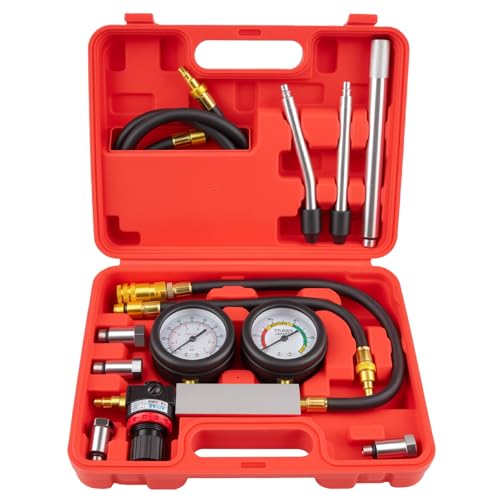
Why Are Diagnostic Tools Essential For Finding The True Source?
Diagnostic tools like compression testers, leak-down testers, and bore scopes are essential because they provide quantitative data that moves you beyond guesswork. While observing smoke timing is a great starting point, it’s not definitive proof. The only way to confirm worn piston rings or a leaking valve without disassembling the engine is by measuring pressure loss.
A bore scope, a small camera inserted through the spark plug hole, allows for a visual inspection of the cylinder walls for scoring or heavy carbon buildup. This visual confirmation, combined with pressure test results, provides an undeniable diagnosis. Relying on symptoms alone can lead to replacing valve seals when the real problem was clogged oil control rings. Using the right tools ensures you fix the right problem the first time.
What Are The Financial Consequences Of Ignoring Oil Burning, Especially Catalytic Converter Damage?
The primary financial consequence of ignoring oil burning is the failure of the catalytic converter, which becomes clogged by non-combustible oil ash. This results in reduced performance, emissions failure, and a repair bill often exceeding $1,500. While topping off oil might seem like a cheap solution, the long-term costs are significant. When oil burns, it leaves behind ash and other deposits that cannot be processed by the catalytic converter.
This oil ash coats the precious metals inside the converter, rendering it useless. The exhaust becomes restricted, leading to a loss of power, poor fuel economy, and the dreaded P0420 check engine light code. Eventually, the converter will clog completely, potentially causing the engine to stall. Beyond the catalytic converter, oil burning also fouls spark plugs, leading to misfires and rough running. Ignoring the problem transforms a potential engine repair into a guaranteed engine and exhaust system repair, often doubling the final cost.
How Do You Decide If Repair Is Viable Versus Mitigation Or Replacement?
Repair viability should be assessed by comparing the consumption rate, the specific failure (rings are costlier than seals), and the vehicle’s current market value. For severe consumption, temporary mitigation methods like high-mileage oil are often the only viable options if repair costs exceed half the car’s value. Making the right financial decision requires an objective framework. The first step is getting an accurate diagnosis and a firm repair quote.
Once you know if you’re facing a moderate valve seal job or a major piston ring replacement, you can weigh that cost against the vehicle’s market value. A widely accepted rule in the industry is that if a single repair exceeds 50% of what the car is worth, it’s generally not a sound financial investment. In these cases, shifting to a mitigation strategy—using high-mileage oil to slow consumption while saving for a replacement vehicle—is often the wisest path. However, for a high-value vehicle with a less severe issue like failed valve seals, a repair is almost always worthwhile.
What Is The True Cost Of Fixing The Major Oil Burning Causes?
The cost to fix oil burning varies dramatically, from under $100 for a DIY PCV valve replacement to over $6,000 for a professional engine rebuild to replace piston rings. It’s critical to understand these potential costs before committing to a repair. The table below provides realistic estimated ranges based on current 2026 rates, but always get a specific quote for your vehicle, as costs can vary by region and model.
| Failure Component | Typical Parts Cost | Estimated Labor (Hours/Cost) | Total Estimated Range |
|---|---|---|---|
| PCV Valve/System | $20 – $150 | 0.5 – 2 Hours ($50 – $250) | $70 – $400 |
| Valve Stem Seals | $50 – $200 | 4 – 8 Hours ($400 – $1,300) | $500 – $1,500 |
| Piston Rings & Re-Ring | $500 – $1,200 | 20 – 40+ Hours ($2,000 – $5,000+) | $2,500 – $6,000+ |
| Catalytic Converter (Secondary Damage) | $500 – $2,000 | 1 – 3 Hours ($100 – $400) | $800 – $3,000+ |
Can High Mileage Oil And Additives Temporarily Stop Oil Consumption?
Yes, high-mileage oils and specific additives can temporarily reduce minor oil consumption caused by hardened rubber seals, but they cannot repair mechanical wear. High-mileage oils are formulated with special esters and seal conditioners designed to penetrate aged rubber seals, causing them to swell slightly and regain some elasticity. This can be effective for slowing down minor leaks from aging valve stem seals.
However, it’s crucial to understand their limitations. These products are not a “mechanic in a bottle.” They have absolutely no effect on worn metal components like piston rings or scored cylinder walls. If your oil consumption is due to mechanical damage, additives will provide little to no benefit. They are a valid mitigation tool for managing minor seal leaks in an older vehicle, but they are not a solution for significant internal engine wear.
FAQs About why would car burn oil
Is It Safe To Drive A Car That Is Burning Oil?
Minor oil consumption (less than 1 qt per 1,000 miles) is often manageable, but severe burning (1 qt per 500 miles or less) poses significant risks, including rapid catalytic converter failure, spark plug fouling, and potential engine damage due to oil starvation. Monitor the oil level constantly, and stop driving if the oil pressure warning light illuminates.
Why Does My Car Only Burn Oil When I Start It Up?
Blue smoke visible only upon a cold start that quickly disappears strongly indicates worn or hardened valve stem seals. When the engine sits, oil seeps past the seals and pools on the piston; this oil burns off only when the engine is initially fired, pointing directly toward a valve seal issue rather than severe piston ring wear.
What Color Is The Smoke When A Car Burns Oil?
Oil burning typically produces blue or blue-gray exhaust smoke. This is the definitive visual cue for internal oil consumption. In contrast, heavy black smoke suggests excessive fuel (running rich), while persistent white smoke indicates burning coolant (often due to a failed head gasket).
How Much Oil Burning Is Acceptable For A High Mileage Car?
While many manufacturers historically considered 1 quart per 1,000 to 1,500 miles acceptable, modern engines and most mechanics view consumption exceeding 1 quart per 1,000 miles as abnormal. For older engines, consumption up to 1 quart per 750 miles may be considered manageable, but anything more severe requires immediate diagnosis.
Can A Simple PCV Valve Replacement Fix Severe Oil Consumption?
Yes, in certain cases, a clogged or failed PCV valve is the sole cause of severe oil consumption, as it causes extreme crankcase pressure that forces oil past the seals. Replacing a failed PCV valve is always the cheapest first step in the diagnostic sequence, especially if the consumption is rapid and occurs without heavy blue smoke.
What Happens If I Ignore The Problem For Too Long?
Ignoring severe oil burning will lead to costly secondary failures, most critically the catalytic converter, which is ruined by oil ash deposits. Continual operation with low oil levels also risks oil starvation to critical components like turbochargers and bearings, potentially leading to catastrophic engine failure.
Key Takeaways: Car Burning Oil Diagnostics and Repair Viability
- Blue Smoke Timing is Key for Diagnosis: Blue smoke primarily on startup or deceleration usually indicates the cheaper fix (valve stem seals), while smoke under load or acceleration suggests the costlier repair (piston rings or cylinder wall wear).
- The PCV System Must Be Checked First: A clogged or failed Positive Crankcase Ventilation (PCV) valve is a common, inexpensive fix that can resolve severe consumption by forcing oil past seals due to excessive crankcase pressure.
- The Leak-Down Test is the Definitive Diagnostic Tool: Professional mechanics use the leak-down test to accurately distinguish piston ring failure from valve sealing failure by measuring air loss percentage and location.
- Ignoring The Problem Leads to High Financial Risk: The secondary damage from unaddressed oil burning, particularly contamination and failure of the catalytic converter, often results in a repair cost significantly higher than the initial component failure.
- Use High Mileage Oil as Mitigation, Not a Solution: High mileage oil can temporarily condition aging rubber valve seals to reduce minor consumption but cannot repair mechanically damaged components like scored cylinder walls or broken piston rings.
- Adhere Strictly to OEM Oil Specifications: Using an oil with incorrect or low high-temperature viscosity can significantly compromise the oil film, allowing oil to slip past seals and rings more easily, especially in modern low-tension engines.
- Assess Repair Feasibility Objectively: If the required repair cost (especially for piston rings) exceeds 50% of the vehicle’s total market value, it is often more financially prudent to mitigate the symptoms or seek a replacement vehicle.
Final Thoughts on Addressing High Engine Oil Consumption
Ultimately, high engine oil consumption is not a death sentence for your car, but it is a critical symptom that demands attention. The most damaging mistake an owner can make is to assume all blue smoke is catastrophic piston ring failure. By utilizing the diagnostic sequence and symptom timing analysis detailed in this guide, you can quickly rule out the simple, cheap fixes like the PCV valve or a viscosity mismatch. Armed with accurate compression and leak-down test results, you gain the confidence to make an informed, financially sound decision on whether your car needs a targeted valve seal replacement, a major engine overhaul, or simply strategic maintenance until it is time to move on to a new vehicle. Maintain vigilance over your oil level and the health of your catalytic converter, and you can maximize the remaining life of your engine.
Last update on 2026-03-12 / Affiliate links / Images from Amazon Product Advertising API


