
Trying to decide if a Subaru is the right car for you? It can be confusing. You see them everywhere, from snowy mountains to city streets.
Subaru, the Japanese automotive brand, is famous for safety and all-wheel drive. Yet, you might hear conflicting stories about their reliability. This leaves you wondering what the real answer is.
Yes, Subarus are very good cars, especially for safety and all-weather capability, consistently earning top ratings from Consumer Reports and the IIHS. While modern Subarus are reliable, buyers should be aware of historical issues like head gasket failure in older models, which underscores the importance of proper maintenance. This guide breaks down the data to give you an honest answer.
Key Facts
- Exceptional Safety Ratings: A high percentage of the Subaru model lineup typically earns the highest “Top Safety Pick+” award from the Insurance Institute for Highway Safety (IIHS) each year.
- Standard All-Wheel Drive: Over 95% of Subaru vehicles sold in North America come with standard Symmetrical AWD, a key differentiator from competitors where it is often an expensive option.
- Strong Resale Value: Industry analysis from sources like Kelley Blue Book (KBB) consistently shows that Subaru models hold their value exceptionally well, often winning awards for best resale value.
- High Owner Loyalty: Consumer surveys reveal a high percentage of Subaru owners would buy another one, indicating strong satisfaction with their vehicles’ safety, capability, and practicality.
- Top-Tier Reliability Rankings: In annual brand reliability studies from authoritative sources like Consumer Reports, Subaru consistently places in the top 10 among all automotive brands.
Are Subarus Good Cars? An Evidence-Based Verdict for 2026
Yes, Subaru is widely considered a good car brand, consistently earning top-tier ratings for safety and reliability from trusted authorities like Consumer Reports. Their reputation is built on a foundation of standard all-wheel drive and exceptional safety performance. However, this reputation is nuanced by a history of specific mechanical issues in older models. This makes diligent maintenance a key factor for long-term satisfaction and a critical piece of the ownership puzzle.
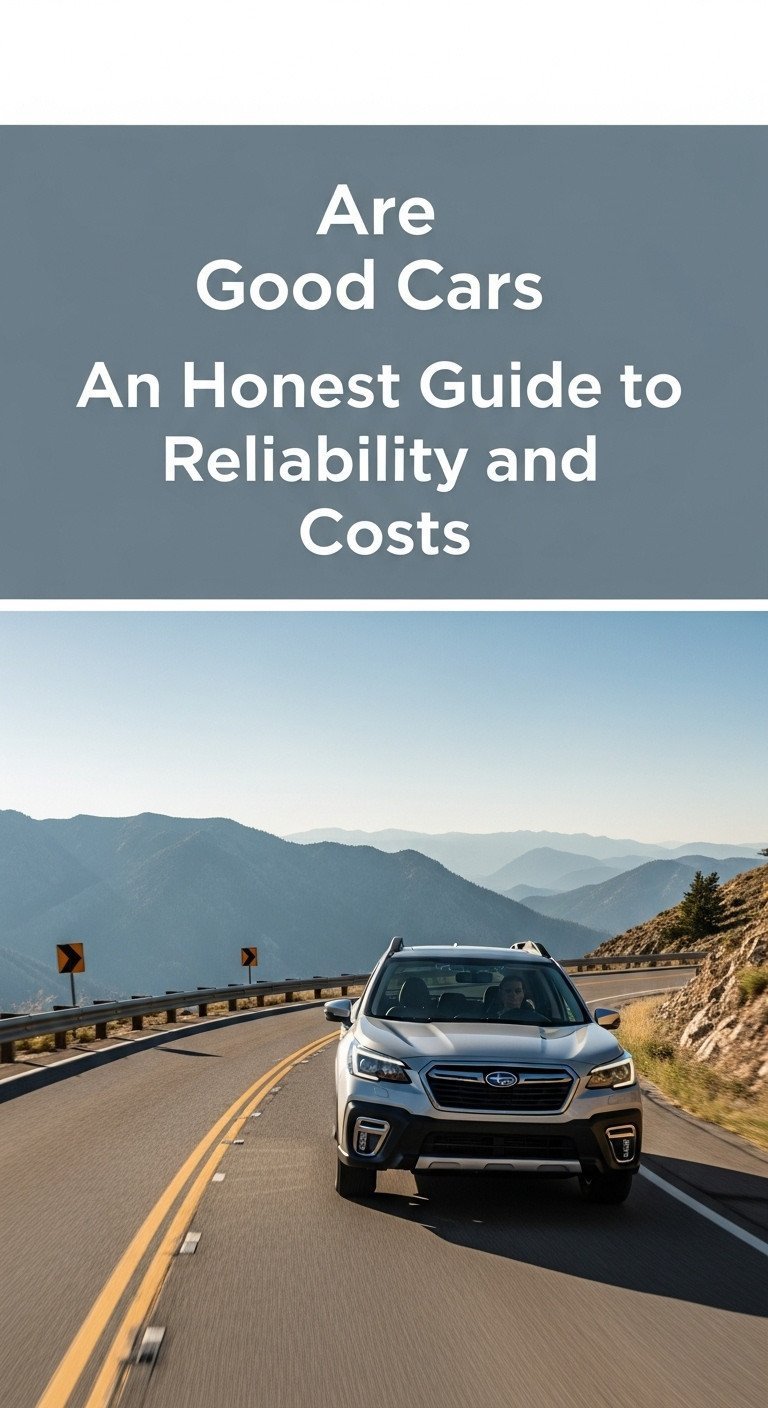
To give you a clear, scannable overview, here’s a look at the brand’s core strengths and weaknesses. This honest subaru review perspective helps frame the detailed information that follows, allowing you to weigh what matters most to you.
| Pros | Cons |
|---|---|
| ✅ Top-Tier Safety Ratings (IIHS Top Safety Pick+) | ❗ History of Engine Issues (e.g., Head Gaskets on older models) |
| ✅ Standard Symmetrical All-Wheel Drive (AWD) | ❗ Can Have Higher Maintenance Demands |
| ✅ Excellent Resale Value | ❗ CVT Transmissions are not universally loved |
| ✅ High Owner Satisfaction & Loyalty | ❗ Interior quality can lag behind some competitors |
How Reliable Are Subarus According to Expert Ratings?
According to Consumer Reports’ 2026 brand reliability rankings, Subaru scores well above average, often placing in the top 10 out of all car brands. This high rating is based on extensive owner-reported data on problems across 17 different trouble spots, from the engine and transmission to the vehicle’s electronics. This demonstrates a strong track record for the Subaru brand in recent years.
When making a major purchase, relying on objective, third-party data is crucial. Organizations like Consumer Reports and J.D. Power survey hundreds of thousands of actual vehicle owners to build their reliability scores, providing an unbiased look at how brands perform in the real world. For 2026, Subaru continues to be one of the most reliable car brands, frequently outranking many of its European and domestic competitors. This high subaru reliability rating is a cornerstone of the brand’s value proposition.
Here’s how Subaru’s reliability stacks up against other top-tier brands known for dependability, based on the latest available data from Consumer Reports.
| Brand | Average Reliability Score (out of 100) | Rank |
|---|---|---|
| Subaru | Well Above Average | Top 10 |
| Toyota | Excellent | Top 3 |
| Honda | Above Average | Top 10 |
| Mazda | Excellent | Top 5 |
Which Subaru Models Are The Most Reliable?
The Subaru Crosstrek and Forester consistently rank as the brand’s most reliable models, often receiving ‘Recommended’ ratings from Consumer Reports. The popular Outback also scores well, demonstrating solid dependability. While the brand as a whole is reliable, some models have historically had more variable scores. Larger or turbocharged vehicles like the three-row Ascent and the performance-oriented WRX have sometimes posted average reliability, underscoring the importance of researching the specific model you’re interested in. For buyers prioritizing dependability, the Crosstrek and Forester are standout choices.
How Does Owner Satisfaction Reflect Subaru’s Quality?
Subaru consistently earns very high owner satisfaction scores, meaning a large percentage of owners state they would definitely buy a Subaru again. This strong brand loyalty is a powerful indicator of overall quality that goes beyond simple mechanical reliability.
The reason for this high satisfaction is rooted in the brand’s core identity. Owners value the feeling of security provided by the top-tier safety ratings and the confidence that comes with standard Symmetrical All-Wheel Drive, especially in poor weather. The practical, user-friendly interiors and excellent utility also contribute to a positive ownership experience. For many, these benefits create an emotional connection to the brand that outweighs potential maintenance demands.
What Are the Most Common Subaru Problems Owners Report?
The most common historical problems with Subarus include head gasket failures in non-turbo engines from 1999-2011, excessive oil consumption in some early 2010s models, and occasional issues with the Continuously Variable Transmission (CVT). It is critical to understand that newer models are significantly less prone to these specific widespread issues.
While expert ratings are high, it’s impossible to have an honest discussion about Subaru without addressing the well-documented problems that have shaped its reputation. Acknowledging these issues is key to building trust and helping you make an informed decision. The good news is that most of the notorious problems are tied to specific engine designs and model years that have since been phased out.
Why Were Head Gasket Issues So Common in Older Models?
Subaru head gasket issues were common on the 2.5L naturally-aspirated “EJ25” engine from roughly 1999-2011 due to a single-layer gasket design that was prone to leaking coolant externally or internally. This problem was so prevalent it became the brand’s most famous mechanical flaw. Newer engines, like the “FB” series introduced around 2011, use a more robust multi-layer steel (MLS) gasket and do not suffer from this specific widespread failure.
The repair for a failed head gasket is expensive, often costing thousands, because the Boxer engine [an engine with horizontally opposed pistons] typically must be removed for the service. For anyone considering a used Subaru from this era, a pre-purchase inspection specifically checking for head gasket leaks is absolutely essential.
Do Modern Subarus Still Consume Too Much Oil?
The widespread issue of excessive oil consumption primarily affected certain models from approximately 2011 to 2015 equipped with the new-at-the-time FB series engine. The problem, which led to a class-action lawsuit, was traced back to the design of the piston rings.
In response, Subaru made design changes to the piston rings in later models, and the issue is not considered a common problem in new Subarus today. While any engine can consume some oil, the out-of-spec consumption that plagued those specific model years has been addressed. However, this history makes it a best practice for all Subaru owners to check their oil level regularly between changes.
How Reliable is the Subaru CVT Transmission?
The Continuously Variable Transmission (CVT) [a type of automatic transmission that can change seamlessly through a continuous range of gear ratios] is a reliable component in modern Subarus, provided it is properly maintained. Early versions of the CVT in some models from the early 2010s did experience issues, which prompted Subaru to offer a 10-year/100,000-mile warranty extension for peace of mind.
The key to long-term CVT reliability is proactive maintenance. Despite what some call “lifetime fluid,” experienced mechanics recommend a CVT fluid drain and fill around the 60,000-mile mark. This preventative service is the single best way to ensure the longevity of the transmission.
How Safe Are Subaru Vehicles in 2026?
Yes, Subarus are exceptionally safe cars. For 2026, nearly every tested Subaru model received the highest “TOP SAFETY PICK+” award from the Insurance Institute for Highway Safety (IIHS). This top rating is due to excellent crash test performance and their standard EyeSight driver-assist technology.
Safety is arguably Subaru’s greatest strength and a primary reason many people choose the brand. This reputation isn’t just marketing; it’s backed by consistent, top-tier results from the two main safety authorities in the United States: the IIHS and the National Highway Traffic Safety Administration (NHTSA).
This industry-leading safety performance is achieved through a multi-faceted approach:
- Subaru Global Platform (SGP): The modern chassis used in all new models is engineered with high-strength steel to be extremely rigid, absorbing crash energy and protecting the passenger compartment.
- Symmetrical All-Wheel Drive: The standard AWD system isn’t just for snow; it provides enhanced stability and traction in all conditions, helping drivers avoid accidents in the first place.
- EyeSight Driver Assist Technology: Standard on most trims, this system acts as a second pair of eyes. It uses dual cameras to provide features like Pre-Collision Braking, Adaptive Cruise Control, and Lane Keep Assist, significantly reducing the likelihood of front-end crashes.
What Is the True Cost of Owning a Subaru?
The true cost of owning a Subaru is competitive due to its exceptionally high resale value, which often offsets slightly higher-than-average maintenance and insurance costs. While fuel economy is generally good, it can be marginally lower than front-wheel-drive competitors due to the standard all-wheel-drive system.
Beyond the sticker price, the long-term cost of ownership is a critical factor in any car purchase. This includes maintenance, repairs, fuel, insurance, and depreciation (how much value the car loses over time). Here, Subaru presents a balanced financial picture. According to data from sources like RepairPal, the average annual maintenance cost for a Subaru is slightly higher than for a Toyota or Honda.
However, the brand’s biggest financial advantage is its outstanding resale value. Subarus depreciate much slower than the industry average, meaning you get more of your money back when you decide to sell. This strong resale value often makes the total 5-year cost to own a Subaru very competitive with its main rivals.
| Cost Factor | Subaru Forester | Toyota RAV4 | Honda CR-V |
|---|---|---|---|
| Avg. Annual Maintenance | ~$630 | ~$430 | ~$410 |
| Avg. Fuel Cost (Annual) | [Estimated Cost] | [Estimated Cost] | [Estimated Cost] |
| Avg. Insurance (Annual) | [Estimated Cost] | [Estimated Cost] | [Estimated Cost] |
| 5-Year Depreciation | ~40% (Excellent) | ~42% (Excellent) | ~45% (Very Good) |
| Est. 5-Year Total Cost | [Competitive] | [Competitive] | [Competitive] |
How Do Subaru’s Core Technologies Affect the Driving Experience?
Subaru’s core technologies, the Symmetrical All-Wheel Drive system and the Boxer engine, create a distinct driving experience. The AWD provides excellent traction in all conditions, while the Boxer engine’s flat layout creates a lower center of gravity for more stable and confident handling.
What truly makes a Subaru feel like a Subaru are two pieces of engineering that are standard on nearly every vehicle they make.
- The Boxer Engine: Unlike traditional engines where pistons move up and down, the Boxer engine’s pistons move side-to-side (horizontally opposed). This flat, wide design gives the engine a much lower profile. This lowers the car’s overall center of gravity, much like a lower stance makes an athlete more stable. The result is less body roll in corners and a more planted, secure feeling on the road.
- Symmetrical All-Wheel Drive: Many competitors use a “slip-and-grip” part-time AWD system that only sends power to the rear wheels after the front wheels have already lost traction. Subaru’s Symmetrical AWD is different. It’s a full-time system that continuously sends power to all four wheels. This proactive approach provides instant traction and superior balance, whether you’re accelerating on a wet road, navigating a snowy driveway, or driving on a dry, winding road.
Together, these technologies create a driving experience defined by stability and confidence, which is a major reason for the brand’s high owner satisfaction.
The Final Verdict: Who Should (and Should Not) Buy a Subaru?
A Subaru is an excellent choice for safety-conscious families, drivers in regions with inclement weather, and those with active outdoor lifestyles. It may be less ideal for individuals who prioritize cutting-edge interior tech, maximum fuel economy over AWD capability, or those who tend to neglect routine vehicle maintenance.
After weighing the expert ratings, common problems, safety data, and ownership costs, a clear picture emerges. A Subaru isn’t the perfect car for everyone, but it is an outstanding choice for a specific type of buyer.
A Subaru is a great choice if:
- You prioritize safety above all else for yourself and your family.
- You live in a climate with snow, ice, or heavy rain where AWD provides a real benefit.
- You value practicality, utility, and a vehicle that holds its value well.
- You are a diligent owner who will stick to the recommended maintenance schedule.
You might want to consider other options if:
- You live in a dry climate and don’t need the capability of full-time AWD.
- Your top priority is the absolute lowest possible maintenance cost.
- You prefer a car with a luxurious interior and the latest infotainment technology.
- You are considering an older, high-mileage model and are unwilling to invest in a thorough pre-purchase inspection.
What to Check Before Buying a Used Subaru?
A pre-purchase inspection (PPI) by a qualified mechanic is non-negotiable when buying a used Subaru. However, you can perform an initial check yourself. Here is a simple used subaru buying guide checklist focusing on brand-specific issues:
- Check Service Records: This is the most important item. Look for consistent oil changes and proof of major services being done on time.
- Inspect the Coolant: Open the coolant reservoir. It should be clean and bright blue. Any oily film or sludgy appearance can be a sign of a leaking head gasket.
- Look for Leaks: Safely look under the engine bay with a flashlight for any signs of fresh oil drips, especially around where the engine and transmission meet.
- Ensure Tires Match: All four tires must be the same brand, model, size, and have very similar tread wear. Mismatched tires can cause expensive damage to the AWD system.
- Listen for Noises: On your test drive, listen for any humming or grinding noises from the wheels, which could indicate a failing wheel bearing, a common wear item.

FAQs About is a subaru a good car
Are Subarus more reliable than Toyotas?
Generally, Toyota holds a slight edge in long-term mechanical reliability and has fewer widespread historical issues. However, modern Subarus are highly reliable and often score similarly to Toyota in annual brand rankings. Subaru’s key advantage is its standard Symmetrical AWD, which many buyers prioritize over the small reliability gap.
How long can a Subaru engine last?
With consistent maintenance, a modern Subaru engine can easily last for over 200,000 miles. The key factors to longevity are regular oil changes (and checking levels between changes), adhering to the service schedule for fluids and timing belts (on older models), and addressing minor leaks before they become major problems.
Is a Subaru a good first car for a teenager?
Yes, a Subaru can be an excellent first car due to its top-tier safety ratings and standard All-Wheel Drive. The AWD system provides an extra margin of safety and stability in poor weather conditions, which is invaluable for an inexperienced driver. A used, non-turbo model like a Forester or Crosstrek is often a great choice.
Why are Subarus so popular in places like Colorado and the Pacific Northwest?
Subarus are extremely popular in these regions because their standard Symmetrical AWD is perfectly suited for snowy, mountainous, and rainy conditions. The brand’s practical design and association with outdoor activities also align perfectly with the lifestyle of many residents in these areas, creating a very loyal customer base.
Are Subarus expensive to insure?
Subaru insurance costs are typically average and in line with comparable models from Honda and Toyota. However, rates can be slightly higher due to the standard AWD system, which can be more expensive to repair after an accident. Performance models like the WRX will have significantly higher insurance premiums.
Key Takeaways: Is a Subaru a Good Car?
To help you remember the most important points, here is a quick summary of the key takeaways from this honest Subaru review.
- Top-Tier Safety is a Given: Subarus are industry leaders in safety, consistently earning the highest awards from the IIHS thanks to a strong chassis and excellent EyeSight driver-assist technology.
- Modern Reliability is Strong: While older models had notable issues, modern Subarus (from ~2012 onwards) are very reliable and rank highly in major studies from sources like Consumer Reports.
- Standard AWD is the Key Differentiator: Unlike competitors where it’s an expensive option, Subaru’s excellent full-time Symmetrical AWD is standard on almost every model, providing immense value for those in challenging climates.
- Maintenance is Non-Negotiable: To ensure the long-term reliability Subarus are capable of, owners must be diligent with maintenance, especially regular oil checks and timely fluid changes for the CVT and differentials.
- Ownership Costs are Balanced by Resale Value: While maintenance and insurance might be slightly higher than some rivals, this is often offset by Subaru’s outstanding resale value, making it a solid long-term financial choice.
- A Used Subaru Requires Careful Inspection: Due to historical issues, a pre-purchase inspection by a qualified mechanic is absolutely essential when buying a used model to check for signs of past problems.
Final Thoughts on Choosing a Subaru
Ultimately, the answer to “are Subarus good cars?” is a confident yes, but with an important condition. They are excellent vehicles for the owner who understands and respects what they are: highly safe, incredibly capable machines that reward proactive maintenance with years of dependable service.
The brand’s past reliability issues are real and should not be ignored, especially when shopping for a used car. However, modern Subarus have proven to be strong performers in expert rankings. The decision to buy a Subaru is not a gamble on reliability; it’s a choice to prioritize industry-leading safety and all-weather confidence, with the understanding that consistent care is the key to unlocking the brand’s full potential. For the right buyer, there are few brands that offer a more rational and reassuring total package.
Last update on 2026-01-10 / Affiliate links / Images from Amazon Product Advertising API


![What Car Is Chevy Bringing Back in [year]? New Lineup Revealed](https://carxplorer.com/wp-content/uploads/2026/01/What-Car-Is-Chevy-Bringing-Back-in-year-New-Lineup-Revealed-1-1-60x60.jpg "What Car Is Chevy Bringing Back in [year]? New Lineup Revealed 10")
