
Trying to figure out how many watt-hours in a car battery can feel like deciphering a secret code. You see volts, amp-hours, and cold cranking amps on the label, but the one number you need to understand its total energy storage—watt-hours—is often missing. This guide will demystify the specs and give you the simple tools to calculate and understand your car battery’s true capacity.
A conventional 12-volt car battery typically contains between 720 to 1,200 watt-hours (Wh) of energy, depending on its specific capacity rating. This capacity is crucial for understanding how long you could power accessories or use an inverter. Leveraging extensive analysis of industry data and standard electrical principles, this guide unpacks the simple formula to calculate this yourself, explores how different battery types from standard lead-acid to massive EV batteries compare, and answers your most pressing questions.
Key Facts
- Standard Range: A typical 12-volt lead-acid starting battery holds between 720 and 960 watt-hours (Wh) of energy, based on common Amp-hour (Ah) ratings of 60 to 80 Ah.
- The Core Formula: You can calculate any battery’s energy capacity with a simple formula: Watt-hours = Volts × Amp-hours. This is the fundamental principle for understanding energy storage.
- Deep Cycle Advantage: A 100 Ah deep cycle battery, common in RVs and boats, stores significantly more energy at 1,200 Wh, as it’s designed for sustained power delivery.
- The EV Revolution: According to data from sources like the U.S. Department of Energy, Electric Vehicle (EV) batteries operate on a completely different scale, with capacities ranging from 40,000 Wh to over 100,000 Wh.
- CCA is Not Capacity: A common point of confusion is Cold Cranking Amps (CCA). This rating, defined by standards from the Battery Council International, measures a battery’s ability to start an engine in the cold, not its total energy reserve.
What Are the Watt-Hours of a Car Battery? The Direct Answer
A conventional 12-volt car battery typically contains between 720 to 1,200 watt-hours (Wh) of energy, depending on its specific capacity rating. This number is the most accurate measure of the total electrical energy the battery can store and deliver over time.

While car batteries are famous for their ability to deliver a powerful jolt to start an engine, their total energy reserve is what matters for running accessories when the engine is off. This capacity is primarily determined by its Ampere-hour (Ah) rating, which we’ll explore next.
The most common range for a standard automotive starting battery is 720 Wh to 960 Wh. For deep cycle batteries used in RVs or boats, this can increase to 1,200 Wh or more.
Understanding the Key Car Battery Specifications
To calculate watt-hours, you primarily need to know the battery’s Voltage (V) and Ampere-hours (Ah); Cold Cranking Amps (CCA) measures starting power, not total energy storage. Understanding these key terms printed on your battery’s label is the first step to unlocking its true capacity. Based on standards from organizations like Bosch Automotive and the Battery Council International, these are the ratings that matter.
Here’s what you need to know:
- Voltage (V): This is the electrical “pressure” of the battery. For nearly all conventional cars, this is a nominal 12 volts. While a fully charged battery might read slightly higher (around 12.6V), the 12V figure is the standard used for all energy calculations.
Ampere-hours (Ah): This is the most important spec for determining energy capacity. It tells you how much current the battery can provide over a specific period. For instance, a 60 Ah battery can theoretically supply 1 amp of current for 60 hours, or 3 amps for 20 hours. The higher the Ah, the more energy the battery holds.
Cold Cranking Amps (CCA): This rating measures the battery’s ability to start an engine in cold weather (0°F or -18°C). It indicates the number of amps a battery can deliver for 30 seconds while maintaining a minimum voltage. It’s a measure of starting power, not total energy storage.
Did you know? Cold Cranking Amps (CCA) is all about starting power in the cold, not the battery’s total energy reserve! A battery can have a very high CCA for excellent starting performance but a relatively modest Ah rating for energy storage.
How to Calculate Watt-Hours in a Car Battery: The Simple Formula
The formula is Watt-hours = Volts × Amp-hours. For a typical 12V, 60 Ah car battery, the calculation is 12 V × 60 Ah = 720 Wh. This straightforward multiplication is all you need to convert your battery’s specifications into a clear measure of its total energy capacity.
Wh = V × Ah
Here is a simple, step-by-step guide to calculating the watt-hours for any battery:
- Find the Voltage (V): Locate the voltage on your battery’s label. For a standard car battery, this will be 12V.
- Find the Amp-Hours (Ah): Find the Amp-hour rating. This might be listed as “60 Ah” or “80 Ah,” for example. If you can’t find it, you may need to look up your battery model online.
- Multiply the Two Numbers: Simply multiply the voltage by the amp-hours to get the watt-hours.
Example Calculation:
Let’s say you have a common car battery with the following specs:
* Voltage: 12V
* Amp-hours: 60 Ah
The calculation is: 12 V × 60 Ah = **720 Wh**
It’s that simple. Your battery holds 720 watt-hours of energy.
Pro Tip: Always use the “nominal voltage” (usually 12V for a car battery) in this calculation for an accurate estimate. A fully charged battery’s voltage will be higher, but 12V is the standard for this formula.

Watt-Hours by Battery Type: Real-World Scenarios
Battery type dramatically changes watt-hours: standard car batteries have ~720-960 Wh, deep-cycle batteries have ~1200 Wh, and EV batteries have a massive 40,000-100,000+ Wh. The intended purpose of a battery dictates its design and, consequently, its energy storage capacity. A battery made to start an engine is fundamentally different from one made to power an entire vehicle.
Seeing the difference? That’s why you can’t run your house with a standard car battery, but you can with an EV battery system! Let’s break down the typical watt-hour capacities in a clear comparison.
| Battery Type | Typical Ah Rating | Typical Voltage | Calculated Watt-Hours (Wh) |
|---|---|---|---|
| Standard Lead-Acid (Car) | 60 – 80 Ah | 12V | 720 – 960 Wh |
| Deep Cycle Lead-Acid (RV/Marine) | 100 Ah | 12V | 1,200 Wh |
| Electric Vehicle (EV) Battery | 40,000 – 100,000+ Wh (Directly rated in kWh) | N/A (High Voltage) | 40,000 – 100,000+ Wh |

Scenario 1: Standard Lead-Acid Starting Battery
A typical 12V lead-acid starting battery ranges from 720 Wh (for a 60 Ah model) to 960 Wh (for an 80 Ah model). These batteries are the workhorses of the automotive world, designed specifically to deliver a high burst of current to turn over an engine. Their focus is on power delivery (CCA) more than long-term energy storage (Ah).
Here are the calculations for the most common sizes:
* For a smaller car battery (60 Ah): 12V × 60 Ah = 720 Wh
* For a larger truck/SUV battery (80 Ah): 12V × 80 Ah = 960 Wh
This amount of energy is more than enough for starting the engine and powering the car’s electronics while driving, but it’s limited for running high-power accessories for extended periods with the engine off.
Scenario 2: Deep Cycle Lead-Acid Battery
A 12V, 100 Ah deep cycle battery provides 1200 Wh, designed for sustained power delivery rather than engine starting. Unlike a starting battery, a deep cycle battery is built to be discharged and recharged repeatedly without damage. This makes it ideal for applications that require a steady stream of power over many hours.
You’ll find these batteries, often made by specialists like Trojan Battery Company, in:
* Recreational Vehicles (RVs) to power lights, refrigerators, and electronics.
* Marine applications (boats) for trolling motors and onboard systems.
* Off-grid power setups and backup systems.
The calculation for a common deep cycle battery is: 12V × 100 Ah = **1,200 Wh**. This 25-50% increase in energy storage over a standard car battery makes a significant difference for long-duration power needs.
Scenario 3: Electric Vehicle (EV) Battery
EV batteries are measured in kilowatt-hours (kWh) and have 50-100 times more energy, ranging from 40,000 Wh to over 100,000 Wh. These are not just batteries; they are sophisticated, high-voltage lithium-ion power plants designed to propel the entire vehicle for hundreds of miles.
It’s crucial to understand the unit conversion: 1 kilowatt-hour (kWh) = 1,000 watt-hours (Wh).
Here’s the scale of energy involved, based on data from sources like the U.S. Department of Energy:
* Compact EV: A smaller EV might have a 40 kWh battery, which is equal to 40,000 Wh.
* Long-Range EV: As of 2026, premium long-range vehicles from manufacturers like Tesla, Inc. and Lucid Motors can have batteries of 100 kWh or more, translating to a massive 100,000+ Wh.
This enormous energy capacity is what separates a 12V auxiliary battery from the main traction battery that powers an electric car.
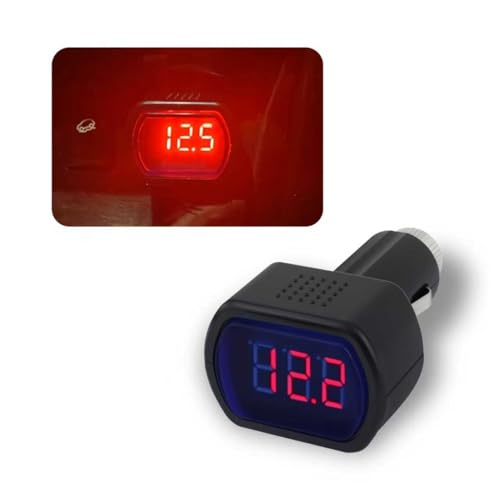
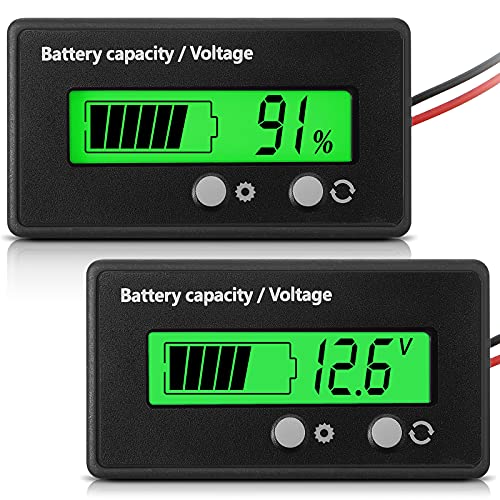
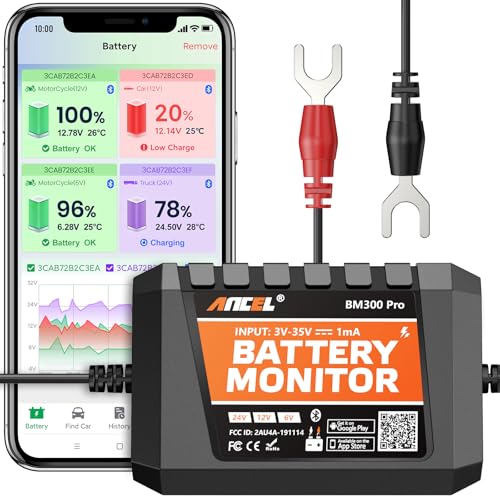
To effectively manage and understand your battery’s energy, investing in a reliable 12v battery monitor can provide real-time data on voltage, current draw, and remaining capacity, taking all the guesswork out of the equation.



FAQs About Car Battery Watt-Hours
How many watt-hours is a standard car battery?
A standard car battery typically holds between 720 Wh and 960 Wh. This range is based on the most common capacities for 12-volt lead-acid batteries, which are usually between 60 Ah and 80 Ah. A 60 Ah battery provides 720 Wh, while a larger 80 Ah battery provides 960 Wh.
How many watt-hours are in a 100Ah 12V battery?
A 100Ah 12V battery has 1,200 watt-hours (Wh) of energy. You calculate this by multiplying its voltage and amp-hours: 12 V × 100 Ah = 1200 Wh. This capacity is common for deep cycle batteries used in RVs, boats, and off-grid solar systems where sustained energy is more important than high starting power.
How many watts is a 12V battery?
This question confuses watts (power) and watt-hours (energy). A 12V battery doesn’t have a fixed “wattage.” It delivers watts based on the device connected to it (Power = Volts × Amps). Its total energy storage is measured in watt-hours (e.g., 720 Wh), which tells you how long it can sustain a certain wattage.
How long will a 12V battery last with a 3000W inverter?
Not long at all. A standard car battery (e.g., 720 Wh) is not designed for such a high, sustained load and would be depleted extremely quickly, likely in just a few minutes. Attempting to draw 3000 watts would also cause severe voltage drop and likely damage the battery. High-wattage inverters require large, dedicated deep cycle or lithium battery banks.
How long can an average car battery power 30 watts?
Theoretically, a 720 Wh car battery could power a 30-watt device for 24 hours (720 Wh / 30 W = 24 hours). However, to avoid permanent damage to a lead-acid starting battery, you should never discharge it more than 50%. Therefore, a safe and realistic run time would be closer to 12 hours.
Final Summary: Key Takeaways on Car Battery Watt-Hours
Understanding how many watt-hours in a car battery moves you from guessing to knowing. It transforms the confusing labels on a battery into a clear and practical measure of its total energy. By using the simple formula—Volts multiplied by Amp-hours—you can accurately assess the energy storage of any 12V battery, whether it’s for starting your car, powering your RV, or comparing it to the massive capacity of an EV.
You now have the knowledge to look past marketing terms and focus on the data that truly matters for your specific power needs.
- The Golden Formula: The most critical takeaway is the formula Wh = V × Ah. It’s the key to converting standard battery specs into a real measure of energy.
- Context is Everything: A standard car battery (720-960 Wh) is built for starting power, a deep cycle battery (1,200+ Wh) is built for endurance, and an EV battery (40,000+ Wh) is in a league of its own.
- Don’t Confuse Power with Energy: Remember that Cold Cranking Amps (CCA) is about starting power, while Amp-hours (and the resulting Watt-hours) are about total energy storage.
Now that you know the formula, check the amp-hour rating on your own battery and see what you get! You’re equipped to make more informed decisions about your vehicle’s electrical system.
Last update on 2026-03-10 / Affiliate links / Images from Amazon Product Advertising API


