
Navigating the process of a Pennsylvania car title transfer can feel complex, but it’s a straightforward procedure when you have a clear roadmap. Questions often arise about who needs to be present, what documents are non-negotiable, and whether a notary is truly required. This guide is designed to eliminate that confusion and provide a definitive, step-by-step path to successfully and legally transfer vehicle ownership in the Keystone State.
To transfer a car title in Pennsylvania, the buyer and seller must meet with an authorized agent, such as a notary, to sign the physical title. Both parties must present valid photo IDs, the buyer must provide proof of PA insurance, and all applicable fees and sales tax must be paid.
Leveraging a detailed analysis of PennDOT requirements and common user pain points, this comprehensive guide unpacks every step of the process. We will cover the essential pre-transfer checklist, the specific responsibilities for both buyer and seller during the signing, and clear instructions for handling special cases like family gifts or inheriting a vehicle. By following these steps, you can ensure a smooth, secure, and legally sound transfer.
Key Facts
- Notarization is Mandatory: Pennsylvania state law requires that all signatures on a private vehicle title transfer be witnessed and notarized by an authorized PennDOT agent. There is no legal way to skip this step.
- All Parties Must Be Present: Every individual listed on the current title (the sellers) and the new owner (the buyer) must be physically present at the same time to sign the documents in front of the notary.
- Pennsylvania Insurance is a Prerequisite: The buyer cannot complete the title transfer without providing valid, current proof of auto insurance from a provider licensed to operate in Pennsylvania.
- The State Fee is Just the Start: While the base PennDOT fee for a title transfer was $58.00 as of 2021, the total cost will also include state sales tax, vehicle registration fees, and the service fees charged by the notary or tag agent.
- A Lost Title Requires Form MV-380: If the original title is lost or destroyed, you must first apply for a duplicate by submitting Form MV-380, Application for Duplicate Certificate of Title By Owner, along with a fee, which was recently listed as $53.
Before You Begin: Your Pennsylvania Title Transfer Checklist
A scannable, upfront checklist ensures you arrive prepared with the original title, valid IDs, proof of insurance, and payment, preventing common delays and frustrations. Following this official PennDOT-aligned checklist is the first step toward a hassle-free experience.
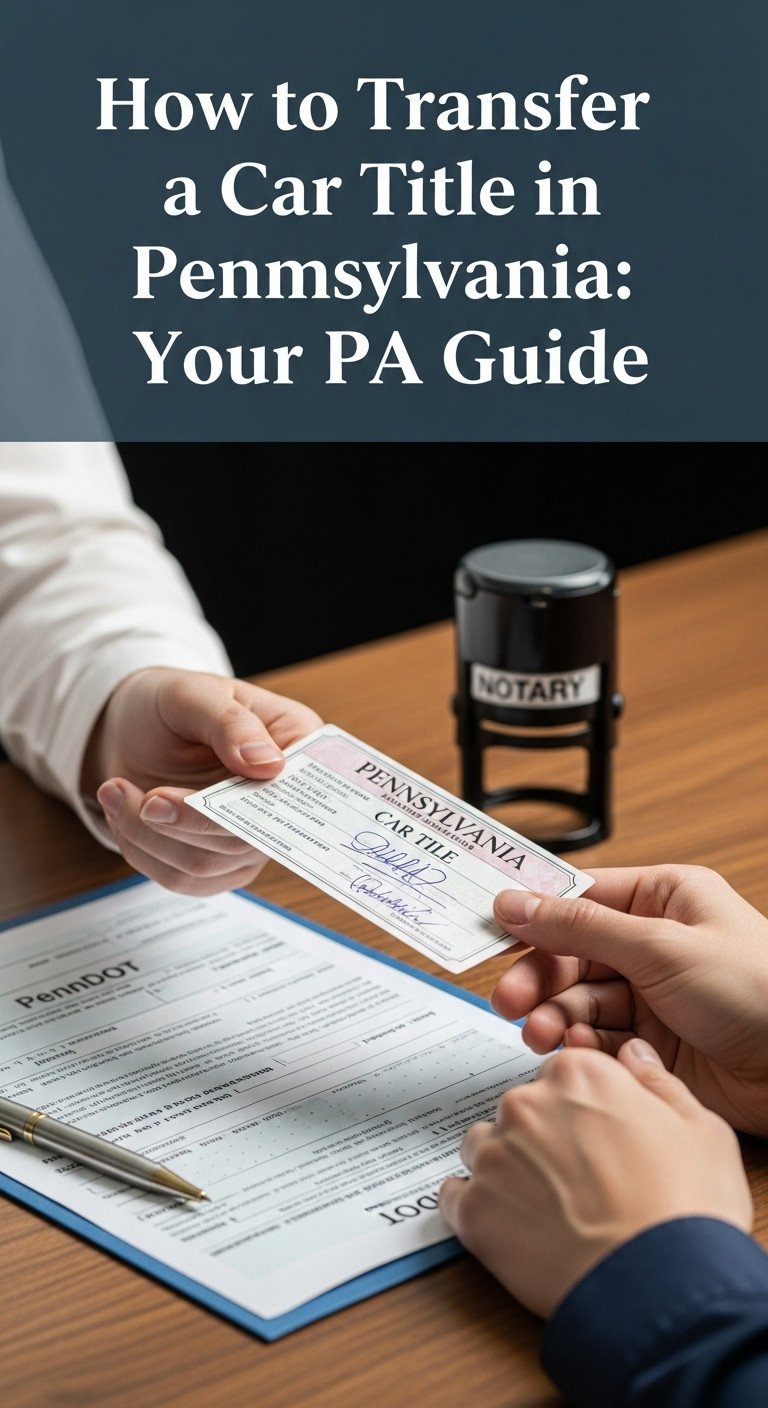
Here is everything you and the other party will need to bring to the authorized agent’s office:
- ✅ The Original Vehicle Title: This must be the physical paper title, not a copy. It cannot have any alterations, erasures, or be marked with white-out.
- ✅ Valid Photo IDs for All Parties: Both the seller(s) and the buyer must present a current, valid, government-issued photo ID. This includes a state driver’s license, photo ID card, or a U.S. Armed Forces Common Access Card.
- ✅ Buyer’s Proof of Pennsylvania Insurance: The buyer must show proof of active auto insurance in their name from a company licensed in Pennsylvania. This can be a digital or printed insurance card.
- ✅ Payment for Fees and Taxes: The buyer should be prepared to pay for the title transfer fee, sales tax on the vehicle’s value, registration fees, and any service fees charged by the notary or tag service.
Pro Tip: Double-check that the title has no alterations, erasures, or white-out. A clean title is essential to avoid delays.
Step 1: Prepare the Original Vehicle Title
Outcome: The original title is located, verified to be free of errors or active liens, and ready for signatures. If lost, a duplicate has been requested via Form MV-380.
Is your title clean and ready, or do you need to handle a lien or order a duplicate first? Let’s get this sorted out. Before you can even schedule a meeting, the vehicle’s title—the primary legal document—must be in proper order.
- Inspect the Title: Carefully examine the original Certificate of Title for any damage, markings, or errors. The names on the title must exactly match the photo IDs of the sellers.
- Verify Lien Release: If the vehicle was ever financed, there will be a lienholder listed on the title. This loan must be fully paid off. The lienholder’s release must be marked directly on the title or you must have a separate official lien release letter from the financial institution. You cannot transfer a title with an active lien.
What If the Title is Lost?
If you cannot locate the original title, you cannot proceed with the sale. The current owner must apply for a replacement. This is done by completing Form MV-380, Application for Duplicate Certificate of Title By Owner. The completed form must be mailed to PennDOT with the required fee. As of 2025, this fee is $53, but you should always check the official PennDOT website for the most current amount before sending.
Step 2: Complete the Title Transfer with a Notary
Outcome: Both buyer and seller have signed the correct sections of the title in the presence of a notary, with the accurate odometer reading recorded, making the transfer legally valid.
This is the central, non-negotiable step in the process. In Pennsylvania, you cannot simply sign a title over to someone else; the signing must be witnessed and certified by an authorized agent. This includes a notary public, a tag service, or a motor vehicle dealer. This legal requirement protects both the buyer and seller from fraud.
Quick Fact: Many authorized agents like tag services have specific cutoff times for title transfers, often well before closing. Always call ahead!
Seller’s Responsibilities: Signing Section A
Key Takeaway: The seller’s primary task is to fill out and sign Section A on the title’s back, paying close attention to the odometer disclosure.
As the seller, your role is to formally assign ownership to the buyer. This must be done accurately and in the presence of the notary. Do not sign anything beforehand.
- Complete Section A: On the back of the Pennsylvania Certificate of Title, you will fill out the information in Section A.
- Record the Odometer Reading: You must accurately state the vehicle’s current mileage. For most vehicles under 10 years old, this is a federal requirement. Do not include tenths of a mile.
- Sign and Print Your Name: Sign your name exactly as it appears on the front of the title and your photo ID. All individuals listed as owners on the title must be present and sign.
Buyer’s Responsibilities: Providing Documents and Signing Section D
Key Takeaway: The buyer must present valid ID and PA insurance, then complete and sign Section D on the title’s front before the notary.
As the buyer, you are responsible for providing the necessary documents to prove your identity and eligibility to register a vehicle in Pennsylvania.
- Provide Valid Photo ID: Present your current driver’s license or state-issued photo ID.
- Show Proof of Insurance: You must provide proof of current Pennsylvania auto insurance. This is a critical step; the transfer cannot be processed without it.
- Complete Section D: On the front of the title, you will fill out Section D with your full name and address.
- Sign Your Name: Sign and print your name in the designated area in the presence of the notary.
Step 3: Pay Fees and Submit Documents to PennDOT
Outcome: The buyer pays all required fees, including the title transfer fee, sales tax, and agent fees. The notarized title is then submitted to PennDOT to issue a new title.
Once the title is signed and notarized, the final step is payment. The buyer is responsible for all associated costs. The authorized agent will calculate the total amount due and will typically submit all the completed paperwork to the Pennsylvania Department of Transportation (PennDOT) on your behalf.
Pro Tip: While the state fee is fixed, notary and agent service fees can vary. It’s wise to ask about their total ‘out-the-door’ price beforehand.
Here is a breakdown of the potential costs involved:
| Fee Type | Estimated Cost | Notes |
|---|---|---|
| Title Transfer Fee | $58.00 | This is the base PennDOT fee as of 2021. Check for the current 2025 rate. |
| State Sales Tax | 6% of Fair Market Value | Calculated on the vehicle’s value. Can be 7% in Allegheny County or 8% in Philadelphia. |
| Registration Fees | Varies | Cost to register the vehicle and get a license plate if not transferring one. |
| Agent/Notary Fee | Varies | This is the service fee charged by the business processing the paperwork. |
After processing, PennDOT will issue a new title. If the buyer financed the vehicle, the new title will be mailed to the lienholder. If the vehicle was purchased outright, the new title will be mailed directly to the buyer’s address.
How to Handle Special Title Transfer Scenarios in PA
This section provides clear, step-by-step instructions for non-standard situations, including family gifts, transfers after a death, and dealing with out-of-state vehicles.
While the standard process covers most private sales, life often presents unique circumstances. Think of these special scenarios as different routes on a map. The destination (a transferred title) is the same, but the path and the landmarks (forms) you’ll pass are different.
Transferring a Title to a Family Member
Key Takeaway: The transfer process is identical, but Pennsylvania sales tax is calculated on the car’s fair market value, not a gifted price of $1. Contact PennDOT about potential exemptions.
When transferring a vehicle to a parent, spouse, or child, the procedure of meeting at a notary with all required documents remains the same. The key difference involves sales tax.
In Pennsylvania, sales tax is based on the vehicle’s “fair market value,” not a gifted or symbolic sale price of $1. The authorized agent will help determine this value. Certain exemptions may apply, so it is wise to contact PennDOT directly to see if your specific family transfer situation qualifies.
Transferring a Title After the Owner’s Death
Key Takeaway: The process differs based on ownership. A surviving joint owner uses Form MV-39 and a death certificate, while an estate executor requires court documents like Letters Testamentary as well.
Dealing with a vehicle title after a loved one has passed requires specific forms and legal documentation. The path forward depends on how the vehicle was originally titled.
For a Surviving Spouse (Joint Title)
If the vehicle was titled jointly by spouses with “rights of survivorship,” the process is relatively simple. The surviving spouse will need:
1. The original title.
2. An original death certificate.
3. A completed Form MV-39 (Notification of Assignment/Correction of Vehicle Title Upon Death of Owner).
4. As noted by sources like entrustedlegacy.law, the standard title fee is waived in this specific case, a detail showing PennDOT’s accommodation for surviving spouses.
For an Executor/Administrator
If the deceased was the sole owner, or if the title was held jointly without rights of survivorship, the transfer must be handled by the executor or administrator of the estate. They will need:
1. The original title.
2. An original death certificate.
3. Court documents proving their authority, such as Letters Testamentary (if there was a will) or Letters of Administration.
4. A completed Form MV-39 and potentially Form MV-4ST (Vehicle Sales and Use Tax Return).
5. Payment for the applicable fees.
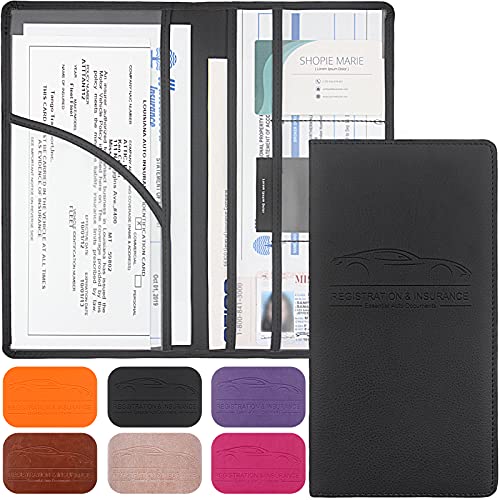
To keep all your essential documents like the title, proof of insurance, and IDs organized and protected during the transfer process, a durable vehicle document holder is a smart investment.


FAQs About Transferring a Car Title in Pennsylvania
Do both parties need to be present to transfer a title in PA?
Yes. In Pennsylvania, all individuals listed on the current title (the sellers) and the new owner (the buyer) must be physically present to sign the title in front of a notary or authorized agent. This is a strict requirement to prevent fraud and ensure all parties consent to the transfer.
Can I do a title transfer online in PA?
No, not for a private sale. You cannot complete a private party car title transfer entirely online in Pennsylvania. State law requires that both the buyer and seller physically sign the original title document in the presence of an authorized agent like a notary public, which makes a fully digital process impossible for these transactions.
How much does it cost to transfer a car title in PA?
The base fee to transfer a car title in Pennsylvania is $58. However, the total cost will be higher, as it also includes other mandatory charges. You should expect to pay for:
* The $58 Title Fee (check for the current 2025 amount)
* State Sales Tax (6% or more of the vehicle’s value)
* Vehicle Registration Fees
* The Service Fee charged by the notary or tag agent
Can I transfer a PA title without a notary?
No. You absolutely cannot transfer a car title in Pennsylvania without a notary or another authorized PennDOT agent. The signatures of both the seller and the buyer must be witnessed and notarized to be legally valid. Attempting to skip this step will result in an invalid transfer and can create significant legal problems for both parties.
Your Guide to a Smooth PA Title Transfer: Final Takeaways
Transferring a vehicle title in Pennsylvania is a process defined by legal requirements designed to protect everyone involved. While it may seem daunting, it boils down to careful preparation and one key meeting. By understanding the rules, you can ensure the ownership of your vehicle is transferred cleanly, legally, and without any future complications.
Here are the most critical takeaways to remember:
- Always Use a Notary: This is the cornerstone of a legal title transfer in Pennsylvania. It is not optional.
- Preparation is Key: Arrive with the correct, unaltered title, valid IDs for everyone, and the buyer’s proof of PA insurance. Having everything ready saves time and prevents a second trip.
- Know Your Scenario: If you are dealing with a family gift or an inherited vehicle, be aware that additional rules and forms, like Form MV-39, will apply.
With this guide in hand, you’re now equipped to handle your Pennsylvania title transfer correctly and confidently. Good luck
Last update on 2025-12-02 / Affiliate links / Images from Amazon Product Advertising API


