The question “do you charge a hybrid car?” seems simple, but it’s one of the most common points of confusion for car shoppers today. You see some hybrids at charging stations and others that never seem to need plugging in, leading to the core question: what’s the real story? This guide will definitively solve this puzzle, breaking down exactly which hybrids need charging, why they’re different, and what it means for your wallet and your daily routine.
It depends on the type: You must charge a Plug-in Hybrid Electric Vehicle (PHEV) to get the full benefits, but a traditional hybrid charges itself automatically while you drive. Understanding this single distinction is the key to navigating the world of hybrid vehicles.
Leveraging extensive analysis of available data and established patterns, this guide unpacks the critical differences between these two powerful technologies. We will explore how each car gets its power, the real cost of charging, and what happens if you can’t plug in. By the end, you’ll know exactly which type of hybrid fits your life.
Key Facts
- Two Distinct Types: The term “hybrid” covers two main technologies: traditional hybrids that self-charge and Plug-in Hybrids (PHEVs) that require an external power source for their full potential.
- PHEVs Maximize Savings: Regularly charging a PHEV is crucial for optimal efficiency. Driving on electricity for daily commutes can significantly reduce gasoline consumption and lower your fuel costs, as highlighted by multiple energy and auto industry sources.
- Home Charging is Cheapest: The most economical way to charge a PHEV is at home, especially overnight during off-peak hours when electricity rates are lower. As data from kbb.com suggests, the cost can be calculated by multiplying your local electricity rate by your car’s battery size.
- No Range Anxiety with PHEVs: Unlike a pure electric vehicle, a PHEV has a gasoline engine as a backup. If you run out of electric charge, the car seamlessly switches to gas power, completely eliminating the fear of being stranded.
- Charging Infrastructure is Shared: PHEVs use the same standard charging equipment (Level 1, Level 2, and sometimes DC Fast Charging) as fully electric vehicles (BEVs), meaning you can use the growing network of public charging stations.
The Simple Answer: Do You Charge a Hybrid Car?
It all comes down to one crucial detail: the type of hybrid you own or are considering. The answer isn’t a simple yes or no; it’s a “yes, for one kind, and no, for the other.”
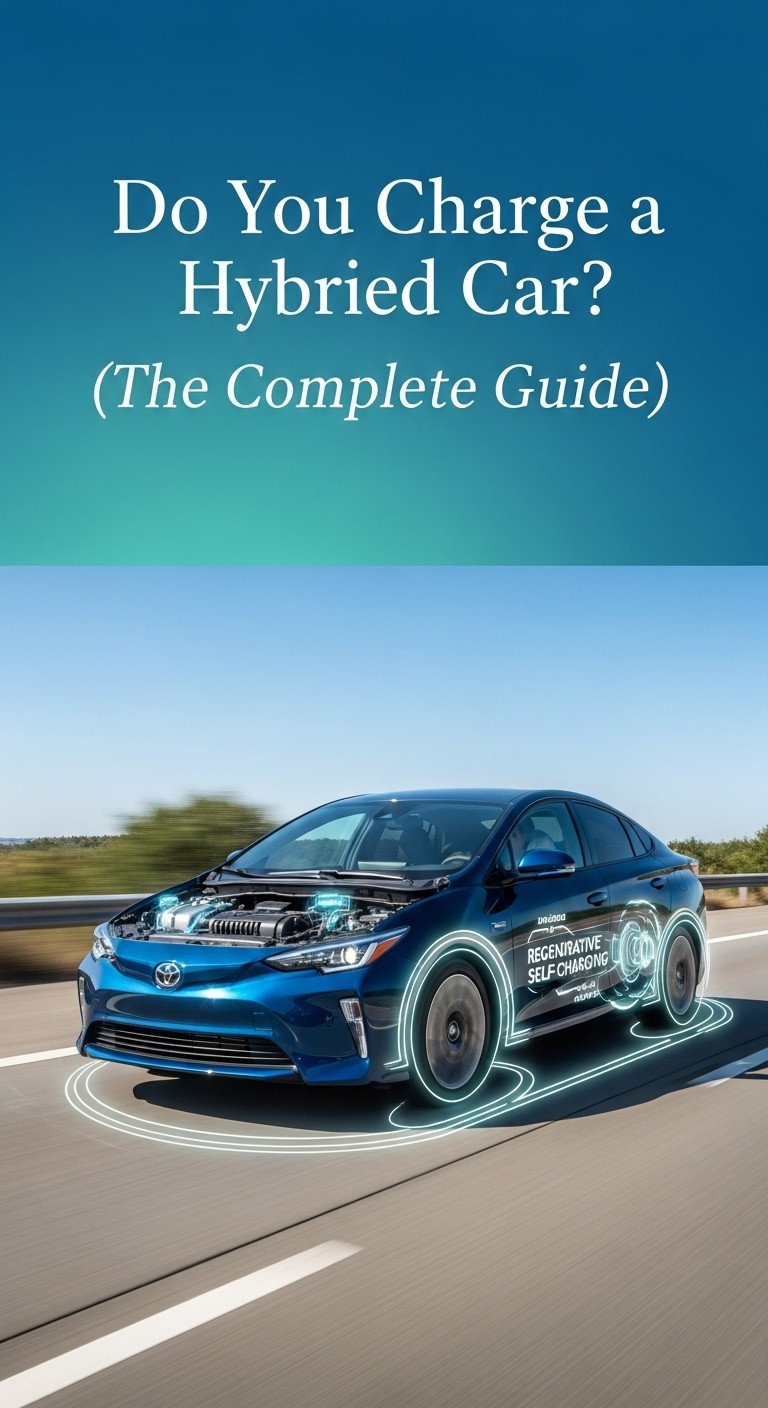
Here’s the essential breakdown you need to remember. You charge a Plug-in Hybrid (PHEV) to take advantage of its larger battery and electric-only driving range. You do not need to charge a traditional hybrid (sometimes called a self-charging hybrid), as it handles the entire charging process on its own while you drive.
- Plug-in Hybrid (PHEV): YES, you must charge this type to get the primary benefits of reduced fuel use and lower emissions. It has a plug.
- Traditional Hybrid (HEV): NO, you never have to plug this type in. It charges its own small battery automatically. It does not have a plug.
To make it even clearer, here is a quick comparison:
| Feature | Traditional Hybrid | Plug-in Hybrid (PHEV) |
|---|---|---|
| Needs Charging? | No, it’s self-charging | Yes, requires external charging |
| Has a Plug? | No | Yes |
| Electric-Only Driving? | Very limited (e.g., parking lots) | Yes, for a significant range (20-50 miles) |
| Main Benefit | Improved gas mileage | Ability to drive on pure electricity |
So, what makes these two types of hybrids so different? Let’s break it down.
Understanding the Two Types of Hybrid Cars: Self-Charging vs. Plug-In
The fundamental difference between a traditional hybrid and a Plug-in Hybrid (PHEV) lies in the size of their battery and how that battery gets its energy. This single distinction dictates everything from driving experience to your daily routine.
The key difference is the battery: traditional hybrids have small, self-charging batteries for efficiency boosts, while PHEVs have large batteries you plug in for significant electric-only driving range. This allows PHEVs to operate as an electric car for most daily trips, while traditional hybrids always operate as a gasoline car that gets a helpful electric assist.
Think of it this way. A traditional hybrid is like a device that never needs plugging in, constantly topping itself up in the background. A PHEV, on the other hand, is like your smartphone—it works best with a daily charge to give you full functionality.
Here is a side-by-side comparison of what sets them apart:
| Feature | Traditional Hybrid (HEV) | Plug-in Hybrid (PHEV) |
|---|---|---|
| Charging Method | Self-charges via engine & regenerative braking | Plugs into an external power source |
| Battery Size | Small (typically 1-2 kWh) | Large (typically 8-18 kWh+) |
| Electric-Only Range | Less than a mile, at very low speeds | 20-50+ miles |
| Best For | Drivers wanting better MPG with zero change in habits | Drivers with short commutes who can charge at home |
Let’s dive deeper into how each of these systems works.
How Traditional Hybrids Charge Themselves
You will never see a standard hybrid at a charging station, and for good reason—its charging happens entirely on the go, without you having to do anything at all. This “self-charging” magic comes from two ingenious processes working together.
Traditional hybrids self-charge via regenerative braking (capturing energy from slowing down) and by using the gasoline engine, requiring no external plugging in.

Here’s how it works:
- Regenerative Braking: This is the primary method. Think of the energy that’s wasted as heat when you use the brakes in a normal car. In a hybrid, the electric motor reverses its function during braking or coasting. Instead of using power to turn the wheels, the wheels’ momentum turns the motor, which acts like a generator to create electricity and send it back to the battery. It’s an incredibly efficient way to recapture energy that would otherwise be lost.
- Engine Power: The internal combustion engine doesn’t just power the wheels; it can also divert some of its power to charge the battery. This typically happens when the battery’s charge is low and the car is cruising at an efficient speed. The car’s computer constantly manages this process, ensuring the battery always has enough charge to assist the engine and boost efficiency.
This constant, automatic cycle of using and recapturing energy is why traditional hybrids, like the Toyota Camry Hybrid, achieve excellent fuel economy without ever needing to be plugged in.
How to Charge a Plug-In Hybrid (PHEV)
Unlike its self-charging cousin, the Plug-in Hybrid Electric Vehicle (PHEV) is designed to be charged from an external power source. This is what unlocks its superpower: the ability to drive for dozens of miles on pure, silent electricity. PHEVs use the same charging infrastructure as fully electric cars (BEVs), but because their batteries are smaller, they charge much faster.
Charge a PHEV using a slow Level 1 standard outlet, a common Level 2 charger for a full charge in a few hours, or a rare but very fast DC Fast Charger.
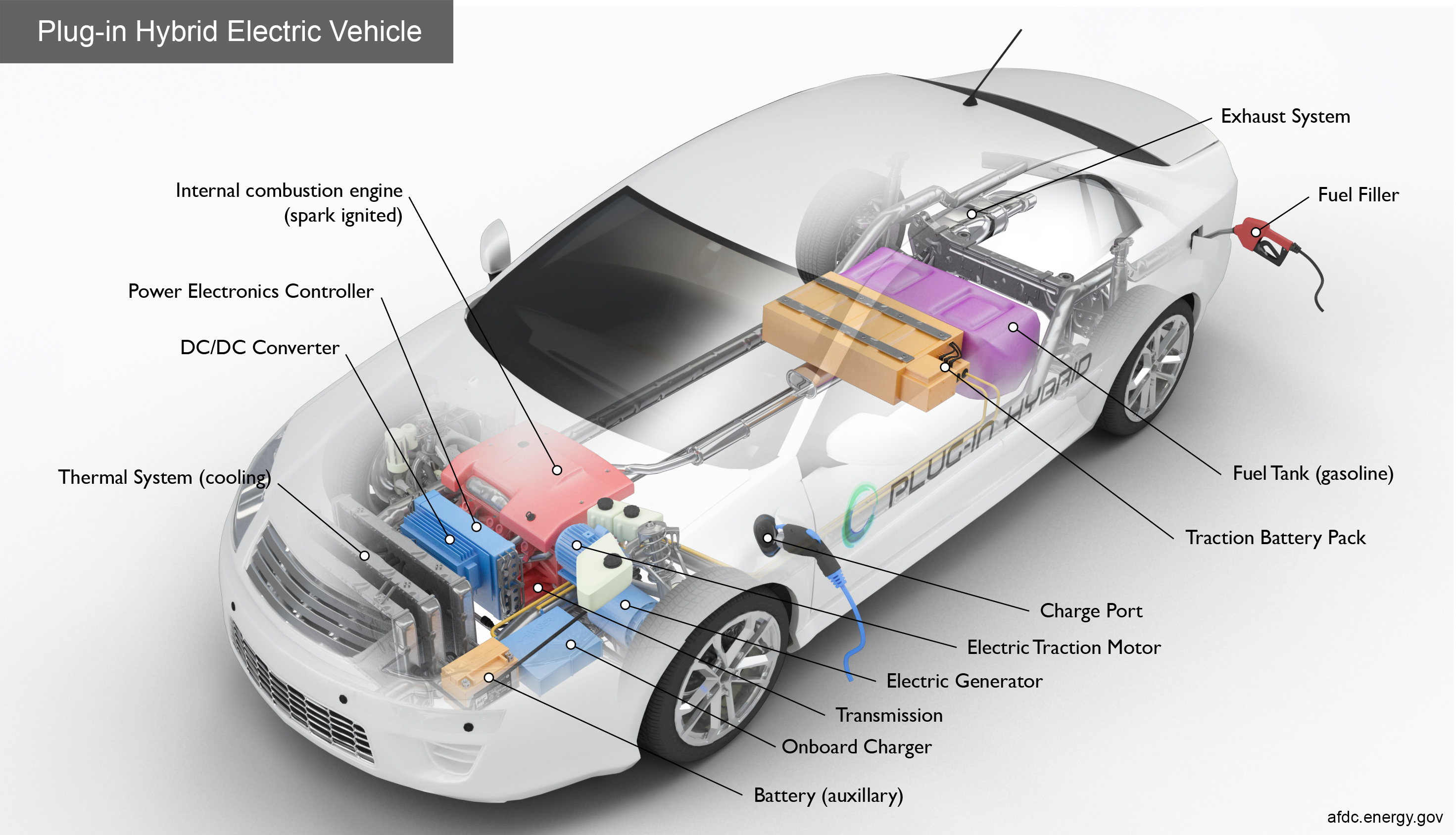
Here are the primary methods for charging your PHEV:
- Level 1 (120-volt AC): This is the simplest method, using a standard household electrical outlet. Every PHEV comes with a Level 1 charging cord.
- Speed: Slowest. It can take 8-12+ hours to fully charge a PHEV from empty.
- Best For: Overnight charging at home, especially if you have a consistent routine and don’t fully deplete the battery every day.
- Level 2 (240-volt AC): This is the most common and practical charging method for PHEV owners. It uses the same type of outlet as a clothes dryer and is found in public charging stations and home installations.
- Speed: Much faster. A full charge typically takes just 2-4 hours.
- Best For: Home charging for maximum convenience and speed, and for topping up at public locations like workplaces or shopping centers.
- DC Fast Charging (Level 3): This is the fastest charging available but is less common for PHEVs. Because PHEVs have smaller batteries, the added cost and complexity of DC Fast Charging capability aren’t always included by manufacturers.
- Speed: Very fast. Can often charge a battery to 80% in under 30-60 minutes.
- Best For: Quick top-ups on long journeys at dedicated public fast-charging stations, if your PHEV model supports it.
For most PHEV owners, installing a Level 2 charger at home is the “sweet spot” for convenience and speed, fully charging the car overnight and ensuring you start every day with a full electric range.
The Cost of Charging a Plug-In Hybrid: Home vs. Public Stations
One of the biggest advantages of a PHEV is the potential for significant fuel savings. But how much does it actually cost to charge one? The answer is almost always far less than a tank of gas, especially when you charge at home.
Charging at home is cheapest; calculate the cost by multiplying your electricity rate by your PHEV’s battery size (in kWh). Public charging is more expensive but faster. The formula, according to energy and automotive experts, is simple:
Cost to Charge = Your Electricity Rate ($/kWh) x Battery Size (kWh)
For a real-world example based on available data, if your home electricity costs $0.15 per kilowatt-hour (kWh) and your PHEV has a common 8.9 kWh battery:
$0.15/kWh * 8.9 kWh = $1.34 for a full charge
That $1.34 could give you 25-30 miles of electric driving. Compare that to the cost of gasoline for the same distance, and the savings become obvious. Check your latest utility bill to find your cost per kWh and plug it into our formula to see your potential savings!
Here’s a comparison of your charging options:
| Feature | Charging at Home | Public Charging Stations |
|---|---|---|
| Cost | Lowest, especially on off-peak rates | Higher, prices vary by network |
| Speed | Slow (Level 1) to Moderate (Level 2) | Moderate (Level 2) to Very Fast (DCFC) |
| Convenience | Highest, wake up to a full charge | Good for top-ups on the go |
While some public stations might offer free charging as a perk, relying on them exclusively will be more expensive and less convenient than a home charging setup.
What Happens if You Don’t Charge a Plug-In Hybrid?
This is a major point of anxiety for potential PHEV buyers, especially those living in apartments or without a dedicated parking spot. What happens if you can’t charge it every day, or even at all?
If you don’t charge a PHEV, it simply runs on its gasoline engine like a traditional hybrid. You won’t be stranded, but you will use more fuel and lose the cost and emission benefits. The car is designed for this flexibility. It will not leave you stranded or damage the vehicle.
Here’s what really happens when a PHEV isn’t charged:
- It operates like a normal hybrid. The car’s computer automatically switches to the gasoline engine and uses its small reserve of battery power (maintained by regenerative braking) to assist the engine, just like a traditional hybrid.
- Fuel economy is reduced. You will get good gas mileage, but it won’t be as high as it would be if you were utilizing the electric range. You’re essentially carrying the extra weight of the larger battery and motor without getting their main benefit.
- Emissions increase. Since you’re relying on the gasoline engine, your tailpipe emissions will be higher than if you were driving on electric power.
- You miss out on cost savings. The biggest loss is financial. You’re paying for the advanced plug-in technology but only using it as a standard hybrid, missing out on the significant savings of driving on cheaper electricity.
This is the key advantage of a PHEV over a pure electric car—the gasoline engine acts as a worry-free backup, eliminating range anxiety completely. While it’s always best to charge a PHEV to maximize its potential, it is not a requirement for the car to function perfectly.
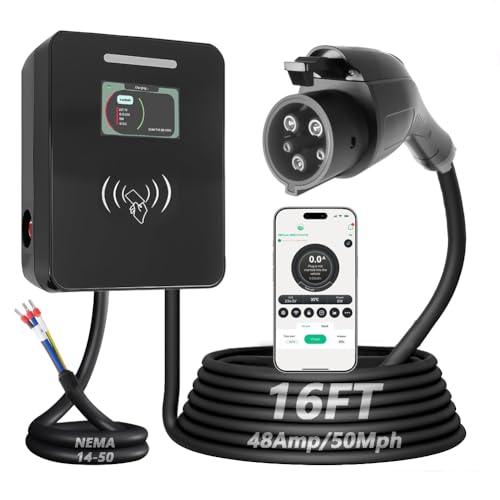
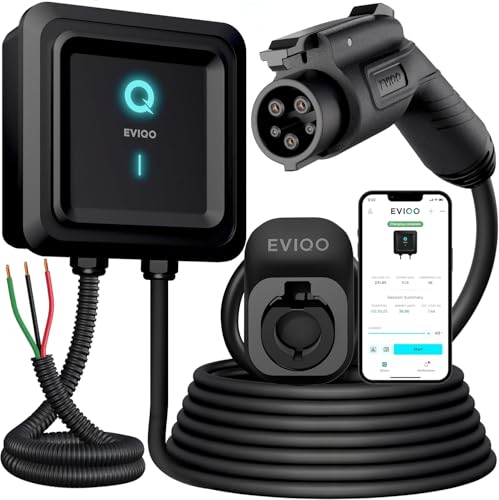
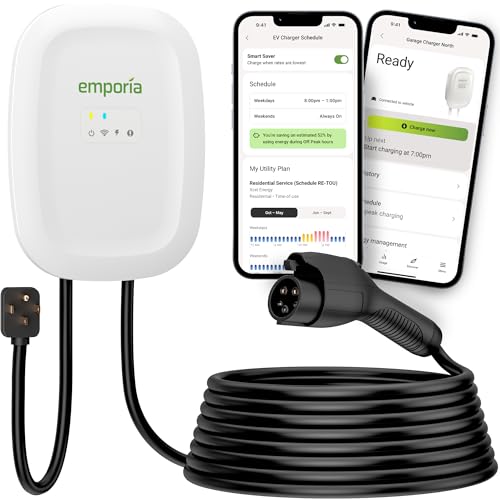
To make home charging for your PHEV as seamless and efficient as possible, investing in a quality Level 2 charger is a game-changer. It dramatically cuts down charging time compared to a standard wall outlet, ensuring you can take full advantage of your car’s electric range every single day.



FAQs About Charging a Hybrid Car
Even after understanding the basics, many drivers have specific questions about the practicalities of charging a hybrid. Here are direct answers to the most common queries.
How often do I need to charge my plug-in hybrid car?
To maximize fuel savings, charge your PHEV daily, especially if your commute is within its electric-only range. This ensures you use the cheaper electric power as much as possible. However, the ideal frequency depends on your driving habits.
- For daily commuters: Charging every night is best. This allows you to start each day with a full electric range, minimizing your gasoline usage for your regular trips.
- For occasional drivers: You only need to charge it before you plan to take a trip where you want to use the electric range. The battery is designed to hold a charge for long periods.
Can you charge a hybrid car in the rain?
Yes, it is safe. Charging equipment for PHEVs and EVs is specifically designed to be weatherproof and prevent any risk of electric shock, even in heavy rain. Both the charging cable and the car’s charging port are engineered with extensive insulation and safety mechanisms that immediately cut off the power if a fault is detected. You can confidently plug in your car, rain or shine.
Do you have to charge a Toyota RAV4 Hybrid or Camry Hybrid?
No, standard RAV4 and Camry Hybrids are self-charging. Only the “Prime” models, like the RAV4 Prime, are plug-in hybrids (PHEVs) that require charging. This is a common point of confusion for buyers.
- Toyota RAV4 Hybrid & Camry Hybrid: These are traditional, self-charging hybrids. You never need to plug them in.
- Toyota RAV4 Prime: This is a Plug-in Hybrid (PHEV). It must be charged to utilize its impressive electric-only range.
What happens if a hybrid car runs out of gas?
The outcome depends entirely on which type of hybrid you are driving. A traditional hybrid will stop if it runs out of gas. A PHEV can continue driving on its electric power if the battery is charged, but only for its limited electric range.
For a Traditional Hybrid (HEV)
If a traditional hybrid runs out of gasoline, it will shut down. Although it has a battery, it’s very small and is not designed to power the car on its own for any significant distance. You will need to refuel the car with gasoline to get it running again.
For a Plug-in Hybrid (PHEV)
If a PHEV runs out of gas but still has charge in its high-voltage battery, it can continue to operate in its all-electric mode. You can drive until the electric range is depleted, which should hopefully be enough to get you to a gas station.
Final Summary: Key Takeaways on Charging Your Hybrid
Navigating the world of hybrid vehicles becomes simple once you grasp the core difference between the two main types. The decision to charge your car is not about a single “hybrid” category, but about whether you have a self-sufficient traditional hybrid or a versatile plug-in hybrid.
In summary, only Plug-in Hybrids (PHEVs) require external charging to maximize their benefits of lower fuel costs and emissions. Traditional hybrids charge themselves and offer unbeatable convenience, while PHEVs offer the powerful advantage of electric-only driving for your daily routine.
Here are the most critical takeaways:
- Only PHEVs Plug In: If the car has a visible plug port, it’s a PHEV and needs charging to be effective. If not, it’s a traditional hybrid that takes care of itself.
- Charging at Home is Cheapest: The most significant cost savings come from charging your PHEV at home, preferably overnight on cheaper off-peak electricity rates.
- Not Charging a PHEV Isn’t a Disaster: Forgetting to charge or being unable to charge your PHEV won’t leave you stranded. It will simply act as a very efficient traditional hybrid until you can plug it in again.
Armed with this knowledge, you can now confidently decide which type of hybrid best fits your lifestyle and driving needs
Last update on 2025-12-02 / Affiliate links / Images from Amazon Product Advertising API