
Ever found yourself in a confusing discussion about your vehicle, perhaps when ordering parts or talking to a mechanic, and paused, wondering, “Wait, what is the right side of a car anyway?” This seemingly simple question can lead to surprising uncertainty, especially when considering global differences in driving conventions or the specific jargon used in automotive repair. Many car owners have faced the dilemma of incorrectly identifying a car’s side, leading to frustration, wasted time, and sometimes even costly mistakes with part purchases. The core of the issue often lies in perspective: are we talking about the right side when facing the car, or when sitting inside it?
The “right side” of a car is universally determined from the perspective of someone sitting inside the vehicle and facing forward; in countries like the USA with left-hand drive, this corresponds to the passenger’s side. This standard definition is crucial for clear communication in the automotive world, ensuring that whether you’re in North America, Europe, or Asia, “right side” means the same thing contextually for that specific vehicle.
Understanding this fundamental principle of vehicle orientation is more than just trivia; it’s essential for accurate part ordering, effective communication with automotive professionals, and even for understanding vehicle dynamics. Drawing on insights from established automotive standards and addressing common user queries, this comprehensive guide will demystify what is the right side of a car, explain why this definition is critical, explore how it applies universally across different driving systems, and provide practical tips to ensure you always get it right. Prepare to navigate the world of automotive directions with newfound confidence.
Key Facts:
- Universal Standard: The automotive industry consistently defines a car’s “left” and “right” sides based on the perspective of an individual seated inside the vehicle, facing the front windshield.
- LHD vs. RHD Impact: In Left-Hand Drive (LHD) countries, such as the United States, where vehicles are driven on the right side of the road, the driver is positioned on the left, making the car’s “right side” the passenger’s side.
- Consistency in RHD: Conversely, in Right-Hand Drive (RHD) nations like the UK or Japan, the driver is on the vehicle’s right. However, the “right side” of the car itself remains to the driver’s right when they are seated and facing forward, adhering to the same internal perspective rule.
- Critical for Parts: Accurately identifying the “left” or “right” side is absolutely vital when ordering automotive components such as headlights, side mirrors, or window regulators to guarantee correct fitment and prevent errors.
- Global Communication Clarity: This standardized “left” and “right” terminology is essential for eliminating confusion in international automotive markets and among mechanics, ensuring consistent understanding regardless of the steering wheel’s placement.
What Exactly is Considered the “Right Side” of a Car?
The “right side” of a car is determined from the perspective of someone sitting inside the vehicle and facing forward towards the windshield. In most countries that practice left-hand drive (LHD), like the United States, this perspective means the right side of the car typically corresponds to the passenger side. This distinction is fundamental in automotive terminology.
Understanding what is the right side of a car hinges on this internal viewpoint. Imagine you are in the driver’s seat or any passenger seat, looking out through the front window. The parts of the car to your right constitute the “right side,” and those to your left constitute the “left side.” This standard prevents ambiguity, which is particularly important in an industry as globalized as automobile manufacturing and repair. If definitions varied, chaos would ensue in parts ordering, repair instructions, and safety regulations.
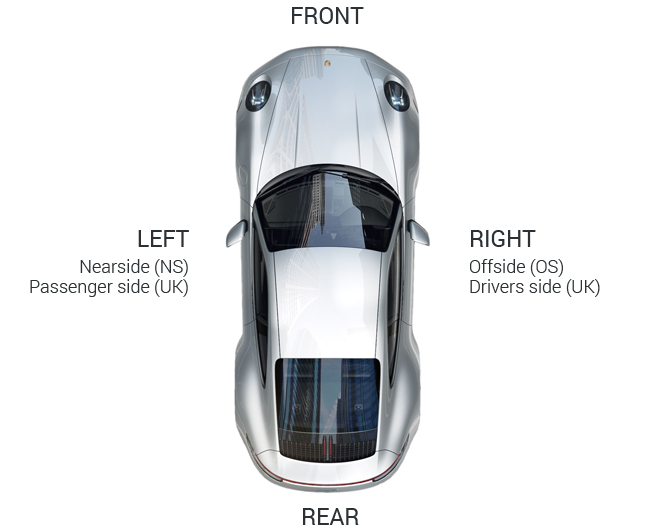
The Fundamental Rule: Your Perspective from Inside the Vehicle
When you sit in any seat of a car facing the front windshield, your right hand naturally points to the vehicle’s “right side,” and your left hand points to its “left side.” This is the unwavering rule used by manufacturers, mechanics, and parts suppliers worldwide.
It doesn’t matter if you’re looking at the car from the outside, standing in front of it, or behind it. The terms “left” and “right” in an automotive context are always relative to this internal, forward-facing orientation. For example, a “right front headlamp” is the headlamp on the side of the car that is to your right if you were sitting in the driver’s seat (in an LHD country, this is the passenger side headlamp). This simple yet crucial rule helps maintain consistency when discussing what is the right side of a car.
Tip: A common mistake is to determine the sides by facing the front of the car. If you do this, your right will be the car’s left, and vice-versa. Always visualize yourself inside the vehicle, looking forward.
Relating “Right Side” to Passenger and Driver Sides (in Left-Hand Drive Countries)
In countries where cars drive on the right side of the road, such as the USA, Canada, and most of Europe (these are Left-Hand Drive or LHD vehicles), the driver’s seat is on the left, making the “right side” of the car the passenger’s side. This is a very common point of reference for many people when trying to determine what is the right side of a car.
So, if you’re in an LHD country:
* Right Side of Car = Passenger Side
* Left Side of Car = Driver’s Side
This direct correlation is helpful for quick identification. However, it’s vital to remember the underlying principle (sitting inside, facing forward) because the driver and passenger sides switch in Right-Hand Drive (RHD) countries, but the car’s intrinsic “right side” does not.
Why is “Right Side” and “Left Side” Universal Automotive Terminology?
“Left” and “right” are universal automotive terms because they provide a consistent, unambiguous reference point for vehicle orientation, regardless of whether a vehicle is designed for left-hand drive (LHD) or right-hand drive (RHD) markets, thereby eliminating confusion. This standardization is paramount for global manufacturing, parts supply chains, repair procedures, and safety documentation.
Imagine the complications if “driver’s side” was the primary term used globally. In the US, the driver’s side is the left. In the UK, it’s the right. If you ordered a “driver’s side mirror” from an international supplier without specifying LHD or RHD, you’d have a 50/50 chance of getting the wrong part. Using “left side” and “right side” based on the internal perspective of being seated and facing forward ensures that a “right side mirror” is always the mirror on the car’s intrinsic right side, no matter where the steering wheel is. This clarity is essential for accurately identifying what is the right side of a car in any context.
Avoiding Confusion: Left-Hand Drive (LHD) vs. Right-Hand Drive (RHD) Systems
While the driver’s seat position changes between Left-Hand Drive (LHD) and Right-Hand Drive (RHD) vehicles, the car’s inherent “left” and “right” sides (from an internal, forward-facing perspective) remain constant. This is the cornerstone of the universal terminology.
- LHD (Left-Hand Drive):
- Steering wheel is on the left.
- Vehicles drive on the right side of the road (e.g., USA, Canada, Germany).
- The car’s right side is the passenger side.
- The car’s left side is the driver’s side.
- RHD (Right-Hand Drive):
- Steering wheel is on the right.
- Vehicles drive on the left side of the road (e.g., UK, Japan, Australia).
- The car’s right side is the driver’s side.
- The car’s left side is the passenger side.
Despite the steering wheel and, consequently, the driver’s position being on different sides, if you are sitting in any RHD car facing forward, your right hand still points to the car’s designated “right side.” This consistency is why “left” and “right” are preferred over “driver” or “passenger” side in technical specifications and parts catalogs, making it clear what is the right side of a car regardless of its origin or intended market.
Consistent Terminology for Global Parts and Repairs
Using “left” and “right” as defined from inside the car facing forward ensures mechanics and parts suppliers worldwide understand precisely which side of the vehicle is being referred to, which is crucial for accurate part ordering, fitment, and repairs. This systematic approach minimizes errors and improves efficiency in the global automotive aftermarket.
Consider a scenario where a part is manufactured in Germany (LHD) for a car model also sold in Australia (RHD). If the part is labeled “right front fender,” it refers to the fender on the car’s intrinsic right side. An Australian mechanic ordering this part knows it’s for the side that would be their driver’s side, while a German mechanic knows it’s for their passenger side. Both receive the correct part because the “right side” definition is absolute, not relative to steering wheel position. This global standard significantly simplifies logistics and ensures accuracy when dealing with what is the right side of a car for maintenance.
How Does Knowing the “Right Side” Impact Ordering Car Parts and Repairs?
When ordering car parts, “right side” almost universally refers to the passenger side in Left-Hand Drive (LHD) countries like the US, or the driver’s side in Right-Hand Drive (RHD) countries, always based on the perspective of sitting in the car facing forward. Specifying “right” or “left” according to this standard ensures you receive the correct component for your vehicle, preventing fitment issues, returns, and delays.
Mistakes in identifying what is the right side of a car can be costly and time-consuming. Imagine ordering a new headlight assembly. If you mistakenly order for the “left side” when you needed the “right side,” the part simply won’t fit. It’s not just about mirrors or lights; many components are side-specific, including suspension parts, window regulators, door handles, and even some engine components or their accessories. Reputable parts suppliers like RockAuto or FCP Euro list parts using this standard “left” and “right” designation.

Identifying the Correct Side for Part Fitment (e.g., Mirrors, Lights, Doors)
For a US-market car (LHD), a “right front headlight” is for the passenger side, and a “left side exterior mirror” is for the driver’s side; always confirm “right” or “left” based on sitting inside the car and facing forward, regardless of the specific part type.
Here are some examples for an LHD vehicle (like those in the USA):
* Right Side Exterior Mirror: Passenger side mirror.
* Left Side Taillight: Driver’s side taillight.
* Right Front Window Regulator: Mechanism for the passenger side front window.
* Left Rear Door: Driver’s side rear door.
* Front Right Fender: The fender on the passenger’s side at the front of the car.
The key is unwavering adherence to the “sitting inside, facing forward” rule. Many parts will even be stamped with “R” or “L” (or “RH” / “LH” for Right Hand / Left Hand) by manufacturers to further aid identification, always following this perspective. When looking up parts for what is the right side of a car, this rule is your best guide.
Tips for Communicating with Mechanics and Suppliers
To ensure clarity when discussing what is the right side of a car with mechanics or parts suppliers, and to get the correct service or components, follow these tips:
- Always Use “Left” or “Right”: Specify the side of the car as “left” or “right.” This is the industry standard.
- Clarify Your Perspective: If you want to be absolutely sure, you can add, “that’s the right side as if I’m sitting in the car facing forward.”
- Avoid “Driver’s Side” or “Passenger’s Side” (Especially with International Suppliers): While often understood locally, these terms can cause confusion with suppliers who deal with both LHD and RHD vehicle parts. If you must use them, also state your vehicle’s drive type (e.g., “passenger side for a US left-hand drive vehicle”).
- Know Your Vehicle’s Drive Type (LHD/RHD): This is especially important if ordering from international sources or if you own an imported vehicle.
- Use Your VIN: Providing your Vehicle Identification Number (VIN) is often the most foolproof way for suppliers to identify the exact parts for your specific car, including side-specific components.
- Double-Check Part Numbers: If possible, compare part numbers from your old component or repair manual with the new one. Some manufacturers, like Honda, even have numerical systems in their part numbers that can indicate right or left. For example, the right side part might have a numerically lower final sequence in its part number than the left side equivalent.
- When in Doubt, Ask for Confirmation: Don’t hesitate to ask the supplier to confirm the side based on the “sitting inside, facing forward” rule. For example: “Just to confirm, your listing for the ‘right side mirror’ means the passenger side for a US car, correct?”
Key Takeaway: Clear, standardized communication using “left” and “right” from the internal perspective is the best way to avoid errors when dealing with car parts and repairs related to what is the right side of a car.
What About Cars in Countries Like the UK or Japan (Right-Hand Drive)?
In Right-Hand Drive (RHD) cars, commonly found in countries such as the UK, Japan, Australia, and India, the driver sits on the right side of the vehicle. However, the “right side” of the car itself is still determined by the fundamental rule: sitting inside the car and facing forward, your right hand points to the car’s designated right side.
This means for an RHD vehicle:
* The driver’s seat is on the car’s right side.
* The passenger’s seat (typically front left) is on the car’s left side.
The core principle of identifying what is the right side of a car remains unchanged. It’s crucial to differentiate between the driver’s position and the car’s intrinsic sides. While the driver switches sides in RHD versus LHD cars, the car’s own right and left orientations, based on the “sitting inside, facing forward” perspective, are constant.
Is the Driver’s Side on the Right in RHD Cars?
Yes, in Right-Hand Drive (RHD) vehicles, the driver’s seat is located on what would be considered the right side of the car’s interior cabin when viewed from inside facing forward, which is opposite to LHD vehicles. The steering wheel, pedals, and primary driver controls are all situated on the right.
So, if you are in the UK and someone refers to the “driver’s side,” they mean the right side of the car’s interior. If they refer to the “car’s right side,” they are also referring to that same side – the one the driver occupies. The terminology aligns in this instance because the driver is on the car’s intrinsic right side. This is a key point when considering what is the right side of a car in an RHD context.
How the “Sitting Inside Facing Forward” Rule Still Applies Universally
The rule of determining a car’s right or left side by sitting inside the vehicle and facing forward applies universally, irrespective of whether it’s a Left-Hand Drive (LHD) or Right-Hand Drive (RHD) vehicle. This consistent application is what makes the terminology effective globally.
Imagine a car design on a blueprint. Before deciding where to put the steering wheel for a specific market, the car has an inherent “front,” “back,” “left side,” and “right side.” The decision to make it LHD or RHD only dictates where the driver’s controls are placed within that existing framework. Your right hand will always point to the car’s designated “right side” if you are seated inside and looking towards the front, no matter which side the steering wheel is on. This is the unchanging truth about what is the right side of a car.
FAQs About What is the Right Side of a Car:
Understanding the correct orientation of your vehicle is crucial. Here are answers to frequently asked questions about what is the right side of a car.
What is considered the right side of your car?
The right side of your car is always determined from the perspective of someone sitting inside the vehicle and facing forward. Whatever is to your right from this viewpoint is the car’s right side.
How do you determine the right and left side of a car?
You determine the right and left side of a car by imagining you are sitting in any seat of the car, looking straight ahead towards the front windshield. Your right-hand side corresponds to the car’s right side, and your left-hand side corresponds to the car’s left side.
What is the right side of the car when driving in the US?
When driving in the US (a Left-Hand Drive country), the right side of the car is the passenger’s side. This is because the driver sits on the left.
When car parts say “right” or “left,” what does it mean?
When car parts say “right” or “left,” it refers to the side of the car as determined by sitting inside and facing forward. “Right” means the side to your right from this perspective, and “left” means the side to your left.
Is the passenger side always the right side of the car?
No, the passenger side is not always the right side of the car. In Left-Hand Drive (LHD) vehicles (e.g., USA), the passenger side is indeed the right side. However, in Right-Hand Drive (RHD) vehicles (e.g., UK, Japan), the passenger side is the left side of the car.
If I’m ordering from RockAuto, which side is “right”?
If you are ordering from RockAuto (or most auto parts suppliers), “right” refers to the car’s right side when you are sitting inside it facing forward. For a US car, this means the passenger side.
Is the driver’s side left or right in America?
In America (USA), which uses Left-Hand Drive (LHD) vehicles, the driver’s side is on the left side of the car.
How is the right side determined for a car in the UK?
For a car in the UK (a Right-Hand Drive country), the right side is determined by sitting inside the car and facing forward; the side to your right is the car’s right side. In the UK, this also happens to be the driver’s side.
What is the “front right” of a car referring to?
“Front right” of a car refers to the section at the front of the vehicle that is on its right side, determined from the perspective of being seated inside and facing forward. For a US car, this would be the passenger-side front corner.
Why don’t they just say “driver’s side” or “passenger’s side” for parts?
Automotive parts suppliers use “left” and “right” (based on sitting inside, facing forward) because it’s a universal standard that avoids confusion between Left-Hand Drive (LHD) and Right-Hand Drive (RHD) vehicles globally. “Driver’s side” changes depending on the country, but the car’s intrinsic “left” and “right” do not.
Summary: Understanding Your Car’s Right Side Made Simple
In summary, correctly identifying what is the right side of a car boils down to one simple, universal rule: it’s always determined from the perspective of someone sitting inside the vehicle and facing forward. In countries with Left-Hand Drive vehicles like the USA, this means the right side is the passenger side. Conversely, in Right-Hand Drive countries like the UK, the right side is the driver’s side, but the fundamental principle of internal perspective remains the constant guide.
This standardized definition is not arbitrary; it’s a cornerstone of the global automotive industry, ensuring clarity for manufacturing, parts ordering, repairs, and communication. Whether you’re a DIY enthusiast ordering a new taillight, discussing a repair with your mechanic, or simply trying to understand your vehicle better, remembering the “sitting inside, facing forward” rule will always steer you in the right direction. By grasping this concept, you can confidently navigate automotive terminology and ensure you’re always talking about the correct side of your car, no matter where you or your vehicle might be.


