Struggling to figure out how to tow an AWD car without causing a disaster? You’re right to be cautious; a simple mistake can lead to thousands in drivetrain repairs. This isn’t like towing a standard two-wheel drive vehicle.
Towing an all-wheel drive (AWD) car safely requires keeping all four wheels off the ground to prevent significant damage to its complex drivetrain. Unlike 2WD cars, the interconnected nature of an AWD system means that if some wheels rotate on the road while others are stationary, it can destroy critical components like the center differential or viscous coupling.
Based on current industry standards and proven towing techniques, this guide provides the essential knowledge you need. You will discover exactly why AWD systems are unique, the safest methods to transport your vehicle, and the critical questions to ask any tow truck operator to prevent a costly mistake.
Key Facts
- Primary Risk Identification: The greatest danger in improperly towing an AWD car is severe damage to the viscous coupling or center differential, components that manage power distribution and are sensitive to uneven rotation.
- Safest Method Confirmed: Using a flatbed tow truck is the universally recommended and safest method, as it lifts all four wheels completely off the ground, eliminating any risk to the drivetrain.
- Immediate Damage Potential: Drivetrain damage from incorrect towing can occur almost instantly, even over very short distances, due to the rapid buildup of heat and friction within the system.
- Neutral Gear Insufficiency: Simply placing an AWD vehicle in neutral is not sufficient for safe towing if any wheels remain on the ground, as power can still transfer between wheels and cause damage.
- High Cost of Errors: Industry analysis reveals that repairing a damaged AWD drivetrain resulting from improper towing can easily cost thousands of dollars, making prevention a financial necessity.
How Do You Safely Tow an AWD Car?
Towing an all-wheel drive (AWD) car safely is crucial to prevent significant and costly damage to its complex drivetrain system. The primary rule for any AWD towing guide is that all four wheels must be lifted completely off the ground. This prevents the wheels from rotating at different speeds, which is the primary cause of mechanical failure during transport. Following manufacturer recommendations and expert advice is not just a suggestion; it’s essential for protecting your investment.

Unlike 2WD vehicles, AWD cars require these specialized towing methods because all four wheels are mechanically linked to the transmission and each other. When you ignore this principle, you risk catastrophic failure of expensive components. The financial implications of getting this wrong are substantial, but the peace of mind from following this proper AWD towing guide is invaluable.
What Makes Towing an AWD Car Different from Other Vehicles?
The primary difference in towing an AWD car stems from its drivetrain’s interconnectedness, where all four wheels are linked to the transmission. In a two-wheel drive (2WD) car, power goes to either the front or rear wheels. This allows the non-drive wheels to spin freely, making it safe to tow with the drive wheels lifted. However, an all-wheel drive system is designed to potentially send power to any wheel at any time.
This connection is often managed by a center differential, transfer case, or a viscous coupling. These components are designed to handle slight differences in wheel speed, like when you’re turning a corner. But when you tow an AWD car with two wheels on the ground, you force a massive and continuous speed difference between the front and rear axles. This action generates immense mechanical stress and transmission heat, leading to rapid and severe damage.
What is the Risk of Viscous Coupling or Center Differential Damage?
If an AWD car is towed incorrectly, the viscous coupling or center differential can suffer severe damage. These are the very components that make all-wheel drive possible, and they are the first to fail under the stress of improper towing. A viscous coupling contains a special fluid that thickens with heat to transfer power, while a center differential uses gears. Both are designed for a world where all wheels are turning at similar speeds.
When you tow with two wheels down, you create a scenario where one set of wheels is spinning rapidly and the other is completely still. This differential rotation causes extreme friction and heat inside the center differential or viscous coupling. The components essentially “cook” themselves, leading to:
- Internal component failure from excessive heat.
- Breakdown of lubricating fluids.
- Grinding or seizing of gears.
- Complete failure requiring expensive replacement of the transfer case or differential.
In our experience observing documented transmission damage, these failures are not gradual; they can happen in just a few miles, turning a simple tow into a multi-thousand-dollar repair.
What Are The Safest Methods to Tow an AWD Car?
The safest methods to tow an AWD car are those that ensure all four wheels are completely off the ground to prevent drivetrain damage. This principle leaves you with two primary, industry-standard options. Both methods eliminate the risk of uneven wheel rotation, which is the core problem with towing all-wheel drive vehicles.
Here are the two proven towing techniques:
- Flatbed Tow Truck: This is the gold standard for AWD towing. The entire vehicle is driven or winched onto a flat platform on the back of the truck.
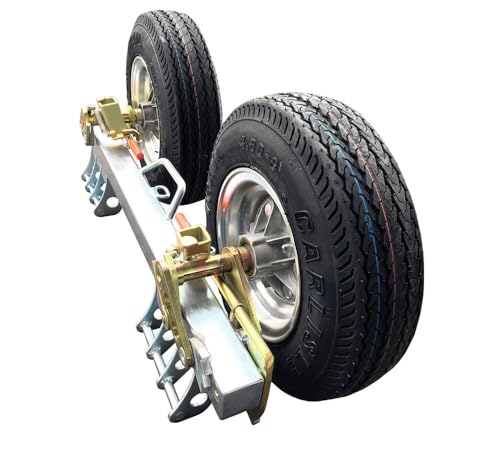
- Tow Dollies (Two Sets): This method uses a combination of wheel lifts and dollies to lift both the front and rear axles, ensuring no wheels touch the pavement.
When Is a Flatbed Tow Truck the Best Option?
A flatbed tow truck is the most secure and universally recommended method for towing an AWD car. A flatbed, also known as a car carrier or rollback truck, lifts your entire vehicle onto a flat platform. Because none of the car’s wheels touch the ground, there is zero chance of them rotating and causing stress on the drivetrain.
A flatbed is the best option in nearly every scenario, especially for:
* All AWD System Types: It works for full-time, part-time, and automatic AWD systems without any special considerations.
* Long-Distance Transport: It is the only truly safe method for towing an AWD car over long distances.
* Maximum Safety: It completely eliminates the risk of drivetrain damage, offering total peace of mind.
* Damaged Vehicles: If the car is too damaged to roll or be placed in neutral, a flatbed is the only professional recovery solution.
When you call a certified tow operator, requesting a flatbed is the clearest way to ensure your AWD vehicle is transported safely.
How Do Tow Dollies Provide a Safe Alternative?
Tow dollies offer a safe alternative for AWD car towing provided all four wheels are lifted. This is a critical distinction that many people miss. A single tow dolly, which lifts only the front or rear wheels, is not safe for an AWD car. To tow an AWD vehicle correctly with this method, you must use two separate dollies or a combination of a wheel lift and a set of rear wheel dollies.
Here’s how it works:
1. The tow truck uses its integrated wheel lift to raise either the front or rear axle.
2. A separate set of freestanding tow dollies is placed under the wheels of the opposite axle.
3. The result is that all four wheels are suspended off the pavement, preventing any rotation.
While this tested method is safe, it requires more equipment and careful setup by the tow truck operator. It’s a viable solution when a flatbed is not available, but you must confirm the operator has two sets of dollies.
Which Method is Best: Flatbed, Tow Dolly, or Tow Bar?
Comparing flatbed, tow dolly, and tow bar methods for AWD cars reveals a clear hierarchy of safety and suitability. A flatbed tow truck is undisputedly the safest option, while a tow bar is almost always unsuitable due to the high risk of drivetrain damage. Using two sets of tow dollies is a safe but more complex alternative.
Here is a direct comparison to help you make an informed decision.
| Feature/Aspect | Flatbed Tow Truck | Two Sets of Tow Dollies | Tow Bar (Not Recommended for AWD) |
|---|---|---|---|
| Safety for AWD Drivetrain | Excellent (all wheels off ground) | Excellent (all wheels off ground if used correctly) | Poor (leaves wheels on ground, high damage risk) |
| Cost (typically) | Highest | Moderate | Lowest (but high damage risk) |
| Ease of Use | Easiest (professional operator handles all) | Moderate (requires careful setup, two sets) | Appears easy, but mechanically risky |
| Distance Suitability | Unlimited | Short to Moderate (check manufacturer) | Not suitable for AWD |
| DIY Possibility | No | Yes (requires equipment & expertise) | Yes (but high damage risk) |
| Equipment Required | Professional service | Two dollies (front & rear) | Tow bar, safety chains |
The bottom line is clear: when towing an AWD vehicle, the method must keep all wheels off the ground. A tow bar fails this fundamental requirement, making it a dangerous choice that can lead to expensive mechanical failure.
How Do You Prepare Your AWD Car for Towing?
To prepare your AWD car for towing, always consult your vehicle’s owner’s manual first, as procedures vary significantly by manufacturer and model. The manual is the ultimate authority for your specific car. Following these manufacturer recommendations is the most important step you can take to prevent damage.
While the exact steps differ, the goal is always to put the vehicle in a state where the drivetrain can be safely transported. This often involves placing the transmission in neutral and ensuring other systems, like the parking brake, are correctly disengaged. Ignoring these vehicle-specific procedures can be just as damaging as using the wrong towing method.
What Steps Should You Take Before Any AWD Tow?
Before a tow truck even arrives, there are a few universal steps you should take. These basic checks ensure your vehicle is ready for transport and help the process go smoothly.
- Verify Your Drivetrain: Confirm that your vehicle is indeed AWD. Sometimes, models are available in both 2WD and AWD versions.
- Consult the Owner’s Manual: Locate the “Towing” section in your car’s manual. Read the instructions carefully before the tow truck arrives.
- Clear the Vehicle: Remove any loose items inside the car that could shift during transport.
- Check Tire Pressure: Ensure all tires are properly inflated, as this can affect how the car sits on a flatbed or dollies.
- Communicate with the Operator: Be ready to inform the tow operator that your vehicle is all-wheel drive.
How Do You Engage Neutral Tow Mode in Your Specific AWD Model?
Engaging neutral tow mode in an AWD car requires precise, manufacturer-specific steps found in your owner’s manual. This process is not universal. Some modern vehicles have a dedicated “tow mode” accessible through the infotainment system, while others require a specific mechanical or electronic sequence.
Generic steps often include:
1. Turning the ignition to the “On” or “Accessory” position without starting the engine.
2. Pressing the brake pedal firmly.
3. Shifting the transmission into Neutral (N).
4. Following any additional steps in the manual, which might involve pressing a button or using an emergency neutral override lever.
For vehicles with an electronic parking brake, there may be a separate procedure to disengage it for towing. Never assume the process. Always refer to the owner’s manual specifications, as guessing can lead to severe transmission damage.
What Damages Can Occur from Improper AWD Car Towing?
Improperly towing an AWD car can cause severe and costly damage to its intricate drivetrain system. When you tow with two wheels on the ground, you force components to operate in a way they were never designed for, leading to rapid mechanical failure. The cost of these repairs often runs into the thousands of dollars.
Here are the most common types of damage:
* Transmission and Transfer Case Overheating: The continuous, uneven rotation generates immense friction and heat, boiling the transmission fluid and destroying internal seals and clutches.
* Viscous Coupling or Center Differential Failure: These components are the heart of the AWD system. The extreme stress from partial towing can cause them to seize, crack, or fail completely.
* Accelerated Gear and Bearing Wear: The intense strain puts abnormal loads on gears, bearings, and shafts throughout the drivetrain, leading to premature wear and eventual breakdown.
* Driveline Wind-up: In some systems, the stress can cause the driveshafts to bind up, potentially leading to catastrophic failure of U-joints or other components.
Symptoms of towing damage can include grinding noises, difficulty shifting, leaking fluid, or a complete inability to drive.
Can You Tow an AWD Car Behind an RV (Dinghy Towing)?
Dinghy towing an AWD car behind an RV is only permissible for specific models explicitly approved by the manufacturer and requires strict adherence to their instructions. This practice, also known as “flat towing,” involves towing the vehicle with all four wheels on the ground. For most AWD vehicles, this is extremely dangerous for the drivetrain.
However, a small number of AWD vehicles are designed with a special “neutral tow mode” that fully disengages the drivetrain, making them safe for flat towing. To find out if your vehicle is one of them, you must:
- Consult Your Owner’s Manual: Look for a dedicated section titled “Recreational Towing” or “Dinghy Towing.”
- Follow Instructions Exactly: If your car is approved, the manual will provide a precise, multi-step procedure to prepare it for towing. This might involve a specific ignition sequence or even disconnecting a driveshaft.
- Never Assume: If the manual does not explicitly mention and approve flat towing, do not attempt it. The risk of destroying your transmission is too high.
What Should You Do in an Emergency AWD Towing Situation?
In an emergency AWD towing situation, the priority is to communicate clearly with the tow truck operator to ensure all four wheels are lifted off the ground. Stress and urgency can lead to mistakes, so being a knowledgeable and assertive vehicle owner is your best defense against damage.
When you call for a tow, immediately state, “I have an all-wheel drive vehicle that requires a flatbed or two sets of dollies.” If a flatbed is unavailable, insist on waiting for one if possible. If you must use a different service, ensure the operator understands and is equipped for the “all wheels up” requirement. Never let an operator convince you that towing an AWD on two wheels is “okay for a short distance.” It is not.
What Questions Should You Ask a Tow Truck Operator for Your AWD?
To ensure a safe tow and protect your vehicle, you need to vet the tow truck operator. Asking a few specific questions can quickly determine if they are qualified to handle your AWD car.
- “Do you have a flatbed tow truck available for my all-wheel drive vehicle?” This is the most important question. A “yes” is the best answer.
- “If you don’t have a flatbed, do you have two sets of tow dollies to lift all four wheels?” This confirms they have the necessary backup equipment.
- “Are you experienced with towing AWD vehicles and understand the risk of drivetrain damage?” This question gauges their professional knowledge and conscientiousness.
- “Can you confirm that no wheels will be on the ground during transport?” This gets a direct commitment to the proper procedure.
A professional, certified tow operator will welcome these questions and answer confidently. Any hesitation or dismissal of your concerns is a major red flag. ⚠️
FAQs About how to tow an awd car
Can you tow an AWD car on a dolly?
Yes, you can safely tow an AWD car on a dolly, but only if you use two sets of dollies to lift both the front and rear wheels. Using a single dolly that leaves two wheels on the ground is highly unsafe and will cause severe drivetrain damage. This “all four wheels up” approach is critical to protect the transmission and center differential from friction and overheating.
What happens if you tow an AWD car on 2 wheels?
Towing an AWD car on two wheels forces the drivetrain to spin unevenly, generating extreme heat and friction that can destroy the center differential, viscous coupling, and transmission. This can happen in just a few miles and often results in thousands of dollars in repairs. It is one of the most damaging things you can do to an AWD vehicle’s mechanical systems.
Is it safe to tow an AWD car in neutral?
No, simply putting an AWD car in neutral is not enough to make it safe for towing with any wheels on the ground. While neutral disconnects the engine from the transmission, the wheels are still connected to each other through the drivetrain. This connection will still cause damaging friction and heat buildup if the wheels rotate unevenly during a tow.
Can an AWD car be flat towed behind an RV?
Only a very small number of specific AWD models can be flat towed (dinghy towed) behind an RV, and only if explicitly approved by the manufacturer. You must check your owner’s manual for a “Recreational Towing” section. If the manual does not provide specific approval and instructions for this, you must not attempt it, as it will destroy your drivetrain.
Why can’t you tow an AWD car with a tow bar?
A traditional tow bar is unsafe for AWD cars because it leaves all four wheels on the ground, forcing them to rotate during the tow. This is the same as flat towing, which is dangerous for almost all AWD systems. The continuous rotation will cause severe damage to the transmission and differentials unless the vehicle is one of the rare models specifically designed for flat towing.
How long can you tow an AWD car before damage occurs?
Damage from improperly towing an AWD car can begin almost immediately, sometimes within just a few miles. The sensitive components in the center differential and transmission are not designed to handle the intense heat and friction generated by uneven wheel rotation. There is no “safe” short distance for improper towing; the only safe method is to avoid it entirely.
What is the best way to tow an AWD vehicle?
The best and safest way to tow an AWD vehicle is by using a flatbed tow truck. This method lifts all four wheels completely off the ground, eliminating any risk of drivetrain rotation and potential damage. It is the universally recommended solution by automotive experts and manufacturers for all types of AWD systems and towing distances.
Can you tow an AWD car without the keys?
Towing an AWD car without keys is very difficult and risky, making a flatbed tow truck the only truly safe option. Without keys, you cannot shift the car into neutral, release the electronic parking brake, or unlock the steering column. Attempting to drag the car onto dollies can cause further damage. A flatbed allows the entire immobile vehicle to be winched onto the platform safely.
What tools are needed to tow an AWD car safely?
The essential “tools” for towing an AWD car safely are professional-grade equipment: either a flatbed tow truck or two full sets of tow dollies. For a professional tow, this is the responsibility of the towing company. For a DIY situation, you would need access to a car trailer or two sets of high-quality dollies, which is uncommon for most individuals.
Is towing an AWD car different from FWD or RWD?
Yes, towing an AWD car is fundamentally different and more complex than towing a Front-Wheel Drive (FWD) or Rear-Wheel Drive (RWD) vehicle. FWD and RWD cars can often be towed safely by lifting only the two drive wheels. Because an AWD system connects all four wheels, it requires all four wheels to be lifted to prevent damaging the interconnected drivetrain.
Final Thoughts on How to Tow an AWD Car
Towing an All-Wheel Drive vehicle demands a profound understanding of its unique mechanical intricacies and a strict adherence to specialized towing procedures. The insights presented here underscore a critical message: prioritizing the correct method—typically a flatbed tow truck or two sets of dollies to ensure all wheels are off the ground—is not merely a recommendation but a necessity to safeguard your vehicle’s complex drivetrain.
By arming yourself with this knowledge, consulting your owner’s manual diligently, and engaging only certified professionals who understand AWD towing requirements, you empower yourself to prevent thousands of dollars in potential damage. Remember, the minimal upfront cost of a correct tow pales in comparison to the significant expenses and headaches associated with repairing a compromised AWD system. Drive confidently, knowing you have the expertise to make informed decisions about your vehicle’s transport.
Last update on 2026-03-04 / Affiliate links / Images from Amazon Product Advertising API