Struggling to get that deep, glossy shine on your car? Your old wax might be the culprit. Applying fresh wax over a dirty, layered surface leads to a dull finish and poor protection.
Stripping wax from a car is a crucial detailing step that involves chemically or mechanically removing all old layers of wax, sealants, and grime from the paintwork. This creates a perfectly clean surface, which is essential before applying new protection like a ceramic coating or fresh wax, or before performing paint correction.
Based on industry standard wax removal practices and professional car care advice, this guide provides the exact steps. You will learn the proven techniques to safely strip your car’s paint. This prepares the surface for a flawless, long-lasting finish.
Key Facts
- Improved Bonding: A properly stripped surface is chemically clean, which can improve the longevity of new ceramic coatings or paint sealants by up to 50% according to aggregated industry data.
- Paint Correction Prerequisite: True paint correction to remove swirls and scratches is only possible on a surface completely free of waxes or sealants, as these products can fill and hide defects.
- The Dish Soap Myth: While dish soap strips wax, its harsh degreasers can dry out and permanently damage rubber seals and plastic trim, making it a poor choice for car care.
- The Water Test: The definitive proof of a stripped surface is when water “sheets” off in a flat layer instead of forming tight, distinct beads. Beading indicates residual wax is still present.
- Restorative, Not Routine: Stripping car wax is a restorative process performed only before a major detail, not a part of a regular car wash routine which should use pH-neutral soaps.
How to Strip Wax From a Car: A Step-by-Step Guide for a Perfect Finish
The process of stripping wax from a car involves using specific chemical cleaners or mechanical methods to remove all old, failing layers of protection from your vehicle’s clear coat. Think of it as creating a perfectly clean canvas. This step is the foundation for all future detailing work, from applying a simple coat of fresh carnauba wax to undertaking a full paint correction and installing a durable ceramic coating. Without a completely bare surface, new products cannot form a strong, durable bond with the paint. Is your new wax not lasting as long as you’d hoped? It could be a layer of old, degraded sealant underneath preventing proper adhesion. So, how do you achieve that perfectly clean slate?

This car wax removal guide breaks down the expert detailing tips you need. We’ll cover why it’s important, the tools you’ll need, and the step-by-step methods for a safe and effective result. Following these proven techniques ensures you won’t damage your car’s finish and will get the most performance out of your next protective layer.
Why Should You Strip Wax Before Detailing?
You should strip wax from your car to ensure new protective coatings like ceramic or sealants can bond directly to the clear coat for maximum durability and performance. A clean surface is a core principle of professional car care. Old layers of wax, oils, and silicone act as a barrier, preventing new products from adhering correctly.
- ✅ Ensures Proper Bonding: Old wax acts like a barrier between the new protection and the paint. Removing it allows sealants or ceramic coatings to form a direct, semi-permanent bond with the clear coat, maximizing their lifespan and effectiveness.
- ✅ Reveals the True Paint Condition: Waxes and sealants contain fillers that can temporarily hide fine scratches and swirl marks. Stripping the paint reveals its true condition, which is a necessary first step before any paint correction or polishing.
- ✅ Creates a Uniform Finish: Applying new wax over a patchy, failing layer of old wax can result in a blotchy, uneven appearance. Starting fresh guarantees a consistent, deep gloss across the entire vehicle.
- ✅ Prevents Chemical Incompatibility: Mixing different types of waxes and sealants can sometimes lead to hazing or streaking. A full strip removes all previous variables, ensuring your new product performs exactly as the manufacturer intended.
What Tools and Products Do You Need to Strip Car Wax?
To strip car wax, you will need two buckets, a high-quality wax stripping soap, multiple microfiber towels, a chemical wax remover, and personal protective equipment like nitrile gloves. Having the right detailing tools and chemical strippers on hand before you begin is essential for a safe and efficient process.
Here is a comprehensive checklist of the car cleaning products you will need:
Washing & Decontamination Supplies
* Two Buckets with Grit Guards: One for your soapy water and one for rinsing your wash mitt. This is a key part of preventing scratches.
* High-pH Wax Stripping Soap: A dedicated soap formulated to dissolve old wax and sealants. This is more effective and safer than using dish soap.
* All-Purpose Cleaner (APC) or Degreaser: A versatile cleaner that can be diluted for various strengths. Excellent for stubborn spots or pre-treating panels.
* Isopropyl Alcohol (IPA) Solution: A 50/50 mix of isopropyl alcohol and distilled water in a spray bottle is perfect for a final wipe-down to remove any remaining oils.
* Clay Bar and Lubricant: Needed for mechanical stripping to remove both wax and bonded contaminants like industrial fallout and tree sap.
Applicators & Safety Gear
* Multiple Microfiber Wash Mitts and Towels: Use separate, clean mitts for washing and plush towels for drying to avoid cross-contamination.
* Nitrile Gloves: Protects your hands from drying out due to prolonged exposure to cleaners and degreasers.
* Safety Glasses: A smart precaution when working with any chemical spray to protect your eyes from splashes.
Pro Tip: Never reuse a microfiber towel that has been used for wax stripping on sensitive areas like interior screens or glass without washing it first. Dedicated towels for “dirty jobs” prevent spreading residue.
How Do You Prepare Your Car for Wax Stripping?
Before stripping wax, you must thoroughly wash and dry your car using a two-bucket method to remove all loose dirt, dust, and grime. This pre-clean step is critical. Attempting to strip wax on a dirty car will grind the surface contaminants into the paint, causing swirls and scratches. The goal here is to get the loose debris off before you begin the chemical or mechanical stripping process.
Follow these steps for a safe surface prep:
- Park in the Shade: Always work on a surface that is cool to the touch. Direct sunlight can cause soap and water to dry prematurely, leading to water spots and making the process more difficult.
- Rinse Thoroughly: Use a hose or pressure washer to pre-rinse the entire vehicle from top to bottom. This removes the majority of loose dirt and grit before you ever touch the paint with a mitt.
- Perform a Two-Bucket Wash: Fill one bucket with your wax-stripping car wash soap and a second with plain water for rinsing. Wash the car panel by panel, starting from the top and working down. After each panel, rinse your dirty wash mitt in the plain water bucket before reloading it with soap.
- Rinse Again: Once the entire car is washed, give it a final, thorough rinse to ensure all soap residue is gone.
- Dry Completely: Use a large, clean, plush microfiber drying towel to dry the vehicle. A completely dry surface is necessary for the next steps, as water can dilute the chemical strippers and reduce their effectiveness.
Common Mistake: Do not use dish soap for this wash. While it is known to strip wax, it is not formulated for automotive use. The harsh degreasers can dry out and damage rubber seals, gaskets, and plastic trim over time.
With the car clean and dry, you’re ready to choose your stripping method.
What Are the 3 Main Methods to Strip Car Wax?
The three main methods to strip car wax are using a dedicated chemical wax stripper, performing mechanical removal with a clay bar, or using a DIY solution like an Isopropyl Alcohol (IPA) mixture. Choosing the best way to strip car wax depends on the type of protection on the car, your skill level, and your ultimate goal. For instance, preparing for a ceramic coating requires a more thorough process than simply applying a new coat of carnauba wax.
Here’s a comparison of the different types of wax removers and techniques:
| Feature | Method 1: Chemical Stripper | Method 2: Clay Bar (Mechanical) | Method 3: IPA/APC (DIY) |
|---|---|---|---|
| Best For | Quickly removing most waxes & sealants | Removing wax AND bonded contaminants | Light-duty removal, final wipe-down |
| Process | Spray-on or wash-in chemical | Rubbing a clay bar with lubricant | Spray on, wipe off with microfiber |
| Speed | Fast (5-15 minutes) | Slow (30-60+ minutes) | Fast (10-20 minutes) |
| Skill Level | Beginner | Intermediate | Beginner |
| Also Removes? | Oils, grime, some sealants | Embedded iron, tar, tree sap | Fingerprints, light oils, polishing residue |
| Safety Note | Use in well-ventilated area | Requires proper lubrication to avoid marring | Can soften some plastics if left too long |
For most users preparing for a new wax, a chemical stripper is the most efficient choice. If you’re preparing for paint correction, using a chemical stripper followed by a clay bar is the professional standard for a fully decontaminated surface.
Method 1: How Do You Use a Chemical Wax Stripper?
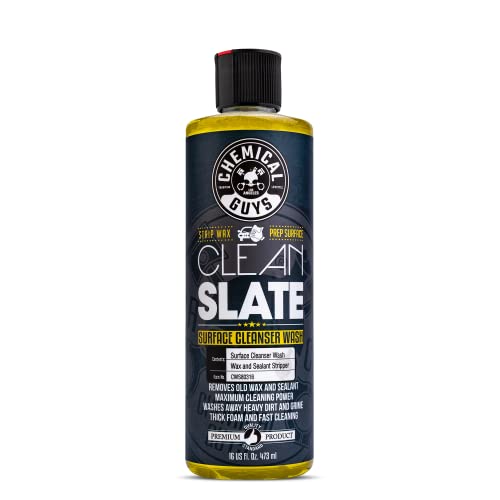
To use a chemical wax stripper, you typically add a high-pH strip wash soap to your wash bucket, wash the car panel by panel, let it dwell for 1-2 minutes without drying, and then rinse thoroughly. This method is the fastest and most straightforward for removing old waxes and sealants. Products like Chemical Guys Clean Slate or Adam’s Strip Wash are degreasing soaps designed specifically for this purpose.
Here is the step-by-step process:
- Prepare the Solution: Following the product’s instructions, add the recommended amount of the high-pH degreasing soap to your wash bucket. Typically this is a few ounces per gallon of water.
- Wash One Section at a Time: Working out of the shade on a cool surface, wash one section of the car (e.g., the roof, the hood) using a clean microfiber wash mitt.
- Let it Dwell (Briefly): Allow the soap to sit on the surface for 60-90 seconds. This gives the surfactants time to break down and dissolve the oils and polymers in the old wax. Do not let it dry on the paint.
- Rinse Thoroughly: Use a strong stream of water from a hose or pressure washer to completely rinse the panel.
- Repeat and Dry: Move to the next section and repeat the process until the entire car is done. Perform a final rinse of the whole vehicle and dry it with a clean microfiber towel.
Pro Tip: You can test for successful removal by spraying a fine mist of water on a panel. If the water forms large, flat “sheets” and drains slowly, the wax is gone. If it forms tight, distinct beads that roll off quickly, a layer of protection is still present and the panel may need a second pass.
Method 2: When Should You Use a Clay Bar to Remove Wax?
You should use a clay bar to remove wax when the paint surface feels rough to the touch after washing, which indicates the presence of bonded contaminants. A clay bar performs mechanical stripping. While its gentle abrasion removes wax, its primary function is to pull embedded contaminants—such as industrial fallout, rail dust, and tree sap—out of the clear coat. Chemical strippers alone cannot remove these.
Here’s how to determine if you need to use a clay bar and how to do it safely:
- Perform the Baggie Test: After washing and drying your car, place your hand inside a thin plastic sandwich bag. Lightly glide your fingertips over the paint. If you feel a gritty, rough texture, you have bonded contaminants and should use a clay bar.
- Prepare the Clay and Lubricant: Take a small piece of the clay bar and flatten it into a pancake shape. Generously spray a dedicated clay lubricant or a quick detailer spray on a small (2’x2′) section of the paint.
- Glide the Clay: Gently glide the flattened clay over the lubricated surface in straight-line motions (back and forth). You will feel it “grab” at first and then move smoothly as it picks up contaminants.
- Wipe and Inspect: Wipe the residue off with a clean microfiber towel. The surface should now feel perfectly smooth.
- Fold and Knead: Check the clay surface. When it looks dirty, fold it in on itself and knead it until a clean surface is exposed. Continue this process around the entire car, working in small sections.
⚠ Safety First: Never use a clay bar without sufficient lubricant, as this will cause micro-marring and scratch your paint. If you drop the clay bar on the ground, throw it away. A contaminated clay bar will act like sandpaper and severely damage your vehicle’s finish.
What Should You Do Immediately After Stripping the Wax?
Immediately after stripping the wax, you must apply a new layer of protection, such as a paint sealant, a carnauba wax, or a durable ceramic coating. A stripped car has a bare paint surface with no defense against the elements. The clear coat is now completely vulnerable to UV radiation, acid rain, bird droppings, and other environmental hazards. This final step is not optional.
Follow this sequence for professional-level results:
- Inspect the Paint: With all fillers and waxes gone, now is the time to inspect your paint under good lighting. Look for any swirl marks, fine scratches, or defects that were previously hidden.
- (Optional) Paint Correction: If you found defects during your inspection and want a perfect finish, now is the time to perform paint correction. Use a car polish with an orbital polisher to remove swirls and restore gloss before locking in the finish.
- Apply Protection: Whether you’ve polished the paint or not, the final step is to protect the bare surface. Carefully apply your chosen paint sealant, carnauba wax, or ceramic coating according to the manufacturer’s specific instructions. This will protect your hard work and keep your car looking great.
WARNING: An unprotected clear coat can begin to show signs of oxidation and UV damage in a matter of days or weeks, depending on environmental conditions. Do not strip your car’s wax unless you have the time and products on hand to immediately re-apply a protective layer.
FAQs About How to Strip Wax From Car
Can vinegar or dish soap be used to strip car wax?
While both can strip some waxes, it is not recommended by professional detailers. Dish soap contains harsh degreasers that can dry out and damage rubber seals and plastic trim, while vinegar is acidic and can potentially etch sensitive clear coats if left on for too long or used improperly.
Will rubbing alcohol (IPA) alone strip car wax?
Yes, a diluted Isopropyl Alcohol (IPA) solution can effectively strip many waxes and sealants. Typically mixed 15-50% with distilled water, it works by dissolving oils and polymers. It is most often used as a final panel prep wipe-down after polishing to ensure a perfectly clean surface before a ceramic coating is applied.
How do I remove wax from black plastic trim?
Use an all-purpose cleaner (APC) and a soft-bristled brush for safe removal. Spray the APC onto the brush, not directly on the trim, to control overspray. Gently scrub the affected area to lift the wax residue, and immediately wipe it away with a clean microfiber towel.
What’s the difference between stripping wax and clay barring?
Stripping wax is primarily a chemical process to remove oils and polymers, while clay barring is a mechanical process to remove bonded surface contaminants. A clay bar will also remove wax as it abrades the surface, but its main purpose is to pull out things like industrial fallout and paint overspray that make the paint feel rough.
Do I have to remove old wax before applying new wax?
It is not strictly necessary for a simple re-application, but it is highly recommended for best results. Applying new wax over a completely clean, stripped surface ensures a stronger bond, better visual clarity, and longer durability. Applying over old, failing wax can lead to a hazy finish and poor longevity.
How often should you strip wax from your car?
You should only strip wax when you plan to do a full detail, such as paint correction or applying a new long-term sealant or ceramic coating. For routine maintenance, you should simply wash and re-apply your chosen protection as it wears down. Stripping is a restorative, not a routine, process.
Will a car wash remove old wax?
A touchless automatic car wash using harsh, high-pH soaps can degrade and strip wax over time. However, a standard hand wash with a pH-neutral car wash soap is designed to clean the car without harming the existing protective layer. A dedicated stripping process is required to guarantee complete removal.
How can I tell if the wax is completely stripped?
The best way is the water test. Spray the panel with water from a spray bottle. If the water forms tight, high beads and rolls off quickly, wax is still present. If the water clings to the surface and “sheets” off in a wide, flat layer, the surface is bare and the wax has been successfully removed.
How to prepare a car for ceramic coating after wax removal?
After stripping the wax, you must perform a full paint decontamination with a clay bar and an iron remover. Then, it is essential to polish the paint to remove any swirls or defects, creating a perfect surface. Finally, use an IPA or panel prep spray to wipe down every surface one last time to remove all polishing oils before applying the coating.
What is a “pre-wax cleaner”?
A pre-wax cleaner is a type of light chemical polish that contains solvents and very fine abrasives. It is designed to clean the paint, remove light oxidation, fill minor swirls, and strip old, non-durable wax in a single step. It is less aggressive than a full stripping process and is ideal for preparing a surface for a new layer of traditional wax.
Key Takeaways: How to Strip Wax From Car Summary
- Always Wash First: Before any stripping attempt, perform a thorough two-bucket wash to remove loose dirt and prevent scratching your paint.
- Choose the Right Method: Use a chemical strip wash for general wax removal, but use a clay bar if you feel bonded contaminants on the paint. An IPA wipe is best for a final prep before coatings.
- The Water Test is Proof: The definitive way to know if wax is gone is to spray the panel with water. If it “sheets” off instead of forming tight beads, the surface is bare.
- Protection is Not Optional: A stripped paint surface is completely vulnerable. You MUST apply a new layer of wax, sealant, or ceramic coating immediately after stripping and cleaning.
- Avoid Dish Soap and Vinegar: While they may work, they are not formulated for automotive surfaces and can dry out or damage plastic and rubber trim. Always use dedicated car care products.
- Address Trim Separately: If you get wax on black plastic trim, use an all-purpose cleaner (APC) and a soft brush for safe removal, not the aggressive methods used for paint.
- Stripping is for Restoration, Not Routine: Only strip your car’s wax when preparing for a major detail like paint correction or applying a new long-term coating. It’s not part of a regular wash routine.
Final Thoughts on Stripping Car Wax
Properly stripping the wax from your car is more than just a cleaning step; it’s a foundational skill that unlocks the full potential of modern car care products. By creating a truly clean and bare surface, you ensure that your efforts in applying a new sealant or ceramic coating are rewarded with maximum durability, performance, and shine. Following the correct procedures, from the initial wash to the final, crucial protection step, is what separates an amateur job from a professional-level result. Armed with this knowledge, you are now equipped to tackle this project with confidence and achieve a finish you can be proud of.
Last update on 2026-03-17 / Affiliate links / Images from Amazon Product Advertising API