
Wondering how to start your car after the airbags deploy? You’re likely in a stressful spot, trying to figure out if you can safely move your vehicle off the road. This situation requires caution.
After an airbag deployment, a car may not start because safety systems activate to prevent fire or further damage. These systems include a fuel pump cut-off switch, which stops fuel flow, and a pyro fuse or Battery Safety Terminal (BST) that disconnects the main battery power. To start the car, these systems may need to be inspected and reset.
Based on proven troubleshooting steps from qualified mechanics, this guide provides a clear diagnostic checklist. You will discover exactly how to assess the situation safely. We’ll cover the essential checks for the fuel system, electrical system, and the car’s computer.
Key Facts
- Intentional Shutdown: A car failing to start after airbag deployment is an intentional safety feature, not necessarily a sign of engine damage. It’s designed to prevent post-crash fires.
- Multiple System Lockouts: Deployment typically triggers at least two primary lockouts: a fuel pump cut-off to stop gasoline flow and a main power disconnect to prevent electrical shorts.
- Cost is a Major Factor: The high cost of replacing the entire airbag system, which can range from $2,000 to over $6,000, is often the primary reason a vehicle is declared a “total loss” by insurance.
- “Hard Codes” Are Stored: The Airbag Control Module records crash data in non-volatile memory. This means a simple battery disconnect will not clear the fault or turn off the SRS warning light.
- Manufacturer-Specific Systems: Different car brands use unique safety components. For example, many Ford models use a physical inertia switch, while BMWs are known for their pyrotechnic Battery Safety Terminal (BST).
How to Start a Car After Airbags Have Deployed?
After airbags deploy, a car often won’t start due to safety features like a fuel pump cut-off switch or a pyrotechnic fuse that disconnects the battery. To attempt a restart, you must first ensure the vehicle is safe from immediate hazards like leaks or fire. Then, you can systematically check and potentially reset these specific safety interlocks. Always prioritize your personal safety over trying to move the vehicle.

Being stranded after an accident is incredibly stressful. Your first instinct might be to restart the engine and get to safety. However, your vehicle has entered a protective lockdown mode for a good reason. This guide is designed to help you quickly and safely assess the situation. Before you touch the ignition, follow these critical safety and diagnostic steps.
What Are the First Safety Steps to Take After Airbag Deployment?
Before you even think about the engine, your absolute first priority is the safety of yourself and any passengers. According to NHTSA post-crash safety guidelines, a specific protocol should be followed.
- Assess Occupants: Check yourself and any passengers for injuries. Adrenaline can mask pain, so a thorough check is crucial.
- Turn Off the Ignition: If the engine is somehow still running or the electronics are on, turn the key to the “Off” position immediately to reduce fire risk.
- Exit the Vehicle (If Safe): If you can do so without risking further injury or exposure to traffic, exit the vehicle. The white powder from the airbags is generally cornstarch or talcum powder but can be an irritant.
- Move to a Safe Distance: Move away from the vehicle and the roadway to a secure location.
- Inspect for Hazards: From a safe distance, carefully look and smell for any immediate dangers. STOP if you see or smell any of the following:
- Smoke or flames.
- Leaking fluids on the ground (e.g., gasoline, oil, or coolant).
- The smell of gasoline or burning plastic.
- Downed power lines near the vehicle.
If you observe any of these hazards, call 911 immediately and do not approach the car.
How to Perform an Initial Diagnostic Checklist?
If the scene is secure and free of hazards, you can perform a quick diagnostic check. This checklist helps you quickly identify the most common reasons your car won’t start after an impact.
- Wait 10-15 Minutes: This is a crucial first step. Deployed airbags use capacitors that need time to discharge fully. Attempting to work on the vehicle’s electrical system before they have discharged can be dangerous.
- Check for Electrical Power: Turn the key to the “On” or “Accessory” position (without trying to start the engine). Do the dashboard lights, dome light, or radio turn on?
- If YES: You have some power. The issue is likely a fuel cut-off or an engine computer lockout.
- If NO: You have a total loss of power. This points directly to a disconnected battery, likely from a blown pyro fuse or Battery Safety Terminal (BST).
- Inspect Battery Connections: Even in a minor impact, battery terminals can be jolted loose. Ensure the positive and negative cables are securely fastened to the battery posts.
- Locate the Inertia Switch: This is one of the most common reasons for a no-start condition. The inertia switch is a safety button that pops out to cut power to the fuel pump. We’ll cover how to find and reset this in the next section.
- Check Key Fuses: Look at the main fuses in the under-hood fuse box. Check any fuses labeled “EFI,” “FUEL,” or “ECU.” Pulling the fuse and visually inspecting if the metal strip inside is broken can identify a simple blown fuse.
Why Won’t My Car Start After Airbags Deploy?
A car won’t start after airbag deployment because automated safety systems are triggered to prevent fire and electrical shorts. The primary reasons are an active fuel pump cut-off, a disconnected main battery via a pyro fuse or BST, and the Engine Control Module (ECM) entering a “lockout” state after receiving a crash signal from the Airbag Control Module (ACM).
When the vehicle’s impact sensors detect a collision severe enough to deploy the airbags, the Airbag Control Module (ACM) takes immediate action. It’s like a central command center that simultaneously triggers three distinct shutdown procedures.
- ✅ Fuel Pump Cut-Off: The ACM sends a signal to either a physical inertia switch or directly to the Engine Control Module (ECM) to de-energize the fuel pump relay. This immediately stops the flow of gasoline, a critical step in preventing a post-crash fire. Without fuel pressure, the engine cannot start or run.
- ✅ Electrical System Cut-Off: To prevent dangerous electrical shorts from damaged wiring, the ACM triggers a pyrotechnic device located directly on the positive battery terminal. This device, known as a Battery Safety Terminal (BST) or pyro fuse, uses a small explosive charge to physically sever the main power cable connecting the battery to the starter and the rest of the car. This results in a complete and immediate loss of electrical power.
- ✅ Engine Computer Lockout: The ACM logs a “crash data” event and communicates this to the Engine Control Module (ECM). In many modern vehicles, the ECM will then enter a “lockout” or “immobilized” state. It will not allow the engine to start, even if fuel and power are restored, until this crash data has been acknowledged or cleared by a diagnostic tool.
How Do You Reset the Fuel Pump After an Accident?
To reset the fuel pump after an accident, you typically need to find and press the red or black button on the inertia switch. This switch is often located in the trunk, glove box, or driver’s side footwell. For cars without a physical switch, a specific ignition key cycling sequence may be required to signal the ECM to re-enable the fuel pump.
Before proceeding, ensure the ignition is off and there are no signs of a fuel leak.
Resetting a Mechanical Inertia Switch
This is common in many Ford, Mazda, and some other models.
- Locate the Switch: Consult your owner’s manual for the exact location. Common spots include:
- Inside the trunk, behind a side panel.
- In the passenger or driver’s side footwell, behind a kick panel.
- Under the dashboard or inside the glove box.
- Identify the Switch: You are looking for a small plastic box with a noticeable red or black button on top.
- Reset the Button: If the button is raised or “popped up,” the switch has been tripped. Press it down firmly until it clicks back into place. If it was not popped up, the inertia switch is not your problem.
Resetting an Electronic (ECM) Fuel Cut-Off
Many newer vehicles, including those from GM and Honda, do not have a physical switch. The fuel cut-off is controlled by the car’s computer.
- Turn Ignition Completely Off: Ensure all vehicle systems are powered down.
- Wait 5 Minutes: Allow all modules to fully power down.
- Turn Key to ‘On’: Turn the ignition key to the “On” position (the position where the dashboard lights illuminate) but do not attempt to start the engine.
- Wait 60 Seconds: Leave the key in the “On” position for at least one minute. This allows the ECM to perform a system check and recognize that the crash event is over.
- Attempt to Start: After a minute, try to start the engine. If successful, you may hear the fuel pump make a whirring sound for a couple of seconds when you first turn the key to “On”.
How Do You Address a Blown Pyro Fuse or Battery Safety Terminal (BST)?
⚠ SAFETY WARNING: This section discusses a pyrotechnic device on your battery. A blown BST has already deployed its charge, but mishandling the component or attempting a bypass carries a risk of electrical shock or creating a fire hazard. This procedure is for identification and emergency bypass by advanced users only. Proceed at your own risk.
A pyro fuse, or Battery Safety Terminal (BST), is a crucial safety component on your car’s positive battery terminal. During a crash, it uses a tiny explosive charge to physically sever the connection to the battery, preventing electrical fires and shorts. This results in a complete loss of power to the starter and most of the car.
How to Identify a Blown BST
A blown BST is usually easy to spot if you know what you’re looking for.
- Open the hood and locate the positive (+) terminal of your car battery.
- The BST is the blocky component that the main red power cable connects to, right on the battery post.
- Look for a visible separation or gap in the main metal conductor of the terminal. It will look physically broken.
- You may also see a dislodged plastic cap or a small, two-wire connector (often yellow or red) that has been pulled from its socket. This is the trigger wire from the Airbag Control Module.
How to Replace a BST (The Correct Way)
The only correct and safe repair is to replace the entire Battery Safety Terminal component. This is a one-time-use device. You will need to purchase a new, manufacturer-specific BST and install it, which typically involves disconnecting the battery and unbolting the old terminal assembly.
Emergency Bypass Method (Advanced Users Only)
This bypass should only be attempted in a true emergency to move a vehicle to a safe location. It is not a permanent repair.
- Disconnect the Negative Terminal: Before doing anything, ALWAYS disconnect the negative (-) battery terminal first to de-energize the system.
- Expose the Conductor Ends: Identify the two separated ends of the main power conductor on the blown BST.
- Create a Bridge: Securely connect the two separated ends using a thick-gauge wire (like a jumper cable lead) and robust clamps. The connection must be tight and free of movement to prevent sparking.
- Insulate the Connection: If possible, wrap the temporary connection in electrical tape to prevent it from touching any other metal parts.
- Reconnect the Negative Terminal: Once the bypass is secure, reconnect the negative battery terminal.
- Attempt to Start: You should now have electrical power restored to attempt a start.
How Do You Reset a Car’s Computer (ECU/ECM) After an Accident?
To reset a car’s computer after an accident, a simple battery disconnect is often insufficient because crash data is stored in non-volatile memory. While a “hard reset” might clear minor glitches, clearing airbag (SRS) crash data typically requires a professional OBD2 scanner with SRS capabilities or a specialized crash data reset tool.
Many people believe disconnecting the battery will solve all computer issues, but that’s a myth when it comes to crash data. The airbag module’s memory is designed like a computer’s hard drive; it retains information even when the power is off. Regular engine memory is more like RAM; it forgets when power is cut. This is why the SRS warning light stays on until the module is professionally addressed.
| Method | What It Does | What It DOES NOT Do | Required Tools |
|---|---|---|---|
| Battery Disconnect (“Soft Reset”) | Clears temporary engine codes, resets adaptive learning. | Clear permanent SRS crash data from the airbag module. | Basic hand tools. |
| Professional Scan Tool (“Hard Reset”) | Reads and clears engine, transmission, and some body codes. | Clear certain proprietary “hard” crash data. | Standard OBD2 Scanner. |
| SRS Crash Data Reset | Reads and clears “hard codes” stored in the airbag module itself. | Repair physical damage to the module or sensors. | Specialized OBD2 scanner with SRS function or dedicated EEPROM programming tools. |
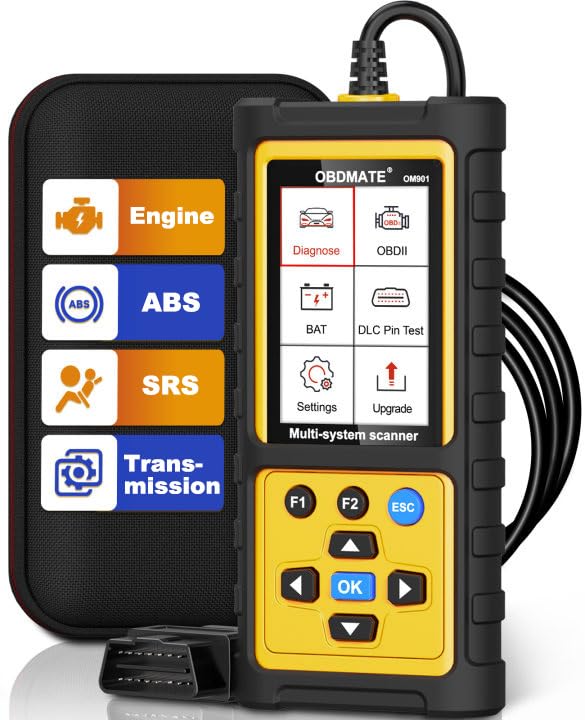
For most DIY mechanics, the most effective tool is an OBD2 scanner that explicitly states it has SRS/airbag reset functionality. This allows you to communicate directly with the Airbag Control Module to read the specific fault codes and, in many cases, clear them after the physical repairs have been completed.
Is a Car Totaled if the Airbags Deploy?
Airbag deployment does not automatically total a car, but it is a major factor. A vehicle is declared a total loss only when the total cost of repairs is higher than a percentage of its value (the “total loss threshold”). Because replacing airbags, the control module, sensors, and seatbelts can cost $2,000 to $6,000+, it often makes older or less valuable cars a total loss.
Insurance companies use a simple formula: If the estimated cost of repairs exceeds a certain percentage (usually 70-80%) of the vehicle’s Actual Cash Value (ACV), they will declare it a total loss. The high cost of airbag system restoration is a primary driver of this calculation.
Here’s a breakdown of typical airbag system replacement costs for 2026:
- Airbag Units (Driver/Passenger): $800 – $2,000
- Airbag Control Module (ACM/SRS): $500 – $1,200
- Seat Belt Pretensioners (per seat): $200 – $500
- Impact Sensors / Clock Spring: $300 – $800
- Labor: $500 – $1,500
For example, if your 10-year-old car is worth $5,000 and the required airbag system repairs are estimated at $4,000, the repair cost is 80% of the vehicle’s value. In this case, it will almost certainly be declared a total loss by your insurance provider.
FAQs About How to Start Car After Airbags Deploy
Can you drive a car with deployed airbags?
Legally and safely, you should not drive a car with deployed airbags. The deployed bags can obstruct your view and, more importantly, the entire Supplemental Restraint System (SRS) is now inactive, meaning you have no airbag protection in a subsequent crash. It should only be driven to move it to a safe location off the road, if absolutely necessary.
Will disconnecting the battery reset the airbag light?
No, simply disconnecting the battery will not reset the airbag warning light. The Airbag Control Module stores crash data in non-volatile memory, which is not erased when power is lost. The light will remain on until the system is properly repaired and the “hard codes” are cleared with a specialized SRS-compatible OBD2 scanner.
Do seatbelts lock when airbags deploy?
Yes, in most modern cars, the seatbelt pretensioners activate along with the airbags. They use a small explosive charge to rapidly tighten the seatbelt, removing slack and holding the occupant firmly in their seat. Once deployed, these pretensioners are one-time-use items and must be replaced along with the airbags.
How to start a Chevy or Ford after airbag deployment?
Many Ford vehicles use a prominent inertia switch, while late-model GM/Chevy vehicles often use an electronic fuel cut-off. For a Ford, locate and press the reset button on the inertia switch (check manual for location). For a Chevy, you may need to perform an ignition cycle reset or address the Battery Safety Terminal on the battery.
How to start a BMW after airbag deployment?
BMWs are well-known for their advanced Battery Safety Terminal (BST) on the positive battery cable. When this pyrotechnic device fires, it severs the main power cable. You will have no power to the starter. Replacement is the only correct repair, though advanced users sometimes attempt an emergency bypass.
What is the difference between an SRS module and an ECM?
The SRS module is the dedicated computer for your car’s safety systems, while the ECM is the main computer for the engine. The SRS (Supplemental Restraint System) module’s only job is to detect a crash and deploy the airbags and pretensioners. The ECM (Engine Control Module) controls engine functions like fuel, spark, and timing. After a crash, the SRS module tells the ECM to shut down the engine.
How much does it cost to replace airbags?
The cost to replace airbags typically ranges from $2,000 to $6,000, but can be higher. This cost includes not just the airbag units themselves ($800-$2,000), but also the mandatory replacement of the Airbag Control Module ($500+), impact sensors, seatbelt pretensioners, and sometimes even the clock spring and dashboard panels, plus several hours of skilled labor.
Does a car have to be on for airbags to deploy?
No, the engine does not need to be running, but the ignition must be in the ‘On’ position. The airbag system is powered directly by the car’s battery as long as the ignition is on. This allows the system to function and deploy airbags even if the engine has stalled just before impact.
Can I bypass airbag sensors to start the car?
Bypassing impact sensors is not a valid way to start the car and is extremely dangerous. The no-start condition is caused by the fuel and power cut-off systems, not the sensors themselves. Attempting to tamper with sensor wiring can lead to accidental deployment or render the entire safety system inoperable, even after repairs.
Is it legal to sell a car with deployed airbags?
Yes, it is legal to sell a car with deployed airbags, but you must disclose this fact to the buyer. The vehicle will typically have a “salvage” or “rebuilt” title, indicating it has sustained significant damage. Failing to disclose a past deployment or a faulty airbag repair is illegal and constitutes fraud in most jurisdictions.
Final Thoughts
Successfully starting your car after an airbag deployment is less about a single trick and more about understanding the safety systems designed to protect you. This guide provides the troubleshooting steps to diagnose the issue, from a simple inertia switch reset to identifying a more complex electrical disconnection at the battery.
While these steps can be invaluable in an emergency, they are temporary measures. The deployment of an airbag signifies a serious event that compromises your vehicle’s most critical safety feature. The only true solution is a comprehensive inspection and professional repair. Use this knowledge to safely assess your situation, but entrust the final restoration of your vehicle’s safety system to a qualified expert.
Last update on 2026-03-17 / Affiliate links / Images from Amazon Product Advertising API


