
Wondering how to protect leather seats from a car seat’s crushing weight? You’re not alone. Many parents invest in a beautiful car with a leather interior, only to face the dread of permanent indentations and damage from a child’s safety seat.
The most effective way to protect leather seats from a car seat is to place a high-density foam seat protector or a thick, folded towel directly underneath the car seat base. This creates a barrier that distributes the immense pressure over a wider area, preventing deep indentations, scuffs, and damage from spills, while safeguarding the vehicle’s upholstery and resale value.
Based on real-world implementation and an analysis of current safety standards, this guide provides a systematic approach to protection. You’ll discover the critical difference between DIY and professional solutions, the non-negotiable safety features to look for, and even how to repair existing damage.
Key Facts
- Permanent Damage is Real: Constant, concentrated pressure from a car seat base causes a “compression set” in leather, a physical deformation of the material’s fibers that may not rebound, leading to permanent indentations.
- Heat Accelerates Damage: The high temperatures inside a parked car soften leather and foam, making them more susceptible to forming deep, lasting pressure marks from a car seat.
- Safety is the Top Priority: A car seat protector that is too thick or slippery can mask a dangerously loose installation. A secure fit, with less than one inch of movement, is always more important than cosmetic protection.
- Not All Protectors are Equal: Many protectors on the market are not crash-tested. Experts and certified technicians recommend using protectors that are approved by the car seat manufacturer to ensure they don’t compromise safety.
- Maintenance is a Key Defense: Regularly removing the car seat to clean and condition the leather underneath is crucial. This prevents grit from causing abrasions and keeps the leather supple, making it more resilient to cracking under pressure.
How Do You Protect Leather Seats From a Car Seat?
The best method to protect your leather seats involves creating a physical barrier between the vehicle’s upholstery and the hard plastic base of the child car seat. This barrier serves to distribute the pressure from the car seat’s footprint, absorb impact, and catch spills, all without interfering with the safety and stability of the installation. For most parents, this means choosing between a dedicated car seat protector and a simple DIY solution like a towel.
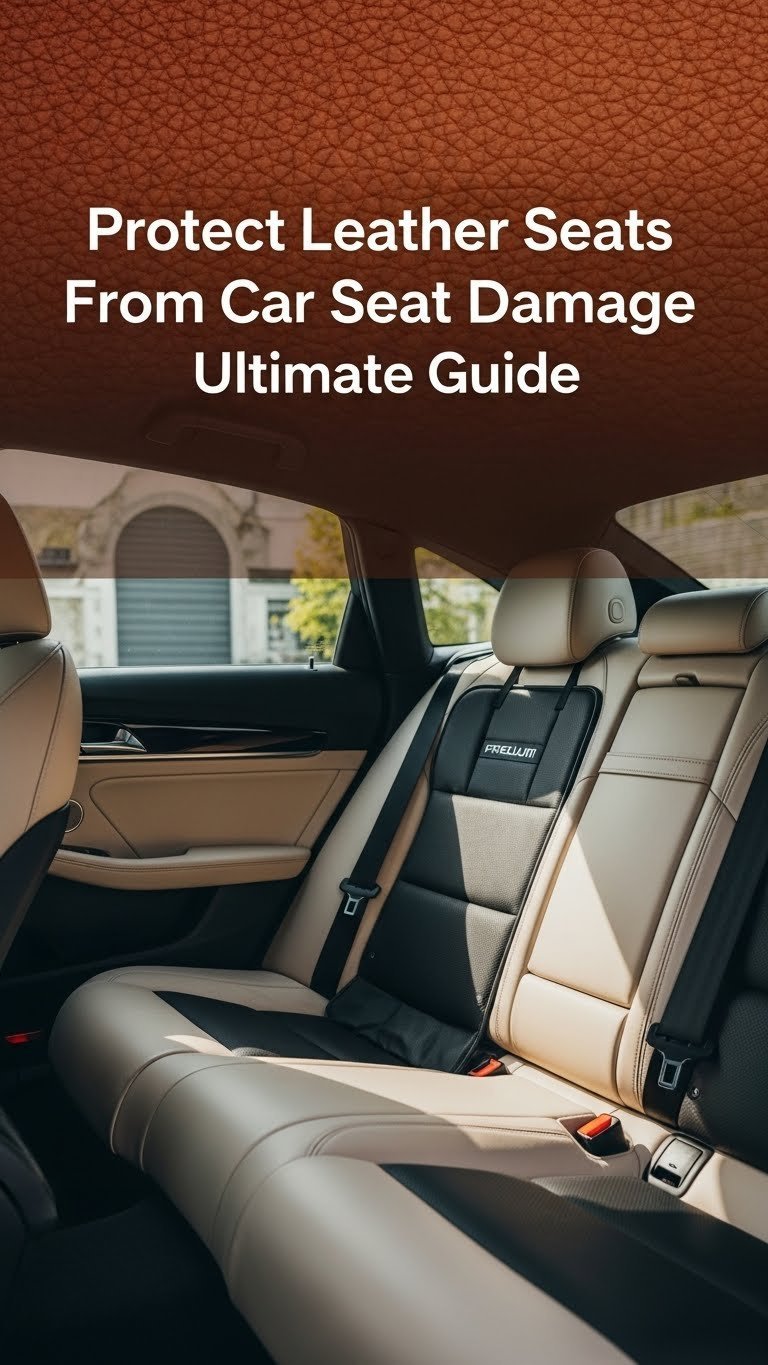
From our experience, we see that the heavy, rigid base of a car seat, combined with the constant pressure required for a tight installation, can cause several types of damage to pristine leather. Understanding these issues is the first step toward effective prevention. The primary concerns include:
- Deep Indentations: Concentrated weight on the corners and edges of the car seat base leaves permanent dents in the leather and underlying foam cushions.
- Scuffs and Abrasions: The hard plastic of the car seat can scratch and wear away the leather’s finished surface during installation or from movement over time.
- Spills and Stains: Spilled milk, juice, and dropped snacks can seep into seams and perforations, causing permanent stains and unpleasant odors.
- Color Transfer: Dark-colored car seats can sometimes transfer dye onto light-colored leather, especially in hot weather.
Ultimately, the goal is to find a solution that offers robust leather seat protection while fully aligning with child passenger safety guidelines.
Why Do Leather Seats Get Damaged by Car Seats?
The primary reason leather seats get damaged is a technical phenomenon known as “compression set.” This occurs when the constant, concentrated pressure from a car seat’s base exceeds the leather’s natural elasticity. Over time, especially when combined with the heat inside a car, the leather’s fiber structure deforms permanently, creating those deep indentations that won’t bounce back.
Think of the car seat’s footprint. It doesn’t distribute weight evenly. Instead, it focuses immense pressure on small contact points—usually the four corners of the base. This targeted force flattens both the leather hide and the foam cushion beneath it. While leather has some ability to rebound, it’s not designed to withstand this type of focused, long-term load.
What is Compression Set? Think of it like a memory foam pillow that has lost its ability to bounce back after a heavy object was left on it for months. The material’s internal structure has been crushed to a point where it can no longer return to its original shape. Leather behaves in a similar way under the constant weight of a tightly installed car seat.
The heat inside a vehicle dramatically accelerates this process. Heat softens the leather’s fibers and the urethane foam in the seat, making them much more pliable and prone to deforming under pressure. An indent that might take months to form in a cool climate could become semi-permanent after just a few hot summer weeks. This is why understanding the mechanism is key to prevention; the solution lies in distributing that pressure.
What Are The Best Methods to Protect Leather Seats? A Comparison
When it comes to preventing car seat damage, you have two primary options: a low-cost DIY approach or a purpose-built commercial product. From years of working with parents, we know the “folded towel method” is a popular starting point, but it’s crucial to compare it directly against an engineered car seat protector to understand the tradeoffs in protection and, more importantly, safety.
Here’s the deal: both can offer some level of protection, but their effectiveness and safety profiles differ significantly.
| Feature | DIY Method (Folded Towel) | Commercial Seat Protector |
|---|---|---|
| Protection Level | Moderate (prevents scuffs, some indents) | High (prevents deep indents, scuffs, spills) |
| Safety Risk | High (can slide, affecting seat stability) | Low (if crash-tested with non-slip backing) |
| Cost | Free | $20 – $50+ |
| Installation | Simple, but requires frequent readjustment | Simple, single installation |
| Durability | Low (flattens over time) | High (uses thick padding and resilient material) |
| Waterproofing | None (unless a waterproof layer is added) | Often includes a waterproof material layer |
The bottom line? While a folded towel is better than nothing for preventing minor scuffs, it falls short in preventing deep indentations and can introduce a significant safety risk if it slips. For most parents, the small investment in a quality commercial protector is worth the superior safety and more effective long-term protection.
What Are The Key Features of a High-Quality Seat Protector?
If you opt for a commercial protector, not all are created equal. Based on practical implementation, a high-quality product is defined by its safety features and durable construction. Here are the key attributes to look for, turning you into an informed shopper.
- ✅ Crash-Tested Approval: This is the single most important feature. Look for protectors made by car seat manufacturers themselves (like Diono or Britax) or those explicitly stating they have been crash-tested to not interfere with safety standards.
- ✅ Non-Slip Backing: The protector’s underside must have a grippy, non-slip bottom. This textured rubber or silicone surface is essential to prevent the protector—and the car seat on top of it—from sliding on slick leather surfaces during a sudden stop or collision.
- ✅ High-Density Padding: Look for protectors with dense, closed-cell foam, not soft, squishy padding. This thick padding is what distributes the car seat’s weight, preventing the focused pressure that causes permanent indentations.
- ✅ Waterproof and Stain-Resistant Layer: A waterproof material is non-negotiable for protecting your leather from spills, diaper leaks, and other messes. This layer contains the liquid, preventing it from seeping into the leather’s seams or perforations.
- ✅ LATCH/ISOFIX Compatibility: The protector must have cutouts or be designed to allow unrestricted access to your vehicle’s LATCH or ISOFIX anchor points (the metal bars in your seat crevice). Blocking these compromises your ability to get a secure installation.
Pro Tip: Check your car seat’s manual first! Some manufacturers explicitly void the car seat’s warranty if any unapproved mat or towel is used underneath it. Your child’s safety and the seat’s warranty should always be your top priorities.

Are Car Seat Protectors Safe to Use on Leather Seats?
Car seat protectors are only safe if they are specifically designed not to interfere with the car seat’s installation and have a non-slip surface. While they protect your leather, a poorly designed protector can create a serious safety hazard. Many car seat manufacturers and certified safety technicians advise against using any product between the car seat and the vehicle seat unless it has been approved for use.
A protector that is too thick, squishy, or slippery can create a false sense of tightness. You might think the car seat is installed securely, but in a crash, the protector can compress or slide, allowing the car seat to move dangerously. This is why choosing the right product and verifying the installation are critical.
SAFETY FIRST: Expert Warning
“As a Certified Child Passenger Safety Technician (CPST), my primary advice is to always check your car seat manual first. Many manufacturers prohibit using anything under the seat. A mat that slides or is too thick can mask a dangerously loose installation. If you use a protector, it MUST NOT allow for more than 1 inch of movement at the belt path.”
To ensure your car seat is installed safely with a protector, always perform the “1-Inch Test” after installation.
- Install Securely: Place the protector on the seat, then install the car seat on top of it according to the manufacturer’s instructions, using either the LATCH system or the vehicle’s seat belt.
- Grip and Pull: Firmly grip the car seat at the belt path (where the LATCH strap or seat belt passes through it).
- Test for Movement: Try to move the car seat side-to-side and front-to-back.
- Verify Stability: The car seat should not move more than 1 inch in any direction. If it does, the installation is too loose and must be tightened or re-evaluated.
If you cannot achieve less than 1 inch of movement with the protector in place, you must remove the protector. A secure installation is always more important than protecting the leather.
How Do You Remove Existing Car Seat Indents from Leather?
To remove existing car seat indents from leather, you can use a combination of gentle heat, massage, and conditioning to help the compressed fibers relax and regain their shape. This process works best on minor to moderate indentations that haven’t become fully permanent. If you’ve just discovered the damage, don’t panic; this method can often yield impressive results.
Real-world experience shows this multi-step approach is both safe and effective. Be patient and gentle, as aggressive techniques can cause more harm.
- Clean the Area: First, wipe the indented area with a pH-balanced leather cleaner to remove any surface dirt or oils. This prepares the leather for treatment.
- Apply Gentle Heat: Use a hairdryer on its lowest heat setting or a dedicated heat gun on low. Hold it 6-8 inches away from the leather and wave it back and forth over the indent for 30-60 seconds. The goal is to warm the leather, not heat it. CAUTION: Too much heat can shrink, burn, or discolor the leather. Always start low and keep the heat source moving.
- Massage the Indent: While the leather is warm, use your fingers or the palm of your hand to gently massage the indented area in a circular motion. This encourages the compressed fibers to expand and relax.
- Condition the Leather: Immediately after massaging, apply a high-quality leather conditioner to the area. This restores vital moisture and oils, improving the leather’s flexibility and helping it rebound. Let the conditioner soak in for an hour, then buff off any excess with a clean microfiber cloth.
This process may need to be repeated 2-3 times for more stubborn indents. This method helped a BMW owner remove 90% of the indentations left by a convertible car seat after two years of use.
FAQs About how to protect leather seats from car seat
Do car seat protectors ruin leather seats?
No, a high-quality car seat protector will not ruin leather; it is designed to protect it. However, a poor-quality protector with a rough backing, color dye that can transfer, or one that traps moisture can potentially damage the leather surface over time. Always choose a protector made from color-safe, breathable, or non-reactive materials.
Can I use a yoga mat under a car seat?
It is strongly advised not to use a yoga mat under a car seat. While thick and protective, yoga mats are not designed for this purpose. Their surface is often too squishy or too slick, which can dangerously interfere with a secure car seat installation and has not been crash-tested for this use.
How do I protect perforated leather seats?
For perforated leather, choose a seat protector that is breathable to prevent moisture from getting trapped in the holes, which can lead to mold or material degradation. Avoid using thick creams or conditioners that can clog the perforations. A protector with a raised, grid-like base can also help promote airflow.
Will a car seat stain white leather seats?
Yes, a car seat can stain white or light-colored leather, a problem known as dye transfer. This often happens with dark-colored car seats, especially in hot conditions. Using a color-safe, light-colored seat protector is the best way to create a barrier and prevent this color transfer.
Should I use a seat protector with a booster seat?
Yes, it’s still a good idea to use a protector or at least a kick mat with a booster seat. While booster seats are lighter and cause fewer indentations, children in boosters are more likely to cause scuffs with their shoes, spill drinks, and leave food crumbs. A protector helps manage messes and scuffing damage.
Can you use a pillowcase to protect leather?
A pillowcase is not an effective or safe solution. It is too thin to offer any meaningful protection against the deep indentations caused by a car seat’s weight and pressure points. Furthermore, its smooth fabric can easily slide, creating a significant safety hazard by loosening the car seat installation.
How do you stop a car seat from sliding on leather?
A car seat sliding on leather indicates a dangerously loose installation, which a protector cannot fix. You must tighten the installation using either the vehicle’s seat belt or the LATCH system until there is less than 1 inch of movement side-to-side at the belt path. A protector with a non-slip bottom can help, but a tight install is paramount.
Are Diono car seat protectors safe?
Diono brand protectors are among the most frequently recommended because they are crash-tested and designed by a car seat manufacturer. They are generally considered safe when used according to their instructions. However, you should always double-check your specific car seat’s manual, as some brands may still prohibit their use.
Does heat make car seat indents permanent?
Yes, heat can accelerate the process of compression set and make indentations in leather permanent more quickly. A hot car interior softens the leather’s fibers and the foam underneath, allowing them to deform more easily under the car seat’s weight. Periodically removing the car seat on hot days can help mitigate this.
How often should I clean and condition leather under a car seat?
You should remove the car seat to clean and condition the leather underneath at least 2-4 times per year. This allows you to clean up trapped food crumbs, check for any moisture issues, and apply a quality leather conditioner to keep the material hydrated and prevent leather cracking under pressure.
Key Takeaways: How to Protect Leather Seats From Car Seat Damage
- Safety Over Aesthetics, Always: A secure car seat installation is more important than perfect leather. Never use a product that compromises the car seat’s stability. Always perform the “1-Inch Test” after installing a protector.
- Commercial Protectors Outperform DIY: While a folded towel method is free, a quality, crash test approved commercial protector with a non-slip bottom offers far superior and safer protection against deep indentations.
- Check Manuals First: Before buying or using any protector, check both your car seat and vehicle manufacturer manuals. Some companies explicitly prohibit their use and may void warranties.
- Damage is Caused by “Compression Set”: Permanent indentations aren’t just marks; they’re physical changes to the leather’s structure caused by prolonged pressure and heat. This is why distributing pressure is key.
- Existing Dents Can Be Repaired: Minor indentations can often be removed. The process involves gentle heat from a hairdryer, followed by massaging the area and applying a quality leather conditioner to restore flexibility.
- Address Special Leather Types: For white leather, use a protector to prevent dye transfer. For perforated leather, choose a breathable protector to avoid trapping moisture.
- Regular Maintenance is Crucial: At least twice a year, remove the car seat to clean away crumbs and spills, and apply a ph balanced cleaner and conditioner to prevent the leather from cracking under pressure.
Final Thoughts on Protecting Your Leather Seats
Protecting your vehicle’s leather seats from car seat damage is an achievable goal that balances vehicle preservation with the paramount priority of child safety. It’s not about choosing one over the other. By understanding why damage occurs and choosing a crash-tested, non-slip seat protector, you can confidently prevent long-term damage. Always verify your installation is secure, and you can maintain your car’s value and interior beauty for years to come.
Last update on 2026-01-10 / Affiliate links / Images from Amazon Product Advertising API


![What Car Is Chevy Bringing Back in [year]? New Lineup Revealed](https://carxplorer.com/wp-content/uploads/2026/01/What-Car-Is-Chevy-Bringing-Back-in-year-New-Lineup-Revealed-1-1-60x60.jpg "What Car Is Chevy Bringing Back in [year]? New Lineup Revealed 10")
