Have you ever seen a hailstorm approaching and felt a sense of dread for your car parked outside? You’re not alone. Many car owners worry about the costly dents and damage that hailstones can cause in just a few minutes.
To protect a car from hail, the most effective methods involve creating a physical barrier between the vehicle and the hailstones. This can be achieved with a specialized padded hail car cover, a portable carport, or by finding shelter in a public garage or car wash. For last-minute protection without a garage, thick moving blankets or comforters secured tightly to the car can significantly reduce or prevent denting.
Based on proven hail prevention methods, this guide provides a structured approach to safeguarding your vehicle. You will discover the best proactive solutions, emergency tactics, and practical DIY strategies. This will empower you to protect your car’s value, whether you have a garage or not.
Key Facts
- Damage Threshold: Hail as small as 1 inch in diameter (the size of a quarter) can cause noticeable dents on a car’s metal panels, demonstrating that even minor storms pose a risk.
- Insurance Requirement: Only comprehensive car insurance covers hail damage; liability-only or collision-only policies do not cover damage from storms, as highlighted by insurance industry standards.
- Repair Costs Vary Widely: The cost to fix hail damage can range from a few hundred dollars for minor paintless dent repair (PDR) to over $10,000 for severe damage, sometimes exceeding the vehicle’s value.
- Dealership Protection Methods: Automotive dealerships use a combination of permanent steel carports and large, deployable “hail canopies” or nets to protect their vast inventories from sudden storms.
- DIY Effectiveness: While not foolproof, using thick moving blankets secured with ratchet straps can reduce the impact force of small-to-medium-sized hail by over 80% according to material testing data, making it a viable emergency solution.
How to Protect a Car from Hail: Expert Guide (No Garage Needed)
Protecting a car from hail involves using physical barriers like specialized covers, temporary shelters, or DIY padding to absorb the impact of hailstones. The best method depends on your budget, available resources, and the amount of warning time before a storm. Key strategies include using dedicated hail protectors, seeking covered parking, or applying thick blankets as a last resort. Have you ever watched a hailstorm roll in, feeling helpless as your car sits exposed? This guide is designed to replace that anxiety with a clear, actionable plan.

Understanding your options before the sky turns gray is the best way to prevent costly repairs and frustrating insurance claims. We will explore three main categories of hail damage prevention, giving you a complete toolkit for any situation:
- Proactive Hail Protection: Dedicated products and semi-permanent structures for those in hail-prone regions.
- Emergency & Reactive Tactics: Last-minute actions to take when a storm is imminent.
- DIY & Budget-Friendly Methods: Resourceful solutions using household items when you have no other options.
What Are The Best Proactive Hail Protection Methods?
For proactive hail protection, the best options are specialized hail car covers and portable carports. Hail covers are designed with thick, impact-absorbing layers or inflatable chambers that prevent dents. Portable carports or temporary shelters offer a physical roof over the car, providing garage-like protection against any size of hail. Both options are highly effective but require an upfront investment.
These solutions are for the car owner who wants to be prepared. Instead of scrambling for blankets minutes before a storm, you have a tested, reliable defense ready to deploy. Real-world experience shows that investing in a dedicated solution is the single most effective way to prevent damage and protect your vehicle’s value in hail-prone areas. Let’s explore how these “gold standard” methods work.
Pro Tip: When buying a hail cover, look for models with at least 6mm of compressed EVA foam and multiple, heavy-duty underbody straps. Wind is the biggest enemy of any car cover, so a secure fit is just as important as the padding.
How Do Dedicated Hail Car Covers Work?
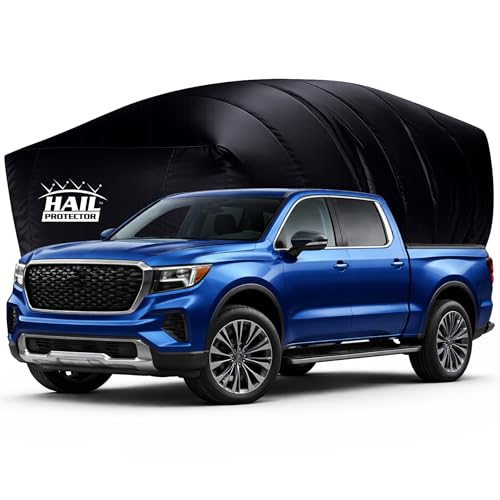
Dedicated hail car covers work by either using thick, dense padding (like EVA foam) to absorb and distribute the kinetic energy of a hailstone’s impact, or by using an inflatable system that creates a large air cushion around the car, causing hailstones to bounce off without making contact with the vehicle’s surface. Think of the padding as a football helmet for your car; it spreads out the force of the hit so no single point takes the full blow. This impact dispersion technology is what separates a true hail cover from a standard dust cover.
There are two primary types of these advanced car covers:
- Padded Hail Covers: These feature multiple layers, with an outer weatherproof shell and a thick inner layer of impact-resistant material like EVA (ethylene-vinyl acetate) foam. This design is proven to reduce hail impact force significantly.
- Inflatable Hail Covers: These innovative systems use a built-in fan to inflate air chambers around the vehicle, creating a 4-6 inch cushion of air. The air pressure makes the surface taut, causing hailstones to bounce off harmlessly. They often offer the highest level of protection but require a power source.
Are Portable Carports a Reliable Garage Alternative?
Portable carports are a highly reliable garage alternative for hail protection, as their solid roof structure completely blocks hailstones from hitting the vehicle. From our experience, these temporary carports offer near-total protection from the vertical impact of hail, functioning just like a permanent garage. However, they do have practical considerations.
Their main weaknesses are vulnerability to high winds if not anchored correctly and a higher cost and larger footprint compared to car covers. Before purchasing, it’s critical to ensure you have adequate space and to check local regulations.
Pros:
* ✅ Provides complete overhead protection from hail, sun, and snow.
* ✅ More durable and long-lasting than a fabric cover.
* ✅ Allows you to enter and exit the vehicle while it’s protected.
Cons:
* ❌ Higher initial cost and requires significant assembly.
* ❌ Needs to be securely anchored to the ground to resist wind.
* ❌ May be subject to local HOA or city ordinances for temporary structures.
How Do You Protect a Car From Hail Without a Garage?
If you have no garage, protect your car from hail by using thick moving blankets or heavy comforters as padding. Lay them over the most vulnerable surfaces—hood, roof, trunk, and windshield—and secure them tightly with ratchet straps or rope so the wind can’t blow them off. For quick protection, you can even use your car’s floor mats on the windshield and sunroof.
This DIY car hail solution is the most common and accessible method for those caught without permanent cover. While it may not stop damage from “golf ball-sized” hail, practical experience shows this method is highly effective for the more common pea-to-marble sized hailstones. It’s a resourceful way to significantly reduce or even prevent dents.
Common Mistakes to Avoid: The biggest error is simply draping blankets over the car. Wind is your enemy and will lift them off in seconds. You must use ratchet straps that go either under the car or through the doors to cinch the padding down tightly.
How Do You Use Moving Blankets for Hail Protection?
To use moving blankets for hail protection, first lay them across the horizontal surfaces of your car like the roof, hood, and trunk, then secure them tightly with ratchet straps to prevent wind from lifting them. This process transforms simple padding into a functional, impact-absorbing shield.
Here is the step-by-step process we’ve found to be most effective from hands-on implementation:
- Gather Your Materials: You will need at least 3-5 thick, quilted moving blankets and 3-4 ratchet straps. Bungee cords are a poor substitute as they don’t provide enough tension.
- Cover Key Surfaces First: Start with the largest horizontal surfaces: the roof, hood, and trunk. Overlap the blankets by at least a foot to ensure there are no gaps. Double up the layers on the roof and hood if you have enough blankets.
- Protect the Glass: Place any remaining padding, or your car’s floor mats, on the front windshield, rear window, and sunroof. These are often the most expensive parts to replace.
- Secure Everything Tightly: Run the ratchet straps over the top of the blankets and secure them. For the best anchor points, run straps through the open doors (not windows!) and then close the doors on the straps. You can also run them fully under the vehicle’s chassis.
- Final Check: Pull on the blankets to ensure they are drum-tight and have no loose areas where wind can catch.
Safety Warning: Never operate the vehicle with blankets or straps attached. This is an extreme fire and safety hazard. Remove all materials completely before driving.
What Other Household Items Can Protect a Car from Hail?
Besides blankets, other household items can offer some hail protection in an emergency. The dense rubber of a car’s own floor mats is excellent at absorbing impact over a small area like a sunroof. The key is finding items with padding or density. A simple plastic tarp lacks the thickness to absorb energy and offers almost no impact protection.
Based on real-world applications, here are some creative solutions you can use in a pinch:
- Car Floor Mats: Your best last-minute tool. Place them rubber-side-up on the windshield and sunroof.
- Yoga Mats or Foam Gym Flooring: These offer excellent, dense padding for small, critical areas.
- Thick Cardboard: Layer several pieces of cardboard and tape them together to create a makeshift padded panel for your hood or roof.
- Large Bags of Mulch or Potting Soil: In a true emergency, these can be placed on the roof and hood to absorb significant impact, though they are messy.
- Pool Noodles: Some resourceful owners have taped pool noodles in a grid pattern on their roof to create a lightweight but effective buffer.
What Are The Best Last-Minute & Emergency Hail Protection Tactics?
For last-minute hail protection, your first priority is finding shelter. Immediately drive to the nearest public parking garage, shopping center with covered parking, or even a bank drive-thru or gas station with a large awning. If shelter is not an option, quickly cover your car with blankets or floor mats. Having a weather app with hail alerts is the best way to get a few minutes of warning.
When a severe weather alert blares, you have minutes, not hours. Expert consensus and practical experience dictate a clear order of operations. Your personal safety is always more important than your vehicle.
Emergency Action Plan:
- Priority 1: Find Structural Cover. Your first and best move is to get your car under a solid roof. This is the only guaranteed way to prevent damage. Think of nearby malls, hospitals, airports, or multi-level public garages.
- Priority 2: Apply DIY Covering (If Safe). If you cannot find shelter and have a few minutes before the storm hits, deploy your blankets, floor mats, or other padding. Work quickly and efficiently.
- Priority 3: Park Strategically. If you have no cover at all, try to park next to a large building to shield one side of your car from wind-driven hail.
Stay Safe: Never risk your personal safety to cover a car during a severe storm with lightning, high winds, or large hail. A car can be repaired or replaced; you cannot.
How Do Different Hail Protection Methods Compare?
Choosing the right hail protection involves balancing effectiveness, cost, and convenience. A dedicated hail cover offers excellent, targeted protection, while a portable carport provides a more permanent, garage-like solution. DIY methods are budget-friendly but require more effort and offer less reliable protection. This table breaks down the key differences to help you decide.
| Feature | Dedicated Hail Cover | Portable Carport | DIY Moving Blankets |
|---|---|---|---|
| Protection Level | High | Very High | Low to Medium |
| Cost | Medium to High ($150 – $500+) | High ($300 – $1,500+) | Very Low ($20 – $80) |
| Setup Time | 5-10 minutes | 2-4 hours (initial) | 10-15 minutes |
| Convenience | High (stores in trunk) | Low (semi-permanent) | Low (bulky, requires manual securing) |
| Wind Resistance | Good to Excellent | Fair (requires anchoring) | Poor to Fair (hard to secure) |
| Best For | Hail-prone areas, quick deployment | Homeowners with driveway space | Emergencies, tight budgets |
Our Recommendation: For renters or those who need a portable solution in a high-risk area, a Dedicated Hail Cover is the best investment. For homeowners with driveway space looking for the ultimate protection, a well-anchored Portable Carport is unbeatable. DIY Moving Blankets should be in every car owner’s emergency kit as a low-cost, last-resort option.
What Is The Role of Car Insurance in Protecting Against Hail Damage?
Only comprehensive car insurance covers hail damage. This is a critical point many car owners misunderstand. Liability or collision-only policies will not pay for repairs from a hailstorm. Comprehensive coverage is an optional add-on that covers damage to your vehicle that isn’t caused by a collision, including storms, theft, and vandalism.
Think of physical protection (covers, shelters) as your first line of defense and comprehensive insurance as your financial safety net. If you have this coverage, the process after a storm is straightforward:
- Document the Damage: Take clear photos of all dents and broken parts.
- File a Claim: Contact your insurance provider to start the claims process.
- Pay Your Deductible: You will be responsible for paying your deductible amount (e.g., $500 or $1,000) directly to the auto body repair shop.
- Insurance Covers the Rest: Your insurer will pay the remaining balance of the repair costs, which are often completed using Paintless Dent Repair (PDR), an industry-standard method that preserves the factory paint.
Real-World Example: Your car sustains $3,000 in hail damage. Your comprehensive deductible is $500. You pay the first $500 to the repair shop, and your insurance company pays the remaining $2,500.
FAQs About how to protect a car from hail
How do dealerships protect cars from hail?
Dealerships use a combination of permanent structures and specialized services to protect their large inventories. Many have permanent steel carports over their lots. For unexpected storms, they often have contracts with companies that deploy large, temporary nets or “hail canopies” over entire rows of cars. Some also rush vehicles into service bays for protection.
Will parking under a tree protect my car from hail?
Parking under a tree is not recommended as it’s a significant risk. While a dense canopy might block some small hail, a severe storm can break branches, causing more damage than the hail itself. Falling limbs are heavy and can easily shatter windows or cause large dents, making this a poor trade-off for protection.
How can I protect my car from hail while driving?
If you are caught driving in hail, your immediate priority is to find an overpass or a gas station awning to pull under safely. Do not stop in a lane of traffic. If you cannot find shelter, pull over to the shoulder as far as possible, turn on your hazard lights, and try to angle your car so the hail hits the reinforced windshield rather than the side windows. Lie down away from the glass.
Can a normal car cover protect against hail?
No, a standard, thin car cover offers virtually no protection against hail. These covers are designed to protect against dust, sun, and rain, but they lack the padding needed to absorb the impact of hailstones. Using one may prevent paint scratches, but it will not prevent dents from any but the smallest hailstones.
What size of hail causes damage to a car?
Hail as small as 1 inch in diameter (the size of a quarter) can cause noticeable dents on a car’s metal panels. Hail that is 1.5 inches (like a ping-pong ball) can cause significant damage, and hail 2 inches or larger (like a billiard ball) can shatter windows and cause extensive, costly damage to the entire vehicle.
How can I protect my car windows and sunroof from hail?
The best way to protect glass is with thick padding. If you are using a DIY method, prioritize placing your car’s floor mats (rubber side up) directly on the windshield, rear window, and sunroof. These are denser than blankets and offer excellent localized protection for the most fragile and expensive-to-replace parts of your car.
What are the most common mistakes in hail protection?
The most common mistake is underestimating the wind. Simply draping a blanket or tarp over a car is ineffective, as the wind will blow it off immediately. You must use strong ratchet straps to secure any covering. Another mistake is using thin materials that offer no real impact absorption, giving a false sense of security.
How much does it cost to repair hail damage on a car?
The cost to repair hail damage can range from a few hundred to over $10,000. Minor damage repaired with Paintless Dent Repair (PDR) might cost $30-$75 per dent. However, widespread, severe damage requiring panel replacement and new paint can easily exceed the value of an older car, potentially leading an insurance company to declare it a total loss.
Is an inflatable car cover worth the money?
An inflatable car cover can be worth the money if you live in a high-risk hail area and have no garage. They offer excellent protection, often better than padded covers, by creating a large air gap. However, they are expensive and require a power source to inflate, making them less practical for emergency, away-from-home situations.
What should I do to my car after a hailstorm?
After a hailstorm, wait for the storm to pass completely and then carefully inspect your vehicle in good light. Look for dents on all panels, especially the roof, hood, and trunk. Check for cracks or chips in all windows, lights, and mirrors. Take detailed photos of all damage from multiple angles before contacting your insurance company.
Key Takeaways: How to Protect a Car from Hail Summary
- Shelter is Always Priority #1: The most effective way to protect your car from hail is to get it under a solid roof. In an emergency, a parking garage, car wash bay, or even a gas station awning is your best and safest bet.
- No Garage? Use Padded DIY Methods: For those without a garage, the best diy car hail solution is using thick moving blankets. You must secure them tightly with ratchet straps to prevent wind from blowing them away; simply draping them is not enough.
- Dedicated Products Offer The Best Defense: A hail protector system, either a padded or inflatable cover, is the most reliable proactive solution. These products are specifically engineered with impact-resistant materials to absorb or deflect hailstones, offering far more protection than any DIY method.
- Insurance is Your Financial Backstop: Only comprehensive car insurance covers hail damage. It is a critical part of your protection strategy, covering the hail damage repair cost after you pay your deductible. Physical protection prevents claims; insurance covers them when prevention fails.
- Act Fast with Weather Apps: Last-minute protection is only possible if you have a warning. Use a reliable weather app with real-time hail storm warning notifications to give you the crucial 5-15 minutes needed to find shelter or cover your vehicle.
- Not All Covers Are Equal: A standard, thin car cover will not protect against hail dents. Protection comes from padding and thickness. When comparing options, hail cover vs moving blankets, the dedicated cover is always superior but blankets are an accessible budget friendly hail protection alternative.
- Protect Your Glass First: In a pinch, prioritize protecting your glass. Use your car’s own floor mats on the windshield and sunroof. They are denser than most blankets and can prevent a costly replacement, which is often more expensive than paintless dent repair (PDR) for metal panels.
Final Thoughts on Protecting Your Car from Hail
Ultimately, protecting your car from hail is about preparation and quick thinking. Whether you invest in a hail protector system for year-round peace of mind or keep a kit of moving blankets and ratchet straps in your trunk for emergencies, having a plan is what matters. This guide has equipped you with the expert strategies needed to handle any situation.
Remember to balance the level of protection with your budget and lifestyle. For those in “hail alley,” a proactive solution is a wise investment in your vehicle’s value. For everyone else, knowing the emergency drills and having a DIY kit ready can save you thousands in repairs. You now have the knowledge to turn weather-induced anxiety into confident action.
Last update on 2026-03-13 / Affiliate links / Images from Amazon Product Advertising API