
Struggling to remove the swirl marks and light scratches that make your car’s paint look dull? You want that deep, glossy, brand new look but find professional detailing costs are too high for a permanent solution. This is a common challenge for car enthusiasts.
Paint correction is the process of permanently removing surface imperfections from a vehicle’s paintwork by carefully leveling the clear coat with a machine polisher and abrasive compounds. It fixes issues like swirl marks, fine scratches, water spots, and oxidation to restore a glossy, factory-new finish. This is a multi-step process that precedes applying protective coatings like wax or ceramic.
Based on professional detailing standards, this guide provides the exact, hands-on experience needed for proven results. We’ll move beyond simple “polishing” to the mechanical leveling process that permanently restores your finish. You will learn the step-by-step method to achieve a true, flawless finish at home.
Key Facts
- Permanent Results: Unlike waxes that temporarily fill scratches, paint correction physically removes a microscopic layer of clear coat, making the defect removal permanent.
- Limited Process: A car’s clear coat is finite. A typical vehicle can only be safely paint corrected 2-4 times in its life, highlighting the importance of proper technique and post-correction protection.
- Preparation is Crucial: Research indicates that up to 50% of a successful paint correction job is in the preparation. A thorough decontamination wash is non-negotiable to prevent inflicting more scratches.
- Machine is Essential: While minor polishing can be done by hand, true paint correction requires the speed and consistency of a machine polisher, typically a dual-action (DA) model, to effectively level the clear coat.
- Protection is Mandatory: After correction, the paint is perfectly clean but completely unprotected. Applying a paint sealant or ceramic coating is critical to preserve the flawless finish and prevent future damage.
How to Paint Correct a Car Step-by-Step for a Flawless Finish
The primary goal of car paint correction is to restore the paint’s optical clarity by mechanically leveling the clear coat. Think of your car’s clear coat like a wooden table. Over time, it gets tiny scratches and scuffs that make the surface look dull and prevent light from reflecting perfectly. Paint correction is the equivalent of finely sanding that wood to create a perfectly flat, smooth surface, allowing for a deep, mirror-like shine. This is not just polishing; it’s a permanent restoration of your car’s finish.
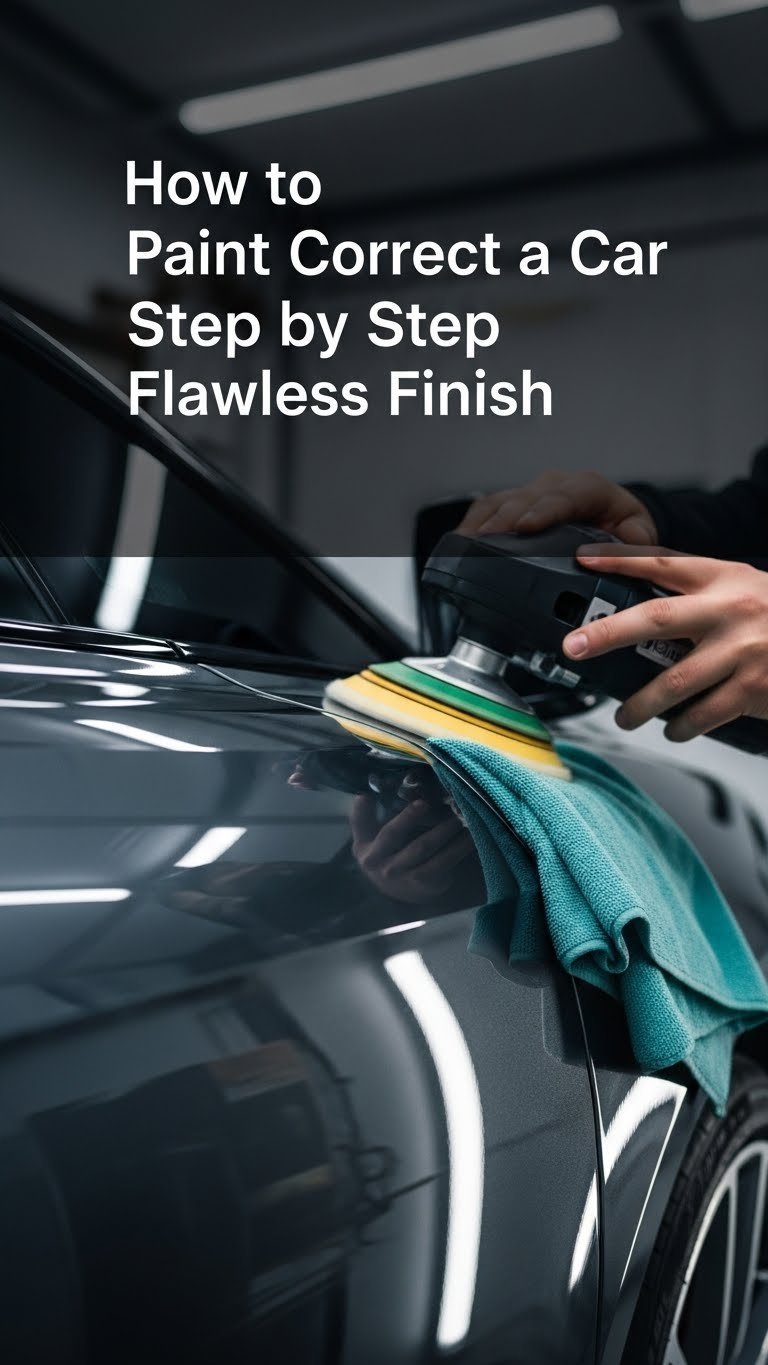
This multi-step process uses a machine polisher, abrasive compounds, and polishing pads to carefully remove a microscopic layer of the clear coat. Doing so eliminates defects that are embedded in the surface, rather than just hiding them. The main benefits of performing a paint correction are clear:
- Removes Defects: It permanently eliminates 80-95% of common surface imperfections like swirl marks, fine scratches, water spots, and oxidation.
- Increases Gloss: By creating a perfectly flat surface, it dramatically increases the paint’s gloss, depth, and reflectivity.
- Enhances Value: A car with a flawless, swirl-free finish has a significantly higher perceived value and visual appeal.
- Prepares for Protection: It creates the ideal, pure surface for a ceramic coating or paint sealant to bond to, maximizing its durability and performance.
What Tools and Supplies Do You Need for Paint Correction?
To perform paint correction, you will need a core set of tools and supplies. For a DIY enthusiast, this initial investment provides the foundation for maintaining your vehicle’s finish for years. The most critical item is the machine polisher, where a dual-action (DA) type is strongly recommended for beginners due to its safer orbital movement.
Here is a comprehensive checklist of what you’ll need:
Machine & Pads
* Dual Action (DA) Polisher: This is the essential tool. A standard DA is great for beginners, while a long-throw polisher offers more efficient cutting power for those with some experience.
* Cutting Pads: These can be microfiber or firm foam pads. They are used with compound to remove heavy defects.
* Polishing/Finishing Pads: These are softer foam pads used with polish to refine the finish and maximize gloss.
* Backing Plate: Ensure you have the correct size backing plate (e.g., 5-inch) for your chosen pads.
Chemicals & Compounds
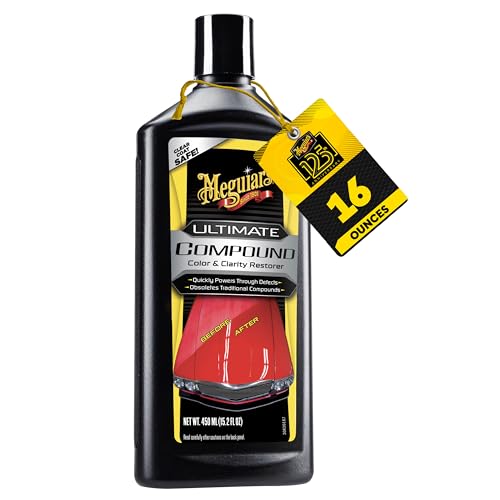
* Cutting Compound: A heavy abrasive liquid designed to remove significant defects.
* Finishing Polish: A fine abrasive liquid used after compounding to restore a high-gloss, swirl-free finish.
* Iron Remover: A chemical spray that dissolves embedded ferrous particles (brake dust, industrial fallout) from the paint.
* Clay Bar or Clay Mitt: A tool used to mechanically remove bonded contaminants like tree sap and road tar.
* Clay Lubricant: A slick spray required to allow the clay bar to glide safely over the paint without marring.
* Isopropyl Alcohol (IPA) Panel Wipe: A solution (typically 15-50% dilution) used to wipe away polishing oils and inspect your true results.
Safety & Accessories
* High-Quality Masking Tape: Automotive-specific tape (like 3M green or blue) is a must to protect plastic trim, rubber seals, and panel edges.
* Bright LED Inspection Light: This is non-negotiable. It reveals swirls and defects that are invisible in normal lighting.
* Dozens of Clean Microfiber Towels: You can never have too many. Use separate towels for compound removal, polish removal, and panel wiping.
* Paint Depth Gauge: Highly recommended, especially if working on an older car or one that has been corrected before. It measures the total paint thickness to ensure you don’t remove too much clear coat.
Pro Tip: Buy more microfiber towels than you think you need. Using a contaminated towel is one of the fastest ways to put scratches right back into the paint you just perfected. A 24-pack is a good starting point.
How Do You Prepare a Car for Paint Correction? (The Critical 3-Step Prep Stage)
To properly prepare a car for paint correction, you must follow a strict three-stage process: a thorough decontamination wash, chemical and mechanical decontamination, and finally, inspection and masking. This preparation phase is the most important part of the entire process. Attempting to polish a dirty or contaminated car will grind that grit into the paint, causing far more damage than you fix. Every minute spent here pays off tenfold in the final result.
Step 1: How Do You Perform a Decontamination Wash?
A decontamination wash uses the two-bucket method and a quality car shampoo to safely remove all loose dirt and grime without inflicting new scratches. This is the foundation of a safe correction. The goal is to get the car as clean as possible before any physical or chemical decontamination.
- Prepare Buckets: Fill two 5-gallon buckets with water. Place a Grit Guard in the bottom of each. Add a pH-neutral or “strip” car shampoo to one bucket (the “Wash Bucket”) and leave the other with just water (the “Rinse Bucket”).
- Pre-Rinse: Thoroughly rinse the entire vehicle with a pressure washer or strong hose stream to knock off as much loose dirt and debris as possible. Work from top to bottom.
- Wash Panel-by-Panel: Dunk your wash mitt into the soap bucket. Wash a single small section (e.g., half a door). Before returning for more soap, rinse the dirty mitt thoroughly in the rinse bucket, rubbing it against the Grit Guard. This prevents dirt from contaminating your soap bucket.
- Final Rinse: Once the entire car is washed, give it a final, thorough rinse to remove all soap residue. Do not dry the car yet.
Why this matters: The two-bucket method is a professional detailing standard. It ensures that the dirt you remove from the car stays in the rinse bucket, preventing you from dragging it back across the paint and creating the very swirl marks you’re trying to remove.
Step 2: How Do You Decontaminate with Clay and Chemicals?
After washing, you must remove the contaminants that are stuck in the paint, not just sitting on it. This is a two-part process: chemical decontamination to dissolve metal particles, followed by mechanical decontamination with a clay bar to pull out everything else.
- Chemical Decontamination (Iron Remover): While the car is still wet, spray an iron remover liberally on all painted surfaces and wheels. Wait 2-4 minutes. You will see the chemical react with tiny metal specks (ferrous particles) and “bleed” purple. This is the product working to dissolve brake dust and industrial fallout. After the reaction, thoroughly rinse the vehicle again.
- Mechanical Decontamination (Clay Bar): Working on a wet panel, mist a 2’x2′ section with a dedicated clay lubricant. Glide a fresh piece of clay bar back and forth over the lubricated area with very light pressure. You will feel it “grabbing” at first. Continue until the clay glides smoothly. Fold the clay on itself frequently to expose a clean surface.
Safety Warning: If you drop your piece of clay on the ground, throw it away. It will have picked up sharp grit that will severely scratch your paint. Do not take the risk.
A great way to check your work is the “plastic baggie test.” Put your hand inside a thin plastic sandwich bag and gently glide it over the paint. If you feel any grittiness, the area needs more claying. If it feels perfectly smooth as glass, it’s decontaminated.
Step 3: Why Is Inspecting and Masking So Important?
This final prep step involves wiping the car dry, inspecting it with a light, and taping off all sensitive areas to prevent damage from the polisher. Polishers can burn or permanently stain unpainted plastic and rubber trim.
- Dry and Wipe: Dry the vehicle completely with clean, soft microfiber drying towels. Then, go panel by panel and wipe each section with an IPA panel wipe solution. This removes any leftover lubricants or old wax, revealing the true condition of the paint.
- Inspect: Take your bright LED inspection light and hold it at various angles to the paint. This is when you will see the full extent of the swirl marks, scratches, and other defects you will be targeting.
- Mask: Carefully apply high-quality automotive masking tape to protect any area you don’t want the polisher to touch.
Areas to Mask:
* All unpainted black or grey plastic trim
* Rubber window and door seals
* Headlight and taillight edges
* Car emblems and badges
* Sharp body panel edges (where paint is thinnest)
How Do You Perform a 2-Step Paint Correction? (Compounding & Polishing)
To perform a 2-step paint correction, you will use a heavy cutting compound to remove the majority of defects, then follow with a fine finishing polish to refine the paint and create extreme gloss. This two-stage approach ensures you are not trying to do two jobs with one product. The first step is for heavy lifting, and the second is for artistic refinement. Before starting on the car, always perform a “test spot” on an inconspicuous area (like the lower part of a door) to find the best pad and compound combination for your car’s paint.
Step 4.1: How Do You Complete the Cutting/Compounding Stage?
The compounding stage uses a cutting pad and a heavy cut compound on a DA polisher at speed 4-5 to remove about 80-95% of visible defects like swirls and medium scratches. The goal of this step is defect removal, not perfect gloss. Don’t chase perfection here; focus on creating a level surface.
- Prime the Pad: Apply 3-4 pea-sized drops of cutting compound to a clean cutting pad (microfiber or firm foam). For a new pad, you may need to spread the compound across the face with your finger to “prime” it.
- Set Machine Speed: Set your DA polisher to a low speed (1-2) to spread the compound over a 2’x2′ section of the paint.
- Increase Speed and Begin Passes: Increase the speed to 4-5. With light to medium pressure, move the polisher in an overlapping “cross-hatch” pattern. Make 2-3 passes going up and down, then 2-3 passes going left and right. Your arm speed should be slow, about 1 inch per second.
- Wipe and Inspect: After 4-6 total passes, turn the machine off while it’s still on the panel. Use a clean microfiber towel to wipe away the compound residue. Use your IPA spray and inspection light to check your work. The majority of swirls should be gone, but the paint may look slightly hazy. This is normal.
- Clean Pad and Repeat: Use a brush or compressed air to clean the pad before moving to the next section to prevent spent compound from reducing effectiveness.
Settings & Technique Summary (Cutting):
* Section Size: 2’x2′
* Machine Speed: 4-5
* Passes: 4-6 total in a cross-hatch pattern
* Pressure: Light-to-Medium
* Arm Speed: ~1 inch per second
Step 4.2: How Do You Complete the Finishing/Polishing Stage?
The finishing polish stage uses a soft foam pad and a fine polish on a DA polisher at a lower speed of 3-4 to remove any haze from compounding and refine the paint to a high-gloss, flawless finish. This is the step that creates the “wet look” and deep reflections. The technique is similar to compounding, but with less pressure and speed.
- Switch Pad and Polish: Switch to a clean, soft foam finishing pad. Apply 3-4 pea-sized drops of your finishing polish.
- Spread and Polish: Spread the polish on your 2’x2′ section at low speed. Increase the speed to 3-4.
- Refine the Paint: Using only the weight of the machine for pressure, repeat the slow, overlapping cross-hatch pattern for 2-4 total passes. This gentle action, often called “jeweling the paint,” refines the surface and removes any micro-marring left from the aggressive compounding step.
- Final Wipe and Inspection: Wipe away the polish residue with a fresh microfiber towel and your IPA spray. Inspect with your light. The haze should be gone, replaced by a deep, crystal-clear, swirl-free shine. You can now repeat this 2-step process across the entire vehicle, panel by panel.
Pro Tip: For the final pass in your polishing section, slow your arm speed even more and lift the polisher off the paint while it’s still moving. This feathering technique helps prevent any chance of leaving buffer trails.
How Do You Protect Your Paint After Correction?
After paint correction, you must protect the freshly exposed clear coat with a layer of wax, sealant, or a ceramic coating to prevent future damage. The paint is now perfectly clean but completely vulnerable to UV rays, acid rain, and new scratches. Applying a Last Step Product (LSP) is not optional; it’s the final, crucial step to lock in your hard work. The best choice depends on your budget, desired durability, and how much time you want to spend on future maintenance.
Here is a comparison of the three main protection options:
| Feature/Aspect | Carnauba Wax | Paint Sealant | Ceramic Coating |
|---|---|---|---|
| Durability | 1-3 Months | 6-12 Months | 2-5+ Years |
| Gloss/Look | Warm, deep glow | Sharp, reflective | Hard, candy-like gloss |
| UV Protection | Good | Better | Best |
| Chemical Resistance | Low | Medium | High |
| Application Difficulty | Easy | Easy | Difficult |
| Cost | Low | Medium | High |
- Carnauba Wax: The traditional choice, offering a beautiful warm glow. It is easy to apply but has the shortest lifespan, requiring reapplication every 1-3 months.
- Paint Sealant: A synthetic polymer that provides a sharp, highly reflective shine. It’s a great middle-ground, offering much better durability (6-12 months) than wax with a similarly easy application process.
- Ceramic Coating: The most durable option. These liquid SiO2 (Silicon Dioxide) formulas create a hard, semi-permanent layer of protection that can last for years. They offer the best resistance to chemicals and UV rays but are the most expensive and have a much more difficult and sensitive application process.
Our Recommendation: For most DIYers who have just completed their first paint correction, a high-quality paint sealant offers the best combination of excellent durability and user-friendly application. It provides months of robust protection without the steep learning curve of a ceramic coating.
FAQs About how to paint correct a car
How much does DIY paint correction cost?
For a DIYer, the initial investment in tools and supplies for paint correction typically ranges from $250 to $500. This includes a quality dual-action polisher ($150-$250), a set of pads ($50), compounds and polishes ($50), and miscellaneous supplies like tape and towels ($50). While this is more than a single professional detail, the tools are reusable for years, making it highly cost-effective over time.
How long does paint correction last?
The paint correction itself is permanent because it physically levels the clear coat. The scratches are gone for good. However, the paint can get new scratches over time. The longevity of the flawless finish depends entirely on how you protect it afterward and your washing technique. With a ceramic coating and safe washing methods, the results can be maintained for years.
What is the difference between polishing and paint correction?
Paint correction is a multi-step process, while polishing is just one step within it. “Paint correction” refers to the entire process, including the heavy compounding stage to remove deep defects. “Polishing” is typically the final, refining step that removes haze and maximizes gloss. A simple “polish” might hide minor swirls, but a full “correction” permanently removes a wide range of defects.
How many times can you paint correct a car?
A car can typically be safely paint corrected 2-4 times over its lifespan. Each correction removes a small amount of clear coat (typically 1-3 microns), and modern vehicles have about 40-60 microns of clear coat from the factory. Using a paint depth gauge is the only way to know for sure how much clear coat is remaining and is highly recommended for any car that has been corrected before.
Can you paint correct a car by hand?
While you can technically apply compounds and polishes by hand, it is not effective for true paint correction. Hand application lacks the power, speed, and consistency of a machine polisher to actually level the clear coat and remove anything more than the lightest of micro-swirls. For removing visible scratches and achieving a flawless finish, a machine polisher is essential.
Does paint correction remove deep scratches?
Paint correction can remove any scratch that has not gone through the clear coat. A common test is the “fingernail test”: if you can run your fingernail over the scratch and it catches, the scratch is likely too deep to be safely removed. Deep scratches that have gone through to the paint or primer layer will require touch-up paint or a respray.
What is the difference between a 1-step and 2-step correction?
A 2-step correction is more thorough, using a separate compounding and polishing step for maximum defect removal and gloss. A 1-step correction (or “paint enhancement”) uses a medium-cut polish and pad to achieve a balance of defect removal and finishing in a single pass. It’s faster but typically only removes 50-70% of defects, making it ideal for cars in good condition.
How do you fix hazy paint or buffer trails after polishing?
Hazy paint or buffer trails are typically caused by an aggressive compound/pad combination or improper technique. To fix this, you must follow up with a less aggressive step. Use a soft foam finishing pad, a fine finishing polish, and slow your machine speed down (to 3-4). Use very light pressure for 2-4 slow passes to refine the paint and clear up the haze.
How often should you paint correct a car?
You should only paint correct a car when it is necessary, not as routine maintenance. If the car is covered in heavy swirl marks and scratches that bother you, it’s time for a correction. For a well-maintained car with a good protective coating, you may never need a full correction again. Minor enhancements might be done every few years if needed.
Is paint correction safe for new cars?
Yes, paint correction is safe for new cars and is often necessary. New cars can accumulate significant swirl marks and defects from the dealership during transport and improper “prep” washes. A light paint correction or polish on a new car can perfect the finish before a ceramic coating is applied, ensuring it looks its absolute best from the start.
Final Thoughts on How to Paint Correct a Car
You now have the complete, step-by-step blueprint for transforming your car’s finish. Remember, paint correction is a methodical process that rewards patience and attention to detail. By following the preparation, correction, and protection stages outlined in this guide, you can safely remove years of defects and achieve a level of gloss and clarity you may not have thought possible. Don’t be intimidated; start with a test spot, trust the process, and get ready to be amazed by the professional, flawless finish you can achieve right in your own garage. Your car will look better than the day it left the showroom.
Last update on 2026-01-13 / Affiliate links / Images from Amazon Product Advertising API


![What Car Is Chevy Bringing Back in [year]? New Lineup Revealed](https://carxplorer.com/wp-content/uploads/2026/01/What-Car-Is-Chevy-Bringing-Back-in-year-New-Lineup-Revealed-1-1-60x60.jpg "What Car Is Chevy Bringing Back in [year]? New Lineup Revealed 10")
