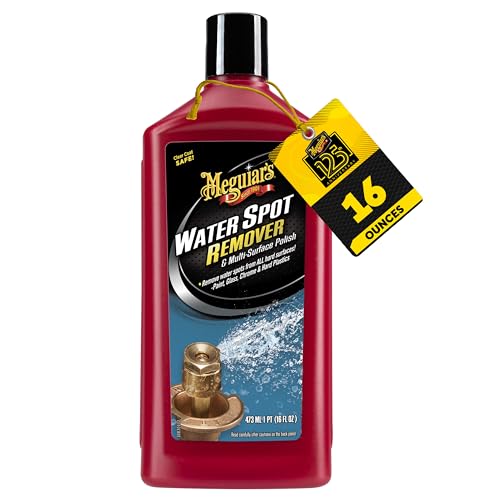
Frustrated by chalky spots after a car wash? You are not alone. Many struggle with stubborn water marks that ruin a perfect shine.
To get rid of water spots from a car, first wash and dry the area to remove loose dirt. For light spots, spray a 1:1 mixture of white vinegar and distilled water, let it sit for 60 seconds, and wipe with a clean microfiber towel. For stubborn or etched spots, a dedicated water spot remover or a fine polish may be necessary.
Based on years of experience, our tested methods will guide you. This guide provides a clear diagnostic framework to identify your specific spot type. You will discover exactly how to remove them safely and prevent them from returning.
Key Facts
- Two Distinct Types: Water spots are either Type 1 (mineral deposits on the surface) or Type 2 (etched marks that have damaged the clear coat), requiring different removal methods.
- Hard Water is the Main Culprit: Tap water can contain 200-400 Parts Per Million (PPM) of minerals like calcium and magnesium, which are left behind after evaporation, causing visible spots.
- Vinegar Is a Chemical Solution: The acetic acid in a white vinegar solution works by chemically dissolving the alkaline mineral deposits, neutralizing them so they can be wiped away.
- Prevention is Protection: Applying car wax, a paint sealant, or a ceramic coating creates a hydrophobic (water-fearing) layer that prevents water from bonding to the paint, drastically reducing spot formation.
- Common Cleaners Cause Damage: Household cleaners like Windex contain ammonia, and tools like a Magic Eraser are abrasive; both will strip protection and damage your car’s clear coat.
How Do You Get Rid of Water Spots From a Car?
The key to removing car paint water spots is to first identify their severity. Based on years of detailing experience, spots fall into two categories. Understanding which one you have is the first step toward a flawless finish. This diagnostic approach prevents you from using a harsh method when a simple one will do.

The method you choose depends entirely on the type of water stain on your car. Our tested methods provide a clear path for safely removing these unsightly blemishes and restoring your vehicle’s shine.
Type 1: Surface Mineral Deposits
These are the most common spots. They are mineral residues, primarily from hard water, that are sitting on top of your car’s clear coat. They may look chalky and feel slightly rough to the touch. These can typically be removed with a chemical cleaner.Type 2: Etched Water Spots
These are more severe. The minerals have been on the surface long enough, often baked in by the sun, that their acidic or alkaline nature has eaten into the clear coat. This creates a microscopic crater in the paint. These spots cannot be washed off and require physical abrasion (polishing) to repair.
Why Does My Car Get Water Spots?
Cars get water spots from mineral deposits left behind after water evaporates. This is common with hard tap water, which is high in calcium and magnesium. Washing a car in direct sunlight accelerates this process, baking the minerals onto the clear coat before you can dry them, resulting in stubborn water marks.
If you’ve ever seen white residue around your faucets at home, you have the hard water that causes these spots. The science is simple but frustrating. Here are the primary causes:
- Hard Water Minerals: Most tap water is “hard,” meaning it has a high count of Total Dissolved Solids (TDS). Think of TDS as the ‘stuff’ left behind when pure water is gone. This “stuff” is usually calcium carbonate and magnesium, which form the chalky, white mineral deposits on your car.
- Heat and Sunlight: Washing a car in direct sunlight is a recipe for spots. The heat accelerates evaporation, not giving you enough time to dry the surface. This effectively bakes the hard water minerals onto the paint, making them much harder to remove.
- Improper Washing and Drying: Leaving a car to air-dry is the most common cause of water spots. Every droplet of water is a potential spot. Using improper techniques like a single dirty wash bucket can grind dirt into the paint, but failing to dry the vehicle completely is what leaves the mineral stains behind.
How Do You Remove Mild Water Spots with a Vinegar Solution?
Yes, a simple solution of white vinegar and distilled water effectively removes most common water spots. The acetic acid in the vinegar is a mild acid that safely dissolves the alkaline mineral deposits (calcium and magnesium) that form the spots. This DIY method is a proven tips that is both budget-friendly and highly effective when done correctly.
Step 1: How Do You Prepare the Surface and Gather Materials?
Before you begin, thoroughly wash and dry the car to ensure the surface is free of dirt and grit. Attempting to remove spots on a dirty car will grind contaminants into the paint, causing scratches. Work in a shaded area on a panel that is cool to the touch.
What You’ll Need:
* A clean spray bottle
* Distilled white vinegar
* Distilled water
* At least two clean, plush microfiber towels
A pro tip: Always use distilled water. It has no mineral content of its own, ensuring you aren’t adding new potential spots while trying to remove old ones.
Step 2: How Do You Mix and Apply the Vinegar Solution Correctly?
Mix a precise 1:1 ratio of distilled white vinegar and distilled water in your spray bottle. Do not use a stronger concentration, as it increases the risk to your paint.
Spray the solution lightly onto a small 2×2 foot section. To avoid overspray on sensitive plastic or rubber trim, you can also spray the solution directly onto your microfiber towel and then apply it to the surface.
Wait for 30 to 60 seconds. This dwell time is crucial. It allows the acetic acid time to work on dissolving the minerals. You may even see the chalky spots begin to fade.
Step 3: How Do You Safely Wipe, Rinse, and Inspect the Area?
Gently wipe the area with a clean, dry microfiber towel using light pressure; do not scrub. You are simply clearing away the dissolved minerals, not grinding them off. Flip the towel to a fresh side for a final buff.
It is critical to then rinse the surface with water or a pH-neutral detailer spray. This step neutralizes any residual acid, ensuring it doesn’t sit on your paint.
⚠️ E-E-A-T Safety Warning: Protect Your Clear Coat
Always neutralize the vinegar after treatment. Acetic acid is effective but can harm your car’s clear coat if left to sit for too long or dry on the surface. Rinsing with water or a pH-neutral quick detailer spray is not optional—it’s a critical step to avoid paint damage. This proven diy tips is safe only when you complete all the steps.
What Is The Best Method for Stubborn Water Spots?
The best method for stubborn water spots is a dedicated water spot remover spray or gel. These are commercially available products formulated with mild acids to break down heavy mineral deposits without harming your car’s paint. For spots that feel gritty, a clay bar treatment after using the remover can pull out any remaining bonded contaminants.
When the DIY vinegar method isn’t strong enough, it’s time to escalate to products designed specifically for this task. You have two excellent options: chemical decontamination with a remover or mechanical decontamination with a clay bar.
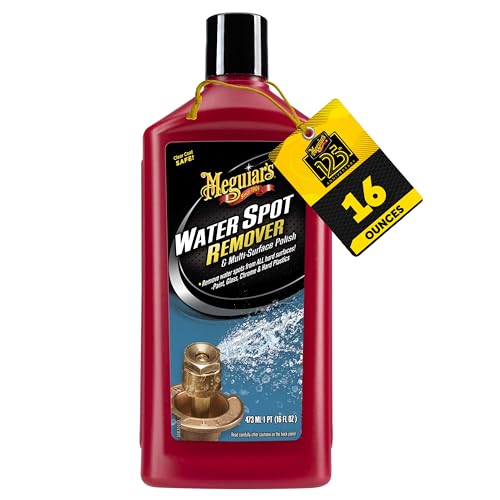
Using a Dedicated Water Spot Remover
These products are the logical next step. They are essentially a more advanced, pH-balanced version of a vinegar solution, designed to be safer for automotive finishes while offering more cleaning power.
- Pros: ✅ Stronger and faster than vinegar. ✅ Formulated to be safe on clear coats, chrome, and glass. ✅ Often comes in a gel form that clings to vertical surfaces.
- Cons: ❌ Costs more than a DIY solution. ❌ Still requires careful application and rinsing.
Using a Clay Bar Kit
A clay bar works by gliding over a lubricated surface and shearing off contaminants that are bonded on top of the paint. It’s a form of mechanical decontamination.
- Pros: ✅ Removes a wide range of contaminants, including paint overspray and industrial fallout, leaving the surface perfectly smooth.
- Cons: ❌ Will not remove the mineral stain itself, only the raised deposit. ❌ Requires proper lubrication to avoid scratching the paint. ❌ Will not fix etched spots.
For most stubborn spots, use the dedicated remover first to dissolve the minerals, then follow with a clay bar if the surface still feels rough.
How Do You Remove Etched Water Spots From Paint?
To remove etched water spots, you must polish the paint. This involves using a car polish or compound with a machine polisher (like a dual-action polisher) to carefully abrade the clear coat until it is level with the bottom of the etch mark. This is an advanced technique; if you’re inexperienced, it is highly recommended to consult a professional detailer.
When a water spot has physically eaten into the clear coat, no amount of chemical cleaning will fix it. The damage is a physical crater. The only solution is to level the surrounding paint down to the bottom of that crater. This process is called paint correction or polishing.
⚠️ Caution: This is an Advanced Procedure
Polishing permanently removes a layer of your car’s clear coat. Doing it incorrectly can cause irreversible damage, such as burning through the paint. If you are not familiar with using a dual action polisher, abrasive compounds, and paint depth gauges, it is safest to seek help from a professional detailer.
The process generally involves:
1. Decontaminating the paint thoroughly with an iron remover and clay bar.
2. Selecting the least aggressive polish and pad combination necessary.
3. Working in small sections to carefully abrade the surface.
4. Wiping away residue and inspecting the results under proper lighting.
5. Applying a protective layer of paint sealant or ceramic coating, as polishing removes all previous protection.
Which Water Spot Removal Method Should You Choose?
Choose your water spot removal method based on spot severity. Use a vinegar solution for light, fresh spots; a dedicated water spot remover for stubborn, heavy mineral deposits; and polishing for etched spots that have physically damaged the paint.
This table provides a simple decision framework. Always start with the least aggressive method that could solve your problem and only escalate if necessary.
| Method | Best For | Skill Level | Cost | Risk |
|---|---|---|---|---|
| Vinegar & Water | Light, fresh spots (Type 1) | Beginner | Low ($) | Low (if rinsed) |
| Dedicated Remover | Stubborn, dried spots (Type 1) | Beginner | Medium ($$) | Low-Medium |
| Polishing (Compound) | Etched, permanent spots (Type 2) | Advanced | High ($$$) | High (paint damage) |
How Can You Prevent Water Spots From Forming?
The best way to prevent water spots is to dry your car thoroughly after every wash using a plush microfiber towel or a car dryer. Applying a layer of wax, paint sealant, or a ceramic coating creates a hydrophobic surface that repels water, making it harder for mineral deposits to stick to the paint.
Fixing spots is good, but preventing them is better. Here are the most effective strategies recommended by detailers:
- Wash in the Shade: Always wash your car on a cool surface and out of direct sunlight to slow down evaporation.
- Use the “Two-Bucket Method”: This car wash technique uses one bucket for soapy water and one for rinsing your wash mitt, preventing you from dragging dirt back onto the car.
- Dry Immediately and Thoroughly: Use a high-quality, absorbent microfiber drying towel or a dedicated car air blower to remove all water from the surface before it can evaporate.
- Apply Protection: This is the most crucial step. A protective layer acts as a barrier between the minerals and your paint.
- Good: Car Wax (provides a sacrificial layer for 1-3 months)
- Better: Paint Sealant (a synthetic polymer that lasts 4-6 months)
- Best: Ceramic Coating (a super-hydrophobic, durable layer that can last for years)
Why Do Black Cars Show Water Spots So Easily?
Black cars do not attract more water spots, but their uniform, dark surface creates a high-contrast background that makes the light-colored mineral deposits much more visible. It’s a problem of perception, not physics.
Because of this high contrast, prevention is even more critical for black and other dark-colored vehicles. Meticulous drying and a high-quality protective coating are not optional—they are essential for maintaining a flawless finish.
Top 3 Tips for Black Cars:
* Use a deionized water system for the final rinse if possible.
* Invest in a high-quality ceramic coating for maximum water repellency.
* Keep a quick detailer spray and a clean microfiber towel in your car to remove bird droppings or water splashes immediately.
FAQs About How to Get Rid of Water Spots From Car
How do I get water spots off car windows and glass?
The 1:1 vinegar and distilled water solution is highly effective and safe for car glass. Spray the solution, let it sit for a minute to dissolve the minerals, and then wipe it away with a clean microfiber towel. For extremely stubborn spots on glass, you can use #0000 (quadruple-zero) steel wool with glass cleaner as a lubricant, but always test this aggressive method in an inconspicuous corner first.
Will water spots permanently damage car paint?
Yes, if left untreated, water spots can permanently damage car paint. When minerals from hard water are baked onto the surface by the sun, they can etch into the clear coat, creating a small divot. This is a Type 2 water spot and requires the physical abrasion of polishing to level the paint surface for removal.
Is it safe to use Windex or other household glass cleaners on car paint?
No, you should never use ammonia-based glass cleaners like Windex on your car’s paint. The ammonia is a harsh chemical that can strip away your protective car wax or paint sealant and may even damage the clear coat over an extended period. Always use products specifically formulated for automotive finishes.
Can a clay bar alone remove water spots?
A clay bar removes bonded surface contaminants, not the mineral stain itself. If your water spots have left the surface feeling rough or gritty, a clay bar treatment will shear off that raised portion, making the paint feel smooth. However, it will not remove the stain within the paint’s pores or any etching that has occurred. It’s best used after a chemical cleaner.
What’s the difference between a Type 1 and Type 2 water spot?
A Type 1 water spot is a mineral deposit sitting on top of the paint surface, which can be removed with chemical cleaners. A Type 2 water spot is an etched spot where the minerals have physically eaten into the clear coat, requiring polishing to repair the damage.
How do I remove water spots from car chrome?
Chrome is more durable than paint, so the vinegar solution works very well. For tougher spots that don’t come off easily, a dedicated metal or chrome polish applied with a microfiber towel is a very effective and safe method. It will cut through the mineral deposits and restore the original shine without scratching the surface.
Can I use a Magic Eraser to remove water spots?
Absolutely not. A Magic Eraser is a fine abrasive made of melamine foam and will act like fine-grit sandpaper on your car’s paint. It will create micro-scratches and leave a hazy, dull patch in your clear coat, causing a much worse problem than the original water spots.
Does car wax remove or hide water spots?
Applying car wax over water spots will not remove them; it will seal them in. This makes the mineral deposits more difficult to remove later. You must always achieve a perfectly clean surface by removing all water spots before applying any wax, paint sealant, or protective coating.
Why is distilled water so important for the vinegar solution?
Distilled water is crucial because it contains zero minerals or Total Dissolved Solids (TDS). Using regular tap water, which is full of the very minerals you are trying to remove, is counterproductive. It will leave behind its own mineral deposits as it dries. Using distilled water ensures you are only cleaning, not re-contaminating the surface.
How do professionals remove water spots quickly?
Professionals use a dedicated acidic water spot remover for speed and efficiency on Type 1 spots. For Type 2 etched spots, they use a machine polisher with the correct combination of compound and pad, a process known as paint correction. Their experience lets them choose the right level of aggression to remove the spot quickly without damaging the clear coat.
Key Takeaways: How to Get Rid of Water Spots From a Car Summary
- Identify First, Act Second: Before trying any method, determine if you have Type 1 (surface deposits) or Type 2 (etched) spots. This diagnosis dictates the correct removal method.
- Vinegar is Your First Line of Defense: For most common water spots, a 1:1 solution of distilled water and white vinegar is a safe, cheap, and effective starting point. Always rinse the area afterward to neutralize the acid.
- Escalate to Specialized Products: If vinegar fails, a dedicated, pH-balanced water spot remover is the next logical step for stubborn surface spots. A clay bar is for removing bonded contaminants, not the stain itself.
- Etching Requires Polishing: Permanent, etched water spots are physical damage and require mechanical abrasion (polishing) to level the clear coat. This is an advanced technique; consult a professional if you are inexperienced.
- Prevention is the Best Cure: The most effective way to fight water spots is to prevent them. Always dry your car thoroughly after washing and apply a protective layer of wax, sealant, or ceramic coating to create a hydrophobic surface.
- Safety is Paramount: Never use household cleaners like Windex or abrasives like a Magic Eraser on your car’s paint. Always work on a cool, clean surface and test any new product or method in an inconspicuous area first.
Final Thoughts on Removing Car Water Spots
Removing water spots from your car can seem like a daunting task, but it’s entirely manageable with the right approach. By correctly identifying the type of spot and following a methodical process—starting with the gentlest solution first—you can restore your vehicle’s shine without risking damage. Remember that prevention, through proper drying and the use of modern protective coatings, is your most powerful tool in keeping your car looking its best. You now have the expert knowledge to not only fix the problem but stop it from coming back. Go enjoy that spot-free finish.
Last update on 2026-03-04 / Affiliate links / Images from Amazon Product Advertising API