
Struggling with how to get hard water spots off car windows? Those stubborn, cloudy blemishes ruin your visibility and are frustratingly difficult to remove with a standard car wash. They seem to reappear no matter what you try.
To get hard water spots off car windows, start with the least aggressive method: a 50/50 solution of white vinegar and distilled water. Spray the solution onto the glass, let it sit for 1-2 minutes to dissolve the minerals, and then scrub gently with a microfiber cloth. Rinse the area thoroughly with clean water and dry completely.
Based on extensive testing of various methods, this guide provides a safe, step-by-step process for restoring your glass. You will learn how to tackle everything from light mineral buildup to stubborn, etched water spots using proven, effective techniques that protect your vehicle’s glass.
Key Facts
- Mineral Deposits are the Culprit: Hard water spots are visible mineral deposits, primarily calcium and magnesium, that are left behind on your car’s glass after water evaporates.
- Heat Makes it Worse: The sun’s heat can bake these alkaline mineral deposits onto the glass surface, making them significantly harder to remove and increasing the risk of permanent etching.
- There are Two Types of Spots: Surface-level spots (Type 1) sit on top of the glass and are removable with cleaners. Etched spots (Type 2) have corroded the glass surface and require polishing to fix.
- Acid is the Answer: Because the mineral deposits are alkaline, a mild acid is needed to dissolve them. This is why a simple solution of white vinegar (acetic acid) and water is the most effective starting point.
- The Wrong Tool Causes Damage: Using an abrasive that is too coarse, such as household steel wool or harsh scrub pads, will create fine scratches in the glass that are often more visible and harder to fix than the original water spots.
How Do You Get Hard Water Spots Off Car Windows Safely?
The safest way to get hard water spots off car windows is to start with the mildest cleaning solution and gradually move to stronger methods only if needed. Hard water spots are stubborn mineral buildup left behind when water evaporates, but a methodical approach can restore that crystal clear look without damaging your glass. This process involves using the right cleaners and tools in the correct order, from simple household solutions to specialized automotive products.

Successfully removing these marks requires understanding the type of spot you’re dealing with and applying the right technique. Most spots are surface-level and can be removed with a simple acidic cleaner. However, more stubborn spots may require a mild abrasive or even a dedicated automotive glass polish for a perfect finish. In this guide, we’ll walk through the tested methods that professional detailers use.
Here’s what you’ll learn to safely restore your car’s glass:
- The science behind why hard water leaves spots.
- The essential tools and materials you’ll need.
- A step-by-step guide to the vinegar method for light spots.
- How to tackle stubborn spots with a baking soda paste.
- The expert-level approach for removing permanent, etched spots.
- How to prevent water spots from coming back.
Why Does Hard Water Leave Spots on Glass?
Hard water leaves spots on glass because it is rich in dissolved minerals, primarily calcium and magnesium. When water evaporates from your car’s window, these heavy minerals don’t evaporate with it. They are left behind as a chalky, white residue, forming the visible spots. This process is called evaporative deposition.
The concentration of these minerals is measured as Total Dissolved Solids (TDS). The higher the TDS, the “harder” the water and the more severe the spotting will be. When a single droplet of hard water dries on your auto glass, all the minerals that were in that droplet are now concentrated in one tiny spot. Heat from direct sunlight accelerates this process, baking the alkaline minerals onto the smooth surface of the glass and making the bond even stronger.
Expert Insight: It’s crucial to distinguish between two types of water spots.
* Type 1 (Surface Deposits): These are fresh mineral deposits sitting on top of the glass. They feel slightly rough to the touch and can be removed with chemical cleaners.
* Type 2 (Etched Spots): These are older spots where the alkaline minerals have started to corrode and permanently etch the glass surface. They may feel smooth, as they are now part of the glass itself, and require polishing to remove.
Understanding this distinction is key. If you are cleaning a Type 1 spot, an acidic cleaner will work. If the spot is etched (Type 2), no amount of cleaning will remove it; the glass surface itself must be repaired.
What Tools and Materials Will You Need?
To remove hard water spots from car windows, you will need basic household items like distilled white vinegar, baking soda, and distilled water. Essential tools include several clean microfiber towels, a spray bottle, and an applicator pad. For safety, it is recommended to wear nitrile gloves and safety glasses, especially when working with chemical cleaners.
Gathering everything you need before you start makes the process smoother and safer. Here is a complete checklist broken down by category.
Cleaning Agents
- Distilled White Vinegar: The acetic acid in vinegar is perfect for dissolving light mineral deposits.
- Distilled Water: Crucial for mixing with cleaners. Using tap water can re-introduce minerals onto the glass.
- Baking Soda: When mixed with water to form a paste, it acts as a very mild abrasive for stubborn spots.
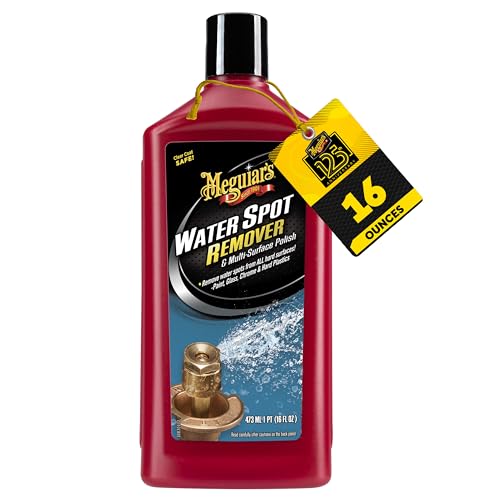
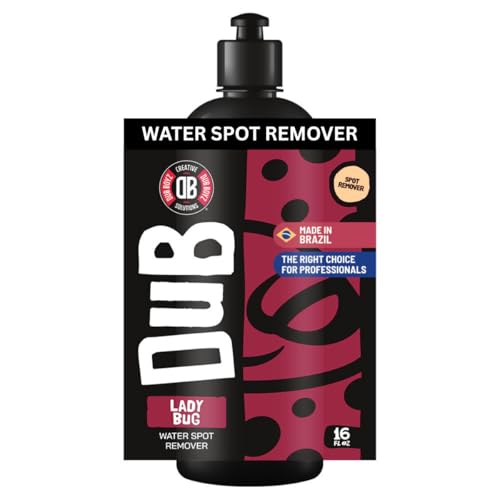
- Commercial Water Spot Remover (Optional): A chemically formulated product for tougher jobs.
- Automotive Glass Polish (Optional): For advanced use on etched spots, containing a micro-abrasive like cerium oxide.
Applicator Tools
- Spray Bottle: For applying the vinegar and water solution evenly.
- Microfiber Towels (At least 3-4): One for cleaning, one for drying, and one for wiping up overspray. Microfiber is soft and prevents scratches.
- Foam or Microfiber Applicator Pad: Ideal for applying pastes or polishes.
- #0000 (Super Fine) Steel Wool (Optional, use with extreme caution): For very stubborn, non-etched spots.
Safety Equipment
- Nitrile Gloves: To protect your hands from drying out or from chemical irritation.
- Safety Glasses: To protect your eyes from any splashes or overspray.
How Do You Remove Mild Water Spots with a Vinegar Solution?
To remove mild water spots, use a solution of 50% distilled white vinegar and 50% distilled water. Spray the mixture directly onto the glass, allow it to sit for about one minute to break down the mineral deposits, and then gently agitate the area with a clean microfiber cloth in a circular motion. It is crucial to rinse the glass thoroughly with clean water afterwards to neutralize the acid. This is the safest and most common DIY method.
Step 1: How Do You Prepare and Apply the Vinegar Solution?
To prepare the solution, mix equal parts distilled white vinegar and distilled water in a clean spray bottle. Using distilled water is a critical pro-tip, as it contains no minerals and won’t cause new spots. Shake the bottle well to combine the liquids.
Spray the solution liberally onto the affected areas of the car window. Work on one window at a time, especially on a warm day, to prevent the solution from drying too quickly.
⚠️ Caution: Avoid spraying the vinegar solution directly onto your car’s paint or plastic trim. The acid can potentially harm these surfaces if left to dwell. If overspray occurs, wipe it immediately with a separate clean, damp cloth.
Step 2: How Do You Agitate and Remove the Deposits?
After spraying the vinegar solution, let it dwell on the glass for 60-90 seconds to dissolve the minerals. This dwell time allows the acetic acid to do its work breaking down the alkaline calcium and magnesium deposits. Don’t let it dry on the surface.
Next, take a clean microfiber cloth and use gentle pressure to rub the area in small, overlapping circular motions. The combination of the chemical action from the vinegar and the light friction from the cloth will lift the mineral deposits. You should feel the surface become smoother as the spots are removed from the glass.
Step 3: Why Is Rinsing and Drying Crucial?
After removing the spots, you must rinse the window thoroughly with clean, distilled water to neutralize any remaining vinegar and wash away all loosened mineral residue. Skipping this step can leave an acidic film that might affect window trim over time and can cause new streaks as it dries.
Immediately after rinsing, dry the glass completely with a fresh, clean microfiber towel. This prevents new water spots from forming from the rinse water and ensures a perfectly clear, streak-free finish.
What Is the Best Method for Stubborn Water Spots?
For stubborn water spots, a paste made from baking soda and water acts as a mild abrasive to scrub them away. Alternatively, a dedicated commercial water spot remover uses a formulated blend of acids and polishing agents for more effective chemical removal. The best method depends on the severity of the spots and user preference for DIY versus a specialized product.
If the vinegar solution didn’t fully remove your water spots, it’s time to step up the intensity. Here is a comparison to help you decide what’s next.
| Feature/Aspect | Vinegar Solution (DIY) | Baking Soda Paste (DIY) | Commercial Remover |
|---|---|---|---|
| Effectiveness | Good for light, recent spots | Very good for stubborn surface spots | Excellent for most spots, including some light etching |
| Mechanism | Chemical (acid dissolves minerals) | Mechanical (mild abrasive) | Chemical & Mechanical (acids and polishing agents) |
| Cost | Very Low | Very Low | Low to Medium |
| Safety / Risk | Low (can harm paint if left on) | Low (must rinse thoroughly) | Medium (requires gloves, proper ventilation) |
| Time / Effort | Low | Medium | Low to Medium |
For a DIY approach with more power, create a paste with three parts baking soda to one part water. Apply this paste with a microfiber applicator pad, scrub gently in circles, and then rinse thoroughly. The baking soda provides a gentle mechanical scrubbing action that vinegar lacks.
If you prefer a faster, more potent solution, a dedicated commercial remover is often the best choice.

How Do You Remove Etched or Permanent Water Spots?
Etched water spots are permanent mineral damage to the glass surface that cannot be removed by simple cleaners. The solution is to use a dedicated automotive glass polish containing a micro-abrasive like cerium oxide to level the glass surface. This is an advanced process that should be done carefully, starting with a test spot, to avoid creating visible scratches.
If you’ve tried vinegar, baking soda, and even strong chemical cleaners with no luck, you are likely dealing with etched water spots. At this point, you are no longer cleaning something off the glass; you are repairing the glass itself.
⚠️ A Critical Warning Before You Begin
Using abrasives like #0000 steel wool or glass polish on car windows carries a high risk of creating fine scratches that are more visible and harder to fix than the original water spots. This process removes a microscopic layer of glass and should only be attempted as a last resort. Always use the finest grade abrasives available and always start in a small, inconspicuous test spot (like the very corner of a window) before proceeding to a larger area. If you are not comfortable with this risk, consult a professional auto detailer.
To proceed, apply a small amount of automotive glass polish to a microfiber applicator pad. Work the polish into a small 2’x2′ section of the glass using firm pressure and overlapping circular motions. After a few minutes, wipe the residue away with a clean microfiber towel to inspect your work. The surface should look and feel smoother, and the etching should be diminished. Repeat as needed, then clean the window with a standard glass cleaner.
How Do You Prevent Water Spots on Your Car Windows?
To prevent hard water spots, always dry your car’s windows immediately after washing using a clean microfiber towel. Avoid washing your car in direct sunlight, as the heat accelerates evaporation. For long-term protection, apply a hydrophobic glass sealant or ceramic coating, which causes water to bead up and roll off the glass instead of drying in place.
Prevention is always easier than correction. Follow these best practices to keep your glass clear:
- Dry Immediately: After washing your car or after it rains, use a high-quality, plush microfiber drying towel to remove all water from the glass before it can evaporate.
- Wash in the Shade: Washing your car in the shade or on a cool, overcast day slows down evaporation, giving you more time to dry the vehicle properly.
- Use a Water Filter: For the final rinse, using a deionized water filter system removes all minerals from the water, making it impossible for spots to form.
- Apply a Glass Sealant: A hydrophobic glass sealant (like Rain-X or a nano-ceramic protection product) creates an ultra-slick surface. Water droplets will bead up and roll right off the glass, taking any minerals with them.
FAQs About how to get hard water spots off car windows
Does vinegar damage car paint or plastic trim?
Yes, vinegar can damage your car’s paint and plastic trim if left to dwell for too long. The acetic acid that is effective at dissolving mineral spots is also strong enough to etch your car’s clear coat and discolor plastic. Always try to avoid overspray, and if it occurs, wipe it up immediately with a clean, damp microfiber cloth.
Will #0000 steel wool scratch my car window?
It can, which is why it should only be used as a last resort with extreme caution. While #0000 grade steel wool is super fine, it can still create micro-scratches in automotive glass, especially on newer cars with softer factory coatings. If you must use it, use it wet (with a glass cleaner as lubricant) and with very light pressure on a small test spot first.
Why won’t my water spots come off with vinegar or cleaners?
If regular cleaners aren’t working, the water spots have likely etched into the glass surface. This means the minerals have corroded a microscopic layer of the glass, creating a permanent defect. At this stage, you are no longer cleaning a deposit off the surface; you need to level the glass itself using an automotive glass polish with a fine abrasive like cerium oxide.
Can I use a clay bar on my car’s glass?
Yes, a clay bar is an excellent and safe tool for removing bonded surface contaminants from glass. It works well for removing things like paint overspray, tree sap, and very light mineral deposits. While it may not be strong enough for stubborn hard water spots, it’s a great step to perform after washing and before polishing to ensure the surface is perfectly clean.
Is it safe to use toilet bowl cleaner on car glass?
No, you should absolutely never use toilet bowl cleaner on your car’s glass or any other part of your vehicle. These cleaners contain harsh hydrochloric or sulfuric acids that are far too aggressive for automotive surfaces. They will permanently etch the glass, destroy your paint, and corrode any metal trim instantly.
Does Dawn dish soap remove water spots?
Dawn dish soap is excellent for removing grease and grime but is generally ineffective against hard water mineral deposits. The soap is not formulated to dissolve the calcium and magnesium that form water spots. While it’s a great first step for general cleaning, you will need to follow up with an acidic solution or mild abrasive to tackle the mineral stains themselves.
How do I stop water spots from forming after a car wash?
The key is to dry the car completely and quickly before the water can evaporate. Use a high-quality microfiber drying towel or an electric car dryer/leaf blower. Avoid washing in direct sunlight where heat accelerates evaporation. For the best results, use a deionized water source for your final rinse, as it contains no minerals to leave behind.
Can I use toothpaste to remove water spots?
While some people suggest this as a home remedy, it is not recommended. Toothpaste is a mild abrasive, but its formulation is inconsistent and not designed for automotive glass. It can leave behind a hazy residue that is difficult to remove and may not be effective on the mineral spots. It is better to use a product designed for the task, like a baking soda paste.
What’s the fastest way to remove water spots from car windows?
The fastest method for moderate to heavy spots is typically a dedicated liquid water spot remover. These products are chemically formulated to work quickly. You simply spray or wipe them on, agitate lightly with an applicator pad for 30-60 seconds, and wipe off the residue. They combine chemical action with lubrication for fast, effective results.
Can hard water spots become permanent?
Yes, if left untreated, hard water spots can become permanent by etching into the glass. The alkaline minerals slowly corrode the surface, creating a microscopic pit. Once this has occurred, the spot cannot be “cleaned” off because it is now part of the glass texture. The only way to remove it is by physically polishing the glass surface down.
Key Takeaways: How to Get Hard Water Spots Off Car Windows Summary
- Start with the Safest Method First: Always begin with a 50/50 mix of distilled white vinegar and water. This acidic solution is often all you need to dissolve light mineral deposits without resorting to harsher chemicals or abrasives.
- Stubborn Spots Require More Power: For spots that resist vinegar, a paste of baking soda and water provides a mild abrasive action. For even tougher jobs, a dedicated commercial water spot remover offers the most effective chemical cleaning power.
- Etched Spots are Damage, Not Dirt: If a spot won’t come off, it has likely etched (corroded) the glass. This requires physically leveling the surface with an automotive glass polish containing cerium oxide, a task that carries a risk of scratching.
- Safety is Paramount: Never use household cleaners like toilet bowl cleaner on your car. Be extremely cautious with abrasives like #0000 steel wool, as they can scratch the glass. Always work in a well-ventilated area and wear gloves.
- Rinsing is a Critical Step: After using any acidic cleaner or abrasive paste, you must rinse the area thoroughly with clean water. This neutralizes the chemicals and removes all residue, preventing streaks and potential damage to trim.
- Prevention is the Best Cure: The easiest way to deal with water spots is to prevent them. Dry your car’s glass immediately after washing and consider applying a hydrophobic glass sealant to repel water and stop it from drying on the surface.
Final Thoughts on Achieving Crystal Clear Car Windows
Restoring your car’s glass to a crystal clear, spotless condition is entirely achievable. The key is to correctly identify the severity of the water spots and patiently apply the right method, always starting with the least aggressive option. By following the safe, step-by-step processes for using vinegar, baking soda, or even advanced glass polishes, you can effectively remove the mineral deposits that cloud your view.
Remember that prevention is your most powerful tool. By adopting simple habits like drying your car properly and applying a quality glass sealant, you can stop hard water spots before they even start. You now have the knowledge to not only fix the problem but to keep your windows looking perfect for years to come.
Last update on 2026-03-06 / Affiliate links / Images from Amazon Product Advertising API



![BMW First Car Expert Costs Analysis and Buying Guide [year]](https://i0.wp.com/carxplorer.com/wp-content/uploads/2026/03/BMW-First-Car-Expert-Costs-Analysis-and-Buying-Guide-year-2.jpg?resize=60%2C60&ssl=1 "BMW First Car Expert Costs Analysis and Buying Guide [year] 10")
