
Struggling to figure out how to remove water spots from your car? You’re not alone; these unsightly mineral deposits can ruin a freshly washed car’s finish. They appear as chalky white spots that won’t simply wipe away.
To remove water spots from a car, the method depends on their severity: for fresh, light spots (Type 1), a 1:1 solution of white vinegar and distilled water dissolves the mineral deposits. For stubborn, bonded spots (Type 2) or etched craters (Type 3), you need mechanical abrasion using a clay bar treatment or a dual-action polisher with a light cutting compound. This process safely levels the paint surface to restore a flawless finish.
Based on proven results from professional detailers, this guide provides the expert advice you need. You’ll learn to diagnose the exact type of water spot you’re dealing with. This reveals the safest, most effective step-by-step method to restore your car’s shine and prevent spots from returning.
Key Facts
- The Cause is Minerals: Water spots are the crystalline mineral deposits, primarily calcium and magnesium, left behind after water evaporates from your car’s surface.
- Not All Spots Are Equal: Superficial spots sit on top of the clear coat and are easy to remove, while etched spots have chemically bonded with and corroded the paint, requiring polishing.
- Vinegar is an Effective First Step: The mild acetic acid in white vinegar is excellent for dissolving the alkaline mineral deposits of fresh water spots without harming the paint when used correctly.
- Etching Requires Abrasion: For spots that have eaten into the clear coat, chemical cleaners are ineffective. A polish with fine abrasives is needed to physically level the paint surface.
- Prevention is Key: The single most effective way to avoid water spots is to ensure water never air-dries on your vehicle. Immediate drying after washing is critical.
How Do You Remove Water Spots From a Car?
Removing water spots from a car involves identifying the spot type and using the correct method, ranging from a simple vinegar solution for fresh spots to machine polishing for etched-in mineral deposits. The key is to dissolve the mineral deposits, which are often composed of calcium carbonate, without harming the car’s clear coat. You’ve just finished washing your car, but as it dries, you see them: a constellation of stubborn water marks. These spots are a common frustration, turning a glossy finish into a dull, stained surface.

The solution always starts with using the least aggressive method that works. Forcing a harsh chemical or abrasive on a light spot is unnecessary and risky. This guide is built on a tiered approach, ensuring you apply the right amount of power for the specific problem, protecting your car’s paint in the process. Think of a superficial spot like dust on a table, and an etched spot like a coffee ring that’s stained the wood; each requires a different cleaning approach.
Before you grab any product, your first step is to diagnose the problem. The correct removal technique depends entirely on the type of water spot you’re facing.
- Superficial Spots: These fresh mineral deposits sit on top of the paint.
- Bonded Spots: These have begun to bond with the clear coat and are more stubborn.
- Etched Spots: These have chemically eaten into the paint, leaving a permanent crater.
This guide will walk you through identifying which type you have and then provide the exact step-by-step process for removing it safely. We will also cover the most important topic: how to properly wash and dry your car to prevent water spots from ever forming again.
What Are the Different Types of Car Water Spots?
Understanding the three types of water spots is critical for choosing the right removal method and avoiding paint damage. From our experience, misdiagnosing the spot is the number one reason DIY attempts fail or cause more harm.
- Type 1 (Surface Deposits): These are fresh, loose mineral deposits from evaporated hard water, like from a sprinkler. They sit on top of your car’s clear coat. They look like a light, chalky residue and are the easiest to remove.
- Type 2 (Bonded Minerals): If Type 1 spots are left for a few days, especially in the sun, the minerals can start to chemically bond with the paint’s surface. These are more stubborn and won’t wash off with regular car wash soap. You can often feel a slight texture when wiping over them with a microfiber towel.
- Type 3 (Etched Spots): This is permanent paint damage. When water containing acidic deposits (like acid rain) or a high concentration of minerals sits on the paint for a long time, it can corrode and eat into the clear coat. This leaves a small, concave crater in the paint that remains even after the mineral deposit is cleaned away. Use your fingernail gently over a microfiber towel; if you can feel a distinct edge or dip, it’s likely Type 3 etching.
Pro Tip: On a black car, Type 3 etching is most visible under direct sunlight. You will often see a faint, concave ring around where the spot used to be, which indicates the clear coat itself is damaged.
How Do You Remove Light Water Spots (Type 1) at Home?
Use a 1:1 solution of white vinegar and distilled water to remove light water spots. Dampen a microfiber towel with the mixture, place it on the spot for 30-60 seconds to soften minerals, then gently wipe. Immediately follow up by neutralizing the area with a pH-neutral detail spray to protect the paint. This simple, cheap, and effective DIY water spot remover is the perfect first step.
The mild acetic acid in white vinegar works by dissolving the alkaline mineral deposits (like calcium and magnesium) that form the spot. It’s a safe method when done correctly.
What You’ll Need:
* Two clean, plush microfiber towels
* Spray bottle
* White vinegar
* Distilled water (using tap water can re-introduce minerals)
* Quick detailer spray or rinseless wash solution
Step-by-Step Removal Process:
1. Prepare the Solution: Mix equal parts white vinegar and distilled water in your spray bottle. A 50/50 ratio is a perfect starting point.
2. Apply to the Towel: Spray the solution directly onto a clean microfiber towel, not onto the car’s paint. This prevents the solution from running into gaps or drying in unintended areas.
3. Dwell and Dissolve: Gently place the damp towel over the water spots and let it sit for 30-60 seconds. This “dwell time” allows the acid to break down the mineral deposits without any scrubbing.
4. Wipe Gently: Lightly wipe the area with the towel. The spots should lift off with minimal effort. Do not apply heavy pressure or scrub.
5. Neutralize the Acid: This is the most critical step many people miss. Spray the treated area with a quick detailer or rinseless wash and wipe it down with a fresh, clean microfiber towel. This neutralizes the acid and removes any vinegar residue, preventing it from potentially damaging your paint.
Safety Warning: Never apply a vinegar solution to a hot surface or let it dry on the paint. The acetic acid can etch the clear coat if left too long or concentrated by heat. Always neutralize the area with a detail spray or ample water immediately after treatment. Avoid using vinegar on unprotected matte or satin finishes.
How Do You Tackle Stubborn or Etched Water Spots (Type 2 & 3)?
For etched water spots, chemical cleaners are ineffective; you need mechanical abrasion. The process starts with a clay bar and lubricant to remove any bonded minerals on the surface. If etching remains, you must use a dual-action polisher with a light cutting compound or car polish. This process physically removes a microscopic layer of clear coat to level the surface.
When your vinegar solution fails, it’s a clear sign you’re dealing with either bonded minerals (Type 2) or true paint etching (Type 3). In our testing, this is where most car owners get stuck. The solution requires moving from chemical cleaners to mechanical methods that physically interact with the paint surface. A clay bar removes contaminants on the paint; polishing removes a microscopic layer of the paint.
| Method | Best For | How It Works | Skill Level |
|---|---|---|---|
| Clay Bar Treatment | Type 2 Bonded Minerals | Shears off contaminants bonded to the surface | Beginner |
| Hand Polishing | Light Type 3 Etching | Abrasives gently level the clear coat by hand | Intermediate |
| Machine Polishing | Moderate to Severe Type 3 Etching | Abrasives powered by a polisher quickly level the clear coat | Advanced |
Think of it this way: a clay bar is like using a razor to shave a surface smooth, removing stubble. Polishing is like using fine-grit sandpaper to sand the surface itself down to remove a stain. Both are effective, but polishing is a more advanced technique that permanently alters the paint and requires more caution.
How Do You Use a Clay Bar for Water Spots (Type 2)?
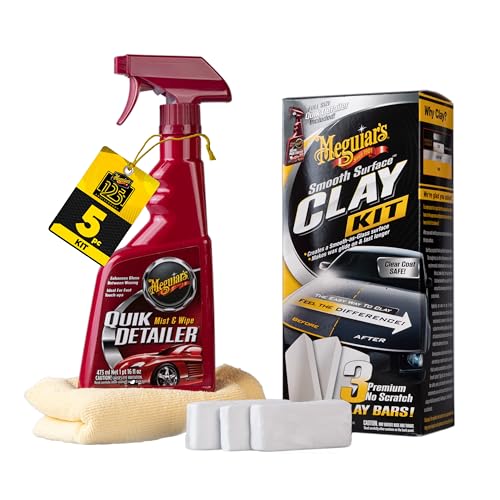
A clay bar treatment is a form of mechanical decontamination. The clay glides over the paint on a layer of lubricant and shears off bonded contaminants like stubborn mineral deposits, tree sap, and industrial fallout, leaving the surface perfectly smooth.
What You’ll Need:
* Automotive Clay Bar (a 30g to 50g piece is enough)
* Clay Lubricant (a quick detailer or dedicated clay lube)
* 2-3 Clean Microfiber Towels
Step-by-Step Clay Bar Process:
1. Start Clean: Ensure the car is freshly washed and dried. You don’t want to rub loose dirt around with the clay.
2. Lubricate Liberally: Working in a small, 2×2 ft. section, spray a generous amount of clay lubricant over the area. There is no such thing as too much lubricant.
3. Glide the Clay: Flatten the clay bar into a small patty. Gently glide it back and forth over the lubricated area using light pressure. You will feel and hear the clay working as it glides over the contaminants. As the surface becomes smooth, the clay will move silently.
4. Wipe and Inspect: Use a clean microfiber towel to wipe away the lubricant residue. The surface should feel glass-smooth. If not, re-lubricate and repeat.
5. Knead the Clay: After each section, inspect the clay. You will see the contaminants it has picked up. Fold the clay over and knead it into a new, clean patty. This prevents you from scratching the next panel with the debris you just removed.
Common Mistake: Never use a piece of clay that has been dropped on the ground. It will pick up grit and severely scratch your paint. Discard it immediately and use a fresh piece.
How Can You Prevent Water Spots on Your Car?
To prevent water spots, never let water dry on your car. The best methods are: 1. Dry Immediately: Use a high-quality microfiber drying towel or an electric leaf blower after every wash. 2. Improve Water Quality: Use a de-ionizing water filter for a spot-free final rinse. 3. Add Protection: Apply a wax, sealant, or ceramic coating to create a hydrophobic surface.
After spending time removing water spots, the last thing you want is for them to reappear. Prevention is the most effective long-term strategy and revolves around one core principle: managing how water behaves on and leaves your car’s surface. Here are the industry-standard best practices.
- Dry Your Car Immediately and Thoroughly: This is the single most important step. Don’t let your car air-dry, especially in the sun. Use a large, plush microfiber drying towel or an electric leaf blower to remove all water from the surface before it has a chance to evaporate and leave minerals behind.
- Improve Your Water Source: The hardness of your tap water is determined by its Total Dissolved Solids (TDS) level. High TDS means more mineral deposits. For the ultimate spot-free rinse, you can install a de-ionizing water filter system. This removes all minerals from the water, allowing you to rinse the car and let it air-dry without any spotting.
- Apply Paint Protection: A high-quality wax, paint sealant, or ceramic coating makes your paint surface hydrophobic (water-repelling). Think of it like a raincoat for your paint. This causes water to form into tight, uniform beads that are more likely to roll off the surface rather than sit and evaporate. Ceramic coatings offer the most durable protection against water spotting and etching.
Myth vs. Fact
Myth: “Parking in the shade while washing prevents spots.”
Fact: While helpful, high winds can cause water to evaporate quickly even in the shade, leaving spots. The speed of drying is the most critical factor, so always dry the vehicle panel by panel.
FAQs About how remove water spots from car
How do you remove water spots from car glass or a windshield?
For car glass, the methods are similar but you can be slightly more aggressive. Start with a 1:1 vinegar and water solution. If that fails, a dedicated automotive glass polish can be used by hand with a microfiber applicator. For severe, stubborn spots on non-tinted windows, 0000 (four-aught) steel wool used with glass cleaner as a lubricant can effectively scrub away mineral deposits without scratching the glass.
How do you remove water spots from a ceramic coating?
Always start with the least aggressive method on a ceramic coating. Begin with a pH-neutral car wash. If spots remain, use a dedicated water spot remover that is specifically labeled “safe for ceramic coatings.” These are often acid-based but formulated to not damage the coating’s hydrophobic properties. Avoid using abrasive polishes, as this will remove the coating itself.
Why does my car have water spots after washing?
This is typically caused by washing the car in direct sunlight or wind, which makes water evaporate too quickly. As the water evaporates, it leaves behind minerals (calcium, magnesium) that were dissolved in it. To prevent this, always wash your car in the shade if possible, wash and dry one panel at a time, and dry the vehicle immediately with a high-quality drying towel.
What is the best water spot remover for cars?
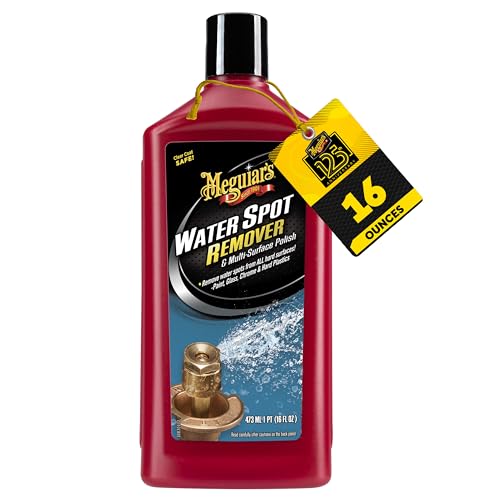
The “best” remover depends on the spot’s severity. For light spots, a simple DIY vinegar solution is effective and cheap. For more stubborn spots, a dedicated chemical water spot remover like CarPro Spotless or Optimum MDR is a great choice as they are formulated to dissolve minerals quickly and safely. For etched spots, the “best” remover is actually a polish or compound applied with a machine polisher.
Are water spots permanent?
Superficial water spots (Type 1 and 2) are not permanent and can be removed. However, severe etched water spots (Type 3) are technically permanent damage to the clear coat. While the spot itself is gone, the crater it leaves behind must be leveled out by polishing, which involves removing a microscopic layer of clear coat. If the etching is too deep, it may be irreparable without repainting.
Can I use steel wool on car glass?
Yes, but ONLY 0000 (four-aught) grade steel wool should be used, and always with a lubricant. 0000 steel wool is softer than glass and will not scratch it. Use it with a glass cleaner or soapy water to gently scrub away mineral deposits. Never use any other grade of steel wool (e.g., 000 or 00) as they are more abrasive and will scratch the glass.
How do you remove water spots from a black car?
The removal process is the same, but imperfections are more visible on black paint. Be extra cautious with any abrasive method. Use the softest microfiber towels to prevent scratching. When polishing, use a fine-grade polish and a finishing pad to ensure a swirl-free finish. Prevention is even more critical for black cars; a high-quality ceramic coating is highly recommended.
Will a car wash remove water spots?
A basic automatic car wash will likely not remove bonded or etched water spots. While it will clean the car, the brushes and soaps are not designed to chemically dissolve or abrade stubborn mineral deposits. Some higher-end car washes may offer special services for this, but for guaranteed removal, manual methods are required.
How do you get water spots off car plastic trim?
Be very careful with plastic trim, as it is more sensitive than paint. Start with an all-purpose cleaner or a 1:1 vinegar solution on a microfiber towel (do not spray directly). If spots persist, use a dedicated trim restorer product or a very light polish designed for plastics, applied by hand. Avoid aggressive compounds as they can discolor the plastic.
What acid removes water spots?
Mild acids are used to dissolve the alkaline mineral deposits (calcium carbonate) in water spots. The most common is acetic acid (found in white vinegar). Professional water spot removers may use stronger but carefully balanced acids like hydrofluoric acid or phosphoric acid. Always use products as directed and wear safety gloves when handling chemical removers.
Key Takeaways: How to Remove Water Spots From Your Car
- Identify the Spot Type First: Before starting, determine if you have light surface spots (Type 1), bonded minerals (Type 2), or etched spots (Type 3). This dictates the correct and safest removal method.
- Start with the Least Aggressive Method: Always begin with a simple 1:1 white vinegar and distilled water solution. Only escalate to a clay bar or polishing if this fails to remove the spots.
- Mechanical vs. Chemical Removal: A clay bar mechanically shears off bonded contaminants on the surface. Polishing mechanically abrades the clear coat to level out etching. Vinegar and acid removers chemically dissolve the mineral deposits.
- Safety is Paramount: Never work on a hot surface, always neutralize acids like vinegar after use, and use ample lubrication with a clay bar to prevent scratching. Wear gloves with chemical removers.
- Polishing is for Etching Only: Polishing is the only way to fix true Type 3 etching. It works by removing a microscopic layer of clear coat to make the surface level again. This should be a last resort.
- Prevention is the Best Cure: The most effective way to stop water spots is to prevent water from evaporating on your car. Dry your vehicle immediately after washing and apply a protective wax, sealant, or ceramic coating.
- Use the Right Tools for the Job: High-quality microfiber towels are essential. For glass, 0000 steel wool is safe with lubricant. For coatings, only use products specifically labeled as “coating safe.”
Final Thoughts on Removing Water Spots
Removing water spots from your car is a manageable task that protects your vehicle’s value and appearance. It’s not about finding one “magic” product, but about understanding the problem. By correctly identifying the severity of the spot and following a safe, step-by-step process, you can confidently restore your paint’s finish at home. Now that you have the right knowledge, you are fully equipped to not only fix the current issue but also to implement the preventative care that will keep your car looking its best for years to come.
Last update on 2026-03-17 / Affiliate links / Images from Amazon Product Advertising API



![Manual Transmission Car Rental Your Ultimate Guide for [year]](https://i0.wp.com/carxplorer.com/wp-content/uploads/2026/03/Manual-Transmission-Car-Rental-Your-Ultimate-Guide-for-year-2.jpg?resize=60%2C60&ssl=1 "Manual Transmission Car Rental Your Ultimate Guide for [year] 8")

