
Wondering how much it costs to add a trailer hitch to your car? You’re trying to budget for the project but are seeing a wide range of prices for parts and labor. This makes it difficult to know what a fair price actually is.
The average cost to add a trailer hitch to a car in 2025 is between $400 and $750, including both parts and professional labor. For a DIY installation, parts can cost as little as $150. A dealership installation for a complex vehicle with a full tow package can exceed $1,200.
Based on an analysis of current industry data, this guide breaks down every cost factor. You will learn the price of different hitch classes, parts, and labor. This reveals exactly what you should expect to pay for your specific vehicle and needs.
Key Facts
- Average Professional Cost: Industry analysis reveals the most common all-in price for a professionally installed hitch and wiring is between $400 and $750.
- DIY Savings: A DIY installation is the cheapest route, with total costs for a bolt-on hitch kit often landing between $150 and $300, saving significantly on labor.
- Dealership Premium: Opting for a dealership installation using Original Equipment Manufacturer (OEM) parts is the most expensive option, frequently costing between $800 and $1,200 or more.
- Wiring is an Add-On Cost: A wiring harness is a legal requirement for towing trailers with lights and typically adds $100 to $400 to the total project cost, depending on complexity.
- Hitch Class Dictates Price: The cost of the hitch itself is directly tied to its strength. A light-duty Class I hitch can cost $150, while a heavy-duty Class V hitch can cost over $600 for the part alone.
How Much Does It Cost to Add a Trailer Hitch to a Car in 2025?
The total cost to add a trailer hitch to a car ranges from approximately $150 for a simple DIY installation to over $1,200 for a complex, dealership-installed tow package with wiring. The average professional installation cost for a standard receiver hitch and wiring is typically between $400 and $750. This price depends heavily on the type of hitch, your vehicle, and who you hire for the job.
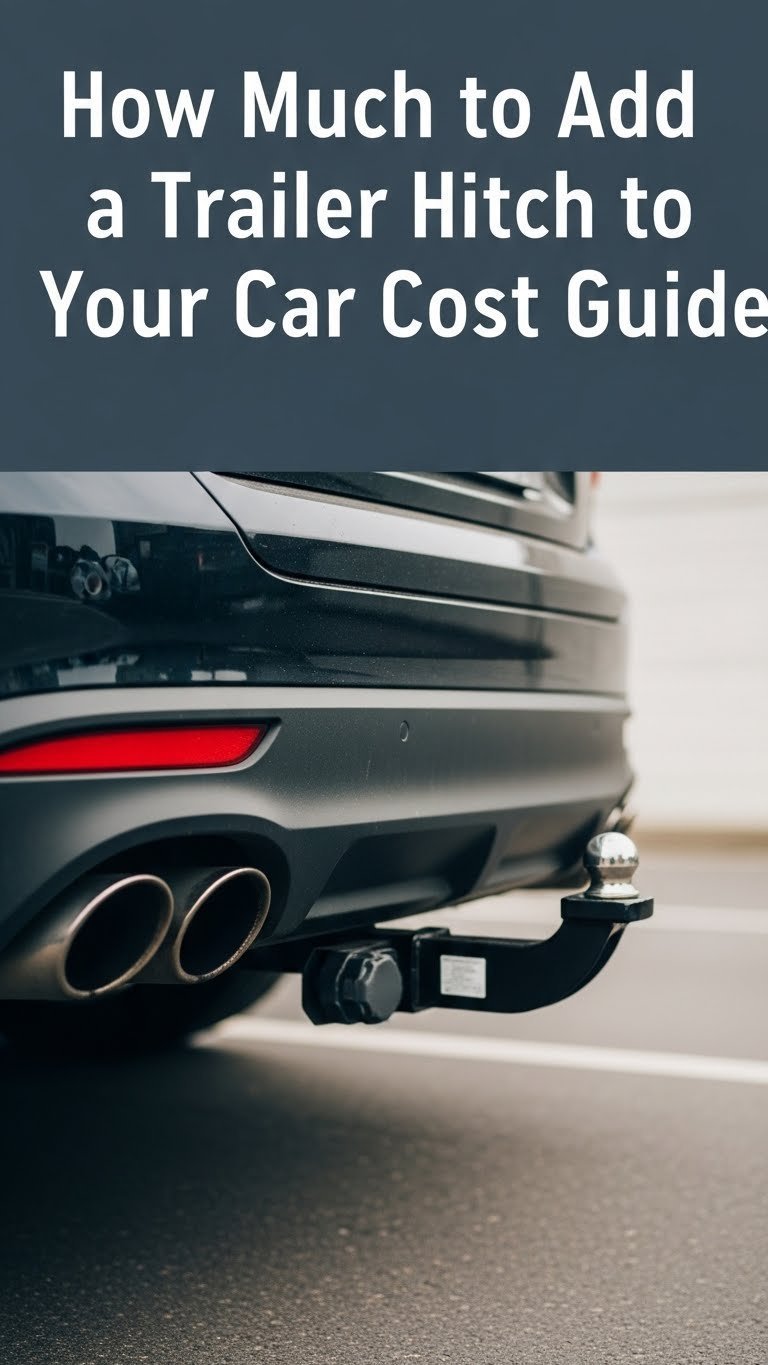
Understanding the cost spectrum is key. A simple hitch for a bike rack will be on the lowest end of the price scale. Conversely, a heavy-duty towing system for a large travel trailer, installed on a luxury SUV, will represent the higher end. The two main variables that determine your final price are the parts—the hitch receiver and any necessary wiring—and the labor to get it all installed correctly.
To get an accurate estimate, you need to consider these scenarios:
- DIY Installation: $150 – $300 (Cost of parts only)
- Professional Installation (U-Haul/Local Shop): $400 – $750 (Parts and labor)
- Dealership Installation: $800 – $1,200+ (OEM parts and labor)
This guide will break down each of these costs so you can build a realistic budget. We’ll explore how the hitch class and wiring harness requirements are key factors that influence the final price you pay.
What Are the Key Cost Components of a Trailer Hitch Installation?
A trailer hitch installation cost consists of two parts: 1) Hardware Cost ($150-$600), which includes the receiver hitch, ball mount, and pin, and 2) Labor Cost ($100-$500), which covers the time for a technician to mount the hitch and install any wiring. Separating these two components helps you understand quotes and compare your options effectively. For example, you might buy a hitch kit online and pay a local shop just for the labor.
From our experience with countless installations, a simple bolt-on hitch for a common SUV like a Toyota RAV4 might only require one hour of labor. In contrast, installing a hitch on a luxury sedan that requires removing the bumper and extensive wiring could take 3-4 hours, significantly increasing the labor cost.
Hitch Parts Cost
The physical hardware is your first expense. This isn’t just one item but a kit that includes the main receiver and sometimes a ball mount. The brand, material, and especially the hitch class are the primary drivers of this cost.
- Hitch Class: Higher towing capacity means more steel and a higher price.
- Brand: Reputable brands like CURT, Draw-Tite, and REESE have different price points.
- Vehicle Model: Custom-fit hitches for less common or luxury vehicles can be more expensive.
Installation Labor Cost
This is the fee you pay a technician for their time and expertise. Labor is often billed hourly, and the time required can vary dramatically based on your vehicle.
- Vehicle Complexity: Some cars have pre-drilled holes in the frame, making installation fast. Others require drilling, which takes more time.
- Bumper Removal: If the rear bumper fascia needs to be removed and reinstalled, expect labor time to double.
- Wiring Installation: A simple plug-in wiring harness is quick, but a custom-wired setup with a brake controller adds significant time and cost.
- Rust and Age: Older vehicles may have rusted bolts that are difficult to remove, adding unexpected time to the job.
| Cost Component | Typical Price Range | Key Factors Influencing Cost |
|---|---|---|
| Hitch Parts | $150 – $600 | Hitch Class (I-V), Brand (CURT, Draw-Tite), Material, Vehicle Model |
| Installation Labor | $100 – $500 | Vehicle Complexity, Drilling Required, Bumper Removal, Wiring Installation |
What Are the Costs of Different Trailer Hitch Classes?
The single biggest factor determining your parts cost is the hitch class. Think of hitch classes like T-shirt sizes (S, M, L, XL)—you need the right size for the job, and the price increases with the size and strength. These classes are defined by the SAE J684 standard, which specifies their maximum Gross Trailer Weight (GTW) and Tongue Weight (TW). What do you plan to tow? Your answer determines the minimum class you need.
- Class I Hitch ($150 – $250): These are for light-duty use on cars and small crossovers. They typically handle up to 2,000 lbs GTW, making them perfect for bike racks or small cargo carriers.
- Class II Hitch ($175 – $300): A slight step up, Class II hitches can tow up to 3,500 lbs GTW. They are suitable for small utility trailers, pop-up campers, or small boats.
- Class III Hitch ($200 – $450): This is the most common hitch class for SUVs, vans, and light trucks. With a capacity up to 8,000 lbs GTW, it’s the versatile choice for towing mid-size boats and travel trailers.
- Class IV Hitch ($300 – $500): A heavy-duty option for full-size trucks and SUVs, Class IV hitches are rated for up to 10,000 lbs GTW, capable of handling larger campers and equipment trailers.
- Class V Hitch ($400 – $600+): These are the workhorses for commercial-duty trucks, designed for the heaviest loads over 10,000 lbs GTW, including large RVs and heavy equipment.
How Do Professional Installation Costs Compare: Dealership vs. U-Haul vs. Local Shop?
Choosing where to get your hitch installed is a major decision affecting both cost and quality. Dealerships offer original parts but at a premium, U-Haul provides a budget-friendly and widely available service, and your trusted local mechanic offers a balance of both. Dealerships are the most expensive option, often costing $800-$1,200+, but they use Original Equipment Manufacturer (OEM) parts that ensure a perfect fit and preserve your vehicle’s warranty. U-Haul is a popular, affordable choice at $300-$600, while independent shops typically charge between $400 and $750.
Here’s a direct comparison to help you decide:
| Installer | Average Total Cost (Parts + Labor) | Parts Used | Pros | Cons |
|---|---|---|---|---|
| Vehicle Dealership | $800 – $1,200+ | OEM (Original Equipment Manufacturer) | Perfect vehicle integration, preserves warranty | Highest cost by far |
| U-Haul | $300 – $600 | Aftermarket (CURT, Draw-Tite, etc.) | Very affordable, widely available, lifetime warranty | May not have custom-fit options for all vehicles |
| Local Mechanic Shop | $400 – $750 | Aftermarket (Customer can sometimes supply) | Good balance of cost and expertise, trusted relationship | Quality can vary, may have less experience than specialists |
- Best for Warranty: The dealership is the safest bet if you have a new car under warranty and want to use OEM parts.
- Best for Budget: U-Haul consistently offers the most competitive pricing for a professional, warrantied installation.
- Best for Balance: A trusted local mechanic can provide quality work at a fair price, often with more personalized service.
Is It Cheaper to Install a Hitch Yourself? (A DIY Cost & Effort Analysis)
Yes, installing a hitch yourself is significantly cheaper, with total costs ranging from $150 to $300 for the hitch kit. You completely eliminate the $100-$500 labor fee. However, this path is best suited for those with some mechanical experience, the right tools, and a willingness to spend a few hours working under their vehicle.
The key to a successful DIY project is choosing a “bolt-on” hitch [a receiver hitch designed to attach directly to existing holes in the vehicle’s frame]. Most aftermarket hitches from brands like CURT or Draw-Tite are engineered for this, requiring no drilling.
Before you decide, here’s a realistic look at what’s involved:
- Required Tools: You’ll need more than just a basic wrench. A socket set, a torque wrench to tighten bolts to manufacturer specifications, and penetrating oil for any rusted parts are essential. Jack stands are also a critical safety requirement.
- Time Required: For a first-timer, plan for 2-4 hours. Even a simple bolt-on job can have hang-ups, like aligning heavy parts or dealing with stubborn bolts.
- Difficulty: A bolt-on hitch is easy to moderate. If your vehicle requires drilling into the frame, the difficulty increases substantially, and a professional is recommended.
Pro Tip: If you’re working on a vehicle that’s a few years old, spray any bolts you need to remove with penetrating oil the night before. This will make them much easier to break loose and can save you a ton of time and frustration.

Do I Need a Wiring Harness and How Much Does It Add to the Cost?
Yes, you need a wiring harness if your trailer has lights or electric brakes. A simple 4-pin harness installation adds $100-$200 to the total cost. This is a non-negotiable legal and safety requirement in virtually all jurisdictions. For larger trailers requiring a brake controller and a 7-pin connector, expect to add $250-$400 or more to the final price.
Think of the wiring harness [an electrical cable assembly that connects your vehicle’s electrical system to the trailer] as the trailer’s nervous system. It lets your car “talk” to the trailer, powering its brake lights, turn signals, and running lights. Without it, you are invisible and unsafe to drivers behind you.
Here’s a breakdown of the two common types:
- 4-Pin Connector ($100 – $200 installed): This is the standard for most light-duty towing. It provides the basic lighting functions (run, turn, brake) for small utility trailers, pop-up campers, and boat trailers. Many modern vehicles offer simple “T-Connector” kits that plug directly into your car’s taillight assembly with no cutting required.
- 7-Pin Connector ($250 – $400+ installed): This is required for larger trailers equipped with electric brakes. In addition to lights, it provides a circuit to power the trailer’s brakes and an auxiliary power line. This setup requires the installation of an electric brake controller inside your vehicle’s cabin, which adds to the cost and complexity.
FAQs About how much to add a trailer hitch to a car
How long does it take to install a hitch?
A professional can typically install a trailer hitch in 1 to 3 hours. A simple, bolt-on hitch for a common vehicle might take 60-90 minutes. A more complex installation on a luxury car or one that requires drilling and bumper removal can take 3 or more hours. A DIY installation for a first-timer often takes 2 to 4 hours.
Does adding a hitch void my car warranty?
No, adding an aftermarket trailer hitch will not automatically void your vehicle’s warranty. Due to the Magnuson-Moss Warranty Act, a manufacturer can only deny a warranty claim if they can prove the aftermarket part caused the specific failure. However, using a professional installer and a quality, vehicle-specific hitch is recommended for peace of mind.
How much to install a hitch on a small SUV like a RAV4?
The cost to install a hitch on a small SUV like a Toyota RAV4 typically ranges from $400 to $700 professionally. A dealership may quote closer to $900-$1,100 using OEM parts. A DIY installation using an aftermarket Class III hitch kit from a brand like CURT would cost around $200-$300 for the parts.
Can any car have a trailer hitch?
No, not every car can have a trailer hitch installed. Vehicle manufacturers provide specific towing capacity ratings for each model. Most trucks, SUVs, and many crossovers are designed for towing. While hitches are available for many sedans, they are typically limited to light-duty Class I hitches for bike racks or very small trailers. Always check your owner’s manual for your vehicle’s official tow rating.
Is it worth getting a professional hitch install?
Yes, for most people, a professional installation is worth the cost for safety and peace of mind. A certified technician ensures the hitch is torqued to manufacturer specifications and that the wiring is done correctly, preventing electrical issues or structural failure. It is especially recommended for complex installations or if you are not experienced with automotive work.
How much does a hidden hitch cost?
A hidden hitch, which has a crosstube concealed behind the bumper, generally costs 20-30% more than a standard hitch. The parts may cost between $250 and $500, and the labor is often higher due to the need for more precise work and potential bumper fascia removal, bringing total installation cost to $600-$900+.
Does a trailer hitch increase car value?
A trailer hitch generally does not increase a car’s resale value, and in some cases, it may slightly decrease it. Buyers may assume the vehicle was used for heavy towing, implying more wear on the engine and transmission. The primary benefit is the increased utility for the current owner, not a financial return on investment.
Can I install a hitch on a leased car?
Yes, you can typically install a hitch on a leased car, but it must be a “no-drill,” bolt-on model that can be removed without a trace before you return the vehicle. Any permanent modification, such as drilling into the frame, could violate your lease agreement and result in significant penalties. Always check your specific lease contract first.
What is the average labor cost for a hitch install?
The average labor cost for a trailer hitch installation is between $100 and $250. This typically covers 1-2 hours of work. Labor costs can rise to $400 or more if the installation is complex, requires extensive drilling, or includes a complicated wiring harness setup.
Do I need a brake controller for a small trailer?
You likely do not need a brake controller for a very small trailer. Most states require trailer brakes (and thus a brake controller) on trailers with a gross weight over 3,000 pounds. For light utility trailers or pop-up campers under this weight, a simple 4-pin wiring harness for lights is usually sufficient. Always check your local laws.
Key Takeaways: Trailer Hitch Installation Cost Summary
- Average Cost is $400-$750: For a professional installation of a standard Class III hitch with wiring, this is the most common all-in price range. DIY can be as low as $150, while dealerships can exceed $1,200.
- Cost = Parts + Labor: The final price is always a combination of the hitch hardware cost ($150-$600) and the installation labor cost ($100-$500). Don’t forget to budget for both.
- Hitch Class Dictates Price: The hitch you need depends on your towing weight. A light-duty Class I for a bike rack is much cheaper than a heavy-duty Class IV for a large trailer. Match the class to your needs to avoid overspending.
- U-Haul is the Budget Pro Option: Compared to expensive dealerships, U-Haul offers a reliable, warrantied professional installation at a significantly lower price point, making it a popular choice.
- Wiring is Not Optional for Trailers: If you are towing anything with lights or brakes, a wiring harness is a legal and safety requirement. This will add at least $100-$200 to your total cost.
- DIY Saves Money, Costs Time: You can save several hundred dollars by installing the hitch yourself, but be prepared with the right tools (especially a torque wrench) and set aside 2-4 hours. It’s best for bolt-on applications.
- Check Your Vehicle’s Tow Rating: Before buying anything, consult your owner’s manual to confirm your car’s maximum towing capacity. Installing a hitch does not increase this factory-set limit.
Final Thoughts on Your Trailer Hitch Installation
Adding a trailer hitch is a practical upgrade that unlocks a new level of utility for your vehicle, whether you’re hauling a bike rack, a small boat, or a moving trailer. While the cost can vary widely, it is a predictable expense once you understand the core components. The right choice for you balances budget, convenience, and safety.
Ultimately, a correctly installed hitch is a safe hitch. Whether you choose a budget-friendly professional like U-Haul, invest in an OEM part at the dealership, or tackle the job yourself, the goal is a secure connection between your vehicle and its load. By using this guide to match a hitch to your needs and select the right installation path, you can make a smart, confident investment in your car’s capability.
Last update on 2025-12-31 / Affiliate links / Images from Amazon Product Advertising API


![Epoxy 2 Car Garage Cost DIY Versus Professional [year]](https://carxplorer.com/wp-content/uploads/2025/12/Epoxy-2-Car-Garage-Cost-DIY-Versus-Professional-year-1-1-60x60.jpg "Epoxy 2 Car Garage Cost DIY Versus Professional [year] 10")