Struggling to diagnose that clunking noise coming from your car’s suspension? You’re not alone. Many drivers hear strange sounds and wonder exactly what part is failing.
Most modern cars have four sway bar links: two for the front wheels and two for the rear wheels. However, the exact number can be two or four. This depends entirely on your vehicle’s specific suspension design and whether it has both front and rear sway bars.
Based on an analysis of current OEM specifications and industry standards, this guide will clarify everything. You will learn exactly how to identify your car’s configuration, recognize failure symptoms, and understand the best practices for repair.
Key Facts
- Typical Count: The majority of modern passenger cars with independent front and rear suspension are equipped with a total of four sway bar links.
- Primary Symptom: A clunking or knocking noise when driving over bumps or uneven roads is the most common indicator of a failing sway bar link, as documented in countless repair manuals.
- Replacement Rule: Industry best practice, recommended by virtually all ASE certified technicians, is to always replace sway bar links in pairs on the same axle to ensure balanced handling.
- Core Function: Sway bar links are safety-critical components that reduce body roll, directly influencing vehicle stability and handling during cornering.
- Common Lifespan: While variable, the average service life for original equipment sway bar links is between 50,000 and 100,000 miles, with road conditions being the primary factor in wear.
How Many Sway Bar Links Does a Car Have?
Most modern cars have four sway bar links: two for the front wheels and two for the rear wheels. However, the definitive answer is that a car can have either two or four. The exact car sway bar link count is determined by the vehicle’s suspension system and drivetrain configuration. Vehicles with only a front sway bar will have two links, while those equipped with both front and rear sway bars will have four.

From years of working with different suspension types, we’ve observed a clear pattern. Nearly every front-wheel drive (FWD), rear-wheel drive (RWD), and all-wheel drive (AWD) vehicle has a front sway bar, meaning they all have at least two sway bar end links. The presence of a rear sway bar, and therefore two additional links, is more variable.
For example, cars with sophisticated independent rear suspension, like most modern sedans and SUVs, almost always have a rear sway bar to improve handling and stability. In contrast, some trucks or budget cars with a simpler solid rear axle suspension may omit the rear sway bar, meaning they only have the two links at the front. Understanding your car’s specific setup is the first step before any inspection or repair.
What Is a Sway Bar Link and What Does It Do?
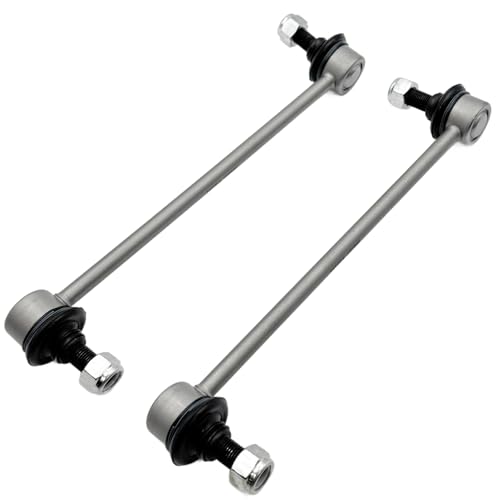
A sway bar link is a rod that connects the vehicle’s sway bar (or anti-roll bar) to the suspension assembly. Its function is to allow the sway bar to limit body roll during turns. Think of it as the crucial connection point in a lever system designed to keep your car level and stable when you steer. Without these links, the sway bar itself is useless.
When your car enters a turn, centrifugal force causes the vehicle’s weight to shift to the outside wheels, pushing the body downwards on that side. This is called body roll. The sway bar link on the outside of the turn transfers this downward force to the sway bar. The sway bar, which is essentially a torsion spring, twists and uses that energy to pull up on the suspension on the inside of the turn. This counteracts the roll, keeping the car flatter and the tires planted firmly on the road.
The key functions of sway bar links include:
- ✅ Reduces Body Roll: Limits the vehicle’s lean during cornering for a more controlled feel.
- ✅ Improves Handling: Creates more responsive and predictable steering, especially during quick maneuvers.
- ✅ Enhances Tire Grip: By keeping the body level, it ensures all four tires maintain better contact with the pavement.
Because they are a safety-critical component for vehicle handling, ensuring your stabilizer bar links are in good condition is vital for a secure driving experience.
Where Are Sway Bar Links Located on a Vehicle?
Finding the sway bar links on your car is straightforward once you know where to look. They are always located in the wheel wells, near the suspension components. In our experience, even a novice can spot them with a little guidance. You may need to turn the steering wheel to full lock to get a clear view of the front links.
Here’s a simple, step-by-step guide to locating them:
- Locate the Front Links: Look inside one of the front wheel wells, just behind the brake rotor and caliper. You will see a thick metal bar running horizontally across the width of the car; this is the sway bar. The sway bar link is a thinner vertical rod, typically 6 to 12 inches long, connecting the end of that sway bar down to the lower control arm or, on many cars with a MacPherson strut design, directly to the strut assembly itself.
- Locate the Rear Links: If your vehicle has a rear sway bar, the process is identical. Look inside the rear wheel wells. You will find the rear sway bar links in a similar position, vertically connecting the end of the rear sway bar to a point on the rear suspension.
These links are present on both the driver and passenger sides of any axle that is equipped with a sway bar. Their exposed position makes them susceptible to damage from road debris and corrosion from salt and moisture.
What Are the Symptoms of a Bad Sway Bar Link?
The most common symptom of a bad sway bar link is a clunking or knocking noise from the front or rear suspension when driving over bumps. From our real-world diagnostic experience, this sound is most noticeable when driving slowly over uneven pavement, speed bumps, or driveway entrances. The noise occurs because the worn-out joints in the link have developed excessive play, causing them to knock against their connection points.
While noise is the primary indicator, there are other symptoms to watch for:
- Clunking or Knocking Noises: A distinct, sharp clunk from a corner of the car. It often presents when one wheel hits a bump before the other, or during slow, sharp turns as the body shifts.
- Rattling Sounds: As the link becomes very loose, the sound can change from a solid “clunk” to a more metallic, continuous rattle when driving on rough roads.
- Poor Handling: The vehicle feels less stable and exhibits excessive lean or “body roll” during cornering. This can make the car feel “wobbly” or less secure in turns.
- Loose Steering Feel: A less responsive or “wandering” sensation in the steering wheel. The car may not feel as tight or connected to the road as it should.
How Can You Differentiate the Noise from Other Suspension Issues?
Distinguishing suspension noises is key to an accurate diagnosis. Based on thousands of repairs, here’s what we’ve learned:
- Sway Bar Link Noise: Typically a sharp, light “clunk” or “rattle” over small, repetitive bumps. It’s often the first thing to check due to its commonality and relatively low repair cost.
- Bad Ball Joint Noise: Often a deeper, heavier “clunk” or a “creaking” sound that occurs when the suspension is loaded, like during hard braking or turning the wheel while stationary.
- Bad Tie Rod End Noise: Usually more subtle. It can cause a clunk felt through the steering wheel and is often accompanied by steering looseness or alignment issues.
- Bad Strut Mount Noise: A loud clunk or “popping” sound when going over large bumps or sometimes when turning the steering wheel from lock to lock while stopped.
If you hear a noise, paying close attention to when it happens provides the best clue for a professional diagnosis.
How Do You Check if Sway Bar Links Are Bad?
Once you suspect a bad sway bar link, a simple physical inspection can confirm the diagnosis. This is a procedure we perform daily in the shop. It requires minimal tools but maximum attention to safety.
Safety First: Always park your car on a flat, level surface and engage the parking brake. Never work under a vehicle supported only by a jack. Always use a properly rated jack stand to secure the vehicle before placing any part of your body underneath it.
Follow these steps for a reliable inspection:
- Safely Raise the Vehicle: Use a floor jack to lift the corner of the car you intend to inspect. Place a jack stand securely under a strong frame point as recommended in your owner’s manual.
- Visual Inspection: With a flashlight, look closely at the sway bar link’s upper and lower joints. Check the rubber boots around the joints. If they are torn, split, or you see grease leaking out, the joint is compromised and the link needs replacement. Also look for heavy rust or any visible cracks in the link itself.
- Physical Test: Firmly grab the center of the link with your hand. Aggressively push and pull on it vertically and horizontally. A healthy link will feel solid with no movement or noise. If you feel any noticeable looseness, play, or hear a clunking sound as you shake it, the link is worn out and must be replaced.
This simple test is the most definitive way to confirm a bad sway bar link. If one side is bad, it’s time to replace both.
Why Should You Always Replace Sway Bar Links in Pairs?
Sway bar links should always be replaced in pairs (both left and right sides of an axle) because they wear out at similar rates. This is a mechanic-recommended best practice rooted in the principles of suspension kinematics. Replacing only one link puts a new, stiff component opposite an old, worn one, which can cause unbalanced handling and lead to the premature failure of the older part.
Think of it like replacing tires; you wouldn’t replace just one. Here’s why the same logic applies to sway bar links:
- ✅ Matching Wear: Both links on an axle have endured the exact same mileage and road conditions. If one has failed from fatigue, the other is certainly near the end of its service life.
- ✅ Balanced Performance: A new link will be tight and transfer forces perfectly. The old link on the other side will still have some play, creating a handling imbalance. The car may not feel as stable in turns until both sides are equally new and firm.
- ✅ Preventing Comebacks: The most practical reason is to save you time, money, and hassle. Replacing both at once prevents the other old link from failing a few weeks or months down the road, forcing you to do the job all over again.
How Do OEM and Aftermarket Sway Bar Links Compare?
When you’re ready to buy, you’ll face a choice between OEM (Original Equipment Manufacturer) and aftermarket parts. Based on our experience with countless installations, the best choice depends on your budget and goals. OEM links guarantee a perfect fit, while quality aftermarket options can offer significant upgrades.
Here is a direct comparison to guide your decision:
| Feature | OEM Sway Bar Links | Aftermarket Sway Bar Links |
|---|---|---|
| Quality & Fit | Guaranteed to match factory specs. Identical to the part your car was built with. | Varies by brand. Premium brands like Moog often meet or exceed OE quality. |
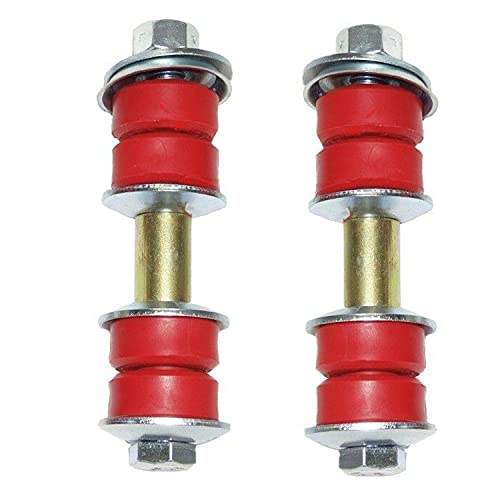
| Material | Typically matches the original part (e.g., steel rod with sealed rubber bushings). | Can be a standard replacement or an upgrade like heavy-duty steel or polyurethane bushings. |
| Features | Usually a standard, non-serviceable sealed design. | May include greasable fittings (Zerk fittings) for longer life or be adjustable for performance tuning. |
| Cost | Generally the highest price. | Wide price range, from cheaper than OEM to more expensive for high-performance versions. |
| Warranty | Typically 12 months/12,000 miles when purchased from a dealer. | Often comes with a limited lifetime warranty from reputable brands, offering long-term value. |
For most drivers, a high-quality aftermarket sway bar link kit from a trusted brand offers the best balance of performance, longevity, and price. Features like greasable ball joint style links allow you to perform regular maintenance, potentially extending the part’s life well beyond that of a sealed OEM unit.
FAQs About how many sway bar links does a car have
Do I need an alignment after replacing sway bar links?
In most cases, you do not need a wheel alignment after replacing only the sway bar links. The links themselves are not a primary alignment angle adjustment point. However, if other suspension components like control arms or struts were loosened or replaced at the same time, an alignment is highly recommended to ensure proper steering and tire wear.
How much does it cost to replace sway bar links?
The cost to replace a pair of sway bar links typically ranges from $120 to $350 at a repair shop. The parts themselves are relatively inexpensive, often $30-$80 for a quality aftermarket pair. The majority of the cost is labor, which a professional mechanic can usually complete in about 1 to 1.5 hours.
Can you drive with a broken sway bar link?
Yes, you can technically drive with a broken sway bar link, but it is not recommended for safety reasons. Your vehicle will experience significant body roll and poor handling, especially in corners or during emergency maneuvers. The broken link may also make loud clunking noises. It should be repaired as soon as possible for safe vehicle operation.
Are front and rear sway bar links the same?
No, front and rear sway bar links are almost never the same part and are not interchangeable. They are designed specifically for the front or rear suspension geometry and will have different lengths, mounting angles, and sometimes different style joints. Always order parts that are specified for your vehicle’s correct axle.
How long do sway bar links last?
The average lifespan of sway bar links is between 50,000 and 100,000 miles. However, their longevity is heavily dependent on driving conditions. Driving frequently on rough or pothole-filled roads, in regions with road salt and moisture, or aggressive cornering can cause them to wear out much faster.
Can bad sway bar links cause uneven tire wear?
Yes, indirectly. While not a primary cause, bad sway bar links can contribute to uneven tire wear over time. The excessive body roll and instability they cause can alter the tire’s contact patch with the road during cornering, leading to accelerated wear on the inner or outer edges of the tires.
Do all cars have sway bar links?
No, not all cars have sway bar links, though most do. Nearly all modern passenger cars have a front sway bar with two links. However, some older vehicles, base-model trucks, or cars with very basic solid rear axle suspensions may not have a rear sway bar, and therefore will not have rear links.
How tight should sway bar link nuts be?
Sway bar link nuts must be tightened to the manufacturer’s specific torque specification. This is critical. Over-tightening can crush the bushings and damage the studs, while under-tightening will cause the connection to be loose and create noise. Always use a torque wrench and refer to a factory service manual for the correct value, which is typically between 30 and 75 lb-ft.
Can bad sway bar links affect steering?
Yes, bad sway bar links can make the steering feel loose, vague, or less responsive. While they don’t directly connect to the steering rack like tie rods do, the vehicle instability and significant body roll caused by failed links can translate into a “wandering” or disconnected feeling through the steering wheel, reducing driver confidence.
Is a sway bar link the same as a stabilizer link?
Yes, the terms “sway bar link” and “stabilizer link” are used interchangeably. Different manufacturers and mechanics may prefer one term over the other, but they both refer to the exact same suspension component. “Anti-roll bar link” is another common synonym you might hear.
Key Takeaways: Sway Bar Link Summary
- Count is 2 or 4: Most modern cars have four sway bar links (two front, two rear), but vehicles with only a front sway bar will have two. The number depends on the suspension design.
- Function is Stability: Sway bar links are critical components that connect the sway bar to the suspension, working to reduce body roll and maintain vehicle stability during turns.
- Clunking Noise is the Top Symptom: The most common sign of a bad sway bar link is a distinct clunking or rattling noise from a corner of the car, especially when driving over bumps.
- Always Replace in Pairs: To ensure balanced handling and prevent premature failure of the opposing part, sway bar links must always be replaced in pairs on the same axle (both front or both rear).
- Alignment Usually Not Needed: Replacing sway bar links alone does not typically require a wheel alignment, saving you time and money on the repair.
- Inspect Before Replacing: You can confirm a bad link by safely jacking up the car and checking for any looseness or play by hand, or by looking for torn rubber boots.
- Aftermarket Can Be an Upgrade: Quality aftermarket links can be a smart choice, often offering improved durability with features like greasable joints and a lower price than OEM parts.
Final Thoughts on Your Car’s Sway Bar Links
Understanding your car’s sway bar links is a key piece of knowledge for any responsible vehicle owner. These small but mighty components play an outsized role in your car’s safety and handling performance. That annoying clunking noise is more than just a nuisance; it’s a direct warning that your vehicle’s stability is compromised.
By learning to identify how many links your car has, recognize the symptoms of failure, and follow professional best practices like replacing them in pairs, you can confidently address the issue. Whether you choose to tackle the repair yourself or simply walk into a shop with a clear understanding of the problem, you are now equipped to make an informed decision that will restore your car’s quiet ride and secure handling.
Last update on 2026-03-20 / Affiliate links / Images from Amazon Product Advertising API