Worried about your car’s revs when you’re stopped? You might notice the needle on your tachometer seems high, or feel a strange vibration, and wonder if it signals a serious problem. This uncertainty can be stressful, especially when you’re trying to keep your vehicle in top condition.
For most modern gasoline cars, the normal idle speed is between 600 and 1,000 revolutions per minute (RPM) when the engine is warm. This value, read on your dashboard’s tachometer, represents the engine running at its minimum speed to maintain operation and power essential systems without stalling.
Based on analysis of current OEM specifications and industry data, understanding this range is the first step in diagnosing your engine’s health. This guide breaks down exactly what’s normal, what different idle behaviors mean, and how you can identify and fix common issues yourself, giving you confidence in your car’s performance.
Key Facts
- Standard Range is 600-1,000 RPM: A healthy, warm gasoline engine should idle steadily within this range, indicating proper function.
- High Idle Often Signals a Vacuum Leak: An idle speed consistently over 1,000 RPM when warm frequently points to unmetered air entering the engine.
- Rough Idle Suggests a Misfire: A shaking or vibrating sensation at idle is a classic symptom of an engine misfire, commonly caused by worn spark plugs or fuel delivery issues.
- The ECU Is in Control: The Electronic Control Unit (ECU), your car’s computer, intentionally adjusts the idle speed to compensate for loads like the A/C, which is normal behavior.
- A/C Increases Idle Speed: Turning on the air conditioner adds a significant load, causing the ECU to raise the idle by 50-150 RPM to prevent stalling.
How Many Revs Should a Car Idle At? A 2026 Diagnostic Guide
The simple answer is that a car’s engine should normally idle between 600 and 1,000 revolutions per minute (RPM) when it’s fully warmed up. This is the standard idle speed range for the vast majority of modern gasoline-powered vehicles. This speed represents the engine’s “heartbeat” when you’re not pressing the gas pedal, providing just enough power to run essential components like the alternator and water pump without stalling.

You can check your car’s idle speed by looking at the tachometer on your dashboard. The tachometer is the gauge that measures your engine’s rotational speed in revolutions per minute (RPM). The numbers on the gauge typically need to be multiplied by 1,000, so when the needle is pointing just below the “1,” your car is idling within that normal 600-1,000 RPM range. This is the baseline for a healthy engine ticking over smoothly. But what if your car doesn’t fall in this range?
What Is the Normal Idle RPM for Different Cars and Conditions?
While 600-1,000 RPM is a great general rule, the precise normal idle speed depends on your vehicle’s engine type and the current operating conditions. The powertrain control module [your car’s central computer] constantly makes micro-adjustments to ensure optimal performance. From a cold morning start to a hot day with the air conditioning on full blast, the ideal RPM changes.
In our experience diagnosing hundreds of vehicles, one of the most common points of confusion for drivers is why their idle isn’t a single, fixed number. The table below breaks down the typical idle ranges for different scenarios, giving you a more accurate benchmark for your specific car.
| Vehicle / Condition | Normal Warm Idle (RPM) | Typical Cold Start Idle (RPM) | Notes & Common Variations |
|---|---|---|---|
| 4-Cylinder Gasoline | 700 – 900 RPM | 1000 – 1300 RPM | Very common in sedans and compact SUVs. |
| V6 / V8 Gasoline | 600 – 750 RPM | 900 – 1200 RPM | Smoother idle due to more cylinders and mass. |
| Diesel Engine | 550 – 800 RPM | 700 – 1000 RPM | Lower RPM due to higher compression and torque. |
| AC Compressor ON | Increases by 50 – 150 RPM | N/A | ECU commands higher RPM to handle the parasitic accessory load. |
| In ‘Drive’ (Auto) | Drops by 50 – 100 RPM | N/A | Engine is under slight load from the transmission. |
Why Does My Car’s Idle RPM Change During Normal Operation?
Your car’s idle RPM changes because the **ECU (Electronic Control Unit) [the engine’s brain] is intelligently compensating for varying loads placed on the engine.** A steady idle speed isn’t the goal; a responsive and adaptive idle is the mark of a healthy, modern engine. Think of it like your own body: your heart rate increases when you walk uphill. Similarly, your engine’s RPM increases when it needs to work harder. These fluctuations are not a sign of a problem but rather proof that the system is working correctly.
This process involves the engine’s computer moving between two states. During a cold start, it’s in an open loop, following a pre-set map to warm up quickly. Once at normal operating temperature, it enters a closed loop, using real-time data from sensors to make precise adjustments.
Here are the most common reasons your idle will change during normal driving:
- Cold Engine Starts: On a cold start, the engine runs at a “fast idle,” often 1,000-1,500 RPM. This helps the engine oil circulate and warms the catalytic converter to operating temperature faster for better emissions.
- Air Conditioning: The A/C compressor creates a significant parasitic drag on the engine. When you turn it on, the ECU immediately increases the idle speed by 50-150 RPM to handle this extra workload and prevent the engine from stumbling.
- Electrical Load: When you use high-draw electrical components like the rear defroster or powerful headlights, the alternator has to work harder to maintain battery voltage. The ECU may slightly raise the idle to support this increased electrical load.
- Power Steering: In cars with hydraulic power steering, turning the wheel at a standstill puts a load on the power steering pump. You might notice a very slight and momentary dip or rise in RPM as the ECU compensates.
Why Is My Car Idling Too High?
If your car is idling consistently above 1,000 RPM after it has fully warmed up, you have a high idle condition. This is not normal and indicates a problem that is forcing the engine to run faster than it should. It wastes fuel and can mask other underlying issues.
Based on countless diagnostic sessions, here are the most common culprits for a high idle, starting with the most frequent.
- Vacuum Leaks: This is, by far, the number one cause of a high idle. A leak in a vacuum hose, intake manifold gasket, or throttle body allows “unmetered air” (air the engine’s computer doesn’t know about) to enter the engine. The ECU detects the extra oxygen from this air and incorrectly adds more fuel to compensate, causing the RPM to rise. A classic sign is a distinct hissing or whistling sound coming from the engine bay.
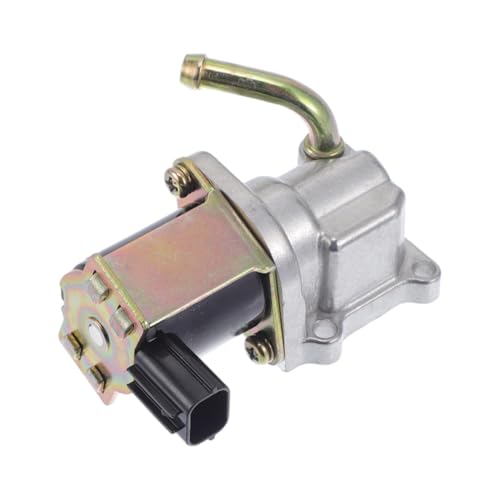
- Faulty Idle Air Control (IAC) Valve: The Idle Air Control (IAC) valve is a small electric motor that the ECU uses to manage the amount of air that bypasses the closed throttle plate, directly controlling idle speed. If this valve gets stuck open due to carbon buildup, it will continuously allow too much air into the engine, resulting in a persistent high idle.
- Malfunctioning Sensors: A faulty engine coolant temperature sensor can incorrectly report to the ECU that the engine is always cold, causing it to remain in “fast idle” mode permanently. Likewise, a malfunctioning throttle position sensor can trick the ECU into thinking you are pressing the gas pedal when you are not.
What Causes a Rough, Low, or Fluctuating Idle?
When your car is shaking, the RPM needle is bouncing, or it feels like it’s about to die at a stop light, you’re experiencing an unstable idle. These symptoms are unsettling and point to specific failures within your engine’s ignition, fuel, or air intake systems. Organizing these issues by symptom is the most effective way to begin a diagnosis.
Causes of a Rough, Vibrating Idle
A rough idle, where the car shakes while idling, is almost always caused by an engine misfire. A misfire means one or more cylinders are not igniting their air-fuel mixture correctly, throwing the engine’s balance off.
* Worn Spark Plugs: This is the most common cause. Old or fouled spark plugs can’t create a strong enough spark to ignite the fuel.
* Faulty Ignition Coils: An ignition coil provides the high voltage for the spark plug. If one fails, its corresponding cylinder will misfire.
* Clogged Fuel Injectors: If a fuel injector is dirty, it can’t deliver the proper amount of fuel to a cylinder, leading to a lean misfire and a rough idle.
* Worn Engine Mounts: While not a cause of the rough idle itself, broken engine mounts can no longer absorb normal engine vibrations, making a slight roughness feel much more severe inside the cabin.
Causes of a Low Idle or Stalling
An idle that drops too low (below 500-600 RPM) or causes the engine to stall points to a “starvation” issue—the engine isn’t getting enough air or fuel to stay running.
* Dirty Throttle Body: Carbon buildup around the throttle plate can restrict the tiny amount of air needed to maintain a proper idle, essentially choking the engine.
* Stuck-Closed IAC Valve: The opposite of a high idle problem. If the Idle Air Control (IAC) valve is stuck closed, it can’t provide the bypass air needed for the engine to idle, causing it to stall as soon as you take your foot off the gas.
* Fuel Delivery Issues: A weak fuel pump or a clogged fuel filter can prevent the engine from getting the steady fuel pressure it requires to maintain a stable idle.
Causes of a Fluctuating or “Hunting” Idle
A “hunting” or surging idle, where the RPM needle bounces up and down rhythmically, is a classic sign that the ECU is trying to correct a problem but is overcompensating.
* Vacuum Leak: A small or intermittent vacuum leak is a primary cause. The ECU detects the lean condition, adds fuel (RPM goes up), then the oxygen sensor reports a rich condition, so the ECU cuts fuel (RPM goes down), creating a cycle.
* Dirty Mass Air Flow (MAF) Sensor: The Mass Air Flow (MAF) sensor tells the ECU how much air is entering the engine. If the sensor is dirty, it will send inaccurate readings, causing the ECU to constantly adjust the fuel trim up and down, resulting in a surging idle.
* Failing Oxygen Sensor: A slow or failing oxygen sensor can send delayed or incorrect data to the ECU, causing the same overcorrection cycle seen with vacuum leaks.
How Can You Diagnose and Fix Common Idle Problems?
The first and most important step in diagnosing any modern idle problem is to use an OBD-II scanner to check for Diagnostic Trouble Codes (DTCs). Guessing can lead to replacing expensive parts you don’t need. An OBD-II scanner lets the engine’s own computer point you in the right direction.
From our practical experience, following a logical diagnostic workflow saves time and money. Here is a proven, step-by-step process for a DIY diagnosis.
- Step 1: Scan for Codes
An OBD-II scanner is an essential tool for any car owner. Plug it into the port under your dashboard and read any stored codes. A code like “P0301” indicates a misfire in cylinder 1, while a code like “P0171” points to a system running too lean, often a vacuum leak. This is your starting point. - 【Convenience and Savings for All Users】Designed with user-friendliness in mind, the V011 OBD2 Scanner is perfect for both novices and seasoned car enthusiasts. The intuitive app helps you interpret the check engine light, and suggests possible fixes. This can help you avoid unnecessary trips to the repair shop and prevent you from being overcharged for repairs. The product also includes helpful how-to guides and video tutorials, empowering you to clear the check engine light yourself and save significantly on repair bills.The fault code can only be cleared after the car is repaired. ⚠️ Notice:lf the car is not repaired,the fault code can only be cleared by the computer in the 4s shop.
- 【Intuitive Data Visualization】Understanding car diagnostics has never been easier. The V011 OBD2 Scanner displays detected data in clear, easy-to-read charts. Whether it's engine coolant temperature, engine speed, vehicle speed, or control module voltage, the visual representation helps you quickly grasp your car’s status. Even beginners can compare these readings against normal values to determine if their car needs any repairs.
- 【Broad Compatibility】The newly upgraded V011 OBD2 Scanner supports over 96% of car makes and models, making it one of the most versatile diagnostic tools on the market. It is compatible with a wide range of brands including Toyota, Honda, Chevrolet, Ford, Mercedes-Benz, Jeep, BMW, Porsche, Subaru, Nissan, Cadillac, Volkswagen, and Lexus, covering vehicles from 1996 to the present. This ensures that almost any vehicle owner can benefit from its extensive features. The device also supports multiple languages, including English, German, Spanish, Finnish, French, Italian, Dutch, Portuguese, and Chinese, ensuring accessibility for a global audience.
- 【Advanced Bluetooth 5.4 Connectivity】Say goodbye to the hassle of traditional wired connections. The V011 OBD2 Scanner features an upgraded Bluetooth 5.4 system, providing faster and more reliable connections. This seamless connectivity ensures you can start diagnosing your vehicle without any delays.Tips: 1. The car must be started (power on and ignition), 2. The mobile phone Bluetooth is turned on. Note that Apple phones only need to turn on Bluetooth, do not connect Bluetooth in the phone settings to turn on OBD Home, the APP will automatically connect (this product is only suitable for OBD home) ", "sku": "B0D44C1F7Y", "brand": { "@type": "Brand", "name": "" }, "offers": { "@type": "Offer", "url": "https://www.amazon.com/dp/B0D44C1F7Y?tag=carxplorer-20&linkCode=osi&th=1&psc=1", "priceCurrency": "USD", "price": "20.89", "availability": "https://schema.org/InStock", "itemCondition": "https://schema.org/NewCondition", "seller": { "@type": "Organization", "name": "" } } } ] }
-
Step 2: Perform a Visual Inspection
With the engine off, look for obvious problems. Are there cracked, disconnected, or brittle-looking vacuum hoses? Is the air filter housing securely clamped? Are there any loose electrical connectors on sensors around the throttle body or intake manifold? -
Step 3: Check for Vacuum Leaks (The Pro Tip)
This is a classic mechanic’s trick that demonstrates hands-on experience. With the engine running, carefully spray short bursts of water from a spray bottle onto suspected vacuum hoses and gasket areas. If the engine idle suddenly changes, stumbles, or smooths out, you’ve found your leak. The water temporarily seals the leak, changing the air-fuel mixture. Safety first: always work on a cool engine and stay clear of moving parts like belts and fans. -
Step 4: Clean Key Components
Often, idle problems are simply caused by dirt and carbon buildup.- Clean the Throttle Body: With the engine off and the intake hose removed, spray a dedicated throttle body cleaner onto a rag and wipe away the black carbon ring around the throttle plate.
- Clean the MAF Sensor: Carefully remove the Mass Air Flow (MAF) sensor and spray it only with a specialized MAF sensor cleaner. Never touch the delicate wires inside.
- Clean or Test the IAC Valve: On older cars, the Idle Air Control (IAC) valve can often be removed and cleaned with throttle body cleaner to free up a sticky plunger.

FAQs About how many revs should a car idle at
Is an RPM gauge under 1 normal at idle?
Yes, it is completely normal for your car’s RPM gauge to be under 1 at idle. The ‘1’ on the tachometer represents 1,000 RPM. A normal warm idle speed is between 600 and 1,000 RPM, which means the needle should be resting steadily in the space just below the ‘1’.
Is 500 RPM too low for a car to idle?
For most modern gasoline cars, 500 RPM is too low for a stable idle. An idle this low will often be rough, cause vibrations, and may lead to stalling. It typically indicates a problem such as a dirty throttle body, a faulty idle air control valve, or a fuel delivery issue.
Why is my car idling at 1500 RPM or higher?
Idling at 1500 RPM when the engine is warm is a sign of a high idle problem. This is often caused by a vacuum leak, where unmetered air is entering the engine. Other causes include a faulty idle air control valve that’s stuck open or a malfunctioning engine coolant temperature sensor tricking the ECU into a permanent “cold start” mode.
Does idle RPM affect gas mileage?
Yes, idle RPM directly affects gas mileage, though the impact is small in short-term idling. A higher-than-normal idle means the engine is burning more fuel per minute just to stay running. Over time, fixing a high idle issue can result in measurable fuel savings, especially for drivers who spend a lot of time in city traffic.
What should car RPM be when in park versus in drive?
Your car’s RPM should be slightly higher when in ‘Park’ or ‘Neutral’ than when in ‘Drive’. When you shift into ‘Drive’, the transmission engages, putting a slight load on the engine. The ECU allows the RPM to drop by about 50-100 RPM to account for this, which is perfectly normal behavior.
Why does my car shake when idling at a red light?
Shaking at a red light is a classic symptom of a rough idle, most often caused by an engine misfire. This means one of the cylinders is not firing correctly. The most common culprits are worn-out spark plugs, a bad ignition coil, or a clogged fuel injector. Worn or broken engine mounts can also cause vibrations to be felt more intensely.
Is it normal for idle to be higher in the winter?
Yes, it is normal for your car to idle higher for a longer period in the winter. The engine’s computer keeps the RPM elevated (fast idle) to help the engine and its fluids warm up to their optimal operating temperature more quickly. In colder weather, this process simply takes more time.
How to fix a rough idle after a battery change?
A rough idle after a battery change often means the engine’s computer needs to relearn its idle settings. The computer’s memory (KAM – Keep Alive Memory) is reset when the battery is disconnected. To fix this, you can perform an “idle relearn procedure,” which usually involves letting the car idle for 10-15 minutes, sometimes with the A/C on and off. Check your owner’s manual for the specific procedure.
Can a dirty air filter cause a rough idle?
Yes, a severely clogged air filter can contribute to a rough idle. The engine needs a precise mixture of air and fuel to run smoothly. If the air filter is too dirty, it restricts airflow, which can throw off the air-fuel ratio and lead to symptoms like poor performance, decreased fuel economy, and a slightly rougher idle.
When should I see a mechanic for an idle problem?
You should see a mechanic if you’ve scanned for codes and none appear, basic cleaning doesn’t solve the issue, or if you’re not comfortable performing the diagnostics yourself. Any problem involving fuel lines, complex sensor replacement, or internal engine issues should always be handled by an ASE-certified technician to ensure safety and prevent further damage.
Key Takeaways: Understanding Your Car’s Idle Speed
- Normal is 600-1000 RPM: For a fully warm gasoline engine, a steady idle in this range is the primary sign of a healthy engine. Your tachometer reading just under the ‘1’ is normal.
- Idle Speed is Dynamic: Your car’s computer (ECU) intentionally changes the RPM to handle loads from the A/C, power steering, and alternator. This fluctuation is normal and expected.
- High Idle Often Means a Vacuum Leak: If your car idles over 1000 RPM when warm, the most common cause is a vacuum leak, where unmetered air is entering the engine.
- Shaking & Rough Idle Points to Misfires: A vibrating or shaking sensation is a classic symptom of an engine misfire, typically caused by worn spark plugs, bad ignition coils, or clogged fuel injectors.
- Start Diagnosis with an OBD-II Scanner: Before guessing, the most effective first step is to scan for Diagnostic Trouble Codes (DTCs). This lets the engine’s computer tell you what it thinks is wrong.
- Simple Cleaning Can Be a Powerful Fix: Many idle issues, including low or rough idling, can be resolved by cleaning carbon buildup from the throttle body and the Idle Air Control (IAC) valve.
- Know When to See a Professional: While many diagnostics and fixes are DIY-friendly, if you’re unsure, can’t find the problem, or the issue involves the fuel system, always consult an ASE-certified mechanic.
Final Thoughts on Maintaining a Healthy Engine Idle
Understanding your car’s idle speed is more than just knowing a number; it’s about learning to listen to your engine’s heartbeat. A smooth, steady idle in the correct range is one of the clearest indicators of overall engine health. By recognizing what’s normal—including the intelligent adjustments your car makes for temperature and accessories—you can stop worrying about every little change in the tachometer.
More importantly, by learning to identify the symptoms of an abnormal idle, like a persistent high rev, a rough vibration, or a frustrating surge, you empower yourself to catch small problems before they become costly repairs. Whether it’s a simple cleaning of the throttle body or using an OBD-II scanner to pinpoint a faulty sensor, paying attention to your car’s idle is a fundamental part of smart, preventative maintenance that will keep your vehicle running reliably for years to come.
Last update on 2026-03-19 / Affiliate links / Images from Amazon Product Advertising API