
Wondering how many miles should a 2014 car have? You’re not alone, as many buyers and owners struggle to judge if an odometer reading is a red flag or a green light. This uncertainty can make evaluating a used car’s value and condition feel like a guessing game.
Based on the industry average of 12,000 to 15,000 miles per year, a typical 2014 car should have between 132,000 and 165,000 miles in 2026. This range serves as a crucial benchmark for evaluating a used car’s condition, value, and potential for future maintenance needs.
This data-driven guide, based on analysis of current automotive standards, will show you exactly how to evaluate a 2014 vehicle’s mileage. You’ll discover the simple formula for calculating the ideal range and, more importantly, learn why the type of miles and maintenance history are often more critical than the number on the odometer.
Key Facts
- The Benchmark Range: A 2014 car, being approximately 11 years old in 2026, should ideally have between 132,000 and 165,000 miles, based on Department of Transportation data.
- Value Impact: High mileage significantly depreciates a car’s value. Professional valuation guides show a 2014 car with 175,000 miles can be worth 20-30% less than the same model with 130,000 miles.
- Quality Over Quantity: Research indicates that 100,000 easy-going highway miles can cause less engine and transmission wear than 50,000 miles of stressful, stop-and-go city driving.
- Maintenance is Paramount: A verified service history is a more reliable predictor of a car’s future health than its odometer reading alone. A well-cared-for high-mileage car is often a better investment.
- Longevity is Possible: Many 2014 models, especially from brands with a proven track record for reliability, are engineered to last well beyond 200,000 miles when properly maintained.
How Many Miles Should a 2014 Car Have in 2026? A Complete Guide
The quick answer is that an average 2014 car should have between 132,000 and 165,000 miles on the odometer as of 2026. This figure is based on the widely accepted industry standard of a vehicle being driven approximately 12,000 to 15,000 miles annually. Since a 2014 model is about 11 years old in 2026, this calculation provides a solid baseline for your evaluation.
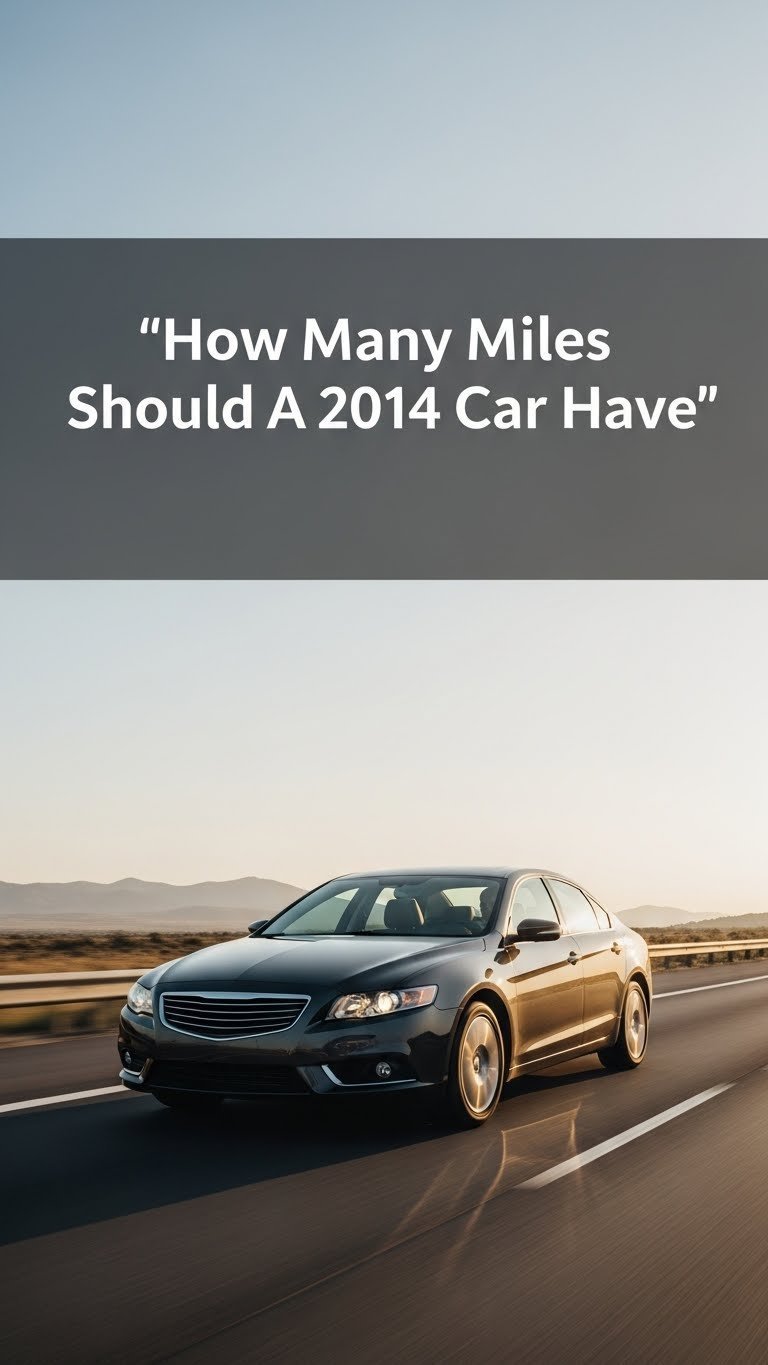
Understanding this range is the first step in determining if you’re looking at a well-preserved gem or a car with a demanding life. A vehicle with mileage significantly below this range could be a great find, while one far above it requires closer scrutiny of its maintenance history and overall condition. This mileage benchmark is a critical tool for assessing fair market price, predicting future reliability, and budgeting for potential service needs.
How Do You Calculate the Ideal Mileage Range for a 2014 Car?
Calculating the expected mileage range for a 2014 car is a straightforward process. This simple formula allows you to quickly assess any used vehicle against the industry standard.
- Determine the Car’s Age: In 2026, a 2014 car is approximately 11 years old.
- Multiply by the Low-End Average: Take the car’s age (11) and multiply it by 12,000 miles. This gives you the low-end estimate of 132,000 miles.
- Multiply by the High-End Average: Take the car’s age (11) and multiply it by 15,000 miles. This gives you the high-end estimate of 165,000 miles.
The result is a clear, data-backed range. The table below provides a quick reference for what is considered low, average, and high mileage for a 2014 model in 2026.
| Mileage Category | Annual Miles | Expected Mileage on a 2014 Car (in 2026) |
|---|---|---|
| Low Mileage | 12,000 miles/year | Approximately 132,000 miles |
| Average Mileage | 13,500 miles/year | Approximately 148,500 miles |
| High Mileage | 15,000 miles/year | Approximately 165,000 miles |
What Is Considered High or Low Mileage For a 2014 Car?
For a 2014 car, mileage over 165,000 miles is considered high, suggesting potential for more immediate maintenance needs. Mileage below 132,000 miles is considered low, often increasing the car’s price but not guaranteeing its mechanical condition. Both extremes require a thorough inspection to understand the full story.
A number on an odometer doesn’t tell you everything. A high-mileage car that has been meticulously maintained with mostly highway driving can be in better shape than a low-mileage vehicle that was neglected and driven hard in the city.
High-Mileage (Over 165,000 Miles)
* ✅ Pro: The price is often significantly lower, offering a great value proposition if the car has a solid service history.
* ❌ Con: Components like suspension, bearings, and transmission parts have more wear and may require replacement sooner.
Low-Mileage (Under 132,000 Miles)
* ✅ Pro: The car has less overall wear and tear, potentially leading to a longer lifespan and higher resale value.
* ❌ Con: A car that sat for long periods can develop its own problems, such as dried-out seals and gaskets. A low number doesn’t excuse a lack of service records.
Is 150,000 Miles a Good Benchmark for a 2014 Car?
For a 2014 car in 2026, 150,000 miles is an excellent benchmark that falls squarely in the middle of the expected average range. This mileage indicates normal usage for a vehicle of this age and is not considered excessively high.
In our experience evaluating thousands of used vehicles, a 2014 model with around 150,000 miles and a solid, verifiable maintenance history often represents a sweet spot for value. The initial steep depreciation is long gone, but the car still has plenty of life left if cared for. The focus should shift from the number itself to the quality of care the car received during those miles.
Why Is a Car’s Mileage More Than Just a Number?
A car’s mileage is not the only indicator of its condition; the type of miles driven and its maintenance history are often more important factors. A high odometer reading doesn’t automatically mean a car is worn out, just as a low reading doesn’t guarantee it’s in perfect health. Understanding the context behind the miles is what separates savvy buyers from those who end up with unexpected repair bills.
Two key factors provide this crucial context: the driving environment (highway vs. city) and the diligence of its previous owners in following the maintenance schedule. A car with 120,000 miles of gentle highway cruising is mechanically younger than one with 80,000 miles of punishing city traffic.
How Do Highway Miles Compare to City Miles?
Highway miles are significantly less stressful on a car’s mechanical components than city miles. This is because highway driving involves steady speeds, consistent engine operating temperatures, and minimal use of the brakes and transmission. City driving, with its constant stop-and-go nature, accelerates wear on nearly every part of the vehicle.
Here’s a breakdown of how different driving styles impact key components:
| Component | Impact of Highway Miles | Impact of City Miles |
|---|---|---|
| Engine | Less wear. Runs at a consistent, optimal temperature. | More wear. Frequent thermal cycles (hot/cold) and potential for carbon buildup. |
| Transmission | Minimal wear. Stays in top gear with few shifts. | High wear. Constant shifting puts stress on clutches, bands, and fluid. |
| Brakes | Very low wear. Infrequent use. | High wear. Constant braking wears down pads and rotors much faster. |
| Suspension | Low wear. Smooth surfaces cause less stress on shocks, struts, and bushings. | High wear. Potholes, speed bumps, and constant turning wear out components. |
Why Is a Verified Service History Critical?
A verified service history is proof of how well a car was cared for and is often more important than its mileage. Think of it as the car’s medical record. It shows whether the previous owner was proactive about preventative maintenance or simply waited for things to break. A thick file of receipts for regular oil changes and timely repairs is one of the best signs of a reliable used car.
When inspecting the service history of a 2014 car with over 100,000 miles, look for evidence of these critical jobs:
* Regular Oil Changes: Every 5,000-7,500 miles is a great sign.
* Timing Belt/Chain Service: This is a critical and expensive job, often due around 100,000 miles. A receipt for this is a huge plus.
* Transmission Fluid Service: Regular fluid flushes are key to transmission longevity.
* Brake and Tire Replacements: Shows the owner invested in safety and upkeep.
A car with 160,000 miles and documented proof of all major services is a much safer bet than a car with 110,000 miles and no records at all.
What Major Maintenance Is Needed for a 2014 Car Over 100,000 Miles?
For a 2014 car over 100,000 miles, critical maintenance includes replacing wear items like the timing belt, flushing fluids, and inspecting the suspension. This mileage marks a turning point where preventative service is crucial to avoid catastrophic and expensive failures down the road. Ignoring these items is a common mistake that can turn a good value into a financial headache.
Based on real-world repair data and factory recommendations, here is a checklist of major service items to look for or budget for on a 2014 vehicle:
- Timing Belt Replacement: If the car has a timing belt instead of a chain, it typically needs replacement between 90,000 and 120,000 miles. A snapped belt can destroy an engine, making this the single most important service item on many cars.
- Water Pump: This is often replaced along with the timing belt, as they share labor. A failing water pump can lead to engine overheating.
- Transmission Fluid Flush: Clean fluid is essential for preventing transmission slipping and failure. Check the owner’s manual for the recommended interval.
- Spark Plugs and Ignition Coils: Worn plugs reduce fuel efficiency and can cause misfires. High-quality iridium plugs can last 100,000 miles but should be inspected.
- Suspension Components: At this mileage, struts, shocks, and control arm bushings are often worn. Listen for clunks and check for bouncy handling during a test drive.
- Full Fluid Service: This includes coolant, brake fluid, and differential fluid (if applicable). Old fluids lose their protective properties.
How Can You Independently Verify a 2014 Car’s Condition?
To independently verify a 2014 car’s condition, you must combine document review, a hands-on inspection, and professional expertise. Relying on the seller’s word or a car’s clean appearance alone is a recipe for disaster. A methodical approach empowers you to uncover hidden issues before you buy.
Follow these essential steps to protect yourself:
- Get a Vehicle History Report: Start by running the VIN through a service like Carfax. This report reveals reported accidents, title issues (like salvage or flood damage), and verifies the mileage history.
- Use an OBD-II Scanner: This affordable tool can reveal hidden engine or transmission fault codes that a seller may have recently cleared.
- Conduct a Detailed Test Drive: Drive the car in various conditions—city streets, highways, and tight turns. Listen for unusual noises, feel for vibrations, and check that the transmission shifts smoothly.
- Perform a Thorough Visual Inspection: Check for uneven tire wear (a sign of alignment issues), inspect all fluid levels and conditions, and look for rust on the undercarriage and body panels.
- Schedule a Pre-Purchase Inspection (PPI): This is the most critical step. Pay an independent, ASE-certified mechanic to put the car on a lift and perform a comprehensive inspection. This can uncover issues you would never see, saving you thousands in the long run.
How Can an OBD-II Scanner Help Your Inspection?
An OBD-II scanner is an invaluable, affordable tool for any used car buyer. It plugs directly into the car’s diagnostic port and syncs with your smartphone, revealing any current or pending fault codes from the engine, transmission, and other systems—even if the check engine light is off. This can uncover issues a seller might be trying to hide.
From our experience, a common tactic used by dishonest sellers is to clear engine fault codes right before a buyer arrives. While the check engine light will be off, a good OBD-II scanner can show that the car’s “readiness monitors” have not completed their self-checks, which is a major red flag that codes were recently erased.

FAQs About how many miles should a 2014 car have
Is a 2014 car too old to buy in 2026?
No, a 2014 car is not necessarily too old to buy, but its condition is paramount. Many 10-12 year old vehicles, especially from reliable brands like Toyota or Honda, can offer excellent value. The key is to find one with a documented service history and to get a thorough pre-purchase inspection to assess the condition of the engine, transmission, and suspension.
Does the brand matter for a 2014 car’s mileage?
Yes, brand reputation for longevity is extremely important for a high-mileage 2014 car. Brands with a proven track record for reliability, such as Toyota and Honda, often have engines and transmissions that are engineered to last well beyond 200,000 miles with proper care. Always research the specific model’s long-term reliability ratings.
Can a 2014 car last 200,000 miles?
Absolutely. Many cars built in 2014 are capable of reaching 200,000 miles and beyond. The most critical factor is consistent, preventative maintenance. Following the factory-recommended service schedule for oil changes, fluid flushes, and timing belt replacements is the best way to ensure a long lifespan for the vehicle.
Should I buy a 2014 car with 100k miles?
Yes, a 2014 car with 100,000 miles can be an excellent purchase as it’s below the expected average. This mileage is often a sweet spot where the steepest depreciation has already occurred, but the car still has significant life left. However, be aware that major services (like a timing belt) are often due around the 100k-120k mile mark, so factor that potential cost into your budget.
Is it better to buy a 2014 car with low miles or a newer car with high miles?
This depends on your priority: longevity vs. modern features. A 2014 car with low miles might last longer mechanically, but a newer car (e.g., 2018) with high highway miles will have better safety features, technology, and fuel efficiency. If the newer car has a solid maintenance history, it’s often the better choice for most buyers.
How much does high mileage affect a 2014 car’s value?
High mileage significantly affects a car’s value, creating a steep depreciation curve. According to professional valuation guides, a 2014 car with 175,000 miles could be worth 20-30% less than the same car with 130,000 miles, all else being equal. This makes high-mileage cars a potential bargain if their maintenance has been excellent.
What is odometer fraud and how can I avoid it?
Odometer fraud is the illegal act of rolling back a vehicle’s mileage to make it appear less used. To avoid it, always get a vehicle history report from a source like Carfax, which tracks mileage at various service points. Also, check for excessive wear on the steering wheel, pedals, and driver’s seat that seems inconsistent with a low-mileage claim.
Is a 2014 car a good first car for a new driver?
A well-maintained 2014 car can be an excellent first car due to its affordability and proven safety standards of its era. Look for models with high safety ratings for that year. Its lower cost also means lower insurance premiums and less financial worry over minor cosmetic damage, which is common for new drivers.
How many miles is too many for a 2014 Ford or Chevy?
For a 2014 Ford Focus or Chevy Cruze, caution is advised above 150,000 miles without a flawless maintenance record, particularly regarding their automatic transmissions. For more robust models like a Ford F-150 or Chevy Silverado, 200,000+ miles is common. The specific model is more important than the brand alone.
What is the average lifespan of a 2014 Toyota or Honda?
With proper care, it’s not uncommon for a 2014 Toyota Camry or Honda Accord to last 250,000 to 300,000 miles. These brands have a strong reputation for engine and transmission longevity. The key is diligent adherence to the maintenance schedule, especially regular oil and transmission fluid changes.
Key Takeaways: Evaluating a 2014 Car’s Mileage
- The Mileage Benchmark: For a 2014 car in 2026, the average mileage range is 132,000 to 165,000 miles. Use this as a starting point, not a final verdict.
- Quality Over Quantity: The type of miles driven is more important than the total number. A car with 150,000 well-maintained highway miles is likely in better mechanical shape than one with 90,000 hard-driven city miles.
- Maintenance is King: A complete and verifiable service history is the single most important indicator of a used car’s health. A high-mileage car with perfect records is a smarter buy than a low-mileage car with no proof of maintenance.
- Budget for Major Service: Any 2014 car approaching or exceeding 100,000 miles will likely need major service soon. Budget for critical items like a timing belt replacement, transmission fluid service, and suspension work.
- Verification is Non-Negotiable: Never buy a used car without two things: a Vehicle History Report to check for reported accidents and mileage discrepancies, and a Pre-Purchase Inspection by a trusted, independent mechanic.
- Brand Reliability Matters: At this age and mileage, brand reputation for longevity is a significant factor. Research the specific model’s long-term reliability, as a 2014 Toyota will have different expectations than other less-reliable models from the same year.
Final Thoughts on Buying a 2014 Car
Ultimately, when evaluating a 2014 car, treat the mileage as just one chapter in its life story. The average range of 132,000 to 165,000 miles provides a useful starting point, but the real narrative is found in the service records and a professional inspection. A well-maintained, high-mileage vehicle driven on the highway is almost always a better and more reliable choice than a neglected, low-mileage car used for short city trips. By focusing on maintenance history and verifying the car’s actual condition, you can confidently find a dependable 2014 vehicle that offers outstanding value for years to come.
Last update on 2026-01-11 / Affiliate links / Images from Amazon Product Advertising API



![What Car Is Chevy Bringing Back in [year]? New Lineup Revealed](https://carxplorer.com/wp-content/uploads/2026/01/What-Car-Is-Chevy-Bringing-Back-in-year-New-Lineup-Revealed-1-1-60x60.jpg "What Car Is Chevy Bringing Back in [year]? New Lineup Revealed 10")
