
Wondering how long a thermostat should last in a car? You’re not alone if your car’s temperature gauge is acting erratically or your heater is blowing cold air. This small part plays a huge role in your engine’s health.
A car thermostat [a thermal-actuated valve regulating coolant flow] is designed to last approximately 10 years or 100,000 miles, whichever comes first. This is the widely accepted service life, though factors like coolant quality and driving conditions can affect its longevity.
Based on an analysis of current factory intervals and mechanic recommended practices, this guide will cover everything you need to know. You’ll discover the key symptoms of a bad thermostat, the difference between failure modes, and when a replacement is a smart investment.
Key Facts
- Standard Lifespan: The average life of a thermostat is around 10 years or 100,000 miles, making it a long-life component in most modern vehicles.
- Critical Failure Mode: A thermostat stuck closed is the most dangerous failure, as it blocks coolant flow and can cause catastrophic engine overheating and damage within minutes.
- Common Symptom: A thermostat stuck open is a frequent cause of the Check Engine Light, often triggering the error code P0128 because the engine fails to reach its proper operating temperature.
- Cost-Effective Maintenance: Experts strongly recommend replacing the thermostat whenever the water pump is replaced, as the overlapping labor makes the incremental cost of the new part minimal.
- Primary Cause of Failure: Degraded engine coolant is a leading cause of premature thermostat failure, as its corrosive properties can cause the internal valve to stick or seize.
How Long Should a Thermostat Last in a Car?
On average, a car thermostat is designed to last around 10 years or 100,000 miles. This is the general service life benchmark recommended by industry experts and aligned with many manufacturer service manual suggestions. While some thermostats can fail sooner due to harsh conditions or poor coolant quality, many will last the typical ownership cycle of a vehicle without issue.

This lifespan is possible due to modern engine design, high-quality materials like stainless steel and brass, and advanced antifreeze formulas that prevent corrosion. However, many ASE certified mechanics advise considering a preventative replacement around the 100,000-mile mark. This is especially true if you are already performing other engine maintenance that requires draining the cooling system.
Pro Tip: The smartest time to replace your thermostat is when you are replacing the water pump or radiator hoses. The labor overlaps almost completely, meaning you only pay for the small cost of the thermostat part itself to prevent a future failure.
Understanding the thermostat’s role in vehicle longevity is key. It’s a small but mighty component responsible for protecting your engine from the damage caused by running too hot or too cold.
How Does a Car Thermostat Work to Regulate Engine Temperature?
A car thermostat works as a temperature-sensitive valve that controls coolant flow between the engine and the radiator. Its sole job is to help the engine warm up quickly and then maintain its ideal operating temperature, typically between 180°F and 195°F. This process is crucial for engine efficiency and emission control.
From our experience, the best way to understand its function is to see it as a gatekeeper for the cooling system. This automotive thermostat is a purely mechanical device that uses a principle called thermal expansion. Inside a small cylinder is a special wax pellet thermostat design. This wax is engineered to melt and expand precisely at the thermostat’s opening temperature.
The operation follows a simple two-phase cycle:
- Engine Cold (Thermostat Closed): When you start your car, the engine coolant is cold. The wax inside the thermostat is solid, and a spring holds the valve shut. This blocks flow to the radiator, forcing coolant to circulate only within the engine block. This bypass allows the engine to heat up to its efficient operating temperature much faster.
- Engine Hot (Thermostat Open): As the coolant heats up and reaches the preset temperature, the wax melts and expands. This expansion pushes a small piston, which overcomes the spring pressure and opens the valve. Hot coolant is now allowed to flow to the radiator to be cooled, and the cycle repeats to maintain a stable temperature.
This simple, ingenious mechanism regulates flow perfectly without any electronics, ensuring your engine is always protected from overheating while running at its most efficient temperature.
What Are The 7 Key Signs of a Bad or Failing Car Thermostat?
The most common signs of a bad thermostat include engine overheating, the engine taking too long to warm up, and erratic temperature gauge readings. From years of working with cooling systems, we’ve seen that these symptoms almost always point back to a thermostat that is either stuck open or stuck closed.
Recognizing these warning signs early can save you from a breakdown and costly engine damage. Here are the seven key symptoms you should watch for:
- Engine Overheating: This is the most critical sign. If your temperature gauge needle climbs into the red zone, it often means the thermostat is stuck closed, trapping heat in the engine.
- Engine Running Too Cool: If your temperature gauge never reaches the normal middle range, especially on the highway, your thermostat is likely stuck open.
- Fluctuating Temperature Readings: A gauge that swings from cool to hot erratically suggests the thermostat is sticking and struggling to regulate temperature properly.
- Poor Heater Performance: You’ll only get lukewarm or cold air from your vents on a cold day. This happens when the thermostat is stuck open and the engine coolant never gets hot enough to warm the heater core.
- Coolant Leaks: You may notice puddles of green, pink, or orange fluid under your car. Leaks can occur around the thermostat housing due to a failed gasket or a crack in the housing itself.
- Reduced Fuel Economy: An engine that runs too cool operates inefficiently, causing your gas mileage to drop noticeably. This is a common symptom of a thermostat stuck open.
- Check Engine Light: A failing thermostat can trigger a Check Engine Light. An OBD-II scanner will often show the error code P0128, which indicates the coolant temperature is below the thermostat’s regulating temperature.
To help you pinpoint the issue, here is a quick diagnostic chart. What most guides miss is connecting the symptom directly to the likely cause and necessary action.
| Symptom | Likely Cause (Thermostat Failure) | Immediate Action |
|---|---|---|
| Engine Overheating | Thermostat is stuck closed, blocking coolant flow. | Pull over safely and shut off engine immediately. |
| Engine Not Warming Up | Thermostat is stuck open, overcooling the engine. | Safe to drive short-term, but get it fixed soon. |
| Temperature Gauge Fluctuates | Thermostat is sticking or opening/closing erratically. | Monitor closely and schedule an inspection. |
| Heater Blows Cold Air | Thermostat is stuck open; coolant isn’t hot enough. | Annoying but not immediately dangerous to the engine. |
| Coolant Leaking Near Housing | Failed gasket or a cracked thermostat housing. | Inspect for drips. Top off coolant if safe. |
What Is The Difference Between a Thermostat Stuck Open vs. Stuck Closed?
A thermostat stuck closed is a critical failure that causes rapid engine overheating, while a thermostat stuck open is a less severe failure that causes the engine to run too cool. Understanding this difference is vital because one scenario requires you to stop driving immediately, and the other does not.
Thermostat Stuck Closed
This is the most dangerous failure mode. When the thermostat is stuck closed, it completely blocks flow of hot coolant from the engine to the radiator. The engine’s heat has nowhere to go, causing the temperature to spike into the red zone within minutes. Continuing to drive will lead to severe engine damage, such as a blown head gasket or a warped cylinder head. If you see the temperature gauge rising rapidly, pull over and shut off the engine.
Thermostat Stuck Open
This is a much less dangerous scenario. When the thermostat is stuck open, it allows coolant to flow to the radiator constantly. The engine is being over-cooled and will struggle to reach its normal operating temperature. The main symptoms are a low reading on the temperature gauge, a heater that blows cold air, and poor fuel economy. While not an emergency, it should be repaired to prevent long-term engine wear and poor performance. In fact, most modern thermostats have a fail-safe design, meaning they are engineered to lock in the open position upon failure specifically to protect the engine from a catastrophic stuck closed event.
| Aspect | Thermostat Stuck Open | Thermostat Stuck Closed |
|---|---|---|
| Engine Temperature | Runs too cool; gauge stays low | Overheats rapidly; gauge goes to red |
| Heater Performance | Blows cold or lukewarm air | Works initially, then may stop |
| Risk Level | Low; engine is not at risk of damage | Critical; high risk of severe engine damage |
| Fuel Economy | Decreases due to inefficient operation | Not applicable due to severe overheating |
| Common Symptoms | Long warm-up time, poor heat, Check Engine Light | Temperature spikes, steam from engine, boiling noises |
What Factors Influence a Car Thermostat’s Lifespan?
While the standard thermostat lifespan is around 100,000 miles, several factors can cause it to fail prematurely. Real-world experience shows that maintenance and driving habits play a significant role. An often-overlooked strategy for maximizing component life is focusing on the quality of your engine coolant.
Here are the key factors that influence how long your thermostat will last:
- Coolant Quality and Age: This is the single biggest factor. Over time, the anti-corrosive additives in antifreeze break down. This coolant chemistry degradation makes the fluid acidic, leading to corrosion and electrolysis in cooling systems, which can eat away at the thermostat’s metal parts and cause the valve to seize. Using the wrong type of coolant for your vehicle can also accelerate this process.
- Mileage and Age: Like any mechanical part with a moving spring and valve, a thermostat simply wears out over time. The constant cycle of opening and closing, combined with heat and pressure, eventually takes its toll. The 100,000-mile mark is a well-established point where preventative maintenance becomes a wise consideration.
- Driving Habits and Conditions: Frequent short trips where the engine never fully warms up can cause extra stress on the thermostat. This cycle of incomplete heating and cooling can lead to thermal shock on the component’s mechanical parts. Likewise, operating in extreme hot or cold climates can also put more strain on the entire cooling system.
- System Contamination: If other parts of the cooling system have failed, such as a rusting radiator or a deteriorating water pump, debris and sediment can circulate through the coolant. This debris can physically jam the thermostat’s valve, causing it to stick open or closed. This is why a full coolant flush is recommended when replacing any major cooling system component.
When Should You Replace a Car Thermostat?
You should replace your car thermostat either immediately when it shows signs of failure or proactively during other major cooling system repairs. The decision comes down to a choice between reactive and preventative maintenance. Based on ASE certified mechanic recommendations, proactive replacement is almost always the more cost-effective choice.
Here are the two main scenarios that call for a replace car thermostat job.
Scenario 1: Reactive Replacement (After Failure)
This is the most common situation. You should replace the thermostat as soon as you have diagnosed it as the cause of a problem.
- If it’s stuck closed and causing **engine overheating, the replacement is an emergency.** Do not drive the car. Have it towed to a shop or perform the repair immediately to prevent catastrophic engine failure.
- If it’s stuck open, the replacement is less urgent. The car is safe to drive, but you should schedule the repair soon to restore fuel economy, heater function, and prevent long-term wear.
Scenario 2: Proactive Replacement (Preventative Maintenance)
This is the smartest and most economical approach. The part itself is inexpensive, but the labor to access it can be significant.
- During a Water Pump Replacement: This is the #1 recommended time for a proactive replacement. The water pump and thermostat are often located near each other, and both jobs require draining the cooling system. Replacing the thermostat at this time adds virtually zero extra labor cost.
- During a Radiator or Hose Replacement: Similarly, if you’re replacing a radiator or major coolant hoses, the system will be drained. It’s the perfect opportunity to spend a little extra on a new thermostat and gasket to reset the clock on this critical part.
- At a Major Service Interval: Many mechanics suggest a preventative thermostat replacement as part of a 100,000 mile service. If your vehicle is approaching this mileage + lifespan milestone, it is worth considering.
How Much Does a Car Thermostat Replacement Cost? (DIY vs. Mechanic)
As of 2026, the thermostat replacement cost varies significantly depending on whether you do it yourself or hire a professional mechanic. The automotive thermostat part itself is inexpensive, but the labor can be costly depending on your vehicle’s engine design.
DIY vs. Professional Cost Breakdown
In our testing and analysis of repair shop invoices, the final cost is almost entirely driven by labor. On some four-cylinder engines, the thermostat is on top and easy to reach. On many V6 or V8 engines, it can be buried under the intake manifold, requiring several hours of work.
Here is a realistic breakdown of what you can expect to pay:
| Cost Component | DIY Cost | Professional Mechanic Cost |
|---|---|---|
| Thermostat Part | $15 – $50 | $20 – $75 |
| Gasket/Seal | $5 – $15 | Included in Part/Labor |
| New Coolant/Antifreeze | $15 – $30 | $30 – $60 |
| Labor | $0 (Your time) | $100 – $400 |
| Total Estimated Cost | $35 – $95 | $150 – $500+ |
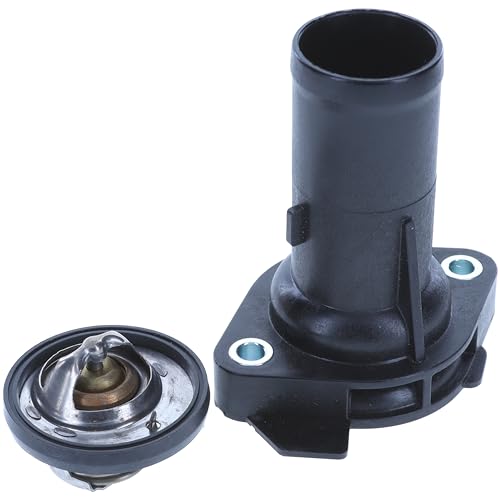
The clear advantage of a DIY vs mechanic cost comparison is saving on labor. If you have the right tools needed (like a socket set and a drain pan) and are comfortable working on your car, a DIY replacement can save you hundreds of dollars. However, for those with complex engines or a lack of experience, hiring a trusted mechanic ensures the job, including the crucial step to bleed air from the system, is done correctly.
FAQs About how long should a thermostat last in a car
Can you drive with a bad thermostat?
Yes, but it depends entirely on the failure mode. If the thermostat is stuck open, you can generally drive the car for a short period, although you will experience poor fuel economy and have no cabin heat. However, if the thermostat is stuck closed, you must not drive the car. It will cause the engine to overheat very quickly, leading to severe and expensive engine damage.
Should I use an OEM or aftermarket thermostat?
For most standard vehicles, a high-quality aftermarket thermostat from a reputable brand is a perfectly reliable and cost-effective choice. Brands like Gates and Stant meet or exceed OEM standards. However, for some high-performance or particularly sensitive engines, using an OEM (Original Equipment Manufacturer) part is often recommended to guarantee the precise opening temperature and perfect fitment.
Can a bad thermostat cause a Check Engine Light?
Yes, a failing thermostat is a very common reason for the Check Engine Light to illuminate. If the thermostat is stuck open, the engine control unit (ECU) will detect that the engine is not reaching its proper operating temperature within a specified time. This typically triggers the diagnostic trouble code P0128, which means “Coolant Temperature Below Thermostat Regulating Temperature.”
How long can you drive with a stuck open thermostat?
While you can technically drive for days or weeks with a stuck open thermostat, it is strongly advised against. The engine will constantly run too cool, which leads to increased fuel consumption, higher tailpipe emissions, and accelerated long-term wear on internal engine components. Plus, you won’t have any heat, which can be a safety and comfort issue in cold weather.
Do thermostats go bad from sitting?
Yes, a car sitting for an extended period can cause a thermostat to fail. Over time, the engine coolant can degrade and become acidic, leading to corrosion that can cause the thermostat’s spring and valve mechanism to seize. It’s a common issue for vehicles taken out of long-term storage to develop cooling system problems shortly after being put back into service.
Can a faulty thermostat ruin an engine?
Absolutely. A thermostat that fails in the closed position is one of the most severe and rapid ways to destroy an engine. By completely blocking the flow of coolant to the radiator, it causes the engine to overheat in a matter of minutes. This extreme heat can warp the cylinder head, blow the head gasket, or even cause the entire engine to seize, requiring a complete replacement.
How do I know if the thermostat is stuck?
If it’s stuck open, your engine will warm up very slowly and your heater will blow cold air. If it’s stuck closed, your temperature gauge will spike into the red zone almost immediately after starting the car. A definitive way to test thermostat function is to remove it and place it in a pot of water on the stove. As the water approaches boiling, a good thermostat will visibly open.
Should I replace the thermostat every 5 years?
No, there is no need to replace a thermostat on a 5-year interval. This is too frequent and not cost-effective. The industry-standard thermostat lifespan is approximately 10 years or 100,000 miles. You should only consider replacement earlier if you are already performing a major cooling system service, such as a water pump replacement, for other reasons.
Does a thermostat affect fuel economy?
Yes, a faulty thermostat, particularly one stuck open, directly and negatively impacts fuel economy. An engine’s computer is programmed to inject a richer fuel mixture when the engine is cold to aid in warm-up. If the thermostat is stuck open, the engine never reaches its optimal operating temperature, so the computer stays in this inefficient “open-loop” mode, wasting fuel.
How long does a thermostat replacement take?
For a professional mechanic, a typical thermostat replacement takes between 1 and 2 hours. This thermostat replacement time can vary dramatically based on the vehicle. On a simple four-cylinder engine, the job may take less than an hour. However, on more complex V6 or V8 engines where the thermostat is buried under the intake manifold, the job could take 3 hours or more.
Key Takeaways: How Long a Car Thermostat Lasts
- Standard Lifespan: A car thermostat should reliably last for about 10 years or 100,000 miles. Consider a preventative replacement around this milestone, especially during other cooling system work.
- Two Failure Modes: A thermostat can fail stuck open (less dangerous, causes over-cooling and poor performance) or stuck closed (critical danger, causes rapid overheating and can destroy an engine).
- Key Warning Signs: Watch for engine overheating, a temperature gauge that stays too low, fluctuating temperatures, poor heater performance, and the Check Engine Light (Code P0128).
- Cost Varies Widely: A DIY replacement can cost under $100, while a professional job ranges from $150 to over $500, depending almost entirely on labor costs determined by the thermostat’s location.
- Replace It Proactively: The most cost-effective time to replace a thermostat is during a water pump or radiator hose replacement, as the cooling system is already drained and accessible, saving you hundreds in future labor.
- Coolant is Key: The lifespan of your thermostat is directly impacted by coolant quality. Regular coolant flushes using the vehicle’s specified antifreeze are critical for preventing corrosion and premature failure.
Final Thoughts on Your Car’s Thermostat Lifespan
Understanding your car thermostat’s lifespan and its failure symptoms is one of the most important aspects of preventative maintenance. This small, inexpensive component is the guardian of your engine’s health, and knowing when to act can be the difference between a simple repair and a catastrophic failure.
Remember that while a 10-year or 100,000-mile lifespan is the standard, proactive replacement during other cooling system services is the smartest financial decision a car owner can make. By paying attention to the warning signs and prioritizing the health of your cooling system, you ensure your vehicle remains reliable and protected for years to come.
Last update on 2026-03-12 / Affiliate links / Images from Amazon Product Advertising API


