
Wondering how long it takes to polish a car? You’re not alone. Many enthusiasts struggle to plan this project, unsure if it’s a single afternoon job or a full weekend commitment. This uncertainty can make the difference between a stunning finish and a half-done car sitting in the garage.
Polishing a car typically takes between 4 and 12 hours, but this can vary significantly based on the car’s size, paint condition, and the method used (hand vs. machine). A simple one-step polish on a small car might take 4-6 hours, while a full two-step paint correction on a large SUV with heavy defects could exceed 15-20 hours.
Based on hands-on experience with hundreds of vehicles, this guide provides a complete time breakdown. Car Polishing [a process of paint correction using abrasives] isn’t just one step; its duration depends on many factors. You’ll discover exactly how to estimate the time for your specific vehicle, ensuring you get that perfect shine without any surprises.
Key Facts
- Machine vs. Hand Time: Using a dual-action machine polisher is at least 3 to 4 times faster than polishing by hand and delivers vastly superior results, according to industry analysis.
- Two-Step Time Commitment: A two-step polish, which includes separate compounding and finishing stages, takes roughly twice as long as a simpler one-step polish, often requiring 8-12 hours or more.
- New Paint Curing: As an industry standard, you must wait a minimum of 30 to 90 days before polishing a car with new paint to allow solvents to fully cure and prevent permanent damage.
- Preparation is Critical: The full process includes 2-3 hours of non-negotiable surface preparation, such as a thorough wash, chemical decontamination, and using a clay bar, before any polishing begins.
- Abrasive Nature: Polishing physically removes a microscopic layer of your car’s clear coat. Excessive polishing can lead to clear coat failure, a costly and irreversible form of paint damage.
How Long Does It Take To Polish A Car?
The time it takes to polish a car can range from 4 hours for a quick one-step polish on a small, well-maintained vehicle to over 20 hours for a multi-stage paint correction on a large, neglected SUV. From our hands-on experience, the average time for a DIY enthusiast using a dual-action polisher for a standard two-step polish is between 8 to 12 hours. This estimate covers the entire process, not just the polishing stage itself.

A precise car polishing time depends entirely on a set of key variables. Think of it less like a single task and more like a project with moving parts. The final duration is a cumulative total of the time spent on preparation steps like a proper car wash and the actual paint correction itself. But what makes one car take 4 hours and another a full 20?
The primary factors that determine the final polishing service duration include:
- The vehicle’s size and complexity
- The current condition of the paint and severity of defects
- The number of polishing stages you plan to perform
- The method you use (hand vs. machine)
What Are the 7 Key Factors That Determine Car Polishing Time?
The seven main factors influencing car polishing time are your vehicle’s size, the paint’s condition, the number of polishing steps, the method used (hand or machine), your personal skill level, the thoroughness of surface preparation, and even environmental conditions. Understanding how each of these contributes to the complete time breakdown helps you create a realistic schedule for your project.
Vehicle Size & Complexity
A larger vehicle simply has more surface area, directly increasing the time required. A small car like a Mazda MX-5 has significantly less paint to correct than a large SUV like a Chevy Tahoe. Complex body lines, spoilers, and vents also add time because they require more careful maneuvering with the polisher.
| Vehicle Size | Paint Condition | Estimated Polishing Time (Machine, 1-Step) | Estimated Polishing Time (Machine, 2-Step) |
|---|---|---|---|
| Small Car (e.g., Mazda MX-5) | Light Swirls | 3 – 5 Hours | 6 – 9 Hours |
| Medium Sedan (e.g., Honda Accord) | Moderate Swirls & Scratches | 4 – 6 Hours | 8 – 12 Hours |
| Large SUV (e.g., Chevy Tahoe) | Moderate to Heavy Defects | 6 – 8 Hours | 12 – 18 Hours |
| Large Truck/Van (e.g., Ford F-150) | Heavy Oxidation & Scratches | 7 – 10+ Hours | 15 – 25+ Hours |
Paint Condition & Defect Severity
A car with a heavily scratched surface and oxidized paint will require significantly more time than one with only light swirl marks. The goal of polishing is to level the clear coat to the bottom of the deepest scratch. Deeper defects require more aggressive compounding, which is the most time-consuming part of the process. A detailing light is essential for properly inspecting the paint to see the true extent of the damage. For heavy defects, using a paint thickness gauge is a critical safety precaution to avoid removing too much clear coat.
Number of Polishing Stages (One-Step vs. Two-Step)
A two-step polish takes at least double the time of a one-step polish because you are covering the entire vehicle twice.
* One-Step Polish (4-8 hours): Uses an “all-in-one” product to remove very light defects and add gloss in a single pass. This is best for gloss enhancement on cars in good condition.
* Two-Step Polish (8-18+ hours): This is the standard for true paint correction. The first step uses a cutting compound to remove heavy defects like swirl marks and scratches. The second step uses a finishing polish to refine the surface and restore maximum clarity and gloss. Think of it like sanding wood: first with coarse sandpaper (compounding) and then with fine sandpaper (polishing).
Polishing Method (Hand vs. Machine)
This is one of the biggest time factors. A machine polisher concentrates more work into a smaller area with greater consistency, making it dramatically more efficient than doing the job by hand.
Detailer’s Skill Level
An experienced detailer with a proven technique and efficient workflow will be significantly faster than a beginner. A professional might complete a two-step polish in 6-8 hours, whereas a beginner learning the process might take 12-15 hours for the same job. Your comfort level with the tools, pad-cleaning process, and masking directly impacts the overall car polishing time.
Surface Preparation Time
Proper surface preparation is non-negotiable and adds 2-3 hours to the total project time before you even start polishing. Polishing a dirty car will only grind contaminants into the paint, creating more scratches. The full detailing workflow requires:
* Thorough Wash: A two-bucket wash to remove loose dirt.
* Chemical Decontamination: Using an iron decontaminant to dissolve embedded metal particles.
* Mechanical Decontamination: Using a clay bar to remove bonded surface contaminants.
Environmental Conditions
Polishing should be done in a shaded, cool, and clean environment, ideally a garage. Polishing in direct sun or on a hot panel can cause the polish to dry out too quickly, making it difficult to work with and wipe off. High humidity can also affect the working time of certain polishes.
How Does Hand Polishing Time Compare to Machine Polishing?
Polishing a car by hand can take 10-20 hours for a mediocre result, while using a dual-action machine polisher can achieve a far superior finish in just 4-8 hours. A machine is approximately 3 to 4 times faster and significantly more effective at removing defects. Our hands-on experience shows that achieving true paint correction for anything more than a very light swirl mark removal is nearly impossible by hand. The effort required is immense, and the results are inconsistent.
This table breaks down the key differences:
| Aspect | Hand Polishing | Machine Polishing |
|---|---|---|
| Average Time (Sedan) | 12+ Hours | 4-6 Hours (1-Step) |
| Defect Removal | Low (light swirls only) | High (scratches, oxidation) |
| Effort Level | Extremely High | Moderate |
| Consistency | Low | High |
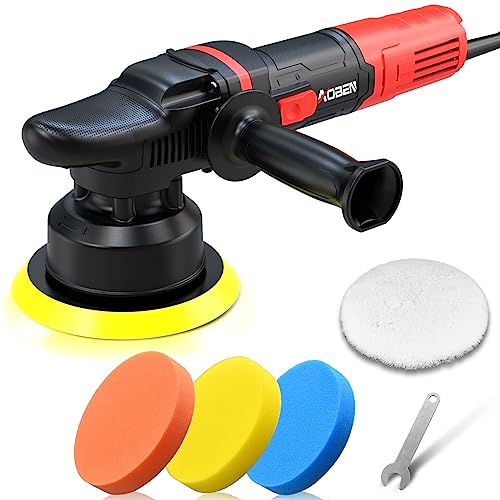
Polishing a single door panel by hand can take 30-45 minutes of intense effort. A dual action polisher [an orbital polishing machine safe for beginners] can achieve a better, more consistent result on that same panel in just 10 minutes. For anyone serious about achieving a great finish in a reasonable timeframe, a dual action polisher is not a luxury; it’s a necessity.
What Is the Complete Time Breakdown for a Full Polishing Process?
A full car polishing process involves more than just polishing; it includes washing, decontamination, compounding, polishing, and applying protection. For a medium-sized sedan, this entire workflow typically takes between 8 and 12 hours to complete correctly. Thinking only about the “polish + wax” time is a common mistake that leads to rushed and subpar results. Here is a complete time breakdown for a full exterior detail.
- Thorough Wash & Dry: 45-60 minutes
This includes a proper two-bucket method wash, cleaning wheels and tires, and safely drying the vehicle with microfiber towels. -
Chemical & Mechanical Decontamination: 1.5 – 2.5 hours
This critical surface preparation stage involves spraying the car with an iron remover to dissolve brake dust and industrial fallout, followed by using a clay bar with lubricant to remove any remaining bonded contaminants. The paint must be perfectly smooth before polishing. -
Masking Trim & Sensitive Areas: 30 minutes
Using automotive masking tape to protect plastic trim, rubber seals, and panel edges from polish residue and potential damage is a professional step that saves cleanup time later. -
Compounding (Step 1 Polish): 4 – 8 hours
This is the most labor-intensive step. You will work in small 2’x2′ sections, using a cutting compound and pad to remove the majority of scratches and swirl marks. -
Finishing Polish (Step 2 Polish): 3 – 6 hours
After compounding, you’ll switch to a finer finishing polish and a softer pad. This step removes any micro-marring left by the compounding stage and refines the paint to a brilliant, high-gloss shine. -
Panel Wipe / Inspection: 30 minutes
A proven technique used by professionals is wiping each panel with an isopropyl alcohol (IPA) solution. This removes any polishing oils that might be hiding fine scratches, allowing you to inspect the true condition of your work before applying protection. -
Applying Protection (Wax or Sealant): 45-60 minutes
The final step is to apply a layer of protection, like a carnauba wax or a paint sealant. This protects your freshly corrected paint from the elements and locks in the gloss.
How Long Should You Wait to Polish a Car After New Paint?
You must wait a minimum of 30 days, and ideally 60-90 days, before polishing a car with new paint. This crucial waiting period allows the paint solvents to fully escape (outgas) and the clear coat to harden. Always confirm the specific cure time with the body shop that performed the work, as different paint systems have different requirements.
Polishing fresh paint [paint that has not fully cured] generates heat and friction. If you polish too early, you can cause serious, irreversible damage.
CRITICAL: Wait 30-90 Days Before Polishing New Paint
Polishing too soon suffocates the paint, trapping solvents and preventing the clear coat from achieving its full hardness and durability.
Here’s what happens if you don’t wait:
* Trapped Solvents: The polish can seal the surface, trapping solvents that are still trying to evaporate. This can lead to small blisters or “solvent pop” in the finish weeks or months later.
* Softness & Haze: The uncured paint is soft and can be easily scratched or marred by the polishing process itself, resulting in a hazy, dull appearance.
* Difficult Buffing: The uncured paint can be sticky, making the polish difficult to work with and remove.
Expert advice is clear: be patient. A gentle hand wash is usually acceptable after a week or two, but any abrasive polishing must wait until the paint is fully cured according to the manufacturer’s or body shop’s specific instructions.
FAQs About how long does it take to polish a car
How long does a 2-step polish take?
A 2-step polish, which includes a compounding stage and a finishing polish stage, typically takes between 8 and 18 hours for a medium-sized car. The first step (compounding) is more time-consuming as it removes deeper defects and can take 5-10 hours. The second step (polishing) refines the finish to a high gloss and usually takes 3-8 hours.
How long does car polish last?
The gloss from polishing is permanent, as it physically levels the clear coat, but the paint can get scratched again over time. To protect the polished finish, you must apply a layer of protection like a wax (lasts 1-3 months), a paint sealant (lasts 4-6 months), or a ceramic coating (lasts 2-5 years). Without protection, new swirl marks can appear quickly.
What is the difference in time between a one-step vs two-step polish?
A two-step polish takes roughly twice as long as a one-step polish. A one-step polish (or “all-in-one”) aims to do a light correction and add protection in a single pass, taking 4-6 hours. A two-step process separates the heavy compounding and fine polishing stages, requiring two full passes over the vehicle and taking 8-12+ hours for a much better result.
How long does it take to buff out a single deep scratch?
Buffing a single deep scratch can take anywhere from 15 minutes to over an hour, depending on its severity. If the scratch hasn’t gone through the clear coat, it often requires careful wet sanding followed by a multi-stage compound and polish in a small, targeted area. This is a delicate process that requires a test spot method to avoid burning through the paint.
How often should you polish your car?
You should only polish your car when it’s needed to remove visible defects like swirl marks or oxidation, typically once every 1-3 years. Polishing is an abrasive process that removes a small amount of clear coat. Polishing too frequently (e.g., weekly) will prematurely wear down your paint’s protective layer. Regular washing and waxing will prevent the need for frequent polishing.
Can you polish a car too much?
Yes, you can absolutely polish a car too much and cause irreversible damage. Every time you polish, you remove a microscopic layer of the clear coat. Since a car’s clear coat is very thin (often thinner than a sticky note), excessive polishing can lead to clear coat failure or “burn through,” requiring a costly repaint. Using a paint thickness gauge is recommended for heavy correction.
How long does it take to wet sand and buff a whole car?
Wet sanding and buffing an entire car is an extremely intensive process reserved for professionals and show cars, taking 30-80+ hours. This process removes significant paint texture (orange peel) and deep defects but also a substantial amount of clear coat. It is not recommended for daily drivers or for anyone without significant hands-on experience due to the high risk of damage.
Is 5 hours enough to polish a car?
Yes, 5 hours can be enough to perform a quick one-step polish on a small-to-medium-sized car that is already in good condition. This timeframe would allow for a light gloss enhancement using an all-in-one product with a dual action polisher. However, it is not enough time for a proper two-step paint correction or to address heavy defects.
How long for a professional detailer to polish a car?
A professional detailer typically takes 6-10 hours for a high-quality two-step polish on a standard vehicle. Professionals are faster due to proven technique, efficient workflows, and powerful tools like rotary buffers. However, a “perfection detailing” job on a black car or for a ceramic coating preparation could still take 15-25 hours or more.
How long to leave polish on car before buffing off?
Most modern car polishes should be buffed off almost immediately after being worked in. Unlike waxes, polishes contain abrasives that do their work while the machine is moving. Once a small section (e.g., 2’x2′) is complete, you should immediately wipe the residue away with a clean microfiber towel. Leaving it to dry can make removal difficult.
Key Takeaways: How Long It Takes to Polish a Car Summary
- Time is Variable: The time to polish a car ranges from 4 hours for a light polish to over 20 hours for a full paint correction. Your car’s size and the severity of its swirl marks are the two biggest factors.
- Machine is Essential: Using a dual action polisher is 3-4 times faster and far more effective than polishing by hand. For any serious defect removal, a machine is a mandatory tool, not a luxury.
- Preparation is Half the Battle: The total project time includes 2-3 hours of crucial surface preparation like washing, iron removal, and using a clay bar. Skipping these steps will compromise the final result and waste time.
- Two-Step is the Standard: A two-step polish (compounding then polishing) is the industry standard for achieving a deep, glossy, swirl-free finish and typically takes 8-12 hours for a DIY enthusiast.
- Polishing is Abrasive: Remember that polishing removes a layer of clear coat. It should only be done every 1-3 years as needed, not as routine maintenance. Always follow up with a protective wax or sealant.
- New Paint Requires Patience: You must wait at least 30-90 days for new paint to fully cure before polishing. Polishing fresh paint too soon can cause permanent damage. Always follow the body shop’s specific advice.
- Total Time is Cumulative: A full “Wash, Clay, Polish, and Wax” workflow for a medium-sized car is a significant project, realistically taking a full weekend (10-15 hours) to complete properly.
Final Thoughts on How Long It Takes to Polish a Car
Ultimately, the time it takes to polish a car is an investment in its appearance and long-term health. While a quick 4-hour job can boost gloss, a proper 12-hour, two-step paint correction can be transformative, restoring a level of clarity and depth you thought was lost forever. By understanding the factors—from your car’s size and condition to the importance of preparation—you can now create a realistic plan. Set aside the right amount of time, use the right tools, and you will be rewarded with a finish that truly shines.
Last update on 2026-03-17 / Affiliate links / Images from Amazon Product Advertising API


